
The Collapse of the 9/11 Guantanamo Trials
Why revoking the 9/11 plea agreements exposes the fatal flaws of the military commissions and denies families closure.
Introduction to the Guantanamo Bay Legal Quagmire
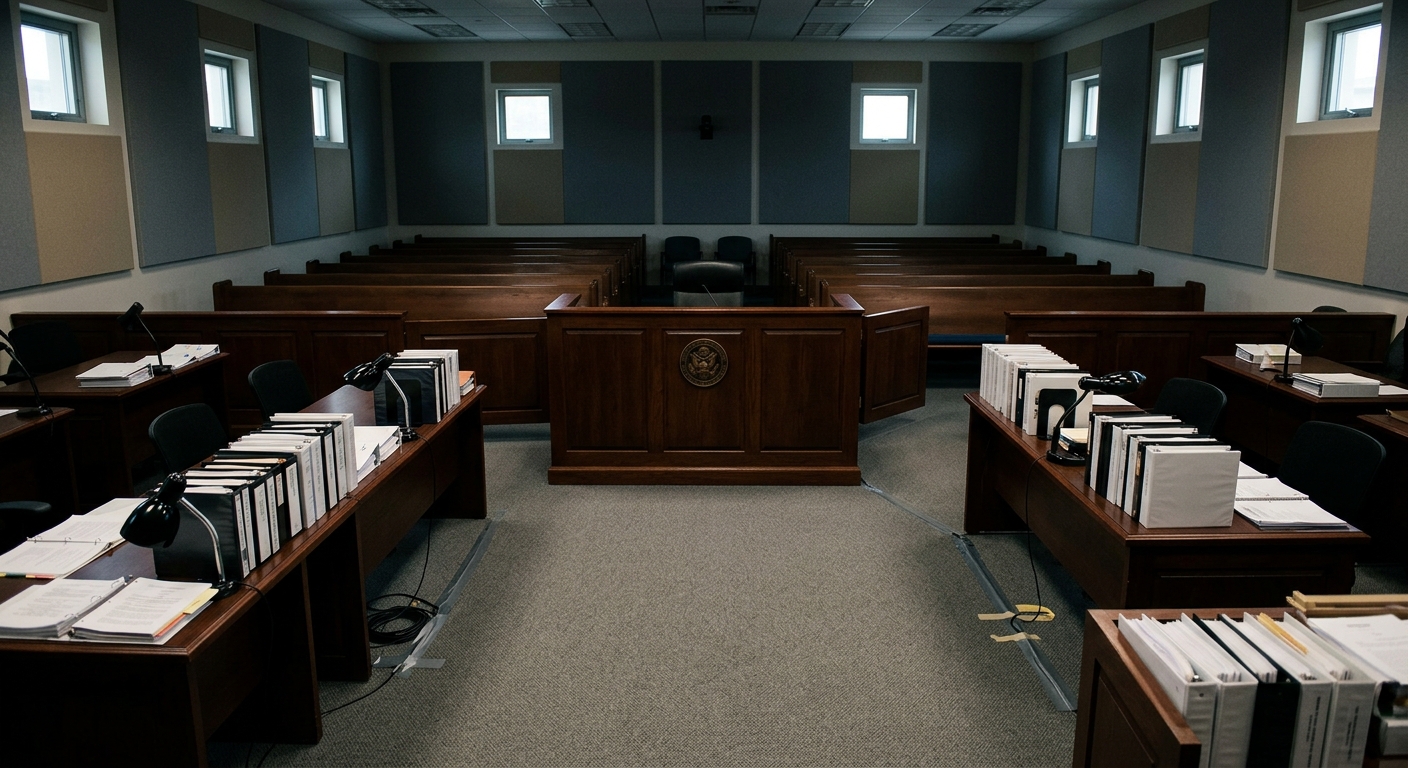
Over two decades after the tragic events of September 11, 2001, the United States’ pursuit of legal accountability for the perpetrators remains mired in an unprecedented quagmire. The military commission proceedings at Naval Station Guantanamo Bay were originally promised to deliver swift, transparent, and definitive justice for the most devastating terrorist attack on American soil. Instead, they have evolved into the longest, most expensive, and most convoluted legal battle in modern American history. Recently, a fragile and highly anticipated breakthrough emerged in the form of plea agreements for the accused architect of the attacks, Khalid Sheikh Mohammed, and his co-defendants. However, these agreements were abruptly rescinded by Defense Secretary Lloyd Austin in a move that shocked legal observers. This chaotic reversal highlights a profound systemic failure of the military tribunal system and underscores a grim, inescapable reality: post-9/11 torture and political maneuvering have irreparably damaged the prospect of ever conducting a successful capital trial.
The Original Sin: CIA “Black Sites” and the Contamination of Evidence
To comprehend why the 9/11 military commissions have stalled for over twenty years without a single trial date holding firm, one must examine the foundational flaw of the entire prosecution: the United States government’s systematic use of torture. In the frantic months and years following the September 11 attacks, the Central Intelligence Agency (CIA) initiated the Rendition, Detention, and Interrogation (RDI) program. High-value detainees, including Khalid Sheikh Mohammed, Walid bin Attash, and Mustafa al-Hawsawi, were disappeared into a global network of clandestine “black sites.”
Within these secret prisons, the defendants were subjected to horrific abuses classified as “enhanced interrogation techniques.” According to the comprehensive 2014 report by the Senate Select Committee on Intelligence (SSCI), these methods included repeated waterboarding, prolonged sleep deprivation, confinement in coffin-like boxes, extreme physical violence, and psychological torment. The architects of this brutal program, contracted psychologists James Mitchell and Bruce Jessen, explicitly designed techniques intended to induce a state of “learned helplessness.” During dramatic pre-trial hearings, Mitchell himself took the stand, offering gruesome, unapologetic testimony about waterboarding Khalid Sheikh Mohammed and slamming detainees into walls. Khalid Sheikh Mohammed alone was waterboarded 183 times.
The Legal Ramifications of Coercion
In any legitimate, rule-of-law-based justice system, evidence obtained through coercion or physical torture is strictly inadmissible. The United States Constitution and international treaties, such as the UN Convention Against Torture, are unequivocal on this matter. When the 9/11 defendants were eventually transferred from the CIA’s black sites to the military prison at Guantanamo Bay to face tribunals, their defense attorneys rightfully challenged the admissibility of nearly all the government’s evidence.
Military prosecutors found themselves trapped in an endless, cyclical loop of pre-trial hearings. The presence of these horrific details in the public record created an insurmountable hurdle for the prosecution. Under the Military Commissions Act, statements derived from torture cannot be used as evidence. The government’s fallback strategy—relying on “clean teams” of FBI agents who re-interrogated the men years later at Guantanamo—was violently contested by defense attorneys. They argued the detainees remained under the psychological grip of their previous torture, rendering any subsequent confessions inherently involuntary. This legal quagmire transformed the pre-trial phase into a grueling, decades-long investigation into the U.S. government’s own misconduct, fundamentally corrupting the evidentiary foundation of the case and rendering a pristine, trial-ready prosecution an illusion.
Structural Inadequacies: The Failure of Military Commissions
A recurring question among the public and legal scholars is why the United States did not simply try these men in traditional federal courts. In the immediate aftermath of 9/11, the Bush administration deliberately bypassed the established federal judiciary, opting instead to create military commissions under the premise of wartime executive authority. However, this novel legal framework lacked the established procedural rules, binding precedents, and operational transparency of Article III civilian courts.
Federal Courts vs. Ad Hoc Tribunals
When the Supreme Court struck down the initial iteration of the military commissions in Hamdan v. Rumsfeld (2006), Congress scrambled to pass the Military Commissions Act (MCA) of 2006, later amended in 2009. Despite these legislative attempts to legitimize the tribunals, the system remained deeply flawed. Unlike federal courts, which benefit from hundreds of years of jurisprudence, every minor procedural dispute at Guantanamo had to be litigated as a matter of first impression. Issues as fundamental as what constitutes hearsay, how to handle classified defense evidence, and whether the Constitution fully applies to detainees at the naval base took years to resolve.
Furthermore, the Classified Information Procedures Act (CIPA) provides a predictable roadmap in civilian courts for substituting classified evidence with unclassified summaries so that a defendant can still mount a robust defense without endangering national security. In the military commissions, however, the government frequently invoked national security privilege to completely block the defense from questioning key witnesses, fundamentally undermining the right to a fair trial. Defense teams faced immense, unprecedented hurdles. They discovered that their confidential attorney-client communications were being monitored, and the military commission system suffered from a rapid turnover of judges. This ad hoc system proved entirely ill-equipped to handle the monumental legal and ethical complexities introduced by the CIA’s controversial interrogation program.
The 2024 Plea Agreements: A Pragmatic and Necessary Compromise
Recognizing that a capital trial was increasingly unviable—and could easily stretch into another decade of appeals if a guilty verdict were somehow achieved—military prosecutors and the court’s convening authority, Susan Escallier, began negotiating plea agreements. By late July 2024, a historic resolution appeared to have finally been reached.
Under the proposed terms, Khalid Sheikh Mohammed, Walid bin Attash, and Mustafa al-Hawsawi agreed to plead guilty to all charges, including the murder of the 2,976 victims of the September 11 attacks. In exchange, the government would formally eliminate the possibility of the death penalty, and the defendants would serve life sentences in military custody.
Choosing Finality Over Vengeance
The meticulous negotiation process spanned more than two years, led by the case’s lead prosecutor and overseen by seasoned military legal minds. The logic was clear: in exchange for capital punishment being taken off the table, the prosecution would secure an airtight, unappealable conviction. For the defendants, the plea deal offered a reprieve from the threat of execution and the grim reality of spending their remaining days in solitary military confinement without formal sentencing.
Crucially, the agreements also reportedly included structured provisions requiring the defendants to submit to detailed, written questioning from the families of the victims. This element of restorative justice was unprecedented in the military commissions. It represented a unique opportunity to unearth the hidden logistical details of the 9/11 plot—facts that might have remained permanently classified or undiscovered in a traditional adversarial trial setting. By prioritizing truth-telling and accountability over the symbolic, yet legally precarious, pursuit of a death warrant, the plea agreements provided a tangible pathway out of the legal wilderness. The government’s conscious decision to torture the defendants had effectively forfeited its moral and legal standing to execute them, making life sentences the only legally sound pathway left.
Political Interference and the D.C. Circuit Court Reversal
The public announcement of the plea deals in late July 2024 was immediately met with a fierce political backlash in Washington. Critics, including prominent lawmakers, argued that offering any negotiated settlement to the architects of the 9/11 attacks was an unacceptable capitulation and an affront to the victims’ memories. Yielding to this immense political pressure, Defense Secretary Lloyd Austin intervened a mere two days after the deals were signed, abruptly revoking the plea agreements. He asserted that the responsibility for such a momentous decision should rest solely with him, superseding the authority he had explicitly delegated to the convening authority.
This unprecedented executive interference plunged the Guantanamo military commissions into a new abyss of legal chaos. The military judge overseeing the case initially ruled that Austin lacked the statutory authority to rescind the legally binding agreements once they were signed by the convening authority. However, the legal ping-pong escalated rapidly as the government aggressively appealed the judge’s procedural decision.
The dispute eventually reached the federal appellate courts. In July 2025, the U.S. Court of Appeals for the D.C. Circuit intervened, ruling in a divided opinion that Secretary Austin did indeed possess the indisputable legal authority to withdraw the plea deals. This monumental ruling effectively threw the agreements out, resetting the prosecution’s timeline to zero and dashing any immediate hopes for a practical resolution to the 9/11 cases.
The Agonizing Limbo for the 9/11 Families
The true casualties of this perpetual legal paralysis are the families of the nearly 3,000 individuals who perished on September 11, 2001. For over two decades, they have been dragged through a grueling, never-ending emotional rollercoaster. Many family members have traveled to the isolated naval base at Guantanamo Bay to observe proceedings, only to witness agonizingly slow pre-trial hearings that focus heavily on the minutiae of classified evidence and the perpetrators’ torture, rather than on the lives lost and the crimes committed against them.
For these families, the physical distance to Guantanamo Bay is mirrored by the emotional detachment of the legal process. The court proceedings are broadcast on a delayed audio feed to prevent the accidental spillage of classified information, a constant reminder of the government’s obsession with secrecy over transparency. During one infamous hearing, the audio feed was abruptly cut by an unknown external censor—later revealed to be the CIA—without the judge’s permission. Such incidents only deepen the families’ frustration and the public’s distrust in the fundamental integrity of the commissions.
The families of the victims are understandably divided on the outcome. Some steadfastly believe that the death penalty is the only just and proportionate punishment for the staggering magnitude of the 9/11 attacks, and they cheered Secretary Austin’s decision to revoke the deals. Others, however, prioritize finality and the unearthing of truth over capital punishment. They recognize that the elusive pursuit of a death sentence has actively denied them closure. The rescinded plea deals promised a definitive end to the litigation and a comprehensive admission of guilt. By blocking this resolution, political leaders have caught the families in a crossfire between political posturing and a broken legal apparatus, condemning them to years of further uncertainty.
The Inevitability of a Negotiated End
As the legal skirmishes over executive authority and pre-trial motions continue to unfold, the broader, tragic lesson of the Guantanamo military commissions remains starkly evident. The United States irreparably compromised its own justice system the moment it authorized the use of torture. The subsequent attempt to prosecute the 9/11 defendants in a flawed, bespoke military tribunal system only compounded the original error, replacing the rule of law with a facade of justice that has crumbled under the weight of its own internal contradictions.
There is no magical legal maneuver or legislative fix that will erase the history of the CIA’s black sites or sanitize the tainted evidence gathered there. If the United States genuinely wishes to bring the 9/11 trials to a dignified close, it must confront the uncomfortable truth that a pristine capital trial is an absolute impossibility. Reinstating the plea deals—or quietly negotiating similar agreements that trade the death penalty for unequivocal guilty pleas and life sentences—remains the most rational, legally sound, and humane course of action. It is the only viable mechanism left to dismantle the agonizing limbo of Guantanamo Bay and provide the families, and the nation as a whole, with a final, concluding chapter to this enduring American tragedy.
Frequently Asked Questions (FAQs)
- Why are the 9/11 suspects being tried at Guantanamo Bay instead of federal civilian courts?
Following the September 11 attacks, the U.S. government chose to utilize military commissions at Guantanamo Bay rather than federal courts, arguing the U.S. was in a state of armed conflict. However, this untested system lacked the established procedural rules and precedents of federal courts, leading to decades of delays and complex legal challenges regarding classified information. - What are CIA “black sites” and how did they impact the 9/11 trials?
CIA “black sites” were clandestine overseas prisons where terrorism suspects were held and interrogated using “enhanced interrogation techniques,” which constituted physical and psychological torture. Because evidence obtained through torture is legally inadmissible, prosecutors have struggled to build a viable capital case, resulting in endless pre-trial litigation over tainted confessions. - Why did Defense Secretary Lloyd Austin revoke the 9/11 plea deals?
In July 2024, military officials signed plea agreements with Khalid Sheikh Mohammed and two co-defendants to exchange guilty pleas for life sentences, avoiding the death penalty. Following intense political and public backlash, Secretary Austin revoked the deals two days later, arguing that such a historically significant decision required his direct oversight and authorization. - What did the D.C. Circuit Court of Appeals rule regarding the plea deals?
In July 2025, the U.S. Court of Appeals for the D.C. Circuit ruled that Defense Secretary Lloyd Austin legally possessed the authority to withdraw the plea agreements. This ruling reversed lower court decisions and effectively nullified the deals that would have finally resolved the cases. - Will Khalid Sheikh Mohammed eventually face the death penalty?
Given the severe legal complications arising from his torture, the destruction of critical evidence, and the recent collapse of the plea deals, it is highly uncertain if a capital trial will ever successfully conclude. Many legal scholars and military experts believe securing and executing a death sentence is virtually impossible under the current legal constraints.
References
- D.C. Circuit Throws Out 9/11 Plea Deals — Lawdragon. 2025-07-11. https://www.lawdragon.com/news-features/2025-07-11-d-c-circuit-throws-out-9-11-plea-deals
- Pentagon chief loses bid to reject 9/11 plea deals — AP News. 2024-12-31. https://apnews.com/article/guantanamo-sept-11-plea-deals-8bcde5886e8ea36a0ab1f5822e11894a
- Revoking the 9/11 Plea Deals: Human Rights Consequences — Just Security. 2024-08-16. https://www.justsecurity.org/99166/revoking-the-9-11-plea-deals-human-rights-consequences/
- Committee Study of the Central Intelligence Agency’s Detention and Interrogation Program — U.S. Senate Select Committee on Intelligence. 2014-12-09. https://www.intelligence.senate.gov/sites/default/files/publications/CRPT-113srpt288.pdf
Similar Articles








Read full bio of Sneha Tete


