
Classifying Criminal Offenses: Felonies to Infractions
Understand the hierarchy of criminal offenses from severe felonies to minor infractions and their legal consequences.
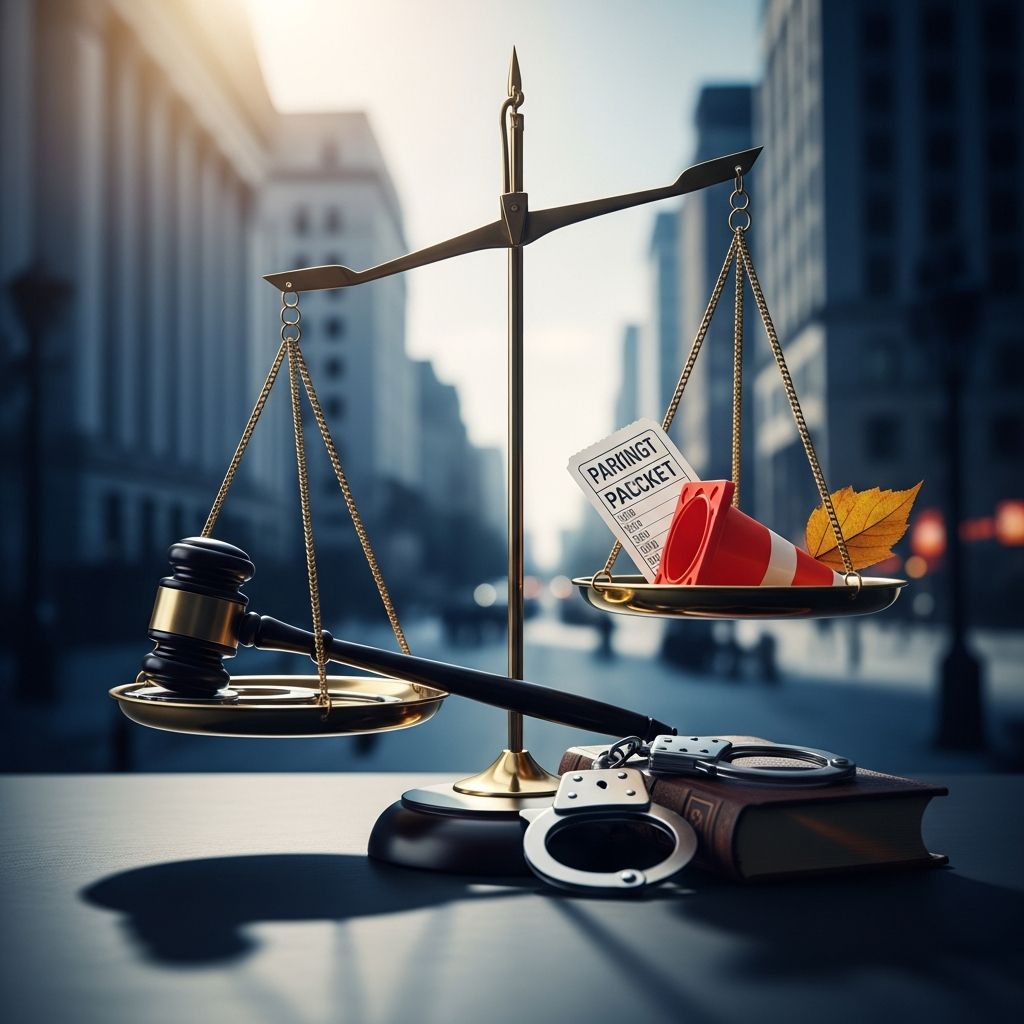
Criminal offenses in the United States are organized into distinct categories based on their severity, which directly influences penalties, court procedures, and long-term consequences for those convicted. These classifications—primarily felonies, misdemeanors, and infractions—stem from historical common law traditions and have evolved through statutes to address modern societal needs. Understanding this framework is essential for anyone navigating the justice system, whether as a defendant, victim, or informed citizen.
The Foundations of Crime Classification
The roots of classifying crimes trace back to English common law, which initially divided offenses into treasons, felonies, and misdemeanors. This system was adopted in the American colonies and expanded by state legislatures and federal codes to include infractions and nuanced gradations. Today, classification serves multiple purposes: it determines pretrial procedures like bail, the presiding court, sentencing options, and even parole eligibility. Grading crimes by offense level ensures proportionality in punishment, reflecting the harm caused and the offender’s intent.
Legislatures base classifications on factors such as the nature of the harm (to persons, property, or public order), the defendant’s culpability, and potential damage. For instance, violent acts threatening life are almost always felonies, while minor disruptions might qualify as infractions. This structured approach allows the justice system to allocate resources efficiently, reserving higher courts and harsher sanctions for grave violations.
Felonies: The Gravest Offenses
Felonies represent the pinnacle of criminal severity, encompassing acts that cause or threaten significant harm, such as serious bodily injury or death. Defined generally as crimes punishable by more than one year in state or federal prison, felonies carry profound repercussions including lengthy incarceration, substantial fines, and lifelong collateral consequences like loss of voting rights or firearm ownership.
Common examples include murder, rape, armed robbery, and large-scale theft or fraud exceeding monetary thresholds. Felonies are often subdivided into classes—such as Class A (most serious), B, C, etc.—or degrees (first-, second-, third-), with penalties escalating accordingly. Capital felonies, like first-degree murder in death-penalty states, may result in life imprisonment or execution. Federal law also applies felony definitions to state convictions for certain restrictions, amplifying their impact.
| Felony Class/Example | Typical Penalty Range | Examples |
|---|---|---|
| Class A/First-Degree | Life or death; 20+ years | Murder, aggravated rape |
| Class B/Second-Degree | 10-25 years | Burglary with weapon, assault with injury |
| Class C/Third-Degree | 2-10 years | Grand theft, drug trafficking |
In practice, felony convictions trigger superior courts, jury trials, and heightened procedural protections. Repeat offenders or those with aggravating factors may face enhanced charges, turning what might otherwise be lesser crimes into felonies.
Misdemeanors: Moderate Violations
Less severe than felonies, misdemeanors involve offenses punishable by up to one year in local jail, fines, probation, or community service. They typically address harms that are disruptive but not catastrophic, such as petty theft, simple assault, or disorderly conduct. States grade misdemeanors similarly (Class A being the most serious), though terminology varies—some use ‘gross’ or ‘high’ misdemeanor.
Unlike felonies, misdemeanors often proceed in lower courts with fewer procedural hurdles, potentially allowing bench trials or diversion programs. Collateral effects are milder but still significant, including employment barriers or license suspensions. ‘Wobbler’ offenses, prosecutable as either misdemeanor or felony based on circumstances, add flexibility—e.g., certain drug possession or low-level theft.
- Petty Misdemeanor: Fines and short jail (under 90 days), e.g., minor traffic violations.
- Class A Misdemeanor: Up to 1 year jail, $2,500+ fine, e.g., DUI first offense.
- Class B/C: Lesser terms, e.g., trespassing, public intoxication.
This category balances accountability with rehabilitation, often emphasizing fines over incarceration.
Infractions: The Least Serious Breaches
Infractions, sometimes called violations, are the mildest offenses, typically non-criminal and resolved with fines rather than jail time or arrests. They target minor public order issues like traffic tickets, jaywalking, or noise complaints. No criminal record usually results, preserving the offender’s status.
Courts handle infractions informally, often via mail or summary hearings without attorneys. Penalties are monetary, scaled to the infraction’s impact—e.g., $50-500 for speeding. While not escalating to criminal proceedings, unpaid fines can lead to license suspension or collections.
Special Categories and Hybrid Offenses
Beyond the triad, some jurisdictions recognize hybrids like felony-misdemeanors (‘wobblers’), where prosecutors choose classification based on evidence or defendant history. Classifications also consider harm type: crimes against persons (homicide, assault), property (arson, theft), public order (bribery, perjury), or family (bigamy). Federal and state variations exist; for example, Texas details felony/misdemeanor ranges in its Penal Code Chapter 12, while states like Maine avoid subcategories altogether.
How Classification Shapes Justice Processes
A crime’s label dictates the entire case trajectory. Felonies demand grand jury indictments, high bail, and state prison post-conviction; misdemeanors use municipal courts and county jails; infractions skip arrests. Sentencing follows statutory guidelines, with judges considering enhancements for priors or mitigators like remorse.
Collateral consequences amplify stakes: felons lose rights, face job stigma; misdemeanants encounter civil penalties. Appeals and expungements vary by class, offering relief pathways for lesser offenses.
Real-World Examples Across Categories
Consider theft: Stealing $1,000+ is often felony grand theft (prison time); $500 is misdemeanor petty theft (jail/fine); littering might be an infraction. Assault escalates from simple (misdemeanor push) to aggravated (felony with weapon). Drug offenses range similarly, with possession quantities determining class. These illustrate how context—amount, weapon, injury—drives classification.
Frequently Asked Questions
What is the difference between a felony and a misdemeanor?
A felony involves potential prison over one year for serious crimes; misdemeanors cap at one year jail for lesser ones.
Can an infraction become a misdemeanor?
Yes, if unpaid or repeated, escalating to criminal court.
Do all states classify crimes the same way?
No, while most use felony/misdemeanor/infraction, grading and terms vary; some lack subcategories.
What are wobbler offenses?
Crimes chargeable as either felony or misdemeanor, like some thefts or assaults.
How does classification affect bail and sentencing?
Higher classes mean higher bail, longer sentences, and stricter release terms.
Navigating Classifications: Practical Advice
For defendants, early legal counsel is crucial to challenge classifications or seek reductions. Victims benefit from understanding processes to advocate effectively. Reforms like sentencing guidelines aim for consistency, but disparities persist across jurisdictions.
In summary, crime classification ensures justice matches offense gravity, from life-altering felonies to ticket-like infractions. This system, refined over centuries, upholds public safety while offering measured responses.
References
- Understanding the Basics of Criminal Law — University of Pittsburgh School of Law Online. 2023. https://online.law.pitt.edu/blog/understanding-the-basics-of-criminal-law
- How Crimes Are Classified: Felony, Misdemeanor, or Infraction? — Peter Johnson Law. 2023. https://www.peterjohnsonlaw.com/post/how-crimes-are-classified-felony-misdemeanor-or-infraction
- Classification of Criminal Offenses — Geoff Heim Attorney, LLC. 2023. https://www.geoffheimlaw.com/classification-of-criminal-offenses/
- 3.6. Classifications of Law — Pennsylvania State University. 2023. https://psu.pb.unizin.org/criminaljusticemclean/chapter/8-6/
- Legal Classification of Criminal Offenses — Justia. 2023. https://www.justia.com/criminal/classification/
- What are the types of criminal law? — Thomson Reuters Legal. 2023. https://legal.thomsonreuters.com/blog/types-of-criminal-law/
- Texas Crime Classification: Felony & Misdemeanor Penalties — BHW Law Firm. 2023. https://www.bhwlawfirm.com/classification-of-crimes-in-texas/
Similar Articles








Read full bio of medha deb




