
Civil Rights Advocacy in a Conservative Court Era
Navigating progressive legal battles amidst a shifting judicial landscape.
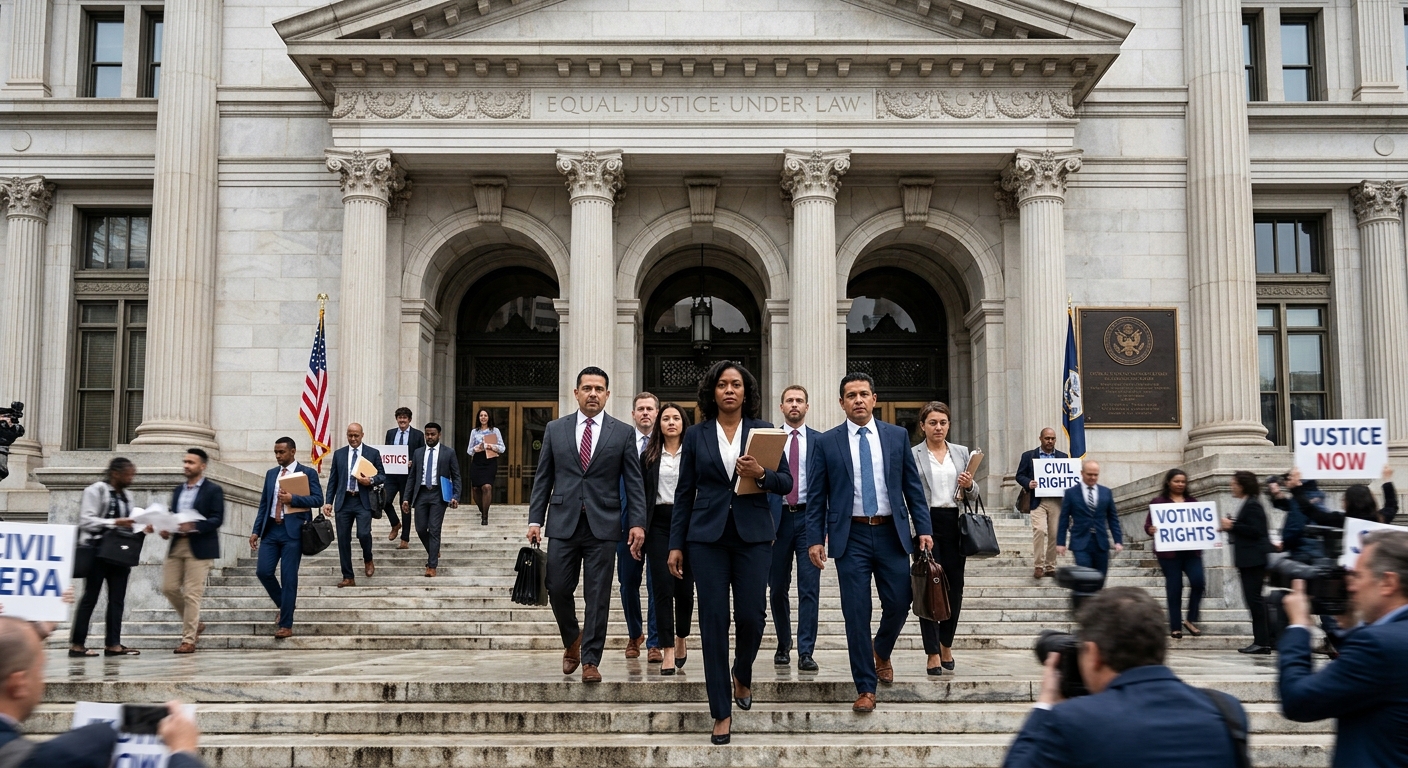
The tectonic plates of American jurisprudence have shifted dramatically over the past decade, culminating in a federal judicial landscape that looks vastly different from the courts of the late twentieth century. At the apex of this transformation sits a United States Supreme Court defined by a solidified conservative supermajority. For progressive litigators, civil rights advocates, and legal scholars, this ideological realignment necessitates a profound strategic pivot. The traditional playbook—which historically relied on federal courts to expand constitutional protections, strike down discriminatory legislation, and serve as the ultimate arbiters of civil liberties—is no longer viable as a primary strategy. Instead, advocates must navigate a complex terrain where federal victories are scarce, and the risks of establishing adverse, nationwide precedents are exceptionally high. This comprehensive shift requires a reimagining of how civil rights are defended and expanded, moving away from a singular focus on federal tribunals and toward a multifaceted approach that embraces state-level advocacy, defensive litigation tactics, and a renewed emphasis on the intersection of law and grassroots democratic mobilization.
Understanding the Modern Judicial Architecture
To effectively counter the current judicial climate, one must first understand its foundational shifts. The federal judiciary has undergone a profound structural and methodological transformation. According to recent analyses of Supreme Court jurisprudence, the contemporary conservative supermajority has engaged in what legal scholars describe as a reciprocal transformation of judicial methodology. Where progressive courts of the past may have utilized purposeful interpretations of the law to expand rights, today’s majority frequently elevates strict textualism, originalism, and judicial independence from the political branches to achieve conservative outcomes. This methodological entrenchment means that arguments relying on living constitutionalism or broad interpretations of the Fourteenth Amendment’s equal protection guarantees are routinely met with skepticism or outright rejection.
Furthermore, this ideological consolidation is not isolated exclusively to the Supreme Court. The pipeline of judicial appointments over recent administrations has significantly altered the composition of federal district and appellate courts nationwide. Consequently, civil rights lawyers cannot simply forum-shop within the federal system hoping for a sympathetic appellate panel. The pervasive influence of conservative legal doctrines requires advocates to operate under the assumption that federal courts will, by default, be hostile to expansive civil rights claims. This chilling effect forces litigators to rigorously assess the risks of affirmative litigation, meticulously weighing the potential for a localized loss against the catastrophic danger of generating binding, nationwide precedent that could curtail civil liberties for an entire generation.
The Renaissance of the “New Judicial Federalism”
In response to the increasingly hostile federal terrain, progressive advocates are experiencing a renewed appreciation for state courts and state constitutions—a movement widely referred to in academic circles as the “New Judicial Federalism.” Coined in the aftermath of Justice William J. Brennan Jr.’s seminal 1977 legal scholarship calling for state courts to step into the breach, this concept posits a crucial constitutional dynamic: while the federal Constitution establishes an absolute floor for individual rights, state constitutions are entirely capable of raising the ceiling.
State constitutions are fundamentally different documents from their federal counterpart. They are often longer, much more easily amended, and contain explicit affirmative guarantees that are entirely absent from the U.S. Constitution. For example, many state charters include explicit rights to privacy, robust protections for public education funding, equal rights amendments, and specific environmental guarantees. Furthermore, state equal protection and due process clauses are frequently interpreted by state judges far more broadly than the federal Fourteenth Amendment.
This strategic migration to state courts is already yielding significant dividends for legal advocates. In recent years, as the federal judiciary has retreated from intervening in issues like partisan gerrymandering and reproductive freedom, state supreme courts have courageously stepped into the void. Litigators are actively mining the unique historical drafting contexts of state constitutions to build independent and adequate state grounds for their claims. Because the U.S. Supreme Court generally lacks jurisdiction to review state court decisions that rest entirely on independent state constitutional law, this strategy effectively insulates progressive victories from federal appellate review. However, advocates remain acutely aware that this approach is not without its own unique challenges. State judges are often subject to direct elections or political retention votes, making them uniquely vulnerable to the same partisan pressures and dark-money campaigns that influence legislative bodies.
Tactical Nuance: Defensive Litigation and Narrow Tailoring
Despite the strategic pivot to state courts, engagement with the federal judiciary remains an unavoidable reality for legal organizations. Federal laws will inevitably be challenged, and progressive groups frequently find themselves named as defendants or forced to intervene in lawsuits brought by well-funded conservative activists. In these high-stakes scenarios, the prevailing legal strategy fundamentally shifts from affirmative expansion of rights to defensive harm reduction.
When federal litigation is inevitable, advocates are increasingly employing the tactic of narrow tailoring. Rather than asking a conservative bench to recognize a new, sweeping constitutional right, litigators construct arguments deeply rooted in statutory technicalities, procedural defects, or administrative law nuances. By intentionally fighting on the opponent’s preferred methodological turf—such as deploying rigorous textualist arguments or appealing to the major questions doctrine in novel, restrictive ways—progressives aim to fracture conservative voting blocs and secure unlikely technical victories.
Key Elements of a Defensive Litigation Strategy
- Emphasizing Procedural Safeguards: Focusing intensely on jurisdictional standing, mootness, or failures under the Administrative Procedure Act (APA) rather than arguing broad, substantive constitutional violations.
- Leveraging Textualism: Crafting arguments that rely strictly on the plain text and historical context of statutes, effectively mirroring the methodology highly favored by current federal judges to compel a favorable ruling.
- Strategic Plaintiff Selection: Ensuring that the plaintiffs representing a cause possess impeccable legal standing and highly sympathetic, fact-specific grievances that complicate broad ideological dismissals by the bench.
- Mitigation of Appellate Risk: Willingly choosing to settle cases, voluntarily dismiss appeals, or accept localized district-level losses rather than risking a disastrous, precedent-setting ruling at the Supreme Court level.
Beyond the Courtroom: Intersecting Law and Legislative Action
A central tenet of the modern progressive legal playbook is the sobering recognition that courts do not operate in a vacuum, nor can they be the sole saviors of democracy. Litigation is increasingly viewed not as an end in itself, but as a singular, highly specialized tool within a much broader ecosystem of democratic mobilization. When the judiciary ceases to function as a reliable protector of minority rights, the burden of defense inevitably shifts back to the political branches, civil society, and the electorate.
In this challenging context, even an anticipated loss in court can serve a vital strategic political purpose if managed correctly. High-profile civil rights litigation can generate essential media coverage, illuminate glaring societal injustices, and create a comprehensive public evidentiary record that catalyzes grassroots mobilization. Advocates use the compelling human narratives developed during grueling trials to fuel legislative campaigns, ballot initiatives, and nationwide voter registration drives.
This paradigm shift emphatically underscores that sustainable civil rights victories must ultimately be codified into law by Congress and state legislatures to withstand judicial scrutiny. Progressive legal organizations are increasingly partnering with community organizers, political strategists, and legislative drafters. By shifting the primary battleground to statehouses and the halls of Congress, advocates aim to secure civil rights through enduring democratic consensus rather than fleeting judicial decree—a method that, while politically arduous, ultimately provides far more durable protections against arbitrary judicial rollback.
Comparative Analysis: Navigating State vs. Federal Legal Avenues
To fully grasp the complex strategic calculations civil rights litigators must make on a daily basis, it is helpful to systematically compare the distinct characteristics of state and federal judicial systems.
| Strategic Feature | The Federal Judiciary | State Judicial Systems |
|---|---|---|
| Jurisprudential Trend | Currently dominated by a reliable conservative supermajority emphasizing originalism. | Highly variable; deeply dependent on the specific state’s political climate and judicial selection methods. |
| Constitutional Scope | Strictly bound by the U.S. Constitution, which serves as the foundational floor of civil liberties. | Capable of offering significantly broader rights (the ceiling) based on unique state constitutional text. |
| Amendment Process | Exceptionally difficult, requiring supermajorities in Congress and ratification by three-fourths of states. | Generally much easier; many states allow for direct citizen ballot initiatives to amend the constitution. |
| Democratic Responsiveness | Lifetime appointments insulate judges entirely from direct electoral consequences. | Many state judges face partisan elections, non-partisan elections, or periodic retention votes. |
| Finality of Rulings | Supreme Court rulings are the final word on federal law and constitutional interpretation. | Rulings based purely on state law are generally shielded entirely from U.S. Supreme Court review. |
Cultivating a Long-Term Jurisprudential Vision
Finally, navigating a conservative court era requires looking far beyond the immediate appellate docket and investing in a generational jurisprudential project. The current conservative dominance of the federal judiciary was not an accident; it was the deliberate result of a highly coordinated, decades-long effort to cultivate legal talent, develop coherent academic theories, and build an impenetrable institutional infrastructure.
Progressive legal advocates deeply recognize the urgent need to replicate this long-term institution-building. This intricate process involves fostering a new generation of brilliant legal scholars who can aggressively develop compelling constitutional theories that rival originalism—theories firmly rooted in democratic proportionality, representation-reinforcement, and a robust, unyielding defense of multi-racial democracy. It also heavily requires a concerted effort to populate the federal and state judicial pipelines with diverse candidates who possess extensive backgrounds in civil rights, public defense, and labor law, rather than exclusively elevating those with corporate litigation or prosecutorial pedigrees. By fundamentally reshaping the academic discourse and training the next generation of law clerks and judges, advocates are painstakingly laying the groundwork for a future where the courts may once again serve as champions of equality and justice.
Frequently Asked Questions (FAQs)
What exactly is the “New Judicial Federalism”?
The “New Judicial Federalism” is a legal doctrine and proactive litigation strategy that emphasizes the use of state constitutions to protect individual rights. It gained massive academic and practical prominence in the late 1970s as a direct response to the federal courts becoming increasingly conservative. Because state constitutions often contain explicit guarantees not found in the U.S. Constitution—such as explicit rights to privacy or equal protection across gender—state courts can grant significantly broader civil liberties than the federal government.
Why are progressive lawyers intentionally avoiding federal courts for civil rights cases?
With a dominant 6-3 conservative supermajority on the U.S. Supreme Court and numerous conservative appointees deeply embedded throughout the lower appellate courts, the federal judiciary is currently highly skeptical of expansive civil rights claims. Litigators proactively avoid federal courts to prevent establishing broad, binding precedents that could negatively impact civil liberties nationwide for decades to come.
Can state courts legally contradict the U.S. Supreme Court?
State courts cannot interpret their state constitutions to provide fewer rights than the U.S. Constitution guarantees, as the federal Constitution serves as the absolute legal baseline. However, state courts are perfectly within their sovereign authority to interpret their state constitutions as providing much more expansive rights. When a state court rules exclusively on “independent and adequate state grounds,” the U.S. Supreme Court generally lacks the jurisdiction to overrule it.
How does defensive litigation actually work in legal practice?
Instead of aggressively filing lawsuits to establish new, progressive constitutional rights, defensive litigation focuses strictly on protecting existing rights from conservative legal challenges. When forced into federal court, progressive lawyers will often deploy narrow, highly technical arguments—such as challenging a plaintiff’s legal standing to sue or pointing out fatal procedural flaws—rather than arguing broad ideological points. The ultimate goal is securing a procedural case dismissal rather than risking a sweeping, adverse constitutional ruling.
References
- The Undone Business of the Warren Court — Harvard Law Review. 2025-11-20. https://harvardlawreview.org/
- State Constitutional Rights and Democratic Proportionality — Columbia Law Review. 2023-11-21. https://columbialawreview.org/
- Foreword: Giving State Constitutions Their Due — Brennan Center for Justice / State Court Report. 2025-04-04. https://statecourtreport.org/
Similar Articles








Read full bio of medha deb


