
The Chilling Effect of Vague Education Mandates
Vague education directives force teachers to self-censor and harm students.
The Shifting Landscape of American Education
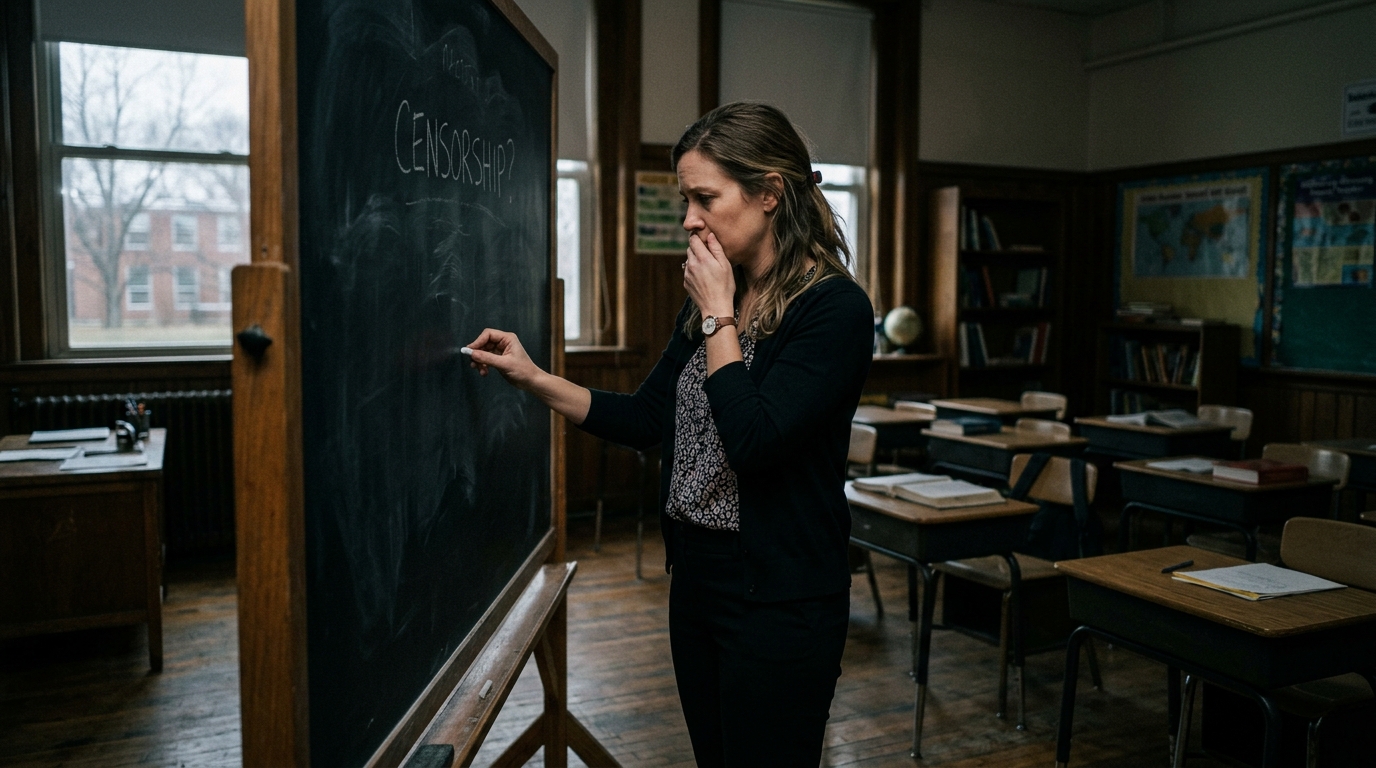
The American classroom has long served as a vital microcosm of the nation itself—a dynamic space where diverse ideas, historical truths, and complex social issues are critically examined, debated, and understood. However, the foundational purpose of public education is currently facing an unprecedented and existential challenge. A sweeping wave of government directives, originating at both the state and federal levels, is fundamentally altering the educational landscape. These mandates, explicitly aimed at restricting discussions surrounding race, gender, and systemic equity, are creating a profound chilling effect across K-12 schools and higher education institutions alike.
By weaponizing vague language and threatening severe, career-ending penalties—including the withdrawal of vital institutional funding and the revocation of individual teaching licenses—these policies force educators into an impossible position. Teachers are compelled to second-guess their curriculum, constantly weighing the pedagogical value of a lesson against the legal risk it may carry. The inevitable result is a rapidly growing culture of self-censorship that severely compromises the quality of education. This environment limits students’ ability to engage critically with the world around them, stunting their intellectual growth. Understanding the mechanics, legal vulnerabilities, and real-world consequences of these directives is absolutely essential for anyone invested in the future of academic freedom and civil rights in American education.
The Mechanics of Educational Intimidation
The contemporary push to restrict classroom discourse frequently manifests through what civil liberties organizations and policy analysts refer to as “educational gag orders.” This term describes a broad array of policies that explicitly and intentionally limit what can be taught, read, or discussed in educational settings. These restrictive directives can take numerous forms, ranging from executive orders and sweeping state legislation to “Dear Colleague” letters issued by politically appointed education department officials. Regardless of their specific origin or format, the structural framework of these mandates remains remarkably consistent across different jurisdictions. They typically target initiatives categorized under Diversity, Equity, and Inclusion (DEI) and strictly prohibit the instruction or discussion of so-called “divisive concepts.”
The defining characteristic—and the primary tactical weapon—of these mandates is their deliberate ambiguity. Terms such as “divisive,” “inappropriate,” “unlawful DEI,” or “ideological indoctrination” are almost never defined with the legal or pedagogical precision required for fair enforcement. This vagueness is not a mere drafting error; it is a calculated feature designed to maximize widespread compliance. When educators and school administrators cannot definitively know where the legal line is drawn, the safest and most rational course of action is to stay as far away from it as possible, creating a wide buffer zone of silenced topics.
Furthermore, the enforcement mechanisms attached to these directives are exceptionally severe. Entire school districts face the existential threat of losing millions in federal or state funding if they are deemed non-compliant. Simultaneously, individual teachers face devastating disciplinary action, intense public scrutiny, or the permanent loss of their professional livelihoods. This dual threat transforms routine, everyday pedagogical decisions—such as selecting a book for independent reading or answering a student’s question about current events—into high-stakes legal gambles. The administrative burden placed on school districts to constantly monitor and vet curricular materials diverts scarce resources away from actual instruction, turning administrators into ideological compliance officers.
The Chilling Effect on Classroom Pedagogy
The most immediate and damaging casualty of these ambiguous educational mandates is classroom pedagogy itself. Educators spend years studying methodology and developing curricula that not only meet rigorous academic standards but also resonate with an increasingly diverse student body. Culturally responsive teaching requires acknowledging historical injustices and discussing how the past directly informs current social dynamics. However, operating under the heavy shadow of restrictive directives, teachers are actively sanitizing their lesson plans to avoid potential controversy.
This chilling effect operates subtly but pervasively throughout the educational system. A high school history teacher, for example, might gloss over the deep systemic impacts of Jim Crow laws or redlining to avoid baseless allegations of teaching “critical race theory.” A literature professor might preemptively remove a critically acclaimed novel by a Black or LGBTQ+ author from their syllabus to prevent organized complaints about “inappropriate gender ideology.” This defensive self-censorship strips the curriculum of its essential depth, nuance, and historical accuracy.
Rather than fostering a robust, engaging environment for inquiry and debate, classrooms are being reduced to sterile echo chambers of uncontroversial, sanitized facts. This pedagogical retreat disproportionately impacts academic subjects that inherently require critical analysis and the exploration of multiple perspectives, such as history, sociology, civics, and literature. Ultimately, this paradigm shift deprives students of a comprehensive education, leaving them ill-equipped to participate thoughtfully in a complex, pluralistic society.
Common Targets of Restrictive Educational Mandates
The following table outlines the primary subjects targeted by these directives, the justifications often used by policymakers, and the direct pedagogical impact on the classroom.
| Targeted Subject Area | Common Justification for Restriction | Impact on Classroom Instruction |
|---|---|---|
| American History (Race & Inequality) | Prevention of “guilt or anguish” based on race; banning “divisive concepts.” | Superficial coverage of systemic racism, civil rights movements, and Indigenous history. |
| Gender & Sexuality | Preservation of “parental rights” and enforcing strict age-appropriateness. | Removal of LGBTQ+ literature, banning of pronouns, and erasure of queer historical figures. |
| Diversity, Equity, and Inclusion (DEI) | Elimination of perceived ideological indoctrination or state-sponsored bias. | Cancellation of cultural competency training for staff and vital equity programs for marginalized students. |
The Constitutional Battleground: First and Fourteenth Amendments
The aggressive and rapid rollout of these restrictive educational directives has not gone unchallenged. Civil rights organizations, professional educators, and student advocacy groups are increasingly turning to the federal court system to halt the enforcement of these mandates. The legal pushback against these gag orders primarily relies on the robust protections guaranteed by the First and Fourteenth Amendments of the United States Constitution.
From a First Amendment perspective, the Supreme Court has long recognized that students do not “shed their constitutional rights to freedom of speech or expression at the schoolhouse gate.” While it is true that local and state school boards possess significant control over the official K-12 curriculum, total ideological censorship raises severe constitutional questions regarding the students’ fundamental right to receive information. Furthermore, at the university level, academic freedom is widely recognized as a special corollary of the First Amendment, strongly protecting the rights of professors to conduct research and teach their subjects without heavy-handed political interference.
Additionally, the Fourteenth Amendment’s Due Process Clause requires that laws provide citizens with adequate, clear notice of what specific behavior or speech is prohibited. Because many of these anti-DEI and anti-CRT directives rely on hyper-subjective, legally undefined terms, plaintiffs successfully argue that they are unconstitutionally vague. Furthermore, Equal Protection claims are frequently raised in these lawsuits. Legal advocates assert that because these policies disproportionately target curricula and support programs that serve racial minorities and the LGBTQ+ community, they are driven by a discriminatory animus, rendering them unconstitutional under the Fourteenth Amendment.
Impact on Students and Marginalized Communities
While the immediate professional and legal burden of these mandates falls squarely on the shoulders of educators, the ultimate and most vulnerable victims are the students. A true education is not merely the rote memorization of dates and standardized test answers; it is the vital development of empathy, critical thinking, and robust civic awareness. When public schools erase honest discussions of race, gender, and systemic inequality from the classroom, they fundamentally fail to prepare students for the realities of a diverse, interconnected, and globalized world.
For marginalized students, the impact of these educational directives is intensely personal and psychologically damaging. Seeing one’s own history, identity, or family structure legally classified by the state as “divisive,” “illegal,” or “inappropriate” sends a devastatingly clear message of exclusion and invalidation. It undermines their lived experiences and severely compromises the safety and inclusivity of the overall school environment.
The Office for Civil Rights (OCR) within the U.S. Department of Education is explicitly tasked with a mission to ensure equal access to education and to promote educational excellence through the vigorous enforcement of civil rights in our nation’s schools. However, when top-down legislative or executive directives directly conflict with these foundational civil rights principles, students are left incredibly vulnerable to hostile, discriminatory educational environments without clear institutional recourse.
Exacerbating the Educator Exodus
The United States education system is currently navigating a severe, escalating, and historically unprecedented teacher shortage. School districts across the nation, from rural counties to major metropolitan areas, are struggling desperately to recruit and retain highly qualified teaching professionals. The introduction of ideologically driven mandates and educational gag orders acts as a massive accelerant to this already critical staffing crisis.
Teachers enter the education profession to inspire, mentor, and educate the next generation, not to serve as pawns in partisan culture wars or to operate under constant ideological surveillance. The looming threat of career-ending complaints based on vaguely worded, subjective directives creates a toxic classroom atmosphere defined by fear, anxiety, and paranoia. Educator morale is currently plummeting as teachers find themselves caught in an impossible, soul-crushing dilemma: fulfill their ethical and pedagogical duty to provide a truthful, comprehensive education to their students, or strictly comply with broad mandates to protect their livelihoods and avoid institutional ruin.
The emotional toll of navigating this restrictive environment cannot be overstated. Teachers are reporting unprecedented levels of stress and burnout, frequently citing the sudden loss of professional trust and instructional autonomy as the primary reasons for their profound dissatisfaction. When the very individuals tasked with shaping the minds of the next generation are marginalized, threatened, and silenced by their own government, the entire educational infrastructure is structurally weakened.
Frequently Asked Questions (FAQs)
- What is an “educational gag order”?
An educational gag order refers to any state or federal legislation, administrative policy, or executive directive that restricts educators from discussing specific topics in the classroom. These restrictive orders most commonly target subjects related to systemic race, racism, gender identity, sexual orientation, and the more complex aspects of American history.
- Why are these educational directives considered legally ambiguous?
Many of these government mandates utilize subjective, legally undefined terms such as “divisive concepts,” “inappropriate material,” or “ideological indoctrination.” Because these laws deliberately fail to clearly outline what specific words, books, or historical facts violate the policy, educators are forced to guess. This lack of clarity inevitably leads to widespread over-compliance and extreme self-censorship to avoid severe penalties.
- How do these educational mandates affect the First Amendment rights of students?
While local school boards have significant legal authority over K-12 curriculum development, the First Amendment protects a student’s fundamental right to receive information. Civil rights attorneys and legal advocates argue that removing library books or severely restricting educational curricula based solely on partisan or ideological disagreement violates these constitutional protections and limits students’ access to a diverse marketplace of ideas.
- What role does the Department of Education’s Office for Civil Rights (OCR) play in this issue?
The Office for Civil Rights (OCR) is formally responsible for enforcing federal civil rights laws that prohibit discrimination on the basis of race, color, national origin, sex, and disability in any educational program receiving federal funding. Major conflicts arise when restrictive state or federal education directives potentially violate these foundational anti-discrimination protections by specifically targeting minority histories or marginalized identities.
Conclusion
The foundational integrity of the American education system relies entirely on the ability of highly trained educators to teach truthfully, comprehensively, and without fear of political retribution. The recent and aggressive proliferation of ambiguous government mandates targeting diversity, equity, and inclusion is systematically dismantling academic freedom and fostering a pervasive culture of fear in classrooms across the country. By weaponizing vague legal language and tying strict compliance to severe professional and financial penalties, these directives force dedicated teachers into a corner, ultimately robbing students of the robust, honest education they deserve. Defending the American classroom against ideologically driven censorship is not merely a transient political battle; it is an essential fight to preserve the fundamental purpose of public education. Ensuring that our schools remain dynamic environments of open inquiry, critical thought, and diverse perspectives is absolutely essential for cultivating an informed, empathetic, and resilient citizenry capable of navigating the immense complexities of the modern world.
References
- Educational Intimidation: How “Parental Rights” Legislation Undermines the Freedom to Read, Learn, and Think — PEN America. 2023-08-23. https://pen.org/report/educational-intimidation/
- About OCR — U.S. Department of Education. 2024-04-23. https://www2.ed.gov/about/offices/list/ocr/aboutocr.html
- Race, Gender, and Teacher Autonomy: A Quantitative Analysis of Black and White Educators — Alberty, R., RAND Corporation. 2024. https://www.rand.org/
- Banned in the USA: The Mounting Pressure to Censor — PEN America. 2023-09-02. https://pen.org/report/banned-in-the-usa-the-mounting-pressure-to-censor/
Similar Articles








Read full bio of medha deb


