
Guarding the Most Vulnerable: Why Child Advocacy Groups Are Fighting New Immigration Detention Rules
Legal experts and child welfare organizations push back against federal policies that threaten to keep migrant families and children detained indefinitely.
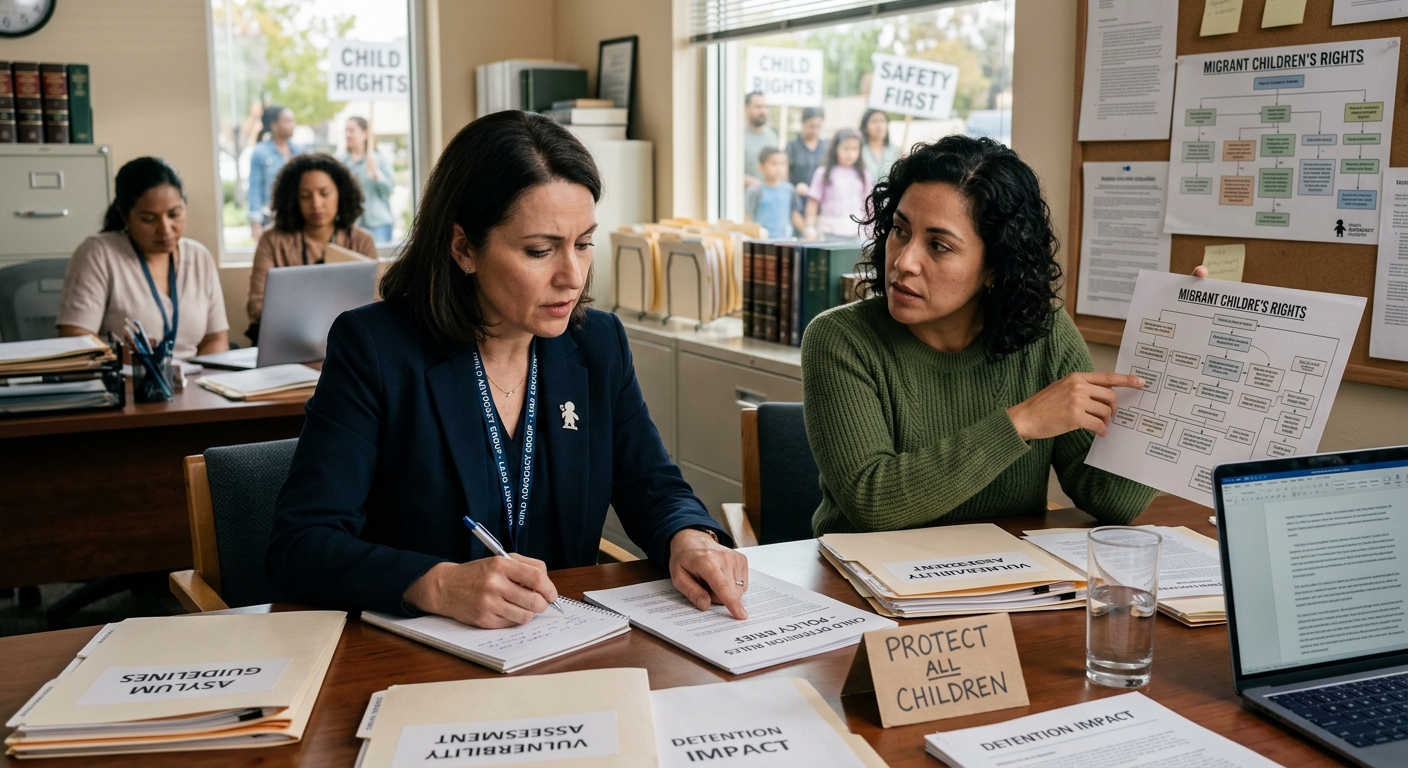
The intersection of national security, immigration enforcement, and fundamental child welfare has long been one of the most contentious battlegrounds in American jurisprudence. In recent years, a renewed push to reform federal immigration policies has placed the well-being of migrant children at the very center of a high-stakes legal and moral debate. Leading advocacy groups, civil rights organizations, and medical experts have launched a coordinated challenge against sweeping new government regulations. These proposed rules aim to fundamentally alter the framework governing the detention of immigrant families and unaccompanied minors, threatening to unravel decades of established humanitarian protections.
For children fleeing violence, poverty, and instability in their home countries, arriving at the United States border is often the culmination of a deeply traumatic journey. Instead of encountering immediate relief, many find themselves placed within a complex and rigid system of federal immigration detention. Historically, child welfare standards were legally enforced to ensure that these detentions were brief, safe, and heavily monitored. However, recent regulatory efforts seek to dismantle these constraints, prioritizing broader immigration deterrence over the psychological and physical safety of the youth in federal custody.
As the legal landscape continues to shift, child advocates are mobilizing across the nation. By deploying aggressive litigation strategies, raising public awareness, and relying on undeniable medical evidence regarding the harms of incarceration, these organizations are fighting to ensure that children’s rights are not sacrificed in the name of border enforcement.
The Historical Baseline: Understanding the Flores Settlement
To grasp the magnitude of the current legal battle, one must first understand the historical framework that has safeguarded migrant children for more than a quarter-century: the Flores Settlement Agreement. Originating from a 1985 lawsuit involving a teenage girl from El Salvador who was subjected to harsh conditions in a juvenile facility, the litigation culminated in a landmark 1997 legal settlement. The Flores Agreement established strict nationwide standards for the treatment, placement, and release of minors in federal immigration custody.
At its core, the agreement rests on a fundamental premise: children are not miniature adults, and their detention must be as brief and humane as possible. Under the Flores stipulations, the government is generally required to release children to a parent, legal guardian, or adult relative without unnecessary delay. If a child cannot be immediately placed with a family member or sponsor, they must be held in the least restrictive setting appropriate for their age, typically a non-secure facility licensed by a state child welfare agency.
Crucially, subsequent judicial interpretations and enforcements of the Flores Agreement established a standard 20-day limit for holding children in unlicensed, secure federal immigration detention centers. For decades, this 20-day benchmark has served as the primary bulwark against the indefinite incarceration of immigrant youth, legally forcing government agencies to expedite processing and prioritize the reunification of families.
The Core of the Conflict: What the New Regulations Propose
The current flashpoint revolves around a concerted effort by federal authorities to replace the Flores Settlement with an entirely new set of regulations. Proponents of the new rules argue that the existing framework is outdated, acts as a magnet for unauthorized migration by encouraging families to travel with minors, and limits the government’s ability to keep families together during lengthy deportation proceedings. In response, federal agencies have sought to codify alternative standards that would grant the government broad discretionary power over how long and under what conditions children can be detained.
Advocacy organizations have meticulously analyzed the new regulations, pointing out several catastrophic shifts in policy that directly threaten children’s rights. Key components of the contentious new rules include:
- Elimination of the 20-Day Limit: The most fiercely debated aspect of the proposed rules is the removal of the 20-day cap on child detention. If fully implemented, this would effectively permit the indefinite detention of children alongside their parents while their complex immigration or asylum cases slowly navigate heavily backlogged court systems.
- Bypassing State Licensing: The new regulations seek to establish an internal, federal licensing or auditing scheme for family residential centers. Advocates argue this is a maneuver to bypass rigorous state-level child welfare licensing, which traditionally ensures independent oversight, frequent safety inspections, and mandated age-appropriate care.
- Lowered Care Standards: Legal experts warn that the proposed guidelines introduce vague language regarding the definition of “safe and sanitary” conditions, potentially lowering the mandated standards for nutrition, medical care, and educational access within these federal detention facilities.
- Expanded Re-detention Protocols: Recent federal enforcement actions have involved re-detaining minors who had previously been released to approved sponsors, severely complicating the legal landscape and alarming child welfare advocates who view this as an unpredictable and traumatizing form of secondary family separation.
The Developmental and Psychological Toll on Youth
The fierce opposition from advocacy groups is not merely rooted in abstract legal theory; it is driven by an overwhelming medical and psychological consensus regarding the catastrophic effects of detention on a child’s development. Leading health organizations have unequivocally stated that there is no safe amount of time for a child to be held in an immigration detention center. The very nature of incarceration—characterized by restricted movement, constant surveillance, and institutional control—is inherently traumatizing for developing youth.
Studies conducted by public health researchers, pediatricians, and child psychologists consistently highlight that even brief periods of detention can trigger profound psychological distress. Children held in these facilities frequently exhibit symptoms of severe anxiety, depression, sleep disturbances, and post-traumatic stress disorder (PTSD). Medical professionals note a high incidence of developmental regression in detained environments, where children temporarily lose previously acquired behavioral milestones, such as language acquisition, social skills, or toilet training.
Furthermore, the physical environment of a detention center actively undermines the foundational parent-child bond. When parents are stripped of their autonomy and are unable to provide basic comforts, children experience a deep sense of insecurity and toxic stress. This prolonged exposure to elevated stress hormones can physically alter the architecture of a developing brain, leading to long-term cognitive and emotional detriments that persist long after the child is eventually released from custody. Advocacy groups rely heavily on these medical realities to argue that the new regulations cross the line from administrative processing into state-sponsored child abuse.
Leading the Charge: How Advocacy Coalitions Are Responding
In the face of these proposed regulatory shifts, a formidable coalition of child rights organizations, immigration attorneys, and civil liberties watchdogs has rapidly mobilized. Groups dedicated to youth law and human rights have adopted a sophisticated, multifaceted strategy to block the implementation of rules that would permit indefinite child detention. This resistance operates simultaneously on several distinct fronts, combining legal muscle with grassroots awareness.
To understand the scope of the resistance, it is helpful to look at the primary domains in which these organizations operate:
| Advocacy Domain | Primary Strategy and Tactics |
|---|---|
| Impact Litigation | Filing federal lawsuits and seeking preliminary injunctions to halt the rollout of harmful regulations before they can take legal root. This includes filing motions to enforce existing settlement agreements. |
| Policy Reform | Lobbying federal lawmakers and engaging with federal agencies to codify the humanitarian protections of the Flores Settlement directly into federal legislation. |
| Public Education | Publishing comprehensive impact reports, hosting press conferences, and disseminating data that translate complex legal jargon into understandable human rights issues for the general public. |
| Facility Monitoring | Conducting independent oversight by visiting detention centers, interviewing detained children and families, and documenting conditions to ensure minimal compliance with human rights standards. |
The cornerstone of this advocacy is federal litigation. Amicus curiae (friend of the court) briefs filed by pediatricians and child development experts provide judges with the empirical data necessary to understand the human cost of these policies. Beyond the courtroom, these coalitions fight to guarantee universal legal representation for unaccompanied children, knowing that a minor navigating the immigration court system alone is virtually guaranteed to lose their case and face deportation to dangerous circumstances.
The Emergence of Unconventional Custody: Open-Air Sites and Border Facilities
The battle over child detention regulations has recently expanded beyond traditional brick-and-mortar facilities due to the emergence of highly unconventional custody arrangements. In recent years, advocates have raised urgent alarms regarding the use of Open-Air Detention Sites (OADS) along the southern border. These makeshift encampments, where migrants are often held for days without adequate shelter, food, or sanitation, represent a glaring violation of the “safe and sanitary” requirements established by decades of legal precedent.
Human rights monitors have documented deeply disturbing scenes: young children sleeping on the bare ground in freezing temperatures, exposed to harsh weather conditions, and severely lacking basic medical attention while awaiting formal processing. Legal organizations have swiftly filed motions to enforce established child protection agreements against these practices, arguing that placing children in open-air sites constitutes a severe dereliction of the government’s duty of care and fundamentally violates their human rights.
The persistence of these conditions underscores the critical importance of independent, third-party oversight. Without advocacy organizations actively challenging these environments, thousands of vulnerable minors would be subjected to severe deprivations entirely outside the view of the general public and the justice system. The fight against these sites is a testament to the ever-evolving nature of immigration enforcement, requiring advocates to remain constantly vigilant against new methods of detention.
The Path Forward for Migrant Child Welfare
As the legal challenges to the new detention regulations continue to navigate the appellate courts, the future of migrant child welfare remains precariously balanced. The outcomes of these high-profile cases will likely dictate the United States’ approach to immigration enforcement and human rights for a generation. Advocates continue to push for a complete paradigm shift that uncouples child welfare from punitive immigration deterrence strategies.
They argue forcefully for community-based alternatives to detention, which have proven to be both highly effective in ensuring court appearances and vastly cheaper for the taxpayer. By providing families with case management and legal counsel rather than locking them behind concrete walls, the government can maintain a functional immigration system without inflicting lifelong trauma on children. Ultimately, the relentless pushback from advocacy organizations serves as a vital democratic check on governmental overreach, demanding that the nation adheres to its fundamental moral obligations to protect the most vulnerable among us, regardless of their country of origin.
Frequently Asked Questions (FAQ)
What is the Flores Settlement Agreement?
The Flores Settlement Agreement is a landmark 1997 legal framework that establishes national minimum standards for the treatment, placement, and release of minors in federal immigration custody. It mandates that children must be held in safe, sanitary conditions and generally limits their detention in unlicensed federal facilities to no more than 20 days.
Why is the government trying to change the rules for detaining migrant children?
Proponents of new regulations argue that current rules limit the government’s ability to deter unauthorized migration and make it difficult to keep families together if deportation proceedings take longer than the mandated 20-day release limit. Administrations have sought to replace these rules to allow for longer periods of family detention in federal facilities.
How does detention impact a child’s health?
Medical experts, including the American Academy of Pediatrics, note that any period of detention is harmful to a child. The experience causes toxic stress, which can lead to severe anxiety, developmental regression, sleep disturbances, and long-term changes to brain architecture resulting in post-traumatic stress disorder (PTSD).
What are Open-Air Detention Sites (OADS)?
Open-Air Detention Sites are informal, outdoor encampments near the border where migrants, including children, have been held by authorities while awaiting formal processing. Advocates argue these sites violate basic human rights as they often lack sufficient food, water, sanitation, and shelter from extreme weather.
Conclusion
The legal battles surrounding the detention of immigrant families and children represent much more than administrative policy disputes; they are a defining test of a nation’s commitment to basic human rights. As federal authorities attempt to enact regulations that could permit the indefinite detention of youth, child advocacy groups stand as the crucial line of defense. By leveraging the courts, public opinion, and irrefutable medical science, these organizations highlight the profound developmental dangers of institutionalizing children. Ensuring that the focus remains on humane treatment and trauma-informed care is essential to protecting the dignity and future of every child who crosses the border seeking safety.
References
- Detention of Immigrant Children — American Academy of Pediatrics (AAP). 2017-05-01. https://publications.aap.org/pediatrics/article/139/5/e20170483/38727/Detention-of-Immigrant-Children
- Mechanisms of Deterrence: Federal Immigration Policies and the Erosion of Immigrant Children’s Rights — National Institutes of Health (PMC). 2019-11-20. https://www.ncbi.nlm.nih.gov/pmc/articles/PMC7005435/
- Independent experts alarmed by child rights violations in US immigration procedures — UN Office of the High Commissioner for Human Rights (OHCHR). 2026-01-27. https://www.ohchr.org/en/press-releases/2026/01/independent-experts-alarmed-child-rights-violations-us-immigration
- Children in ICE Detention Skyrocket in Trump’s Second Term — The Marshall Project. 2026-01-29. https://www.themarshallproject.org/2026/01/29/ice-immigrant-children-detention-trump
Similar Articles








Read full bio of medha deb




