
Opening a Checking Account Without an SSN or Driver’s License
Learn how to open a U.S. checking account without a Social Security number or driver’s license using alternative forms of identification.
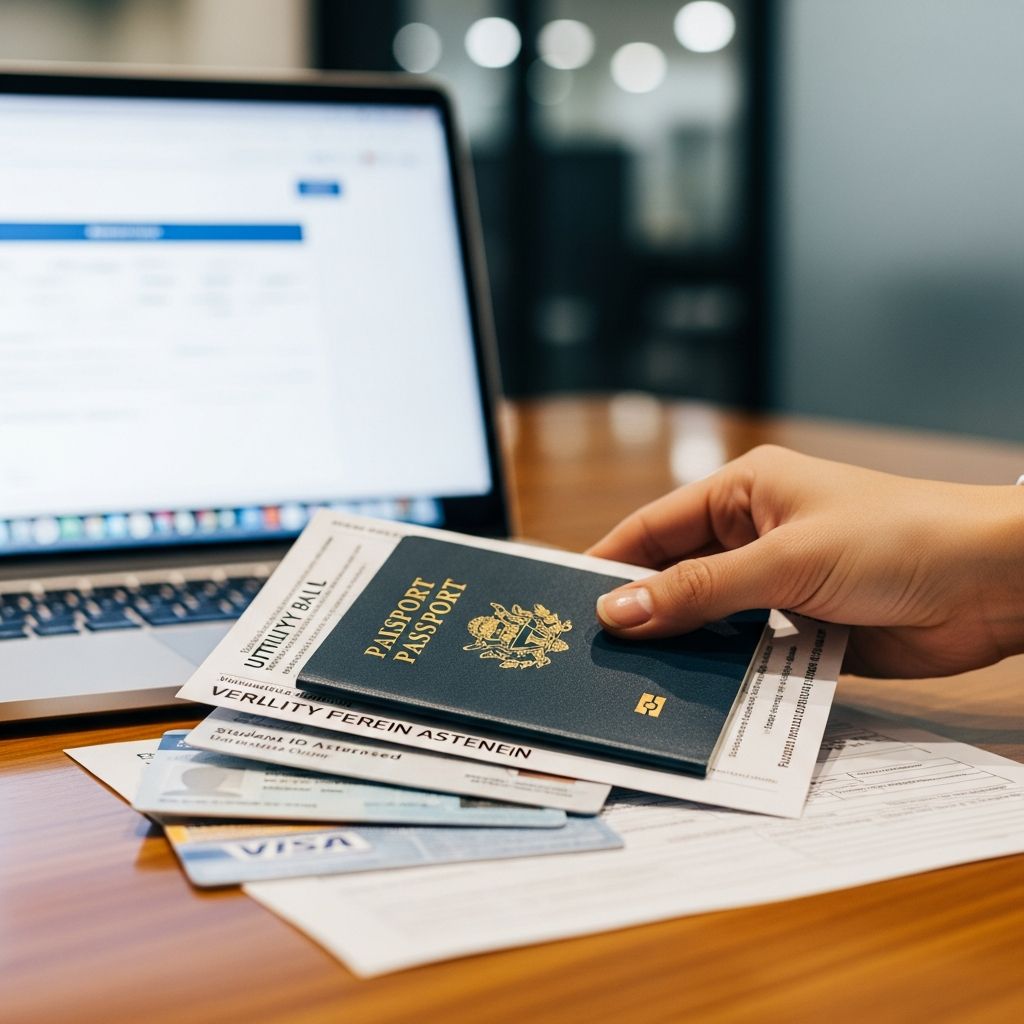
Many people living, working, or studying in the United States need a safe place to keep money, pay bills, and receive wages, but do not have a Social Security number (SSN) or a U.S. driver’s license. Federal law does not require banks to collect an SSN or a driver’s license from every customer in all situations. Instead, banks must verify a customer’s identity using reliable information and documents, and they have flexibility in how they do that.
This guide explains what rules apply, which documents banks may accept instead of an SSN or driver’s license, and practical steps you can take to open a checking account even if you are undocumented, a nonresident, or simply do not drive.
Why Banks Ask for Identification
Banks and credit unions must follow “Customer Identification Program” (CIP) rules issued under the Bank Secrecy Act and related anti–money laundering laws. These rules require each financial institution to collect enough information to form a reasonable belief that it knows the true identity of every customer.
Typical information collected includes:
- Full legal name
- Date of birth (for individuals)
- Physical address (residential or business address; for some people, an Army Post Office or Fleet Post Office address is used)
- Identification number (for example, SSN, taxpayer ID, or other government-issued number)
How a bank verifies this information is largely up to that institution, as long as its policy meets or exceeds the federal standards. That is why one bank might insist on a specific document, while another bank in the same city may accept several alternatives.
Do You Legally Need an SSN to Open a Bank Account?
There is no federal law that universally requires an SSN to open a checking or savings account for every type of customer. What is required is an identification number, which can be one of several options, especially for people who are not eligible for an SSN.
Banks often request an SSN because:
- It is a standard way to verify identity within U.S. systems.
- Interest-bearing accounts can require tax reporting to the Internal Revenue Service (IRS).
- Internal systems and applications are designed with SSNs in mind.
However, according to the IRS and major U.S. banks, many nonresidents and individuals without SSNs can open accounts using an Individual Taxpayer Identification Number (ITIN) or other allowed documentation.
Alternative Identification Numbers Banks May Accept
| Type of Number | Who Uses It | Typical Use in Banking |
|---|---|---|
| Social Security Number (SSN) | U.S. citizens and eligible residents | Common for most personal accounts and tax reporting |
| Individual Taxpayer Identification Number (ITIN) | People not eligible for SSN but with U.S. tax obligations | Often accepted in place of SSN for nonresidents or undocumented filers |
| Foreign Passport Number | Nonresidents, visitors, students | Identity verification; sometimes paired with ITIN or other documents |
| Alien Registration/USCIS Number | Some noncitizens with immigration documents | May be used for identity purposes depending on bank policy |
Opening a Checking Account Without a Driver’s License
A U.S. driver’s license is only one form of acceptable identification. If you do not drive, are not eligible for a license, or have a foreign license, you can often use other documents instead. Many banks state publicly that they accept different combinations of primary and secondary IDs.
Common Primary Identification Documents
Banks and credit unions frequently accept one of the following as a primary ID:
- U.S. passport
- Foreign passport
- State-issued identification card (non-driver ID)
- U.S. permanent resident card (green card)
- Military ID
- Consular identification card (such as a matrícula consular issued by a foreign consulate)
Secondary Identification and Supporting Documents
In addition to a primary ID, a bank may ask for one or more supporting documents to confirm your identity and address. Examples include:
- Debit or credit card with your name
- Student ID card or employer ID badge
- Recent utility bill, lease, or bank statement with your name and address
- Official school enrollment letter or pay stub showing your address
Each institution designs its own acceptable-document list, so it is important to ask a representative what combinations they will accept before you apply.
Options for People Without an SSN
If you do not have an SSN, you still have several possible paths to opening a checking account. The best option depends on your immigration status, whether you have U.S. tax obligations, and what type of account you need.
Using an ITIN in Place of an SSN
The Internal Revenue Service issues Individual Taxpayer Identification Numbers to people who are not eligible for an SSN but must file a U.S. tax return or report certain types of income. Many major banks and credit unions accept ITINs in place of SSNs for opening bank accounts.
To obtain an ITIN, you generally must:
- Complete IRS Form W-7 (Application for IRS Individual Taxpayer Identification Number).
- Provide original or certified copies of identity and foreign status documents, such as a passport or national ID card.
- Submit a federal tax return or other allowable documentation that justifies your need for an ITIN, unless you qualify for an exception.
The IRS processes ITIN applications by mail, in person at certain IRS offices, or through authorized acceptance agents. Processing can take several weeks, so plan ahead if you need an ITIN for banking.
Opening an Account as a Nonresident Without an SSN
Nonresidents—such as international students, temporary workers, or visitors—may be able to open a U.S. bank account using a combination of documents even before obtaining an SSN. Major banks that offer nonresident accounts typically request:
- Valid foreign passport
- Proof of local address (such as a lease, utility bill, or university housing letter)
- Visa document (such as an I-20 for F-1 students or DS-2019 for exchange visitors)
- ITIN, foreign taxpayer number, or completion of IRS Form W-8BEN if no U.S. tax ID is available
Many banks emphasize that you do not need to be a U.S. citizen or permanent resident to open an account, but you must be able to prove your identity and provide the requested tax information for any interest-bearing accounts.
Undocumented Immigrants and Checking Accounts
Undocumented immigrants can often open bank accounts at institutions that explicitly accept nontraditional forms of identification and that do not require an SSN. Consumer-focused resources and some financial institutions highlight that this can help people avoid high-cost alternatives such as check cashers and money orders, and can offer safer ways to store money.
Banks and credit unions that are known for working with customers who lack SSNs may accept:
- Consular ID cards
- Foreign passports
- Individual Taxpayer Identification Numbers (ITINs), if available
- Birth certificates and other official documents as part of a larger set of IDs
Because undocumented status can be sensitive, many people prefer to choose institutions with clear public statements or community partnerships indicating they serve immigrants regardless of status.
What to Ask a Bank Before You Apply
Bank policies can vary widely. Before visiting a branch or starting an online application, contact the institution to clarify its requirements. Some key questions include:
- Do you require an SSN, or will you accept an ITIN or foreign ID number?
- What forms of primary and secondary identification do you accept?
- Can I open an account if I am not a U.S. citizen or permanent resident?
- Do you require proof of U.S. address? If so, what documents are acceptable?
- Is there a special account type for nonresidents or people without SSNs?
- Can I apply in person if your online system requires an SSN field?
Getting these answers in advance helps you avoid unnecessary denials and ensures you bring the right documents.
Step-by-Step: Opening a Checking Account Without SSN or Driver’s License
- Identify banks or credit unions that work with nontraditional IDs.
Look for institutions that publicly mention accepting ITINs, foreign passports, or consular IDs, or that have programs for international students or immigrants. - Collect your identification documents.
Prepare a primary ID (such as a passport or consular ID) and at least one secondary document (for example, a student ID and a utility bill). Confirm in advance which combinations are acceptable. - Gather proof of address.
If you have a lease, electricity or internet bill, bank statement, or official letter from a school or employer that shows your name and address, bring it with you. Some banks accept digital copies if you apply online. - Determine whether you need an ITIN.
If the bank requires a U.S. tax ID for the type of account you want and you do not qualify for an SSN, consider applying for an ITIN through the IRS. Use Form W-7 and provide the required documents. - Visit a branch if online forms require an SSN.
Many online applications are designed around SSNs and may not handle alternatives well. In-person staff may be able to bypass those fields or use other procedures for nonresidents and people with ITINs. - Review account terms carefully.
Ask about monthly fees, minimum balance requirements, ATM networks, and overdraft policies. Nonresident accounts may have different fee structures or limitations.
If a Bank Denies Your Application
Even when you provide acceptable documents, a bank can decline to open an account for various reasons, including internal risk policies or incomplete identification. If that happens, you may consider:
- Requesting an explanation. Ask whether the denial was due to missing documents, internal rules, a consumer report on your banking history, or another reason.
- Trying another institution. Some banks and credit unions have more flexible policies and more experience with nonresidents, international students, and undocumented immigrants.
- Considering a basic or non-interest account. A simpler account may require less tax-related documentation than an interest-bearing account.
- Exploring reputable digital accounts. Certain online or mobile providers can offer checking-like services to nonresidents, though you should verify that they are properly licensed and insured.
Staying Safe and Protecting Your Information
When you open a checking account using alternative forms of ID, you may feel pressure to share sensitive documents or personal details. To protect yourself:
- Only share documents directly with the bank or credit union. Do not give copies of your passport or consular ID to people who claim they can “help” open an account unless they are officially authorized representatives.
- Confirm that deposits are insured. Look for FDIC insurance (for banks) or NCUA insurance (for federal credit unions). This protects your deposits up to applicable limits if the institution fails.
- Keep your address and contact information updated. Banks send statements, tax forms, and security notices by mail or email. Outdated contact information can create problems.
- Review statements regularly. Check for unauthorized withdrawals or fees you did not expect, and contact the bank promptly if you see errors.
Frequently Asked Questions (FAQs)
Can I open a checking account without a Social Security number?
Yes. Many institutions allow customers to open accounts using an Individual Taxpayer Identification Number (ITIN) or other government-issued identification numbers instead of an SSN, particularly for nonresidents or people who are not eligible for an SSN.
Can I get a checking account if I do not have a driver’s license?
Yes. A driver’s license is just one form of ID. Banks often accept passports, state ID cards, consular IDs, and other government IDs, sometimes combined with secondary documents such as utility bills or student IDs.
What if I am undocumented?
Many banks and credit unions serve undocumented customers using alternative IDs such as foreign passports, consular IDs, and ITINs. Policies vary, so you should ask the institution directly which documents they accept and whether they require any U.S. tax identification number.
Do I have to give a U.S. address?
Most banks require a physical address for account records, but some may allow a foreign address for nonresident accounts while still asking for a U.S. mailing address for correspondence. You can usually prove address with a lease, utility bill, or official letter.
Is an ITIN the same thing as an SSN?
No. An ITIN is a tax identification number issued by the IRS for people who are not eligible for an SSN but have U.S. tax reporting obligations. It is used for tax and certain financial purposes but does not grant work authorization or immigration status.
References
- How to open US bank account for non residents — PNC Bank. 2023-06-15. https://www.pnc.com/insights/personal-finance/spend/how-to-open-us-bank-account-for-non-residents.html
- How to open a bank account in the US without an SSN? — Wise US Blog. 2023-03-01. https://wise.com/us/blog/bank-account-without-ssn
- How to Open a U.S. Bank Account for Non-Residents — JPMorgan Chase Bank. 2023-07-20. https://www.chase.com/personal/banking/education/basics/us-bank-account-for-non-residents
- How Undocumented Immigrants Can Get Bank Accounts — NerdWallet. 2024-01-10. https://www.nerdwallet.com/banking/learn/undocumented-immigrants-bank-accounts
- Your guide to opening a U.S. bank account without a Social Security number — MPOWER Financing. 2022-09-08. https://www.mpowerfinancing.com/blog/your-guide-to-opening-a-us-bank-account-without-a-social-security-number
- Is it possible to open a bank account, get a credit card, or purchase a cell phone plan without an SSN? — Harvard International Office. 2024-02-05. https://www.hio.harvard.edu/it-possible-open-bank-account-get-credit-card-or-purchase-cell-phone-plan-without-ssn
- What you’ll need to open an Everyday Checking account — Wells Fargo Bank. 2024-03-01. https://www.wellsfargo.com/checking/everyday/identification-required-to-open/
- Open a U.S. Bank Account for Non-Residents and Non-Citizens — Bank of America. 2023-11-10. https://info.bankofamerica.com/en/international/us-bank-account-non-residents
Similar Articles








Read full bio of Sneha Tete


