
Championing Equality: The Legal Crusade for Trans Protections
Inside the strategic courtroom battles defending transgender civil liberties.
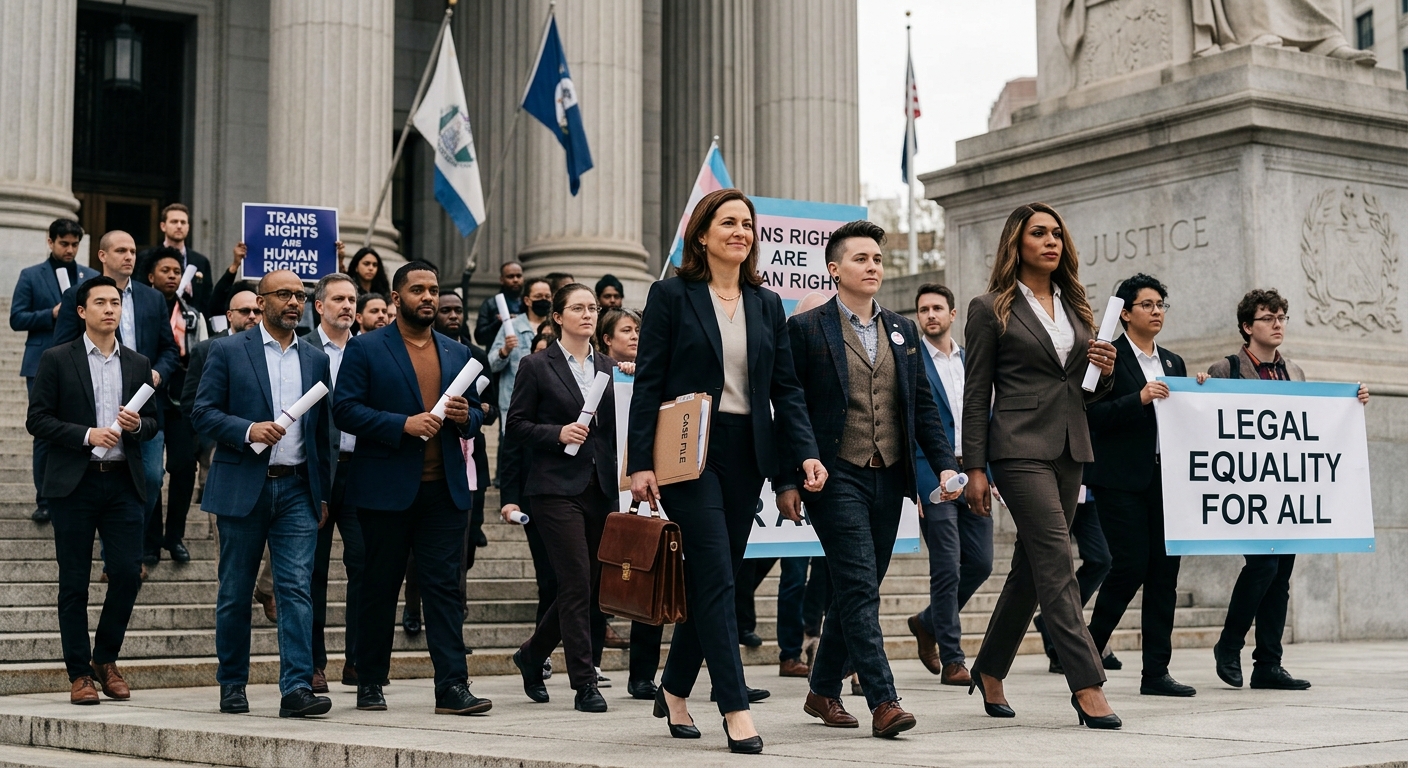
The Dawn of a New Civil Rights Era
Over the past several years, the United States has found itself at the epicenter of a profound legal, cultural, and political conflict surrounding transgender rights. Across dozens of state legislatures, a highly coordinated and unprecedented wave of legislative measures has been introduced and enacted. These laws explicitly target the bodily autonomy, public existence, and fundamental civil liberties of transgender individuals—with a disproportionate and alarming focus on vulnerable youth. In response to this legislative onslaught, a formidable and resilient coalition of civil rights attorneys, nationwide advocacy organizations, leading medical professionals, and incredibly courageous families has mobilized. Their chosen arena is the federal and state court systems, and their objective is unequivocal: to secure emergency injunctions, permanently halt discriminatory statutes, and establish durable legal precedents that guarantee the fundamental rights of all transgender Americans.
This widespread and complex litigation is not merely a transient political debate; it represents a foundational fight for equal protection, inherent human dignity, and the constitutional right to exist without enduring state-sponsored marginalization. Advocates recognize that the outcomes of these contemporary courtroom clashes will not only dictate the immediate safety and healthcare access of hundreds of thousands of individuals but will also define the trajectory of American civil rights jurisprudence for generations to come.
Decoding the Legislative Assault on Autonomy
To fully grasp the magnitude of the legal defense being mounted, one must first understand the unprecedented nature of the legislative attacks. The current array of anti-transgender bills generally falls into two distinct but related categories: categorical bans on medically necessary gender-affirming healthcare and restrictive measures designed to expel transgender individuals from public life, particularly in educational and athletic settings. State legislatures have passed sweeping laws that criminalize medical providers for adhering to established clinical guidelines, penalize parents for seeking optimal medical care for their children, and forcefully detransition adolescents who have been thriving under their current medical regimens.
Simultaneously, numerous states have enacted extreme sports bans that mandate biological sex verification, stripping transgender youth of the right to participate in school athletics and depriving them of the profound psychological and social benefits of team camaraderie. These legislative efforts frequently utilize volatile rhetoric and rely on debunked pseudoscientific claims to justify the systemic exclusion of a marginalized minority. In the face of these sophisticated political maneuvers, civil rights lawyers have been forced into a rapid-response posture, filing complex federal lawsuits mere hours after discriminatory bills are signed into law. The legal strategy hinges on exposing these statutes not as protective measures, but as targeted campaigns of animus designed to erase transgender people from the fabric of society.
The Unequivocal Medical Consensus on Gender-Affirming Care
A central pillar of the legal argument against healthcare bans is the overwhelming, unequivocal consensus of the broader medical and scientific communities. The American Medical Association (AMA), along with the American Academy of Pediatrics (AAP), the American Psychiatric Association, and the Endocrine Society, universally recognize gender-affirming care as evidence-based, medically necessary, and frequently lifesaving. During litigation, expert witnesses repeatedly testify that treatments such as puberty-delaying medications and hormone therapy are standard medical practices tailored to alleviate gender dysphoria—a recognized and intensely painful psychological condition.
The AMA has forcefully urged state governments to cease their interference in the patient-physician relationship, explicitly classifying legislative bans on transition-related care for minors as a “dangerous intrusion into the practice of medicine”. Extensive clinical research presented in court demonstrates that when transgender youth are denied access to these critical interventions, they face catastrophic spikes in anxiety, severe depression, and suicidality. Conversely, youth who receive timely and appropriate gender-affirming care exhibit dramatically improved mental health outcomes, aligning closely with their cisgender peers. In the courtroom, attorneys systematically dismantle the state’s assertions that these medical treatments are “experimental,” utilizing decades of peer-reviewed data and the comprehensive guidelines set forth by the World Professional Association for Transgender Health (WPATH) to prove that denying care constitutes an egregious and unconstitutional harm.
Constitutional Battlegrounds: Equal Protection and Due Process
At the heart of nearly every lawsuit defending transgender rights lies the Fourteenth Amendment of the United States Constitution, specifically the Equal Protection and Due Process Clauses. The Equal Protection Clause mandates that no state shall deny to any person within its jurisdiction the equal protection of the laws. Civil rights advocates argue forcefully that laws targeting transgender individuals intentionally single out a vulnerable minority class for disparate, punitive treatment. The core legal debate often centers on the “standard of review” that courts should apply. If a court determines that a law discriminates on the basis of sex or transgender status, the state must pass the rigorous test of “heightened” or “intermediate scrutiny,” requiring the government to prove that the law serves an important objective and is substantially related to achieving that goal.
A prominent example of this constitutional battle is the litigation surrounding state-level healthcare bans, such as the case of United States v. Skrmetti, which challenges Tennessee’s prohibition on puberty blockers and hormone therapies for minors. In these high-stakes hearings, advocates argue that because the state permits cisgender children to receive the exact same hormones for different medical conditions (such as precocious puberty), banning them solely for the treatment of gender dysphoria is a blatant, textbook violation of equal protection based on sex and gender nonconformity. Furthermore, plaintiffs invoke the Due Process Clause, asserting that these bans infringe upon the fundamental rights of parents to direct the medical care and upbringing of their children without unwarranted state interference.
Title IX and the Fight for Inclusive Athletics
Beyond healthcare, the federal courts are heavily engaged in deciding the future of transgender students’ participation in educational programs and school athletics. The primary legal instrument utilized in these cases is Title IX of the Education Amendments of 1972, a landmark federal civil rights law that prohibits sex-based discrimination in any school or education program receiving federal funding. Civil liberties organizations have filed multiple federal lawsuits arguing that categorical sports bans inherently violate Title IX by depriving transgender girls and boys of equal educational opportunities.
Cases like Little v. Hecox, which challenges Idaho’s restrictive athletic bans, highlight the discriminatory nature of laws that subject young athletes to invasive physiological scrutiny and mandate exclusion based on immutable characteristics. Attorneys emphasize that Title IX was designed to ensure fairness and equal opportunity for all students, and that weaponizing the statute to ostracize a marginalized group directly contradicts its foundational purpose. The courts are thus tasked with reconciling the genuine goals of athletic fairness with the constitutional imperative to protect transgender youth from arbitrary and damaging exclusion.
Key Legal Showdowns in the Federal Courts
To understand the breadth of the current legal defense strategy, one must examine the specific high-profile cases currently making their way through the federal appellate courts and up to the Supreme Court. The table below outlines several of the most consequential legal battles shaping the future of transgender rights in the United States.
| Case Name | Core Issue | Primary Legal Argument |
|---|---|---|
| United States v. Skrmetti | Bans on gender-affirming medical care for minors in Tennessee. | Violation of the 14th Amendment Equal Protection Clause due to sex-based discrimination in healthcare access. |
| Little v. Hecox | Categorical prohibition of transgender women and girls participating in female scholastic sports in Idaho. | Violation of the Equal Protection Clause by creating a quasi-suspect classification that unfairly marginalizes transgender athletes. |
| Withrow v. United States | Employment and facility discrimination against transgender service members in the military and government sectors. | Violation of Title VII of the Civil Rights Act of 1964, prohibiting targeted sex discrimination in federal employment. |
The Human Element: Courageous Plaintiffs Leading the Charge
While appellate rulings, constitutional theories, and medical statistics form the structural backbone of these lawsuits, the true driving force behind the legal defense of transgender rights is the profound courage of the plaintiffs. The individuals at the center of these cases are often young teenagers, supportive parents, and dedicated medical providers who have made the agonizing decision to step into the intense glare of the public and legal spotlight. By attaching their names and deeply personal life stories to federal complaints, these families humanize the abstract legal debates.
The toll of serving as a civil rights plaintiff cannot be overstated. These families endure invasive legal discovery, relentless media scrutiny, and the emotional trauma of having their inherent identities debated by politicians and judges. Yet, it is precisely their willingness to share their truth that proves most effective in court. When a federal judge listens to a parent describe the transformation of a severely depressed child into a thriving, joyful teenager following gender-affirming care, the state’s abstract arguments regarding “protecting youth” quickly unravel. These courageous individuals are the indispensable vanguard of the movement, risking their privacy to ensure that future generations can live authentically.
Long-Term Strategies for Durable Equality
The fight for transgender civil liberties is undeniably a long-term strategic endeavor. Civil rights litigators understand that the ideological composition of the current federal judiciary presents significant challenges. Consequently, the legal strategy extends far beyond seeking immediate preliminary injunctions. Attorneys are meticulously building robust, unassailable evidentiary records at the district court level—records filled with sworn expert testimony, comprehensive medical data, and undeniable proof of the harm caused by anti-transgender legislation. By establishing these ironclad facts in the lower courts, advocates make it significantly more difficult for hostile appellate panels to dismiss their claims without blatantly ignoring the established evidentiary record. The ultimate goal is to generate a critical mass of judicial precedent that recognizes transgender individuals as a protected class, thereby shielding them from the shifting winds of partisan state politics.
Frequently Asked Questions (FAQ)
- What exactly constitutes gender-affirming care for minors?
For prepubescent children, gender-affirming care is entirely social, encompassing changes in name, pronouns, and clothing. For adolescents experiencing the onset of puberty, care may involve fully reversible puberty-delaying medications, which grant families time to make informed decisions. Older adolescents, after extensive consultation with medical and mental health professionals, may receive gender-affirming hormone therapy. Surgical interventions are exceedingly rare for minors and are generally reserved for adulthood. - How does the 14th Amendment’s Equal Protection Clause apply to these cases?
The Equal Protection Clause prohibits states from denying any person equal protection under the law. Advocates argue that laws banning gender-affirming care or targeting transgender individuals classify and discriminate against citizens based on their sex and their failure to conform to traditional gender stereotypes. Such sex-based classifications legally require courts to apply intermediate scrutiny, forcing the state to provide a substantial justification for the discrimination—a burden states consistently fail to meet in trial courts. - What role does Title IX play in the legal defense of transgender athletes?
Enacted in 1972, Title IX prohibits sex-based discrimination in federally funded educational institutions. Recent legal interpretations and federal agency guidance have affirmed that discrimination on the basis of gender identity is a form of sex discrimination. Therefore, advocates utilize Title IX to sue states and school districts that categorically ban transgender students from participating in sports teams that align with their gender identity. - Why do major medical organizations overwhelmingly oppose legislative bans on gender-affirming healthcare?
Leading institutions like the American Medical Association oppose these bans because they represent a dangerous governmental intrusion into the private practice of medicine. The consensus is based on decades of peer-reviewed clinical research demonstrating that gender-affirming care significantly reduces rates of depression, anxiety, and suicide among transgender youth. Medical professionals argue that healthcare decisions should remain exclusively between a patient, their family, and their doctor, rather than being dictated by politicians.
References
- AMA to states: Stop interfering in health care of transgender children — American Medical Association. 2021-04-26. https://www.ama-assn.org/press-center/press-releases/ama-states-stop-interfering-health-care-transgender-children
- United States v. Skrmetti — Legal Information Institute, Cornell Law School. 2025-06-18. https://www.law.cornell.edu/supct/cert/united_states_v_skrmetti
- Little v. Hecox — Legal Information Institute, Cornell Law School. 2026-01-13. https://www.law.cornell.edu/supct/cert/little_v_hecox
- Court Cases – Transgender People and Discrimination — American Civil Liberties Union (ACLU). 2026-05-29. https://www.aclu.org/court-cases
Similar Articles








Read full bio of medha deb


