
Challenging Radar Gun Readings in Traffic Court
Discover proven strategies to contest radar gun evidence and potentially dismiss speeding tickets in court proceedings.
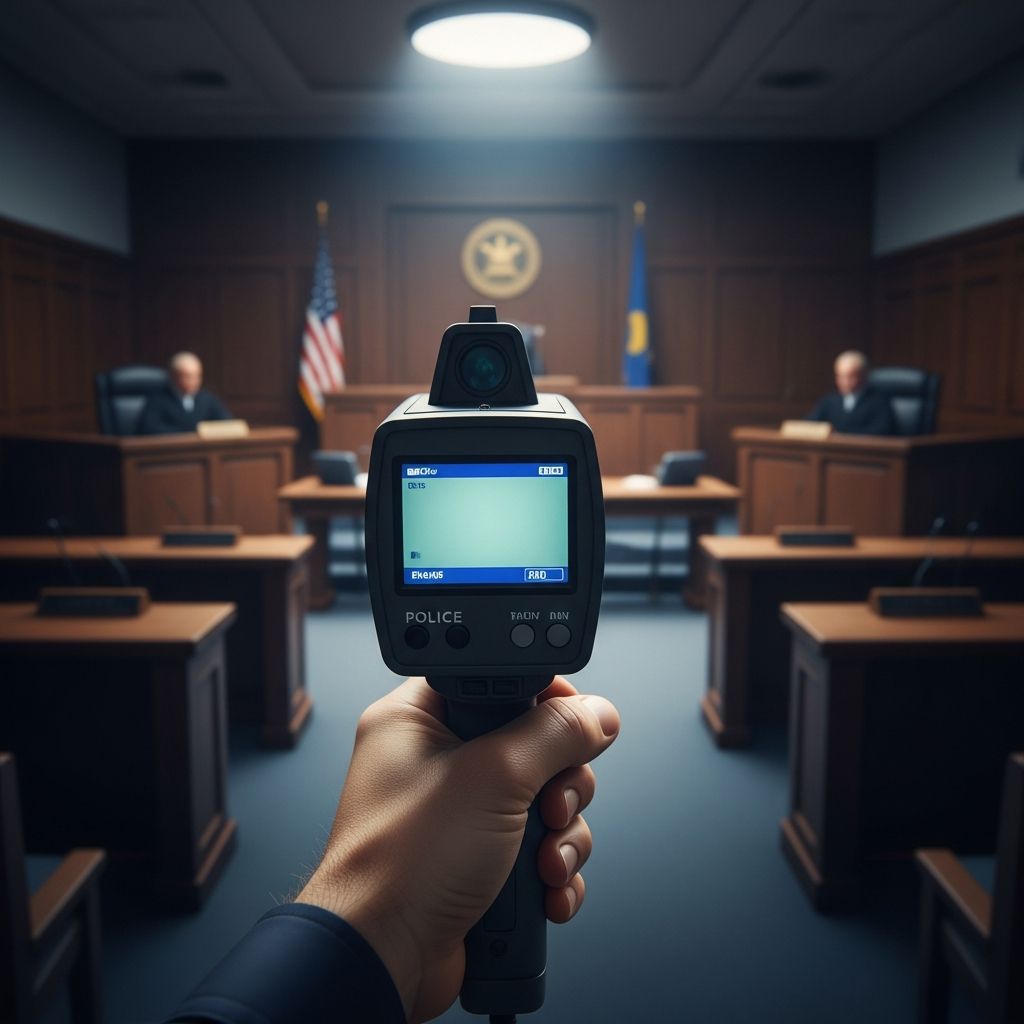
Radar guns serve as primary tools for law enforcement to measure vehicle speeds, but their readings are not infallible. Drivers facing speeding citations can mount credible defenses by scrutinizing device maintenance, operator expertise, and external influences that compromise accuracy. This comprehensive guide outlines actionable steps to question radar evidence, empowering you to present a compelling case in court.
Understanding Radar Technology and Its Vulnerabilities
Police radar devices emit radio waves that bounce off moving vehicles, calculating speed via the Doppler effect—the shift in wave frequency caused by motion. While reliable under ideal conditions, these tools are susceptible to errors from cosine errors, where oblique angles distort readings, or multipath interference, when signals reflect off nearby objects like signs or other cars.
Modern handheld and stationary radars have improved, yet lapses in protocol persist. Courts increasingly demand proof of proper use, recognizing that unverified readings fail to meet evidentiary standards. Challenging these begins with grasping how minor deviations yield significant inaccuracies.
- Doppler Principle Basics: Waves lengthen for receding targets and shorten for approaching ones, enabling speed computation.
- Common Pitfalls: Handheld units require steady aiming; shakes or poor positioning inflate speeds.
- Instant-On Mode Risks: Sudden activations can capture transient signals from passing traffic.
Key Grounds for Contesting Radar Accuracy
Successful challenges hinge on exposing procedural flaws. Focus on three pillars: device calibration, officer certification, and operational context. Each provides leverage to introduce reasonable doubt.
Scrutinizing Calibration and Maintenance Logs
Radar units must undergo regular tuning with certified tuning forks or internal tests to ensure precision within manufacturer tolerances, typically ±1 mph. Absent recent logs—often required daily or per shift—readings lose admissibility. Request these via discovery or public records acts, revealing delays or improper methods.
For instance, if calibration occurred weeks prior or used unverified tools, argue systemic unreliability. Courts have dismissed cases where agencies failed to produce documentation, underscoring the burden on prosecution to validate equipment.
Verifying Officer Training and Proficiency
Manufacturers mandate certified training, often 8-16 hours, covering theory, calibration, and targeting. Uncertified operators risk misapplication, such as failing to isolate targets in traffic. Demand training certificates; gaps here undermine testimony.
Cross-examine on specifics: Did the officer confirm a stationary reading before targeting? In multi-vehicle scenarios, could signals have locked onto a faster car? Inexperienced handling amplifies these risks.
Environmental and Situational Interference
Adverse conditions degrade performance. Rain, snow, or foliage scatters beams; hills cause ground clutter; heavy traffic invites crosstalk. Nighttime or curved roads compound aiming difficulties, potentially registering speeds from adjacent vehicles.
| Factor | Impact on Reading | Defense Strategy |
|---|---|---|
| Heavy Traffic | Signal bounce from faster vehicles | Question target identification |
| Weather (Rain/Snow) | Beam attenuation and scatter | Highlight visibility logs |
| Road Geometry (Curves/Hills) | Cosine error amplification | Request site photos/diagrams |
| Nearby Objects (Signs/Trees) | Multipath reflections | Argue non-line-of-sight issues |
Step-by-Step Guide to Building Your Defense
Systematic preparation turns skepticism into victory. Follow this roadmap from citation to courtroom.
- Review the Ticket Immediately: Note radar model, reading time, and location. Photograph the scene for context.
- Request Discovery Materials: Submit formal demands for calibration certificates, maintenance history, officer training records, and dispatch logs. Use state-specific forms or FOIA equivalents.
- Gather Counter-Evidence: Calibrate your speedometer at a certified shop; secure dashcam footage or witness statements affirming moderate speed.
- Consult a Specialist: Traffic attorneys know local judges’ preferences and radar precedents, often securing reductions pre-trial.
- Prepare Your Testimony: Practice concise narratives emphasizing doubt without confrontation.
Plead not guilty at arraignment to trigger discovery. Many jurisdictions offer pre-trial conferences where weak evidence prompts dismissals or pleas to non-moving violations.
Courtroom Tactics for Maximum Impact
In trial, poise and precision prevail. Begin with stipulations to calibration if provided, then pivot to usage flaws. Pose targeted questions:
- Did you calibrate immediately before/after the stop?
- How did you distinguish my vehicle in traffic?
- Were environmental factors noted in your report?
Respectfully highlight inconsistencies—e.g., vague recall of conditions signals fabrication. If the officer no-shows, cases often collapse. Visual aids like diagrams of interference paths bolster arguments.
Motion to suppress evidence pre-trial if records are incomplete; success rates climb with documented lapses. Judges weigh scientific reliability, dismissing where foundations crumble.
Real-World Success Stories and Lessons
Courts nationwide have invalidated radar evidence. In one Illinois case, absent tuning fork verification led to acquittal. New York drivers prevailed by proving inadequate targeting amid congestion. A Texas motorist exposed expired certification, prompting dismissal.
These victories share themes: thorough discovery, expert questioning, and exploiting oversights. Statistics indicate 20-30% of contested tickets result in reductions or dismissals, per legal analyses, rewarding persistence.
Potential Outcomes and Risk Management
Fighting yields varied results: full dismissal, reduced charges (e.g., 10-over to 5-over), or point minimization. Fines drop significantly; insurance hikes avert. Worst case? Conviction with costs, but calibrated speedometer evidence often sways judges.
Weigh time investment—typically 4-8 hours—against $200+ fines and 3-6 points. For habitual offenders, victories preserve licenses.
Frequently Asked Questions
Can I challenge a radar ticket without a lawyer?
Yes, many succeed pro se by focusing on records and conditions, but attorneys boost odds through nuanced cross-examination.
How soon must I request radar records?
Within 10-30 days post-arraignment, varying by jurisdiction; delays risk waiver.
Do all states admit radar evidence equally?
No; some require foundational testimony, others presume reliability absent objection.
What if the radar was LIDAR instead?
LIDAR (laser) demands similar scrutiny: beam divergence, training, and calibration.
Will fighting raise my insurance?
Not if dismissed; non-point pleas minimize impacts.
Empowering Your Right to a Fair Hearing
Speeding citations burden thousands daily, but radar’s aura of perfection masks contestable flaws. Armed with knowledge of calibration imperatives, training mandates, and interference realities, drivers reclaim agency. Proactive steps—from discovery requests to courtroom poise—transform daunting proceedings into winnable battles. Consult local rules, document meticulously, and approach with confidence; justice favors the prepared.
References
- National Highway Traffic Safety Administration – Radar Gun Accuracy Guidelines — NHTSA. 2023-05-15. https://www.nhtsa.gov/equipment/law-enforcement/radar-lidar
- International Association of Chiefs of Police – Speed Measuring Device Training Standards — IACP. 2024-02-10. https://www.theiacp.org/resources/document/speed-measuring-devices
- Federal Highway Administration – Traffic Enforcement Technology Report — FHWA. 2022-11-20. https://highways.dot.gov/safety/speed-management/traffic-enforcement
- Reuters – Court Rulings on Radar Evidence in Traffic Cases — Reuters. 2025-01-05. https://www.reuters.com/legal/traffic-radar-challenges-2025
- National Institute of Standards and Technology – Doppler Radar Calibration Protocols — NIST. 2023-08-12. https://www.nist.gov/programs-projects/radar-metrology
Similar Articles








Read full bio of Sneha Tete




