
Challenging Radar Gun Evidence in Traffic Court
Learn how to question radar gun accuracy and build a strong defense against a speeding ticket.
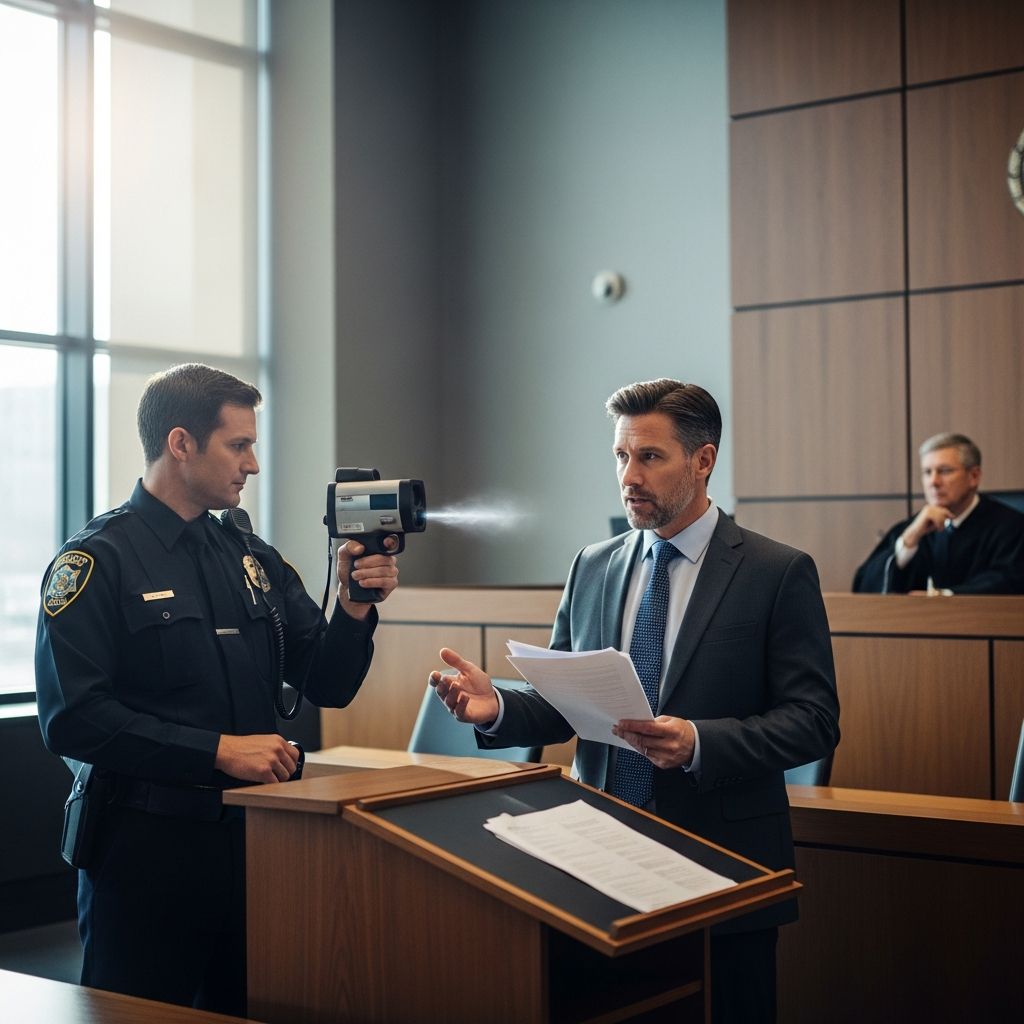
Understanding Radar Gun Evidence in Speeding Cases
When a police officer issues a speeding ticket based on a radar gun reading, many drivers assume the case is closed. After all, radar is a scientific tool, and the number on the display seems objective. But in reality, radar readings are not automatic proof of guilt. Like any measurement device, radar guns are subject to error, misuse, and procedural flaws that can be challenged in court.
Successfully defending against a radar-based speeding ticket requires more than just saying the officer was wrong. It involves understanding how radar works, what the prosecution must prove, and where the evidence can break down. With the right preparation and legal strategy, it is possible to create reasonable doubt about the accuracy of the radar reading and potentially get the ticket dismissed or reduced.
How Radar Guns Measure Speed
Radar guns used by law enforcement operate on the Doppler principle. They emit a radio wave that bounces off a moving vehicle and returns to the device. The change in frequency between the transmitted and reflected waves is used to calculate the vehicle’s speed.
There are two main types of radar used in traffic enforcement:
- Stationary radar – The officer is parked and measures the speed of approaching or receding vehicles.
- Mobile radar – The radar is used while the patrol car is moving, measuring the relative speed between the patrol car and the target vehicle.
Some departments also use LIDAR (laser) devices, which work similarly but use light pulses instead of radio waves. Both technologies can be accurate when used correctly, but both are also vulnerable to specific types of error.
What the Prosecution Must Prove
In most jurisdictions, the prosecution cannot rely solely on a radar reading to secure a conviction. They must establish that:
- The radar device was functioning properly at the time of the stop.
- The device was properly calibrated and maintained according to department policy and state law.
- The officer was trained and certified to operate the radar equipment.
- The officer used the radar correctly under the conditions present at the time.
- The officer’s visual estimate of the vehicle’s speed is consistent with the radar reading (in many states).
If any of these elements are missing or questionable, the radar evidence can be challenged. The burden is on the state to prove the reliability of the device and the officer’s use of it, not on the driver to prove the radar was wrong.
Common Grounds for Challenging Radar Evidence
There are several ways to attack the credibility of a radar gun reading in court. The most effective defenses focus on technical, procedural, and observational weaknesses.
1. Improper or Missing Calibration
Radar guns are scientific instruments and must be regularly calibrated to ensure accuracy. Most states require calibration before and after each shift, or at least at regular intervals. Calibration is typically done using tuning forks or internal electronic tests.
Defenses based on calibration can include:
- No calibration records are available for the date of the stop.
- The records show the device was not calibrated before or after the shift.
- The calibration certificate is expired or improperly completed.
- The officer cannot testify about the calibration process or the specific tests performed.
If the prosecution cannot produce valid calibration records, the radar reading may be treated as unreliable or inadmissible.
2. Officer Training and Certification
An officer must be properly trained to operate a radar gun. This includes understanding how the device works, how to interpret the display, and how to avoid common errors like interference from other vehicles or improper targeting.
Questions to raise in court include:
- Was the officer certified to use that specific radar model?
- When was the officer’s last training session?
- Does the officer understand the device’s limitations (e.g., cosine error, interference, minimum/maximum range)?
- Did the officer follow department policy for radar use?
If the officer lacks proper training or cannot explain basic radar principles, the court may question the reliability of the reading.
3. Environmental and Operational Errors
Radar guns can produce inaccurate readings due to environmental conditions and operator error. Common issues include:
- Interference from other vehicles – In heavy traffic, radar can pick up the speed of a nearby vehicle instead of the target car.
- Cosine error – When the radar is not aligned directly with the vehicle’s path, the measured speed is lower than the actual speed. This can work in the driver’s favor, but it also shows the reading is not exact.
- Reflections and obstructions – Large signs, guardrails, or buildings can reflect radar waves and distort readings.
- Weather conditions – Heavy rain, fog, or snow can affect radar performance.
- Improper targeting – The officer may have targeted the wrong vehicle, especially in multi-lane roads or curves.
These factors can be used to argue that the radar reading is not a reliable measure of the defendant’s actual speed.
4. Lack of Visual Confirmation
In many states, radar evidence is not sufficient on its own. The officer must also provide a credible visual estimate of the vehicle’s speed. If the officer cannot describe how fast the vehicle appeared to be going, or if the description is inconsistent with the radar reading, this creates reasonable doubt.
For example:
- The officer says the vehicle was “going fast” but the radar shows only a few miles over the limit.
- The officer cannot recall details like the make, model, or color of the vehicle.
- The officer admits they did not see the vehicle until the radar alerted them.
These inconsistencies can undermine the officer’s credibility and the reliability of the radar reading.
How to Obtain Radar Evidence Before Trial
Before going to court, it is essential to gather all available evidence related to the radar gun and the officer’s actions. This is typically done through discovery or public records requests.
1. Requesting Calibration and Maintenance Records
You or your attorney can request:
- Calibration logs for the specific radar unit used in your case.
- Service and repair records for the device.
- Department policies on radar calibration and use.
If the records are missing, incomplete, or show that the device was not properly maintained, this can be a powerful argument in court.
2. Obtaining Officer Training Records
Ask for documentation showing:
- The officer’s radar certification.
- Training dates and course content.
- Any prior complaints or disciplinary actions related to radar use.
An officer who is not properly trained or who has a history of errors with radar may not be a credible witness.
3. Reviewing the Officer’s Notes and Report
The officer’s written report and any field notes can reveal inconsistencies or omissions. Look for:
- Details about the location, time, and weather conditions.
- Descriptions of the vehicle and driver.
- Whether the officer mentions a visual estimate of speed.
- Any notes about calibration checks performed that day.
Discrepancies between the report and the officer’s testimony can be used to challenge the radar evidence.
Building a Strong Defense Strategy
Challenging radar evidence is not about denying that radar can be accurate. It is about showing that, in this particular case, the reading may not be trustworthy. A strong defense strategy includes:
1. Focusing on Procedural Deficiencies
Highlight any failure to follow required procedures, such as:
- No pre- or post-shift calibration.
- Improper calibration method (e.g., using the wrong tuning fork).
- Failure to perform internal self-tests.
- Use of the radar in a manner inconsistent with the manufacturer’s instructions.
These issues can be enough to cast doubt on the reliability of the reading.
2. Questioning the Officer’s Observations
During cross-examination, ask the officer:
- How far away was the vehicle when first targeted?
- How many vehicles were in the area at the time?
- Was the radar in stationary or moving mode?
- Did the officer see the vehicle before the radar alerted them?
- What was the officer’s visual estimate of the speed?
Answers that are vague, inconsistent, or implausible can support a motion to suppress the radar evidence or create reasonable doubt.
3. Presenting Alternative Explanations
Offer plausible alternative explanations for the radar reading, such as:
- The radar picked up a larger vehicle (truck, motorcycle) nearby.
- Reflections from signs or guardrails distorted the reading.
- Weather conditions affected the radar signal.
- The officer misidentified the vehicle.
These explanations do not have to be proven; they only need to be reasonable enough to create doubt about the accuracy of the reading.
When to Consider Hiring an Attorney
While it is possible to represent yourself in traffic court, challenging radar evidence is highly technical and fact-specific. An experienced traffic attorney can:
- Request and review calibration and training records.
- Identify weaknesses in the prosecution’s case.
- Prepare effective cross-examination questions.
- Negotiate with the prosecutor for a reduction or dismissal.
- File motions to suppress evidence if necessary.
Given the potential consequences of a speeding conviction—points on your license, higher insurance rates, and even license suspension in some cases—consulting with an attorney is often a wise investment.
Practical Steps to Take After Receiving a Ticket
If you receive a speeding ticket based on radar, take the following steps:
- Do not admit guilt – Paying the ticket is an admission of guilt and may result in points and higher insurance.
- Request discovery – Ask for all evidence related to the stop, including radar logs, calibration records, and officer training documents.
- Review the evidence – Look for gaps, inconsistencies, or procedural errors.
- Consider legal representation – A traffic attorney can help you evaluate the strength of the radar evidence and build a defense.
- Prepare for court – Organize your arguments, gather any supporting evidence (photos, witness statements), and practice your questions.
FAQs: Challenging Radar Gun Evidence
Can I really challenge a radar gun reading in court?
Yes, radar gun readings can be challenged. While radar is generally considered reliable, it is not infallible. Issues with calibration, officer training, environmental conditions, and procedural errors can all be used to question the accuracy of the reading.
What kind of evidence do I need to challenge radar?
Key evidence includes radar calibration and maintenance records, officer training and certification documents, the officer’s written report, and any available photos or videos of the scene. You may also need to show that the officer’s visual estimate was inconsistent with the radar reading.
Do I need an expert witness to challenge radar?
Not always. In many cases, the defense can rely on cross-examining the officer and pointing out procedural flaws. However, in complex cases or where the prosecution presents expert testimony, hiring a radar or traffic engineering expert may be necessary.
What happens if the radar evidence is thrown out?
If the court excludes the radar reading, the prosecution must prove speeding based on other evidence, such as the officer’s visual estimate. If that evidence is weak or inconsistent, the case may be dismissed or reduced to a non-moving violation.
Can I challenge a LIDAR (laser) speed reading the same way?
Yes, many of the same principles apply. LIDAR devices must also be properly calibrated and used correctly. Challenges can focus on calibration records, officer training, targeting errors, and environmental conditions like fog or rain that can affect laser accuracy.
Conclusion
Radar gun evidence is a common tool in speeding cases, but it is not automatically conclusive. By understanding how radar works, what the prosecution must prove, and where the evidence can be challenged, drivers can mount a strong defense in traffic court.
The key is to focus on the reliability of the device, the officer’s training and actions, and the surrounding circumstances. With proper preparation and, in many cases, the help of an experienced attorney, it is possible to create reasonable doubt and protect your driving record and insurance rates.
References
- How to Request Radar Gun Calibration Records — Escort Radar. Accessed 2025. https://www.escortradar.com/blogs/news/how-to-request-radar-gun-calibration-records
- How Does a Prosecutor Prove the Reliability of Radar for a Speeding Conviction in Oklahoma? — Wirth Law Office. 2024-05. https://www.wirthlawoffice.com/tulsa-attorney-blog/2024/05/how-does-a-prosecutor-prove-the-reliability-of-radar-for-a-speeding-conviction-in-oklahoma
- Challenging the Accuracy of the Radar Gun — Kubosh Law. 2017-05. https://www.kuboshlaw.com/blog/2017/may/challenging-the-accuracy-of-the-radar-gun/
- The Role of Radar Guns in Speeding Cases: Can You Challenge Their Accuracy? — Legal Survival. https://www.legalsurvival.com/the-role-of-radar-guns-in-speeding-cases-can-you-challenge-their-accuracy/
- How and When to Challenge a Radar Gun Speeding Ticket — Tucker Law PLLC. https://www.tuckerlawpllc.com/faqs/how-and-when-to-challenge-a-radar-gun-speeding-ticket.cfm
- How Data from Radar Guns Really Works — Stowe Law Firm, PLLC. https://www.stowelawfirmnc.com/how-data-from-radar-guns-really-works/
- Challenging Police Radar: Exposing Weaknesses to Fight Texas DWI Drug Stops — Galveston Justice. https://www.galvestonjustice.com/blog/challenging-police-radar-exposing-weaknesses-to-fight-texas-dwi-drug-stops/
Similar Articles








Read full bio of medha deb


