
CFPB’s Permanent Home: Why Its Headquarters Matters for Consumers
How the Consumer Financial Protection Bureau’s permanent headquarters supports its mission to protect household finances nationwide.
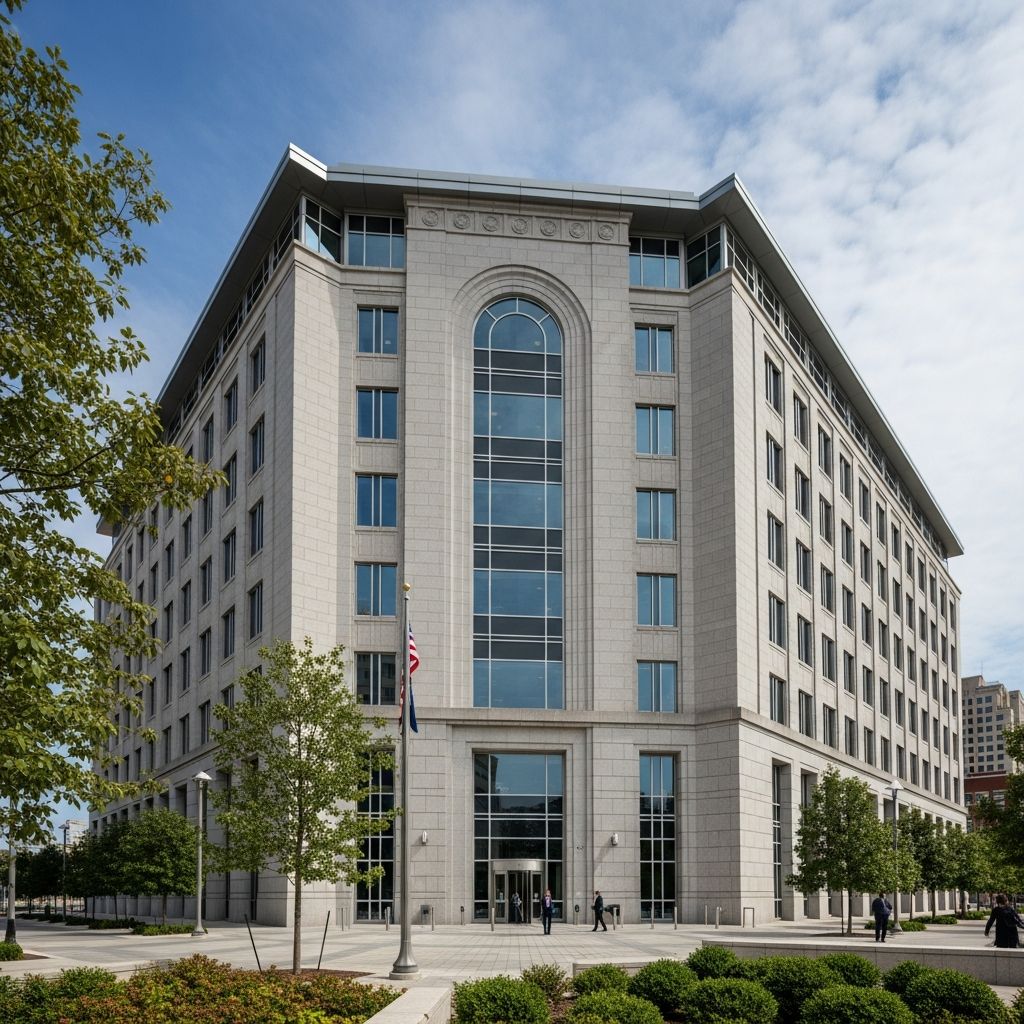
The Consumer Financial Protection Bureau (CFPB) was created after the financial crisis to make sure that everyday people get a fair deal from banks, lenders, and other financial companies. Its permanent headquarters in Washington, D.C. is more than just a building—it is a symbol of a long-term commitment to consumer protection and an operational hub for the agency’s nationwide work.
From Concept to Concrete: How the CFPB Came to Be
The CFPB grew out of a simple idea: federal consumer financial rules should be enforced by a single watchdog focused on people, not on the balance sheets of large financial institutions. Before the CFPB, consumer financial protection powers were scattered across multiple agencies, often treated as a secondary priority.
Key milestones in the CFPB’s creation include:
- 2007–2008: The financial crisis exposes widespread abuses in mortgage lending and other consumer finance markets.
- June 2009: The White House proposes a new agency devoted to consumer financial protection.
- July 2010: Congress passes the Dodd–Frank Wall Street Reform and Consumer Protection Act, formally authorizing the CFPB.
- July 2011: The CFPB officially opens its doors as an independent bureau.
The decision to establish a permanent headquarters followed from this legislative foundation: if the agency was going to consolidate powers from seven different regulators and oversee markets across the country, it needed a stable base of operations.
Why a Permanent Headquarters Matters
Choosing and investing in a permanent headquarters for a federal regulator is both a logistical and a strategic decision. For the CFPB, this move signaled that consumer financial protection was intended to be a lasting, central feature of the federal regulatory landscape.
Stability and Long-Term Planning
A permanent headquarters in the nation’s capital offers several advantages:
- Continuity of operations: A dedicated space allows the CFPB to design work environments around long-term enforcement, supervision, and research needs, rather than relying on temporary or scattered offices.
- Institutional memory: Centralizing staff and records in one headquarters supports consistent enforcement strategies and reduces the risk of fragmented oversight as leadership changes over time.
- Investment in specialized infrastructure: The CFPB can build secure systems, hearing rooms, training spaces, and consumer-response facilities that would be difficult to maintain in leased or short-term locations.
Visibility and Accountability
Locating the headquarters in Washington, D.C. places the CFPB in the middle of the federal policymaking ecosystem, close to Congress, the courts, and other financial regulators.
- Public visibility: A recognizable headquarters helps consumers, advocacy groups, and state officials know where to take concerns, data, and ideas.
- Congressional oversight: Lawmakers can more easily examine the agency’s budget, performance, and building investments, particularly because CFPB funding and expenditures have been the subject of ongoing debates.
- Interagency coordination: Proximity to the Federal Reserve, FDIC, OCC, and other regulators facilitates joint rulemakings and coordinated responses to industry abuses.
Inside the CFPB: Key Functions Housed at Headquarters
The permanent headquarters brings together the people and offices responsible for the CFPB’s core work. This includes everything from writing rules to answering individual complaints.
| Core Function | What It Does | How Headquarters Supports It |
|---|---|---|
| Supervision & Examination | Oversees banks and nonbank financial firms to ensure compliance with federal consumer laws. | Centralized teams coordinate on-site exams nationwide and share findings with enforcement and policy staff. |
| Enforcement | Brings cases against companies that engage in unfair, deceptive, or abusive acts and practices. | Lawyers, investigators, and economists collaborate closely to prepare investigations, lawsuits, and settlements. |
| Rulemaking & Research | Writes regulations and conducts market studies to address emerging risks to consumers. | Policy experts and researchers share data, draft rules, and analyze comments in a coordinated environment. |
| Consumer Response | Handles consumer complaints about financial products and services and forwards them to companies for responses. | Contact centers and analysts in headquarters track complaint trends, which often trigger supervision and enforcement work. |
| External Affairs & Education | Engages with the public, state regulators, and community groups and develops consumer education tools. | Centralized outreach helps ensure that messages are consistent and data-driven, and that feedback reaches senior leadership. |
How the Headquarters Supports the CFPB’s Legal Mandate
The CFPB’s mandate under the Dodd–Frank Act is to ensure that consumers have access to fair, transparent, and competitive markets for financial products and services. The headquarters is structured to support that legal mission in several concrete ways.
Coordinating Dodd–Frank Authorities
Dodd–Frank consolidated consumer protection powers from several federal entities into one bureau, including responsibilities that had previously been housed at the Federal Reserve, FDIC, FTC, and HUD. Having a permanent headquarters allows the CFPB to manage this broad portfolio with:
- Unified leadership over supervision of large banks and certain nonbank lenders.
- Integrated policy teams that can interpret and apply multiple consumer statutes, from mortgage rules to credit card protections.
- Shared data systems that combine complaint information, examination results, and market research.
Funding, Facilities, and Oversight
Unlike many agencies, the CFPB is funded through transfers from the Federal Reserve up to a statutory cap, rather than through the annual appropriations process. The headquarters building and any renovation or expansion projects have been scrutinized as part of broader debates about the bureau’s budget and independence.
- Congressional hearings have focused on the cost and design of the headquarters, using it as a case study in how the CFPB manages funds.
- Critics have argued that building expenses reflect an agency with too much autonomy, while supporters say modern, secure space is necessary to handle sensitive data and legal work.
In practice, the physical headquarters is a tangible example of how the CFPB uses its resources—information that lawmakers, watchdogs, and the public can evaluate.
Benefits to Consumers of a Strong Headquarters
Although most consumers will never visit the CFPB’s headquarters, they experience its effects in their daily financial lives. Strong central operations support outcomes such as:
More Effective Enforcement Actions
Centralizing enforcement staff makes it easier to spot patterns across markets and coordinate large cases. Since opening, the CFPB has ordered companies to return billions of dollars to consumers and pay civil penalties for illegal practices, including deceptive credit card add-on products and abusive mortgage servicing.
- Investigators and attorneys can work side-by-side to analyze company records and consumer complaints.
- Enforcement teams can quickly share best practices from one case to another, improving the speed and quality of investigations.
Better Use of Consumer Complaints
The CFPB runs a national complaint system where consumers can submit problems with credit cards, mortgages, student loans, debt collectors, and other products. The headquarters is where these complaints are:
- Received through web, phone, and mail channels.
- Routed to companies for responses.
- Analyzed for trends that may indicate systemic issues or potential law violations.
This centralized analysis often triggers supervision and enforcement work, allowing the bureau to identify and address problems earlier than would otherwise be possible.
Designing a Headquarters for a Modern Regulator
Modern financial regulation depends heavily on data, technology, and cross-disciplinary teams. That reality shapes how the CFPB’s headquarters is organized.
Secure and Data-Driven Operations
The CFPB’s work involves sensitive consumer data, confidential supervisory information, and proprietary business records. A permanent headquarters provides a controlled environment for:
- Secure data centers and analytics labs capable of handling large financial datasets.
- Confidential meeting spaces for settlement negotiations and internal deliberations.
- Integrated IT systems connecting complaint intake, exam teams, and enforcement staff.
Workspaces for Collaboration
Many CFPB projects—such as drafting a major mortgage rule or investigating a national debt collection firm—require economists, attorneys, data scientists, and policy analysts to work closely together.
- Shared project rooms help cross-functional teams coordinate more quickly.
- Training areas allow examiners and enforcement staff to stay current on new products, such as digital wallets or buy-now-pay-later services.
- Conference rooms support regular engagement with state regulators, industry representatives, and consumer advocates.
Critiques, Debates, and the Symbolism of the Building
The CFPB’s permanent headquarters has occasionally become a focal point in political and legal debates about the agency’s very existence.
Cost and Scope Concerns
Some lawmakers and commentators have argued that:
- Headquarters renovation or construction costs are excessive and signal that the bureau is not sufficiently constrained by Congress.
- The size and design of the building reflect an agency that may grow its reach beyond what lawmakers originally intended.
These criticisms are often part of larger discussions about whether the CFPB’s funding model and single-director structure provide too much independence from elected officials.
Supporters’ View: A Necessary Investment
Supporters respond that an effective consumer watchdog needs clear authority, stable funding, and modern facilities to stand up to large financial firms.
- They see the permanent headquarters as a necessary investment in fair markets and a physical sign that consumer protection is no longer an afterthought.
- They argue that the building’s cost should be weighed against consumer restitution, reduced fraud, and fewer financial crises.
What the Headquarters Means for the Future of Consumer Protection
The CFPB’s permanent headquarters will continue to influence how the bureau responds to new challenges, such as digital banking, fintech products, and evolving forms of discrimination in credit markets.
Adapting to Emerging Risks
As financial products become more complex and technology-driven, the headquarters is likely to play a larger role in:
- Hosting specialized tech and data teams focused on algorithmic decision-making, artificial intelligence in lending, and online fraud.
- Coordinating with cybersecurity and privacy regulators to protect consumer data.
- Evaluating whether existing rules still provide adequate safeguards in digital markets.
Continuing Public Engagement
For the CFPB to remain effective, it must hear from the public, not just from industry and policymakers. The headquarters offers a focal point for that engagement through:
- Public meetings, hearings, and roundtables.
- Listening sessions with community organizations, military families, older Americans, and student borrowers.
- Collaborations with state attorneys general and local consumer protection offices.
Frequently Asked Questions (FAQs)
Q1: What is the Consumer Financial Protection Bureau?
The CFPB is a federal agency created by the Dodd–Frank Act in 2010 to protect consumers in the market for financial products and services. It supervises certain banks and nonbanks, writes rules, and enforces federal consumer financial laws.
Q2: Why does the CFPB need a permanent headquarters?
A permanent headquarters in Washington, D.C. gives the CFPB a stable base of operations to coordinate nationwide supervision, enforcement, and consumer response work. It supports secure data handling, cross-functional teams, and regular engagement with Congress, other regulators, and the public.
Q3: How is the CFPB funded, and does that relate to its building?
Under Dodd–Frank, the CFPB receives funding through transfers from the Federal Reserve up to a statutory cap, instead of through annual appropriations. Spending on its headquarters and other facilities has been a point of oversight and debate, with critics citing costs as evidence of too much independence and supporters emphasizing the need for modern, secure space.
Q4: Does the headquarters affect how I can get help from the CFPB?
Most people interact with the CFPB online or by phone, not in person. However, the headquarters is where staff process complaints, design education tools, and coordinate enforcement work that can lead to refunds and policy changes for consumers nationwide.
Q5: Can the CFPB’s headquarters change in the future?
Like other federal agencies, the CFPB could adjust or expand its facilities as missions and technology evolve, but any significant changes would occur within its legal mandate and be subject to oversight and public scrutiny.
References
- Building the CFPB — Consumer Financial Protection Bureau. 2011-07-21. https://www.consumerfinance.gov/data-research/research-reports/building-the-cfpb/
- Celebrating 10 years of consumer protection — Consumer Financial Protection Bureau. 2021-07-20. https://www.consumerfinance.gov/about-us/blog/celebrating-10-years-consumer-protection/
- Twelve years of protecting consumers and honest businesses — Consumer Financial Protection Bureau. 2023-07-20. https://www.consumerfinance.gov/about-us/blog/twelve-years-of-protecting-consumers-and-honest-businesses/
- Consumer Financial Protection Bureau (CFPB) — Encyclopaedia Britannica. 2025-07-29. https://www.britannica.com/money/Consumer-Financial-Protection-Bureau
- Consumer Financial Protection Bureau Budget — Congressional Research Service. 2023-04-26. https://www.congress.gov/crs-product/74520
- The CFPB: The Beginning of the End? — American Action Forum. 2017-03-29. https://www.americanactionforum.org/insight/the-cfpb-the-beginning-of-the-end/
- Consumer Financial Protection Bureau — Consumer Financial Protection Bureau (About & History summary page). Accessed 2025. https://www.consumerfinance.gov/about-us/
Similar Articles








Read full bio of medha deb


