
CFPB Enforcement Against Edfinancial: What Borrowers Need to Know
Understanding the CFPB’s action against Edfinancial, what went wrong in student loan servicing, and how borrowers can protect their rights.
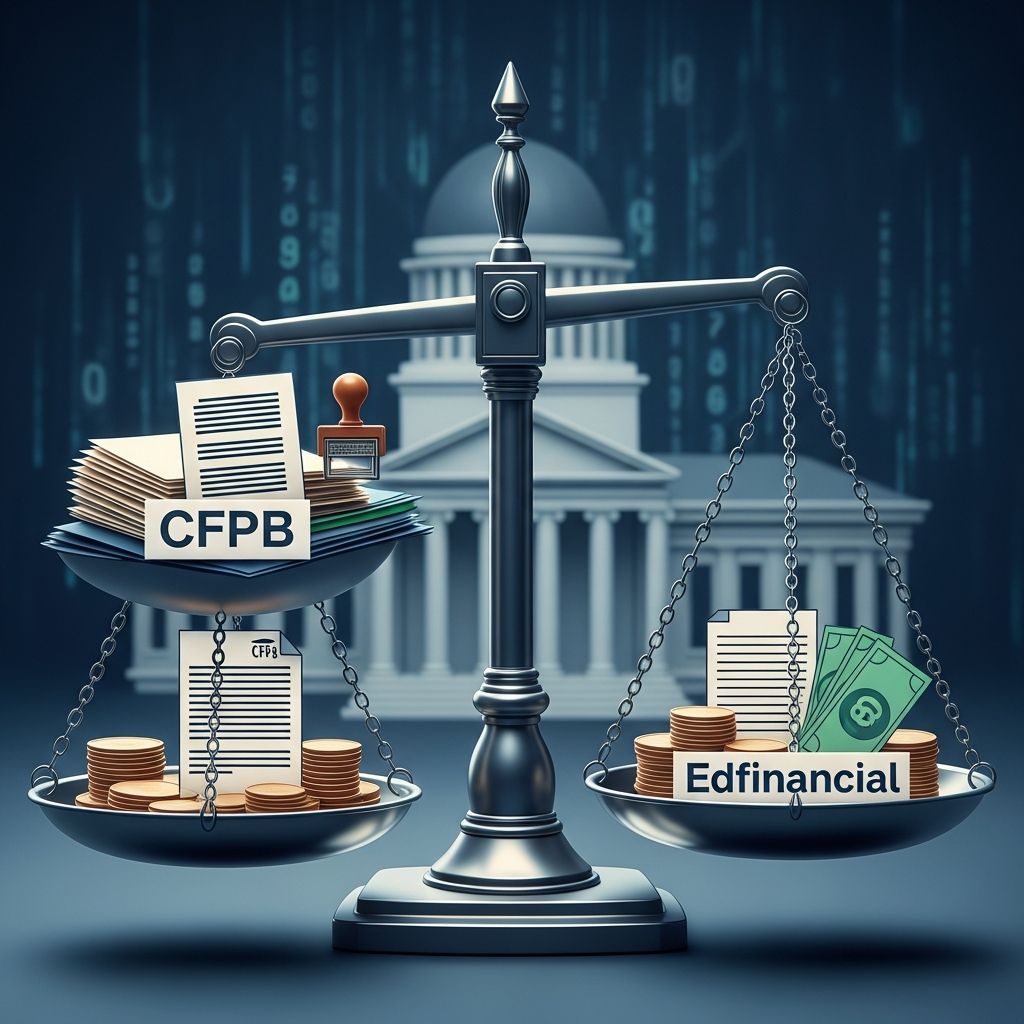
Federal regulators continue to scrutinize how student loan servicers treat borrowers, and enforcement actions are one of the main ways the government corrects misconduct and restores harmed consumers. The Consumer Financial Protection Bureau (CFPB) has used this authority in a case involving Edfinancial Services, a major student loan servicer. This article explains what such an enforcement action generally involves, why it matters, and what it can teach borrowers about protecting their rights.
Background: Who Regulates Student Loan Servicers?
The modern federal consumer protection framework in finance is built around several agencies and statutes created or reshaped after the 2008 financial crisis. The CFPB, established under the Dodd-Frank Act, is the primary federal agency focused on consumer financial products and services, including many aspects of student loan servicing. It implements and enforces a range of federal consumer financial laws and can bring enforcement cases against companies that violate those laws or engage in unfair, deceptive, or abusive acts or practices (often called UDAAPs).
Key agencies and laws involved in oversight of servicers include:
- Consumer Financial Protection Bureau (CFPB) – Enforces federal consumer financial laws and UDAAP prohibitions for many nonbank financial companies, including student loan servicers.
- Federal Trade Commission (FTC) – Oversees unfair or deceptive practices for many for-profit entities in consumer finance markets and shares authority with the CFPB for certain nonbank institutions.
- Banking regulators (OCC, FDIC, Federal Reserve) – Examine banks and some affiliates for compliance with consumer protection laws and can take enforcement action when violations are found.[10]
Student loan servicers may also be subject to state consumer protection laws and supervision by state attorneys general or financial regulators, who increasingly use both state statutes and federal tools like the Consumer Financial Protection Act in their enforcement work.
What Is an Enforcement Action?
An enforcement action is a formal step a regulator takes when it believes a company has violated the law. For the CFPB, enforcement actions may result in:
- Orders to stop illegal conduct (injunctive relief).
- Monetary relief for consumers, such as refunds, credits, or debt cancellation.
- Civil money penalties paid to the government.
- Changes to business practices, often documented in a consent order.
Most CFPB enforcement resolutions are published so that the public, other firms, and policymakers can see what conduct the Bureau considered unlawful and what remedies were imposed. This transparency allows cases like the one involving Edfinancial to serve as a warning to other servicers and a guidepost for borrowers.
Edfinancial Services: Role in the Student Loan Market
Edfinancial Services is an established student loan servicer that has contracted to handle billing and customer service for various portfolios of student loans. Servicers like Edfinancial do not necessarily own the loans; rather, they:
- Send statements and process payments.
- Apply payments to principal and interest.
- Manage deferments, forbearances, and repayment plans.
- Communicate with borrowers about options, benefits, and obligations.
Because servicers are the main point of contact for borrowers, they wield significant influence over whether borrowers understand affordable options such as income-driven repayment plans, loan forgiveness programs, and protections in times of hardship. Regulators have repeatedly found that failures or misrepresentations at the servicing level can push borrowers into costlier options and long-term financial harm.
Core Allegations in the CFPB’s Case
Although specific details are unique to each enforcement action, the CFPB’s action involving Edfinancial fits into broader patterns of alleged misconduct the Bureau and other agencies have identified across the student loan industry. These patterns often include:
- Misleading information about repayment options – Failing to clearly explain, or downplaying the availability of, income-driven repayment plans that may reduce monthly payments.
- Inaccurate statements about loan forgiveness eligibility – Providing incorrect or incomplete information about qualification for Public Service Loan Forgiveness or other forgiveness programs.
- Steering borrowers into forbearance – Encouraging temporary payment suspensions instead of placing borrowers into affordable long-term repayment plans, which can increase interest costs.
- Inadequate error resolution – Failing to properly respond when borrowers raise concerns about misapplied payments or incorrect balances.
Under federal consumer financial law, these kinds of conduct can be found unfair if they cause substantial injury that consumers cannot reasonably avoid and that is not outweighed by countervailing benefits. They may be deceptive if the company makes or omits material statements that mislead reasonable consumers. The CFPB is empowered to prohibit unfair, deceptive, or abusive practices in markets for consumer financial products and services.
Legal Framework: How the CFPB Brings Cases
The CFPB’s authority arises from the Consumer Financial Protection Act (sometimes called Title X of the Dodd-Frank Act), which created the Bureau and gave it enforcement powers for numerous federal consumer protection laws. These include legacy statutes like the Truth in Lending Act, Fair Debt Collection Practices Act, Fair Credit Reporting Act, and others, plus a broad prohibition on UDAAPs.
| Tool | What It Does | Relevance to Servicers |
|---|---|---|
| UDAAP authority | Prohibits unfair, deceptive, or abusive acts or practices in consumer finance. | Used to challenge misleading statements and harmful servicing practices. |
| Enumerated consumer laws | CFPB enforces at least 19 federal consumer financial laws, many of which predate Dodd-Frank. | Applies where servicing implicates disclosure, billing, collections, or credit reporting duties. |
| Rulemaking power | CFPB issues regulations to clarify obligations and close gaps in existing laws. | Shapes servicing standards over time and can lead to new compliance obligations. |
The Bureau investigates potential violations, often using investigative subpoenas (civil investigative demands), examinations, and complaint data that consumers submit through its public portal. If it determines that a company has broken the law, it may seek a settlement or litigate the case in court or through an administrative proceeding.
Outcomes Typical of an Action Like Edfinancial’s
In a case like the CFPB’s enforcement involving Edfinancial, the resolution typically includes several types of relief and obligations:
- Monetary relief to affected borrowers
- Direct refunds or credits on accounts.
- Waiver or cancellation of certain fees or interest that accumulated due to unlawful conduct.
- Potential loan balance reductions or discharges for specific categories of borrowers.
- Changes to business practices
- Revised call scripts, training materials, and website content.
- Improved systems for handling complaints and disputes.
- Requirements to proactively notify borrowers about certain rights or programs.
- Civil penalties
- Payments to the CFPB’s Civil Penalty Fund, which can be used to compensate consumers in other cases where direct redress is impracticable.
- Ongoing reporting and oversight
- Periodic reporting to the CFPB on compliance efforts.
- Record-keeping requirements to facilitate future monitoring.
These remedies aim not only to make affected borrowers whole but also to deter similar misconduct by Edfinancial and other servicers.
Why This Matters for Borrowers
Enforcement actions send a message about the standards regulators expect servicers to meet. In the case involving Edfinancial, the Bureau’s action reinforces several important principles for student loan borrowers:
- Servicers must provide accurate and complete information about repayment options and benefits.
- Companies cannot lawfully misrepresent eligibility for forgiveness or fail to properly process applications for specialized programs.
- Borrowers have the right to fair treatment when they complain about errors or ask for help managing their loans.
- Regulators are willing to use enforcement to secure monetary relief and policy changes when servicers fall short.
At the same time, enforcement actions do not automatically fix every issue a borrower may have with a servicer. Consumers still need to be proactive in monitoring their accounts, requesting information in writing when necessary, and using available complaint channels.
Practical Steps for Borrowers Serviced by Edfinancial or Similar Companies
Whether or not you are directly affected by the specific CFPB action, the following practices can help protect your interests with any student loan servicer:
1. Keep Detailed Records
- Save copies of billing statements, notices, and emails.
- Write down the date, time, and name of any representative you speak with.
- Follow up important phone conversations with a brief written summary sent by mail, secure message, or email.
2. Ask for Written Confirmation of Key Representations
- When a servicer tells you that you are eligible for a particular program, request that confirmation in writing.
- Retain any approval notices or letters that describe terms for repayment plans, deferments, or forgiveness.
3. Regularly Review Your Account
- Verify that payments are applied correctly to principal and interest.
- Compare your outstanding balance with your records and past statements.
- Check that any promised changes (such as interest capitalization or plan changes) actually occurred.
4. Submit a Complaint When Problems Arise
- Use your servicer’s internal complaint channels first, in writing when possible.
- If you are not satisfied, you can file a complaint with the CFPB, which maintains a public complaint database and forwards complaints to companies for response.
- Consider also alerting your state attorney general or state financial regulator, who often have authority to enforce both state and federal law.
5. Stay Informed About Your Rights
- Consult official sources such as federal agencies and reputable nonprofit organizations when researching repayment options.
- Be cautious of unverified advice from social media or commercial websites that may have conflicts of interest.
Implications for the Student Loan Industry
The enforcement action involving Edfinancial is part of a broader pattern in which federal and state regulators are increasing their scrutiny of student loan servicers. The CFPB, FTC, and banking regulators have all emphasized that companies must comply not only with technical requirements of specific statutes but also with overarching standards against unfair or deceptive conduct.[10]
Consequences for the industry include:
- Heightened compliance expectations – Servicers are expected to invest more heavily in compliance systems, staff training, and monitoring.
- Potential state actions – States can independently enforce many federal consumer financial laws and often have additional state-level protections.
- Reputational risk – Public enforcement actions can influence how borrowers, schools, and policymakers view particular companies.
- Regulatory evolution – Lessons from enforcement cases inform future rulemaking and supervisory guidance, gradually raising the bar for industry conduct.
Frequently Asked Questions (FAQs)
Q1: What is the CFPB and why does it matter for student loan borrowers?
The CFPB is a federal agency created to protect consumers in the financial marketplace, including credit cards, mortgages, student loans, and other products. For student loan borrowers, it matters because the Bureau can take action against servicers that engage in illegal practices and can require them to provide relief and change their behavior.
Q2: How do I know if I am affected by the CFPB’s action involving Edfinancial?
In many enforcement actions, the company is required to identify affected consumers and provide notifications or automatic relief. Borrowers can monitor communications from their servicer, review any official announcements related to the case, and contact the company if they believe they were harmed. If you suspect misconduct but do not receive relief, you may wish to file a complaint with the CFPB for review.
Q3: What kinds of conduct can be considered unfair or deceptive by a loan servicer?
Examples include misrepresenting eligibility for programs, steering borrowers into costlier options without explaining alternatives, or failing to correct obvious errors that harm borrowers. Under the Consumer Financial Protection Act, the CFPB can prohibit unfair, deceptive, or abusive practices in consumer financial markets, which encompass these types of conduct.
Q4: Can states also take action against student loan servicers?
Yes. State attorneys general and regulators can enforce their own consumer protection laws and, in many cases, certain federal consumer financial laws as well. Some states have adopted strong student loan servicing statutes or have state-level “mini-FTC” acts that prohibit unfair or deceptive practices, adding another layer of oversight on top of federal regulation.
Q5: Where can I file a complaint if I have a problem with my student loan servicer?
You can typically start with your servicer’s internal complaint process. If that does not resolve the issue, you can submit a complaint to the CFPB through its official complaint portal, which forwards your issue to the company and tracks its response. You may also contact your state attorney general’s office or state financial regulator, who may investigate patterns of misconduct or help facilitate resolutions.
References
- The Consumer Financial Protection Bureau (CFPB) — Congressional Research Service. 2023-03-15. https://www.congress.gov/crs-product/IF10031
- A Primer on State Consumer Financial Regulation — Venable LLP. 2025-02-10. https://www.venable.com/insights/publications/2025/02/a-primer-on-state-consumer-financial-regulation
- Consumer Finance — Federal Trade Commission. 2023-09-01. https://www.ftc.gov/news-events/topics/consumer-finance
- Rules & Policy — Consumer Financial Protection Bureau. 2024-11-05. https://www.consumerfinance.gov/rules-policy/
- Code of Federal Regulations: CFPB Regulations — Consumer Financial Protection Bureau. 2024-09-30. https://www.consumerfinance.gov/rules-policy/final-rules/code-federal-regulations/
- Major Consumer Protection Laws — Board of Governors of the Federal Reserve System. 2023-06-01. https://www.federalreserve.gov/pubs/complaints/laws.htm
- Consumer Protection — Office of the Comptroller of the Currency. 2024-05-10. https://www.occ.gov/topics/consumers-and-communities/consumer-protection/index-consumer-protection.html
Similar Articles








Read full bio of medha deb


