
Cesar Chavez Day and California Courts: History, Impact, and Practice
Explore why Cesar Chavez Day is honored in California, how it affects court schedules, and what this civil rights holiday represents for the justice system.
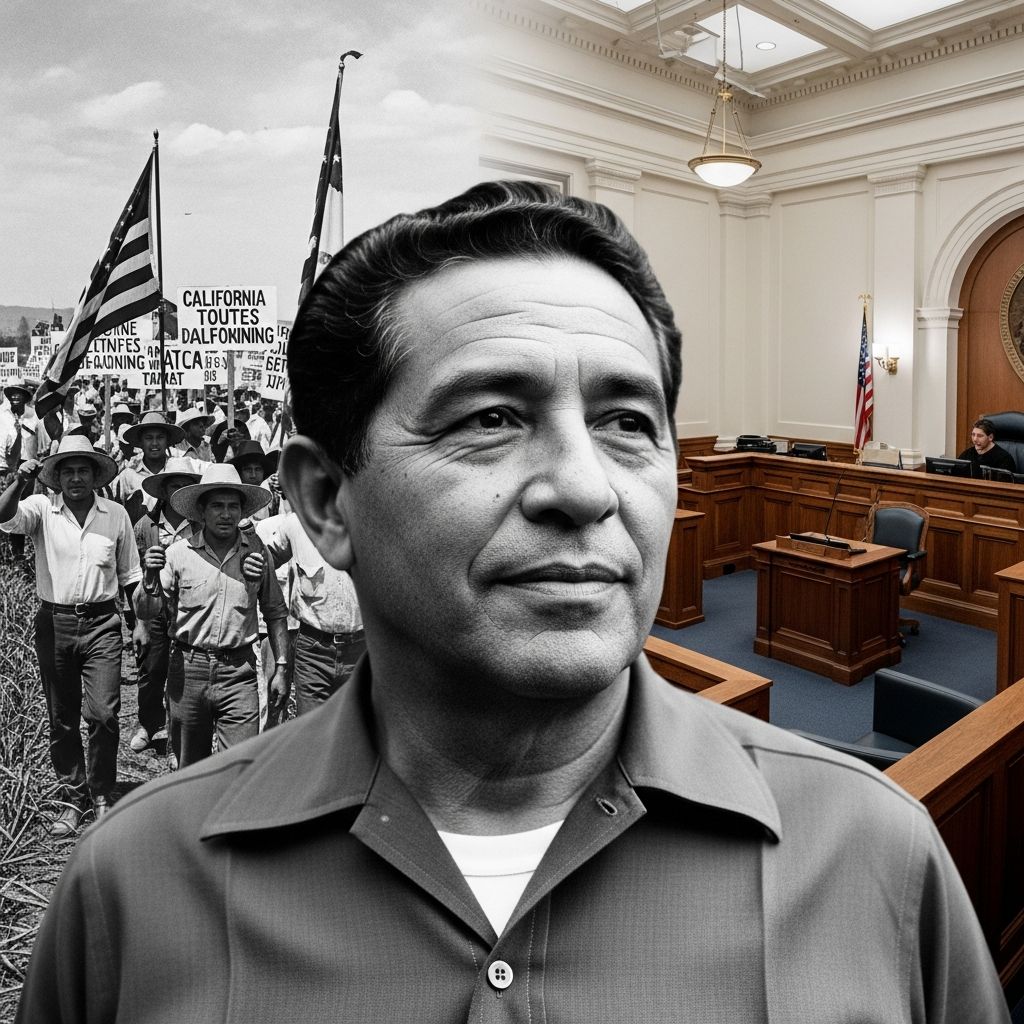
Cesar Chavez Day is more than a date on the calendar. It is a moment each year when California, and several other states, pause to honor a civil rights and labor leader whose work reshaped the rights of farmworkers and influenced protections for workers nationwide. For legal professionals and court users, the day also has practical implications, because many California courts close or modify operations in observance of the holiday.
This article explains what Cesar Chavez Day is, why California treats it as a state holiday, how it affects court schedules and legal deadlines, and how lawyers, litigants, and the public can plan around it while honoring its deeper meaning.
Who Was Cesar Chavez and Why Is He Commemorated?
Cesar Chavez was a Mexican American farmworker, organizer, and civil rights advocate who co-founded the United Farm Workers (UFW) union and led a national movement for fair wages and humane working conditions for agricultural laborers.
- Born in 1927 near Yuma, Arizona, Chavez’s family became migrant farmworkers after losing their land during the Great Depression.
- He experienced low pay, poor housing, unsafe conditions, and discrimination in the fields.
- In the 1950s he trained as a community organizer, focusing on voter registration and campaigns against racial and economic injustice.
- In 1962 he helped form what would become the United Farm Workers, combining nonviolent protest, boycotts, and strikes to win bargaining power for farmworkers.
Chavez’s campaigns, including the famous Delano-to-Sacramento march and national grape boycott in the 1960s, helped secure passage of the California Agricultural Labor Relations Act of 1975, the first U.S. law to guarantee farmworkers the right to organize and bargain collectively.
Core Principles Behind the Holiday
Cesar Chavez Day reflects several core values associated with Chavez’s life and work:
- Nonviolence – Chavez insisted on nonviolent tactics, including marches, strikes, and extended fasts, drawing inspiration from leaders like Mahatma Gandhi and Dr. Martin Luther King Jr.
- Dignity of work – He emphasized that those who harvest the nation’s food deserve safe workplaces, decent housing, and fair pay.
- Collective action – Boycotts and union organizing highlighted the power of workers and consumers acting together.
- Service and community – Modern observances often frame the day as a “day of service,” encouraging civic engagement and volunteering rather than a purely recreational holiday.
What Is Cesar Chavez Day?
Cesar Chavez Day is a U.S. federal commemorative holiday observed on March 31, Chavez’s birthday, to celebrate his contributions to labor rights, civil rights, and environmental justice.
- It was first widely observed as a state holiday in California in the 1990s and gradually gained recognition in other states.
- In 2014, President Barack Obama issued a presidential proclamation designating March 31 as Cesar Chavez Day at the federal level as a commemorative observance.
- Governors, including California’s governor, regularly issue annual proclamations highlighting Chavez’s legacy and encouraging service activities on this date.
Unlike holidays such as Independence Day or Thanksgiving, Cesar Chavez Day is not a federal paid holiday for most federal employees. Its legal status and effects on public offices depend heavily on state law.
Where Is Cesar Chavez Day Officially Recognized?
States vary in how they treat Cesar Chavez Day under their own statutes and public employment rules.
| Jurisdiction | Status of March 31 | Typical Impact on Public Offices |
|---|---|---|
| California | State holiday in honor of Cesar Chavez | Many state offices, courts, schools, and libraries closed or operating on holiday schedules |
| Colorado | State holiday / optional in some contexts | Some state offices and schools close; others hold commemorations |
| Texas | State holiday / optional observance | Selected agencies and school districts close or hold events |
| Other states & cities | Local or commemorative observances | Events, educational programs, and service projects; limited closures |
In California, the holiday has a particularly strong institutional presence, including its effect on the courts.
Why California Courts Observe Cesar Chavez Day
California recognizes Cesar Chavez Day as a legal state holiday, which in turn affects court operations and filing rules. State proclamations emphasize Chavez’s central role in California history: his organizing work took place largely in California’s fields and towns and led directly to landmark state labor legislation.
Historical and Legal Context
There are several reasons the day is embedded in California’s legal and court calendar:
- Farmworker movement roots in California – Chavez and his allies organized major campaigns in places like Delano and throughout the Central Valley, culminating in the 1966 march from Delano to Sacramento and the grape boycott.
- California Agricultural Labor Relations Act (ALRA) – Enacted in 1975, this pioneering law provided collective bargaining rights to farmworkers and established the Agricultural Labor Relations Board. Recognizing Chavez in state law reflects his role in the political movement that made ALRA possible.
- State policy of honoring civil rights leaders – Like holidays for Martin Luther King Jr. and other civil rights figures, Cesar Chavez Day signals the state’s commitment to equity, workers’ rights, and non-discrimination.
The California governor’s annual proclamations typically describe Chavez as a leader who “empowered thousands” and “led our nation toward a more equitable and just society,” underscoring why a day of recognition has legal significance in the justice system itself.
Symbolic Meaning for the Justice System
For courts, closing on Cesar Chavez Day does more than align with a state holiday list. It acknowledges that:
- Farmworkers and low-wage workers historically faced systemic barriers to justice.
- Organized, peaceful advocacy prompted legal reforms that now shape labor law cases heard in those same courts.
- The rule of law evolves when marginalized communities gain access to courts and political institutions.
Honoring Chavez within the justice system reinforces that court accessibility and fairness are central to the rights he championed.
How Cesar Chavez Day Affects California Court Operations
In practice, Cesar Chavez Day functions for California courts much like other statewide judicial holidays. The exact procedures vary by county and court type, but several general patterns apply.
Typical Court Impacts
On or around March 31, court users can expect:
- Court closures – Many superior courts close their clerk’s offices and do not conduct regular civil or criminal calendars.
- No regular filing deadlines – Statutory deadlines that fall on a court holiday are usually extended to the next court day under general rules of civil procedure.
- Limited emergency services – Some courts maintain small staffs for urgent matters, such as protective orders or criminal arraignments, but schedules are reduced.
- Adjusted hearing calendars – Civil motions, unlawful detainer trials, and other calendars are often moved to adjacent dates.
Because details differ by jurisdiction, litigants and attorneys should review local court notices and annual holiday schedules posted by each county’s superior court.
Deadlines and Filing Strategy Around the Holiday
From a practice-management perspective, Cesar Chavez Day matters whenever a due date falls near March 31. Lawyers and self-represented litigants can reduce risk by following basic planning steps:
- Check the local holiday list early – At the beginning of each year, review statewide and local court holidays and enter them into your calendaring system.
- Adjust for e-filing rules – If a court treats Cesar Chavez Day as a holiday for electronic filing systems, submissions may be deemed filed on the next business day.
- Plan service in advance – Service by mail or personal service near the holiday should account for office closures, staffing shortages, and mail delays.
- Confirm statutory extensions – Many statutes toll or extend deadlines when they fall on a court holiday, but practitioners should verify the applicable code section for the type of case at issue.
Good calendaring around March 31 can prevent missed deadlines and last-minute complications while also allowing office staff to respect the holiday.
Civic and Educational Aspects of Cesar Chavez Day
Although court closures are important for practitioners, the broader purpose of Cesar Chavez Day is to encourage public education, service, and reflection on workers’ rights and social justice.
Day of Service and Learning
Many institutions treat the holiday as a “day on” rather than a “day off.” Activities may include:
- Volunteer projects with food banks, worker centers, and community organizations
- Workshops on labor rights, wage theft, and workplace safety
- Classroom lessons about the history of farmworker organizing and civil rights movements
- Public lectures featuring labor leaders, scholars, and community advocates
Organizations like the NAACP and various colleges promote Cesar Chavez Day of Service as a way to connect Chavez’s legacy with contemporary struggles for justice and equality.
How Legal Professionals Can Participate
Lawyers, law students, and court personnel can engage with the holiday in ways that both respect their professional roles and advance civic understanding:
- Offering pro bono legal clinics for farmworkers, immigrants, or low-wage workers
- Hosting continuing legal education (CLE) programs on agricultural labor law, workplace discrimination, or organizing rights
- Supporting law school or bar association events that explore labor history and current policy debates
- Mentoring students from communities historically involved in farm labor
These activities align with the service-oriented spirit emphasized in calls to treat March 31 as a day of community action and learning.
Enduring Legal Legacy of Cesar Chavez in California
Cesar Chavez Day also offers an annual reminder of specific legal developments that emerged from the farmworker movement and continue to shape California law.
Key Legal Achievements Associated with Chavez
- Collective bargaining rights for farmworkers – The California Agricultural Labor Relations Act provides a legal framework for union elections, unfair labor practice enforcement, and bargaining rights in agriculture, an area long excluded from federal labor statutes.
- Recognition of nontraditional workers – Campaigns led by Chavez highlighted gaps in protections for seasonal and migrant workers, contributing to later expansions in worker protections at both the state and federal levels.
- Integration of civil rights and labor law – Chavez’s focus on race, immigration status, and economic inequality helped link civil rights litigation with labor advocacy.
For judges and attorneys, awareness of this history can inform interpretation and application of labor and employment statutes, especially when cases touch on vulnerable worker populations.
Continuing Relevance
Although Chavez died in 1993, state agencies, courts, and community organizations continue to grapple with issues he highlighted:
- Access to justice for low-wage and migrant workers
- Enforcement of wage-and-hour laws in agriculture and related industries
- Health and safety standards for outdoor work, including protections from extreme heat and pesticide exposure
- Bargaining rights and union representation for workers outside traditional industrial sectors
In this sense, Cesar Chavez Day is not merely a memorial; it is a prompt for ongoing policy discussions and legal reforms.
Frequently Asked Questions (FAQs)
Q: Is Cesar Chavez Day a paid holiday for all government employees?
A: No. At the federal level, Cesar Chavez Day is a commemorative holiday, not a universal paid day off. In California, it is a state holiday for many state employees and influences court and agency schedules, but specific benefits depend on state law and collective bargaining agreements.
Q: Are California courts always closed on March 31?
A: Most California courts treat Cesar Chavez Day as a holiday and close regular operations, but policies can vary by county and by year. Always check the latest holiday notice or calendar from the relevant superior court before relying on a closure.
Q: How do filing deadlines work if they fall on Cesar Chavez Day?
A: Under general principles of civil procedure, if a filing deadline falls on a court holiday, it is usually extended to the next court day. However, parties should consult the applicable code sections and any local rules to confirm how a particular deadline is calculated.
Q: Does Cesar Chavez Day only relate to farmworker issues?
A: While the holiday grows directly from the farmworker movement, it is widely understood to honor broader themes of workers’ rights, civil rights, environmental justice, and community service, all of which extend beyond agriculture.
Q: Can schools or courts hold educational events even if they are closed?
A: Yes. Many institutions observe Cesar Chavez Day with events, lectures, and service projects in the days before or after March 31. Courts and bar associations sometimes sponsor educational programs that are scheduled around, but not necessarily on, the official holiday.
References
- Governor Newsom Proclaims Cesar Chavez Day 2025 — Office of Governor Gavin Newsom (California). 2025-03-27. https://www.gov.ca.gov/2025/03/31/governor-newsom-proclaims-cesar-chavez-day/
- About Cesar Chavez — Cesar Chavez Foundation. (n.d.). https://chavezfoundation.org/about-cesar-chavez/
- Cesar Chavez Day — Los Angeles County Library. (n.d.). https://lacountylibrary.org/cesar-chavez/
- Cesar Chavez Day — San Jose Public Library. (n.d.). https://www.sjpl.org/cesar-chavez-day/
- Places of Cesar Chavez — U.S. National Park Service. 2021-03-30. https://www.nps.gov/articles/000/places-of-c%C3%A9sar-ch%C3%A1vez.htm
- Cesar Chavez National Holiday (Resolution) — NAACP. 2011-07-28. https://naacp.org/resources/cesar-chavez-national-holiday
- Cesar Chavez & Dolores Huerta Day of Service — Occidental College. (n.d.). https://www.oxy.edu/student-life/involvement/our-programs/days-service/cesar-chavez-dolores-huerta-day-service
Similar Articles








Read full bio of medha deb


