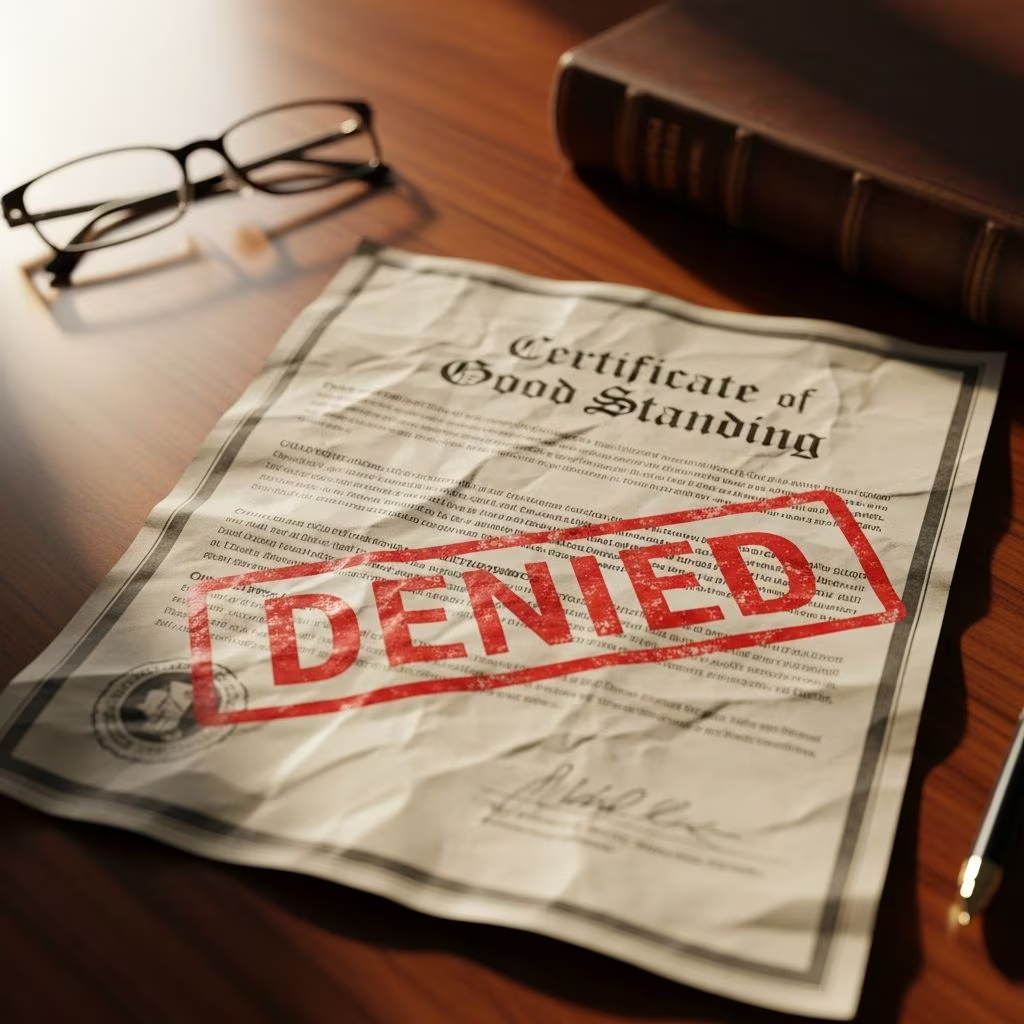
A certificate of good standing is a critical document for any registered business entity. When your state’s Secretary of State issues this certificate, it serves as official verification that your company is authorized to conduct business, has met all compliance requirements, and remains in good legal standing. However, many business owners face the disappointing reality of having their certificate applications denied. Understanding why this happens—and more importantly, how to prevent or resolve it—is essential for protecting your business operations and financial interests.
What Constitutes Good Standing Status
Before exploring denial scenarios, it’s important to understand what “good standing” actually means in legal and regulatory contexts. Good standing status indicates that an entity has filed all required reports and paid all necessary fees with the state Secretary of State’s office. This encompasses more than just maintaining an active registration; it represents ongoing compliance with state-mandated obligations.
Different states may use varying terminology for this document. While “Certificate of Good Standing” is the most common designation, you may encounter terms such as “Certificate of Existence,” “Certificate of Status,” or “Certificate of Authorization” depending on your state jurisdiction. Regardless of the name, the fundamental purpose remains consistent: providing official proof that your business entity is legitimately operating within state guidelines and maintaining its legal authority to transact business.
Primary Reasons Businesses Lose Good Standing
Business entities can face denial of their certificate applications when they’ve fallen out of compliance with state requirements. Several specific violations commonly trigger this scenario:
Failure to File Annual Reports
One of the most frequent reasons businesses lose good standing involves missing or late annual report filings. Most states require registered entities to submit annual reports that provide comprehensive information about business activities. These reports typically include financial data, operational details, market segment information, and plans for future products or services. When businesses miss these filing deadlines, states automatically mark them as non-compliant, making certificate issuance impossible until the reports are submitted and all associated penalties are paid.
Unpaid Franchise Taxes and State Fees
Another critical factor is the failure to timely pay franchise taxes and state fees. Every state that allows business registration assesses fees for maintaining corporate status. These aren’t optional expenses—they’re mandatory obligations tied to your authorization to do business. When these payments fall behind, even by a small amount, the state moves your entity into non-good-standing status. This creates a compounding problem because certificate issuance is withheld until all outstanding tax obligations and penalties are resolved.
Registered Agent and Office Deficiencies
Maintaining proper registered agent and registered office information is another critical requirement. States require all business entities to maintain a designated registered agent and office address within the state where they’re registered. This agent serves as the official point of contact for legal and regulatory communications. Allowing this information to lapse, become inaccurate, or go unaddressed prevents states from issuing good standing certificates because they cannot verify that the business maintains the necessary legal infrastructure.
Consequences of Certificate Denial
The ramifications of being denied a certificate of good standing extend far beyond simply not having a document to display. This denial creates significant operational and financial obstacles:
Banking and Financial Institution Barriers
Banks typically require a certificate of good standing when opening a business bank account. This requirement serves as proof that your company is legally formed and compliant with state requirements. Without this certificate, most financial institutions will deny your application for a business account. This creates a substantial problem because maintaining separate business and personal finances is essential for preserving the limited liability protection that using a corporate or LLC structure provides. Without proper banking separation, courts may “pierce the corporate veil” and hold you personally liable for business debts and legal judgments.
Credit Establishment Challenges
A certificate of good standing is often needed to begin establishing business credit. When lenders and credit bureaus evaluate your business for credit extension, they rely on this certificate to confirm the company’s legal compliance and legitimate existence. Credit card companies and lenders use the certificate as part of their underwriting process to verify that they are extending credit to a legitimate entity rather than a shell company or inactive corporation. Without this verification, establishing business credit becomes nearly impossible, limiting your ability to secure favorable financing terms or access needed capital.
Loan Application Rejection
Lenders use the certificate to confirm the business is active, properly registered, and not facing dissolution. Banks include the certificate requirement in their standard loan checklists because lending to a business that lacks legal authority to operate would violate banking regulations. The certificate confirms the business has the legal capacity to enter into loan agreements and grant security interests in its assets. Without it, traditional lending sources will systematically reject your applications.
Foreign Qualification Impediments
A Certificate of Good Standing is often required in order to register to do business in other states. When businesses expand operations across state lines, they must obtain “foreign qualification” in those new states. Most states request that you provide a certificate of good standing from your “home state”—the state where you originally formed your business—before granting foreign qualification. If your home state has denied your certificate due to non-compliance, you cannot expand into other states, effectively constraining your business growth opportunities.
Steps to Restore Compliance and Regain Certificate Eligibility
The good news is that certificate denial is not permanent. Most businesses can restore their good standing status by systematically addressing the compliance issues that triggered the denial. The specific process varies by state, but generally follows this framework:
Conduct a Comprehensive Compliance Audit
Begin by contacting your state’s Secretary of State office or equivalent agency to obtain a detailed report of your entity’s current status and outstanding obligations. Identify exactly which requirements you’ve failed to meet: unpaid taxes, missing annual reports, lapsed registered agent information, or other specific compliance gaps. Understanding the complete scope of the problem is essential before attempting remediation.
File All Overdue Annual Reports
If your non-compliance stems from missing annual reports, you must file all overdue reports in chronological order, going back to the year you fell out of compliance. Many states provide a “catch-up” process that allows businesses to file multiple years of back reports simultaneously. Be prepared to pay filing fees for each year, plus any associated penalties and interest charges.
Settle All Outstanding Tax Obligations
Contact your state’s tax authority to determine the exact amount of franchise taxes, income taxes, and any other state-level tax obligations owed. Pay these amounts in full, including any penalties and interest that have accrued. Some states offer payment plans for substantial balances, though these typically require formal agreements and ongoing payment schedules. Confirm in writing that all tax obligations have been satisfied.
Update Registered Agent and Office Information
Verify that your registered agent and registered office address are current and accurate in state records. If your registered agent has resigned or your office address has changed, file the necessary amendments with the Secretary of State to update this information. Ensure that the registered agent is aware of their responsibilities and willing to fulfill them going forward.
Submit Your Certificate Request
Once all compliance issues have been resolved, request your certificate of good standing from the Secretary of State office or equivalent government agency in your state. Most states allow you to request this document online, by mail, or through a registered agent or business service company. Processing times typically range from a few days to several weeks, depending on the state. Some states offer expedited processing for an additional fee.
Preventive Strategies for Maintaining Good Standing
The most effective approach to avoiding certificate denial is implementing systems that prevent compliance lapses in the first place:
- Implement calendar-based compliance tracking: Create a detailed annual calendar marking all due dates for state filings, tax payments, and registered agent renewals. Set reminders well in advance of actual deadlines to allow time for preparation and submission.
- Engage a registered agent: Consider utilizing a professional registered agent service that specializes in maintaining compliance documentation. These services monitor deadlines and ensure that your business remains in good standing status.
- Work with a business accountant: Partner with an accountant familiar with your state’s requirements to ensure all tax obligations are identified and paid on schedule.
- Establish a compliance budget: Set aside funds annually for all known compliance costs, including annual report filing fees, franchise taxes, registered agent fees, and any other state-mandated expenses.
- Review state requirements regularly: Laws and requirements change periodically. Conduct annual reviews of your state’s current business entity requirements to ensure you’re meeting all obligations.
Frequently Asked Questions About Certificate Denial
Q: Can I operate my business while my certificate of good standing is denied?
A: Operating without good standing status exposes your business to significant legal and financial risk. You lose limited liability protection, cannot open business accounts or obtain financing, and may face penalties from your state. It’s essential to resolve compliance issues promptly.
Q: How long does it take to restore good standing status?
A: The timeline depends on how quickly you can address all compliance issues and submit required documentation. In many cases, you can restore compliance within 30-90 days if you prioritize the required steps. Processing your certificate request itself typically takes 5-15 business days.
Q: Will certificate denial affect my personal credit score?
A: While the denial itself doesn’t directly impact your personal credit, the inability to access business credit and the potential for unpaid taxes can indirectly affect your financial situation. Ensure your business taxes are paid to avoid personal liability.
Q: What’s the difference between a certificate of good standing and a certificate of existence?
A: These terms are often used interchangeably by different states. A certificate of good standing indicates current compliance with all state requirements, while a certificate of existence simply verifies that your business was formed and remains registered. Good standing is the more comprehensive credential.
Q: Can a business service help me restore my good standing status?
A: Yes. Business service companies specialize in helping entities restore compliance. They can file overdue reports, handle registered agent updates, and coordinate with state agencies. However, you must personally ensure all taxes are paid, as business services cannot satisfy tax obligations.
Q: Is there a way to expedite the certificate issuance process?
A: Most states offer expedited processing for certificate requests, typically for an additional fee. Once your compliance issues are resolved, you can often obtain your certificate within 1-3 business days through expedited service.
Moving Forward with Restored Compliance
Certificate of good standing denial represents a serious compliance matter that demands immediate attention. By understanding the specific reasons for denial, systematically addressing each compliance gap, and implementing preventive measures for the future, you can restore your business’s standing and protect the legal protections and financial opportunities that proper business structure provides. The key is acting promptly and comprehensively to resolve all outstanding obligations with your state.
References
- What is a certificate of good standing & how do I get one? — Brex. Retrieved February 2026. https://www.brex.com/journal/certificate-of-good-standing
- 50-State Certificate of Good Standing — Harbor Compliance. Retrieved February 2026. https://www.harborcompliance.com/certificate-of-good-standing-existence-overview
- Certificate of good standing: What it is + how to get one — QuickBooks. Retrieved February 2026. https://quickbooks.intuit.com/r/running-a-business/certificate-of-good-standing/
- What Is Good Standing and Why Your Business Needs It — Wolters Kluwer. Retrieved February 2026. https://www.wolterskluwer.com/en/expert-insights/what-is-good-standing-and-why-your-business-needs-it