
Beyond the Border: The Crisis of CBP Profiling
The legal loopholes and human costs of racial profiling at U.S. borders.
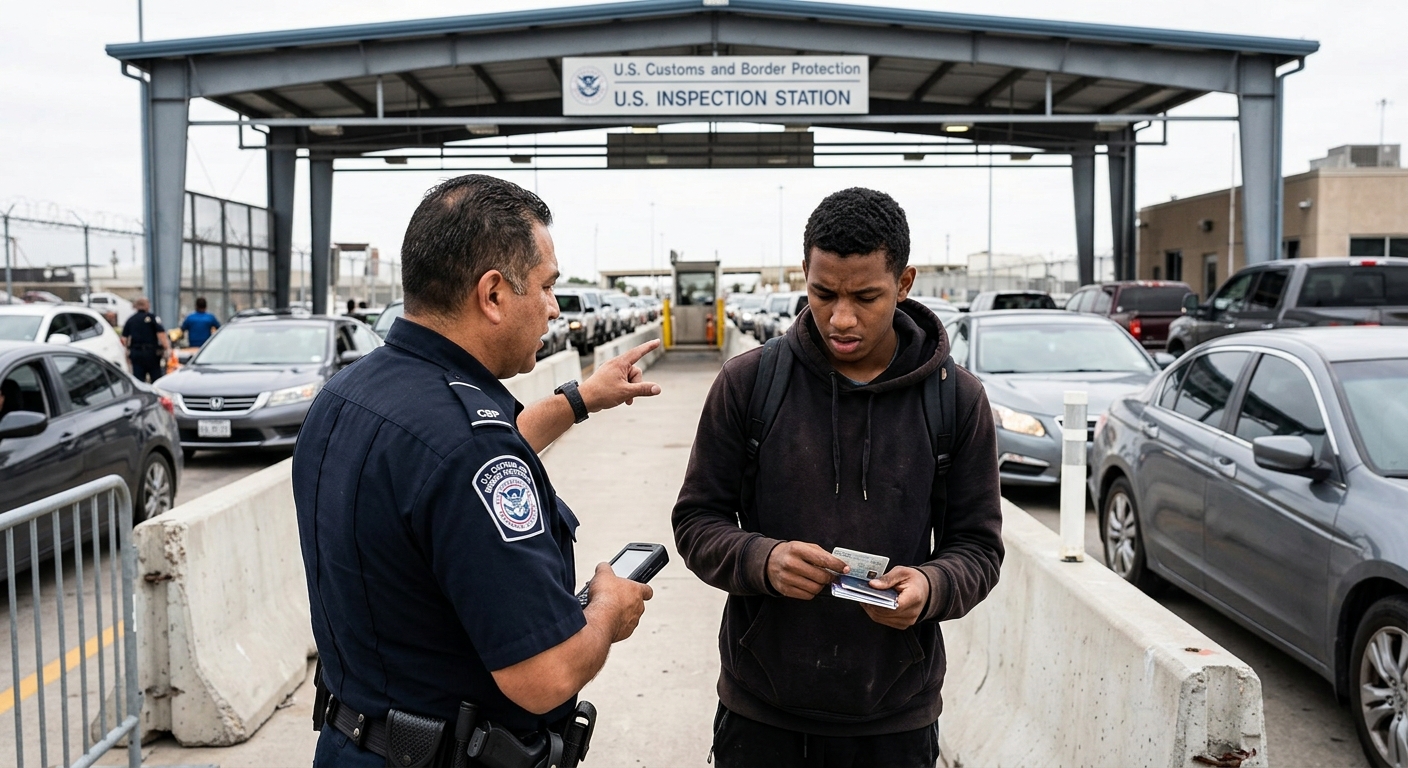
The Intersection of Security and Civil Liberties
Every year, millions of travelers legally cross the physical boundaries of the United States. They travel for business, leisure, and to reunite with family members. While the primary and undeniably critical mission of U.S. Customs and Border Protection (CBP) is to secure the nation from external threats, the specific law enforcement methods deployed to achieve this goal frequently collide with the civil liberties of ordinary individuals . For numerous U.S. citizens, permanent residents, and foreign visitors of various ethnic, racial, and religious backgrounds, navigating a port of entry or traveling within their own country has become a source of profound, enduring anxiety. Instead of a standard administrative process, they encounter a recurring, humiliating ordeal: being pulled aside for secondary screening, subjected to invasive questioning, and held in prolonged detention. This treatment is rarely driven by actionable, individualized intelligence or verifiable suspicion. Rather, it is overwhelmingly symptomatic of systemic racial, ethnic, and religious profiling. Understanding the legal architecture that permits these encounters, the human suffering they cause, and the ongoing legal battles to stop them is essential to preserving the democratic values of equality and justice.
Understanding CBP’s Expanded Authority and the 100-Mile Zone
A critical factor enabling these controversial encounters is the unique and broadly interpreted legal architecture surrounding American border enforcement. The Fourth Amendment to the United States Constitution explicitly guarantees the protection of the people against unreasonable searches and seizures. However, federal law grants CBP an expanded territorial reach that drastically exceeds what most Americans might imagine . Through federal statutes and subsequent regulations, immigration officers are permitted to conduct certain kinds of warrantless stops, board vehicles, and search for immigration documentation within a ‘reasonable distance’ from any external boundary of the United States.
This ‘reasonable distance’ has been defined by the government as 100 air miles from any land border or coastline. The implications of this definition are staggering. This 100-mile border zone encompasses nearly two-thirds of the entire United States population—over 200 million people. It includes the entirety of states like Florida and massive metropolitan hubs such as New York City, Los Angeles, Philadelphia, and Chicago . Within this vast jurisdiction, Border Patrol agents routinely operate internal immigration checkpoints and conduct roving patrols. While the government maintains that Fourth Amendment protections still apply in this zone, the practical application of CBP’s authority frequently blurs the line between lawful border security and unconstitutional, arbitrary harassment of minority communities.
The Human Toll: The Reality of Suspicionless Stops
Statistical data regarding border enforcement, drug seizures, and apprehension rates rarely capture the severe psychological and emotional trauma inflicted by racial profiling. For U.S. citizens of South Asian, Middle Eastern, or Latin American descent, the manifestation of CBP’s broad authority often translates into a lifetime of systemic harassment. Imagine the distress of returning from a relaxing family vacation or a grueling international business trip, only to be repeatedly and predictably pulled out of the primary inspection line while white counterparts pass through effortlessly.
These marginalized travelers are frequently escorted into isolated secondary screening rooms where they may be forced to wait for hours without any explanation, access to legal counsel, or the ability to contact their families. During these detentions, they are subjected to rigorous and hostile interrogations that veer wildly away from standard customs inquiries . CBP agents often delve into deeply personal and constitutionally protected territories, scrutinizing a traveler’s religious practices, the mosques or community centers they attend, their charitable donations, and their political opinions.
The cumulative, long-term effect of these repeated, suspicionless stops is undeniably devastating. It creates a powerful chilling effect on the fundamental right to travel, work freely, and participate fully in society. Victims of profiling report suffering from chronic anxiety in the weeks leading up to any planned travel. They intentionally arrive at airports many hours earlier than required, bracing themselves for the inevitable humiliation of being paraded away by armed agents in front of their peers. More fundamentally, these experiences send a corrosive message: despite holding U.S. citizenship, they are viewed as perpetual foreigners and inherent national security threats. This profound alienation undermines the very core of American democratic principles.
Policy Loopholes and the Illusion of Protection
One might reasonably assume that robust, airtight federal policies are in place to prevent the discriminatory use of race or religion by law enforcement. In fact, in 2014, the Department of Justice (DOJ) issued revised, highly publicized guidance explicitly prohibiting federal law enforcement officers from utilizing race, ethnicity, gender, national origin, religion, sexual orientation, or gender identity as a basis for investigative actions .
However, a closer, critical examination of this guidance reveals glaring, intentional loopholes. The updated policy specifically carved out exemptions for agencies tasked with border and transportation security. Consequently, CBP and the Transportation Security Administration (TSA) operate under frameworks that still permit the consideration of nationality, and in certain undefined contexts, race and ethnicity, during border screening and interdiction activities. While internal Department of Homeland Security (DHS) policies state that profiling is prohibited in all but the ‘most exceptional circumstances’ and requires a ‘compelling governmental interest,’ this standard is distressingly vague .
Because ‘national security’ is inherently classified as a compelling interest, agents are provided with a wide legal berth to rely on generalized demographic assumptions rather than specific, individualized evidence of wrongdoing. This creates a dangerous operational environment where discriminatory practices are not simply the actions of rogue, misinformed agents, but are essentially sanctioned by the ambiguities of the overarching policy framework itself.
Litigation and the Fight for Accountability
Faced with entrenched discriminatory practices and utterly inadequate administrative complaint processes, victims of racial profiling and dedicated civil liberties organizations have aggressively turned to the federal judiciary for relief. The American Civil Liberties Union (ACLU), along with numerous state affiliates and independent legal clinics, has spearheaded complex lawsuits aimed at dismantling the unconstitutional practices of immigration enforcement agencies .
These critical legal battles frequently center on violations of the Fourth Amendment’s protection against unreasonable seizures and the Fifth Amendment’s guarantee of equal protection under the law. For example, prominent lawsuits have challenged the widespread practices of roving Border Patrol agents making suspicionless stops of vehicles far from the physical border, relying entirely on the perceived Hispanic ethnicity of the drivers. In one widely publicized case in Montana, two U.S. citizens were detained by a CBP agent for the sole ‘offense’ of speaking Spanish to each other at a local convenience store—an egregious overreach that resulted in a successful federal civil rights lawsuit .
Similarly, class-action lawsuits in regions like New York and Minnesota have exposed coordinated operations where federal agents allegedly swept through immigrant neighborhoods, unlawfully arresting individuals without warrants or probable cause based purely on racial perceptions . Through these intensive litigation efforts, civil rights advocates seek not only financial compensation for the traumatized victims but, more importantly, vital injunctive relief. They demand binding court orders that force systemic, verifiable changes to CBP’s training regimens, oversight mechanisms, and internal disciplinary protocols.
Government Accountability and Systemic Failures
The urgent, undeniable need for comprehensive reform is further substantiated by thorough investigations from independent government oversight bodies. The U.S. Government Accountability Office (GAO) has repeatedly reviewed CBP’s operations and identified significant, systemic operational deficiencies. While CBP officially maintains policies and training modules designed to prevent discrimination, the GAO has found that the actual implementation, monitoring, and oversight at the field level remain wildly inconsistent .
Furthermore, multiple GAO reports have highlighted severe gaps in foundational data collection across CBP operations. Whether evaluating the inconsistent documentation of checkpoint activities, the lack of transparency in processing public complaints, or the handling of individuals’ personal property during short-term custody, the absence of reliable data severely hampers effective oversight . Without comprehensive, mandated reporting on the demographics of who is being stopped, searched, and detained, it is exceedingly difficult for lawmakers and the public to quantify the true scope of racial profiling.
The Path Forward: Restoring Constitutional Norms
The ongoing, highly politicized debate over American border security must not be decoupled from the fundamental imperative to protect human rights and constitutional liberties. The heavily documented experiences of U.S. citizens subjected to relentless, invasive scrutiny merely because of their faith or the color of their skin serve as a stark indictment of current border enforcement paradigms. Ensuring robust national security is undeniably a valid government objective, but it cannot be sustainably achieved by sacrificing the rights of the very public it aims to protect.
Dismantling the entrenched architecture of racial profiling at the border requires a sustained, multi-pronged approach. It necessitates definitive legislative action to close the DOJ guidance loopholes that currently grant immigration agencies sweeping exemptions from standard anti-discrimination rules. It demands rigorous, independent oversight of field operations, bolstered by mandatory, transparent demographic data collection. Ultimately, it requires a fundamental shift in the deeply ingrained culture of border enforcement—moving away from a system that defaults to suspicion based on identity, toward one that rigidly adheres to individualized, evidence-based policing. Until these comprehensive reforms are actualized, the U.S. border will remain a constitutionally precarious zone.
Frequently Asked Questions (FAQs)
- What constitutes the ‘100-mile border zone’?
The federal government defines the border zone as the geographic area within 100 air miles of any external land boundary or coastline of the United States. Within this massive jurisdiction, which houses nearly two-thirds of the U.S. population, Border Patrol claims expanded authority to operate checkpoints and conduct certain warrantless stops . - Is it explicitly legal for CBP to use race in their screening processes?
While general Department of Justice guidelines strictly prohibit racial profiling by federal law enforcement, controversial exemptions exist specifically for CBP and the TSA. These exemptions permit the consideration of nationality and ethnicity in the context of national security and border integrity, creating a loophole that critics argue enables systemic profiling . - Do U.S. citizens retain their Fourth Amendment rights at the border?
Yes, but those rights are heavily attenuated. The judicial border search exception allows customs agents to conduct routine searches of luggage and persons without a warrant or probable cause. However, non-routine, highly invasive digital searches or prolonged physical detentions generally require reasonable suspicion. - How are advocacy organizations combating these civil rights violations?
Civil liberties groups, most notably the ACLU, combat these practices through aggressive federal litigation on behalf of affected citizens. They also engage in legislative advocacy, pushing for laws that would legally mandate comprehensive data collection to expose discriminatory policing .
References
- 100 Mile Border Zone — American Civil Liberties Union. 2025-09-05. https://www.aclu.org/know-your-rights/border-zone
- CBP Policy on Nondiscrimination in Law Enforcement Activities — U.S. Customs and Border Protection. 2025-06-20. https://www.cbp.gov/about/eeo-diversity/policies/nondiscrimination-law-enforcement-activities
- Traveler Inspections: DHS Mechanisms to Help Prevent Discrimination — U.S. Government Accountability Office (GAO). 2023-12-12. https://www.gao.gov/products/gao-24-105383
- ACLU Sues Federal Government to End ICE, CBP’s Practice of Suspicionless Stops — American Civil Liberties Union. 2026-01-15. https://www.aclu.org/press-releases/aclu-sues-federal-government-end-ice-cbps-practice-suspicionless-stops
- Suda v. U.S. Customs and Border Protection — American Civil Liberties Union. 2020-11-24. https://www.aclu.org/cases/suda-v-us-customs-and-border-protection
Similar Articles








Read full bio of medha deb


