
When Border Patrol Defies Visa Court Orders
The chilling reality of unchecked border authority and student deportations.
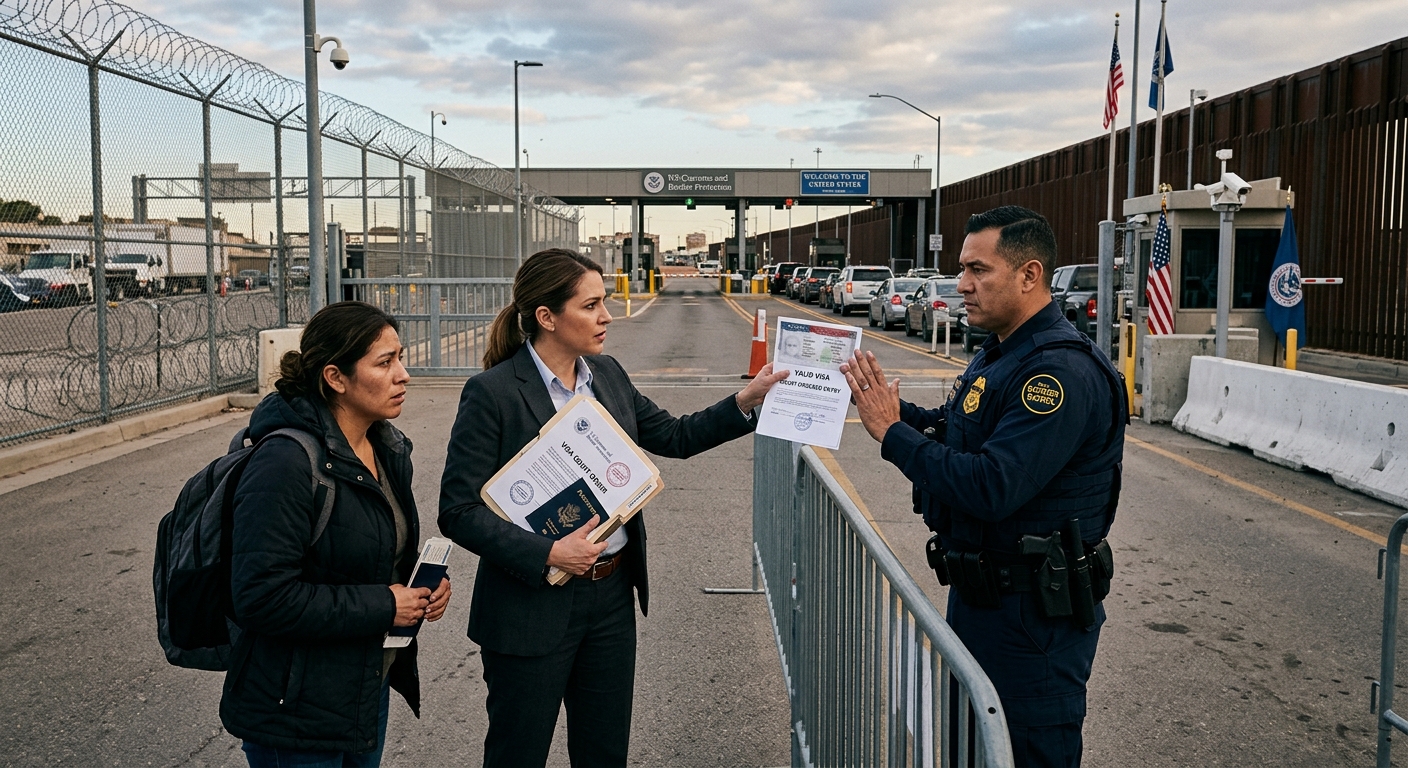
The Illusion of Assured Entry
Entering a new country to pursue higher education is a milestone often marked by anticipation, relief, and years of relentless academic preparation. However, for a growing number of international students arriving at United States ports of entry, this monumental life event has abruptly transformed into an ordeal of detention, interrogation, and sudden deportation. In theory, obtaining a valid F-1 student visa from the United States Department of State signifies that an applicant has already undergone extensive background checks, security clearances, and diplomatic vetting. Yet, the reality experienced at the border can be starkly different. Agents working for U.S. Customs and Border Protection (CBP) wield immense discretionary power, allowing them to effectively overrule the State Department’s prior authorizations with little to no immediate oversight.
This unchecked authority came sharply into focus in early 2020 when a devastating intersection of geopolitical tensions, stringent border security measures, and dramatic judicial intervention played out at Boston’s Logan International Airport. The case of an international scholar whose valid visa was arbitrarily revoked—culminating in a deportation that brazenly defied a direct federal court order—serves as a chilling case study on the fragile limits of due process and civil liberties at the American border.
The Grueling Process of Securing an F-1 Visa
To fully comprehend the gravity of a border agent deciding to revoke an international student’s visa on the spot, one must first understand the grueling procedural gauntlet that these scholars must navigate. The U.S. State Department’s vetting apparatus is widely considered to be among the most stringent in the world. Prospective international students are required to submit extensive documentation long before they ever purchase a plane ticket. This includes proof of admission to a certified educational institution, detailed financial affidavits proving their ability to afford tuition and living expenses, and comprehensive background data detailing their entire academic and personal histories.
Beyond the standard paperwork, applicants from certain countries—particularly those experiencing strained diplomatic relations with the United States—are subjected to prolonged administrative processing. This enhanced scrutiny involves deep coordination across multiple federal intelligence, anti-terrorism, and law enforcement databases. During this extended waiting period, candidates undergo meticulous security clearances designed to ensure they pose absolutely no threat to national security and possess no ties to illicit foreign entities.
When a student finally receives their physical visa stamp, it represents the culmination of a months-long governmental evaluation affirming their legitimacy. However, under the complexities of U.S. immigration law, a visa merely grants the holder permission to travel to a port of entry and formally request admission. It fundamentally does not guarantee entry. The final, overriding decision rests entirely in the hands of the CBP officer conducting the inspection at the airport, creating a precarious legal dynamic where a single border official can unilaterally invalidate a year’s worth of diplomatic vetting.
The Flashpoint at Logan International Airport
The inherent vulnerability of international travelers holding valid visas was dramatically exposed on the evening of January 19, 2020. Mohammad Shahab Dehghani Hossein Abadi, an Iranian national and dedicated economics student enrolled at Northeastern University, landed at Boston’s Logan International Airport. Armed with a newly renewed F-1 student visa—granted after a rigorous vetting process that lasted nearly a full year—he fully expected to simply clear customs and resume his undergraduate studies. Instead, his arrival was met with immediate, unyielding hostility.
Upon presenting his meticulously prepared credentials, he was immediately flagged and diverted for secondary inspection. This intimidating process involves moving travelers into separate, isolated holding areas where they are subjected to intensive, probing questioning, often lasting for several hours. During these detentions, travelers are systematically denied access to legal counsel, are frequently not allowed to use their cell phones, and cannot contact their university’s international student office for assistance. Reports from legal advocates indicate that border officials interrogated the student extensively, allegedly attempting to uncover hidden associations with foreign entities or seeking any minor discrepancy to justify an expedited removal order.
In these secondary inspections, border agents frequently utilize broad, “catch-all” statutory provisions. They often claim the individual secretly intends to overstay their nonimmigrant visa or harbors long-term immigrant intent, effectively allowing them to cancel the visa on the spot. Despite his documented, compliant history of prior study in the United States and robust institutional backing from his university, the officials determined he was inadmissible and initiated fast-tracked procedures to force him onto the next outgoing international flight.
A Legal Lifeline Ignored: The Emergency Judicial Stay
Word of the student’s sudden detention quickly reached the outside world, prompting a rapid, highly coordinated response from civil rights advocates, local immigration attorneys, and the American Civil Liberties Union (ACLU) of Massachusetts. Recognizing the imminent and irreversible threat of an unwarranted deportation, a dedicated coalition of lawyers scrambled through the night to draft and file an emergency petition in federal court. Their objective was clear and urgent: halt the removal proceedings immediately until a comprehensive judicial hearing could ascertain the validity and legality of CBP’s sudden visa revocation.
This intense legal mobilization yielded a significant, albeit temporary, victory for civil rights. Late into the evening of January 20, a federal judge presiding in the U.S. District Court for the District of Massachusetts granted an emergency stay of removal. The judicial order explicitly mandated that the student’s deportation be delayed for a minimum of 48 hours, legally preserving the status quo so that a formal court hearing could take place the following morning to review the agency’s rationale.
For the exhausted attorneys and the passionate crowd of demonstrators who had gathered in Logan Airport’s arrival hall chanting in solidarity, the judicial intervention felt like a monumental triumph of the rule of law. The federal court had forcefully asserted its oversight authority, effectively commanding an executive branch enforcement agency to pause its unilateral actions. In a functioning democratic system anchored by checks and balances, a judicial order acts as an absolute command, strictly binding all parties involved.
Defiance or Miscommunication? Deportation Despite a Court Order
The profound relief felt by the student’s legal team and supporters was shattered the very next morning when it was shockingly revealed that CBP had deported him anyway. Despite the explicit judicial mandate, agents placed him on an outbound flight to Paris overnight. The agency’s actions represented a direct, brazen contravention of the federal judge’s 48-hour stay of removal.
When publicly challenged on this flagrant defiance of judicial authority, federal officials offered conflicting and highly contested narratives. CBP spokespersons officially claimed that the agency was completely unaware of the court order at the exact time the student boarded the plane, attributing the unfortunate situation to unavoidable administrative lag and the inherently fast-paced nature of expedited border removals. However, immigration advocates and the student’s attorneys strongly and publicly disputed this defense.
Legal representatives pointed to timestamped electronic communications proving that the emergency stay was officially issued, docketed, and directly transmitted to government representatives well before the aircraft’s scheduled departure. Furthermore, independent flight tracking data and communication logs strongly suggested that there was ample, actionable time for border officials to physically remove the passenger from the aircraft before it ever took off. When a federal judge later reviewed the frustrating situation in court, the case was ultimately dismissed as legally moot solely because the student was already outside U.S. jurisdiction. This outcome left the court effectively powerless to force his immediate return, thereby inadvertently rewarding the agency’s non-compliance.
A Disturbing Pattern: The Targeting of Iranian Nationals
The deeply troubling events at Logan Airport did not occur in an isolated vacuum. The deportation of this specific student was strongly emblematic of a much broader, systemic crackdown on Iranian nationals attempting to enter the United States during a period of acute, escalating geopolitical friction. Early 2020 was characterized by extreme diplomatic and military tensions between Washington and Tehran. In the immediate wake of these international developments, immigration attorneys and prominent civil rights organizations reported a sharp, undeniable uptick in the harassment, prolonged detention, and unceremonious removal of Iranian travelers.
The ACLU and other watchdogs noted that this specific case was merely the most visible tip of the iceberg. Credible reports quickly emerged that at least a dozen other Iranian students had been systematically turned away at various U.S. airports within just a few months, with a disproportionate number of them being detained specifically at Boston Logan. These individuals had successfully undergone extreme vetting, held perfectly valid visas, and were simply returning to continue their academic pursuits.
This undeniable pattern of targeted exclusion raised profound constitutional, legal, and ethical questions. Advocates strongly argued that CBP was improperly weaponizing its vast discretionary authority to covertly enforce a shadow travel ban based purely on national origin, thereby intentionally circumventing the lawful, transparent channels of congressional policy-making. By arbitrarily subjecting students from a specific nation to insurmountable secondary inspections, the agency was executing a de facto policy of exclusion.
Political Backlash and Community Outrage
The blatant disregard for a federal court order and the seemingly discriminatory targeting of Iranian students immediately ignited a massive firestorm of political and public backlash across the country. The academic community, which is heavily reliant on the free, unimpeded exchange of global talent and ideas, was rightfully outraged. Spontaneous protests erupted at university campuses and airport terminals alike, with demonstrators passionately demanding strict accountability and transparency from border enforcement agencies.
The political response from elected officials was equally swift and severe. Prominent lawmakers aggressively drafted urgent communications directly to the acting commissioner of CBP. They demanded a comprehensive, unredacted explanation for the agency’s defiance of a judicial stay and sought detailed data regarding the alarming pattern of Iranian students being subjected to expedited removal. Legislators emphasized that absolutely no federal agency is above the law, and the apparent refusal to comply with a direct federal mandate threatened the very foundational checks and balances of the United States government. Despite this intense political pressure, holding border agencies accountable remains notoriously difficult.
Bureaucratic Autonomy and the Erosion of Due Process
At the very heart of this controversy is the unique, highly permissive legal framework governing U.S. borders, which creates a geographical zone where traditional constitutional protections are severely diluted. Under the legal doctrine known as the “border search exception,” the standard constitutional requirements for probable cause and warrants are significantly relaxed at international ports of entry. For non-citizens arriving at an airport, including those holding meticulously approved visas, the constitutional right to due process is highly restricted.
In this environment, CBP officers act as the ultimate gatekeepers, wielding the extraordinary power to simultaneously act as investigator, judge, and jury in the span of just a few hours. When an officer autonomously decides to cancel a visa and issue an expedited removal order, the affected individual generally has absolutely no right to a hearing before a neutral immigration judge, no right to an attorney during the primary inspection, and virtually no realistic avenue for an immediate, effective appeal.
This extreme bureaucratic autonomy has long been a major subject of concern for civil liberties experts and legal scholars. The blatant defiance of the emergency stay perfectly, and tragically, illustrates the ultimate danger of this autonomy: when an enforcement agency genuinely believes its operational mandate supersedes external legal constraints, the fundamental tenets of due process are dangerously eroded. Safeguarding civil liberties at the border will fundamentally demand comprehensive legislative reform aimed at establishing robust, independent oversight mechanisms for these agencies.
Frequently Asked Questions (FAQs)
- What is an F-1 student visa?
An F-1 visa is a specific nonimmigrant visa formally issued by the U.S. Department of State that legally allows foreign nationals to enter the United States to study at an accredited academic institution. Applicants must conclusively prove they are fully enrolled, possess sufficient financial backing, and intend to return home. - Does a valid visa guarantee entry into the United States?
No. A visa only grants the holder permission to travel to a U.S. port of entry. The ultimate, final authority to permit or deny actual admission to the country rests entirely with Customs and Border Protection (CBP) officers at the border checkpoint. - What does expedited removal mean?
Expedited removal is a fast-tracked legal procedure that allows CBP officers to rapidly deport foreign nationals who arrive at U.S. borders if they are deemed inadmissible, without ever affording them a formal hearing before an independent immigration judge. - Can a student return after being deported this way?
Being formally subjected to an expedited removal order typically triggers an automatic five-year legal ban on re-entering the United States. Returning requires applying for a complex legal waiver of inadmissibility. - How can border agencies defy a federal court order?
In cases involving rapid deportations, agencies often cite operational delays, administrative lag, or an alleged unawareness of the judicial order prior to the deportation occurring. Because the individual is quickly removed from U.S. soil, courts frequently declare the subsequent legal challenges moot since they lose physical jurisdiction over the person.
References
- US deports Iranian student despite court order — Al Jazeera. 2020-01-21. https://www.aljazeera.com/news/2020/1/21/us-deports-iranian-student-despite-court-order
- The deportation of an Iranian student shows the unchecked power of Customs and Border Protection — The Washington Post. 2020-01-23. https://www.washingtonpost.com/outlook/2020/01/23/deportation-an-iranian-student-shows-unchecked-power-customs-border-protection/
- Iranian Student Deported From Boston Despite Court Order; Federal Judge Dismisses Case — WBUR News. 2020-01-21. https://www.wbur.org/news/2020/01/21/iranian-northeastern-cbp-immigration-deportation-shahab-dehghani-boston-logan
- Student Visas — U.S. Department of State – Bureau of Consular Affairs. 2023-10-01. https://travel.state.gov/content/travel/en/us-visas/study/student-visa.html
- Pressley, Senators Markey and Warren Demand Answers from Trump Admin on Removal of Student — Office of Congresswoman Ayanna Pressley. 2020-01-23. https://pressley.house.gov/2020/01/23/rep-pressley-senators-markey-and-warren-demand-answers-trump-admin-removal-student/
Similar Articles








Read full bio of medha deb




