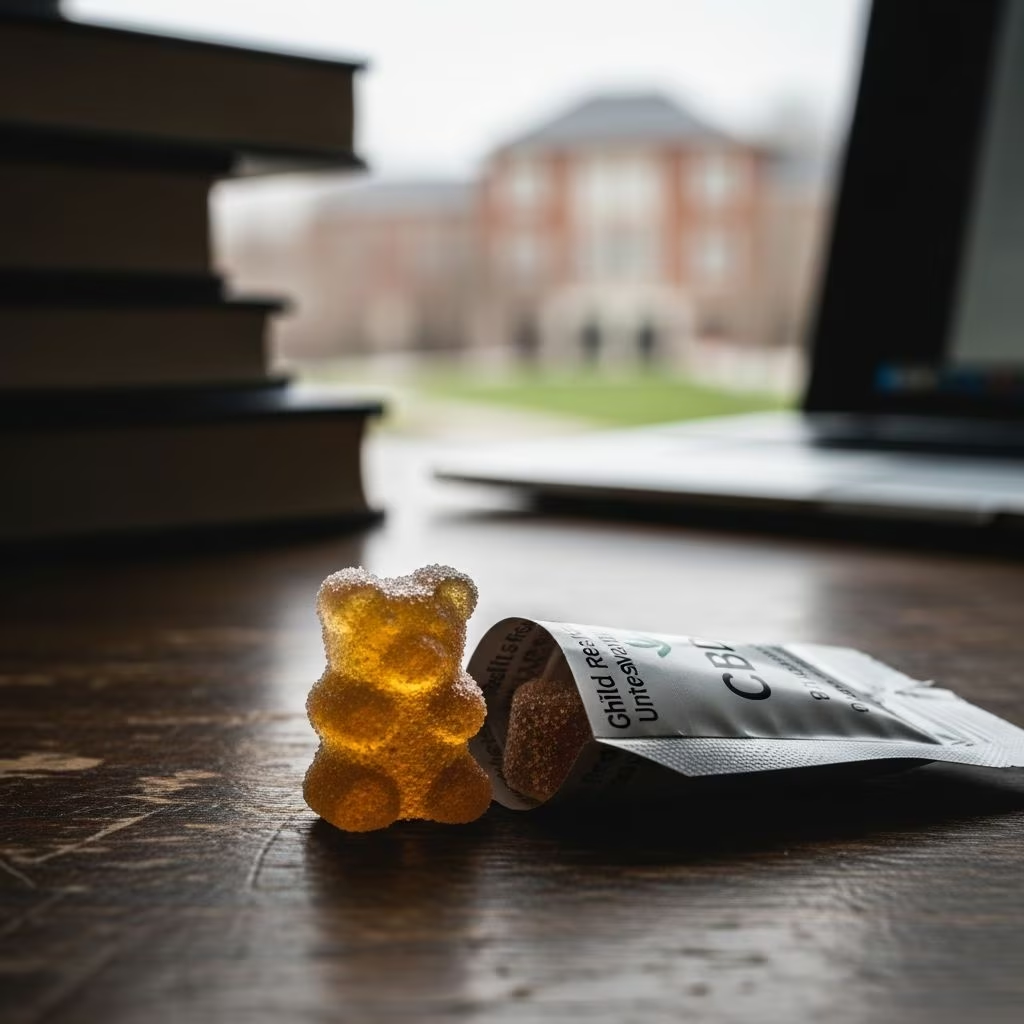
CBD-infused gummies and similar edibles remain a gray area in educational environments despite growing popularity. Federal laws classify most cannabis-derived products as controlled substances on school grounds, prompting strict prohibitions by most institutions.
Understanding CBD and Its Rise in Popularity
Cannabidiol (CBD), a compound from cannabis or hemp plants, is promoted for benefits like stress relief and pain management. Products like gummies appeal to students facing academic pressures, but their presence in schools triggers legal concerns due to varying THC content and regulatory oversight.
The 2018 Farm Bill legalized hemp-derived CBD with less than 0.3% THC federally, yet the FDA prohibits adding CBD to foods or supplements. This creates confusion, as products flood markets without consistent testing, potentially containing trace THC that violates drug-free mandates.
Federal Frameworks Governing School Environments
The Drug-Free Schools and Communities Act (DFSCA) of 1989 mandates that federally funded schools maintain drug-free campuses. Cannabis, including derivatives, falls under controlled substances, risking funding loss for non-compliance.
Even pure CBD isn’t explicitly exempted; institutions often ban all cannabinoid products to avoid disputes. From 2014-2018, the Education Department fined institutions $739,000 for DFSCA violations, underscoring enforcement rigor.
- Federal funding dependency drives blanket prohibitions.
- CBD’s unregulated status prevents reliable THC verification by schools.
- NCAA athletes face cannabinoid bans, including CBD, due to testing risks.
State-Level Variations and School District Responses
While federal law sets a baseline, states diverge. California advises prohibiting all CBD foods and supplements, deeming them impermissible. Districts lack resources to test THC levels, reinforcing bans on all cannabis products where children are present.
In contrast, California’s SB 223 (effective 2020) allows optional policies for parents to administer non-inhaled medical cannabis (e.g., oils, tinctures) to qualified students on campus. Key restrictions include:
- No storage at school; parents must bring and remove products.
- No staff handling required; policy adoption is voluntary.
- Administration must not disrupt education; sign-in mandatory.
This applies only to medical patients with doctor’s recommendations, excluding recreational CBD gummies.
| State Example | Policy Summary | Source |
|---|---|---|
| California (K-12) | Prohibit CBD foods/supplements; limited parental medical admin allowed. | |
| General Federal-Funded Schools | Blanket cannabis bans to protect funding. |
Higher Education: College and University Policies
Colleges mirror K-12 caution. Many, like Pepperdine University, ban all cannabis forms, including CBD, with penalties from fines to expulsion. Federal funding ties under DFSCA compel such measures.
Policies often fail to distinguish low-THC hemp CBD, opting for broad prohibitions. Institutions risk legal challenges if ambiguities allow use, prompting explicit CBD bans akin to alcohol restrictions.
Athletes face heightened scrutiny; NCAA prohibits cannabinoids entirely, citing THC contamination risks in CBD products. Some schools, like Colorado State University, permit legally grown hemp products but remain outliers.
Health and Safety Concerns in Educational Settings
Beyond legality, unanswered questions surround CBD safety for youth. The FDA highlights risks like drug interactions, dosage uncertainties, and long-term effects, especially for children.
Unregulated labeling leads to misrepresentations; products may exceed THC limits, triggering positive drug tests. Schools prioritize child safety, avoiding endorsement of unproven supplements.
- Lack of pediatric research amplifies caution.
- Potential for abuse or dependency in student populations.
- Interactions with medications common in school health plans.
Upcoming Regulatory Changes: The 2026 Hemp Landscape
A significant shift looms with potential hemp restrictions post-November 2026. Proposed federal rules could ban manufacturing/selling certain THC-containing hemp products nationwide, overriding state allowances.
This targets consumables exceeding new potency limits, affecting edibles like gummies. Educational institutions may tighten policies preemptively, emphasizing compliance amid uncertainty.
Practical Guidance for Students, Parents, and Educators
Students should avoid bringing CBD products to campus to evade disciplinary actions. Parents seeking medical options must verify district policies under laws like SB 223.
Educators benefit from clear communication: update handbooks to specify CBD prohibitions, train staff on recognition, and consult legal counsel for policy drafts.
- Review DFSCA compliance annually.
- Prohibit storage/use of all cannabinoid items.
- Document incidents consistently for federal reporting.
Frequently Asked Questions
Can students possess CBD gummies at school?
No, most schools ban them under federal drug-free rules, regardless of THC content.
What about medical CBD for K-12 students?
Some states like California allow parental administration via optional policies, but not student possession or recreational use.
Are colleges more lenient with CBD?
Rarely; federal funding risks lead to prohibitions, with exceptions like verified low-THC hemp in select cases.
Will the 2026 hemp ban affect schools?
Yes, it could criminalize many CBD edibles federally, strengthening campus bans.
What penalties apply for violations?
Range from warnings to expulsion/suspension; institutions face funding cuts.
Navigating Policies: Best Practices for Compliance
To foster safe environments, districts should:
- Adopt explicit CBD bans in codes of conduct.
- Educate via assemblies on risks and laws.
- Partner with health experts for accurate info.
Parents can advocate for medical accommodations but respect no-storage rules. Students benefit from alternatives like counseling for stress management.
In summary, while CBD’s appeal grows, educational settings prioritize caution. Federal overlays, safety gaps, and policy inertia make bringing edibles inadvisable.
References
- Legal Update Memo No. 13-2019 – Everything You Never Wanted to Know About CBD K-12 — Southern California League of Schools. 2019. https://sclscal.org/legal-update-memo-no-13-2019-everything-you-never-wanted-to-know-about-cbd-k-12/
- CBD In The School Setting: What School Officials Should Consider — Murphy, Buancore, Reynolds & Keener. N/A. https://www.mbm-law.net/insights/cbd-in-the-school-setting-what-school-officials-should-consider/
- New Laws: SB 223, Administration of Medical Cannabis at School Sites — California School Boards Association. 2019-10-09. https://blog.csba.org/new-laws-sb223/
- Is CBD Legal On College Campuses? — cbdMD. N/A. https://www.cbdmd.com/blogs/posts/is-cbd-legal-at-college
- CBD on Campus: Many Questions, Few Answers — Best Best & Krieger LLP. N/A. https://www.bsk.com/news-events-videos/cbd-on-campus-many-questions-few-answers
- The Truth About the Nationwide Hemp Ban in 2026 — Simple Leaf CBD. N/A. https://simpleleaf.com/the-truth-about-the-nationwide-hemp-ban-in-2026/