
The Case for Abolishing Qualified Immunity
A growing judicial consensus demands an end to qualified immunity doctrine.
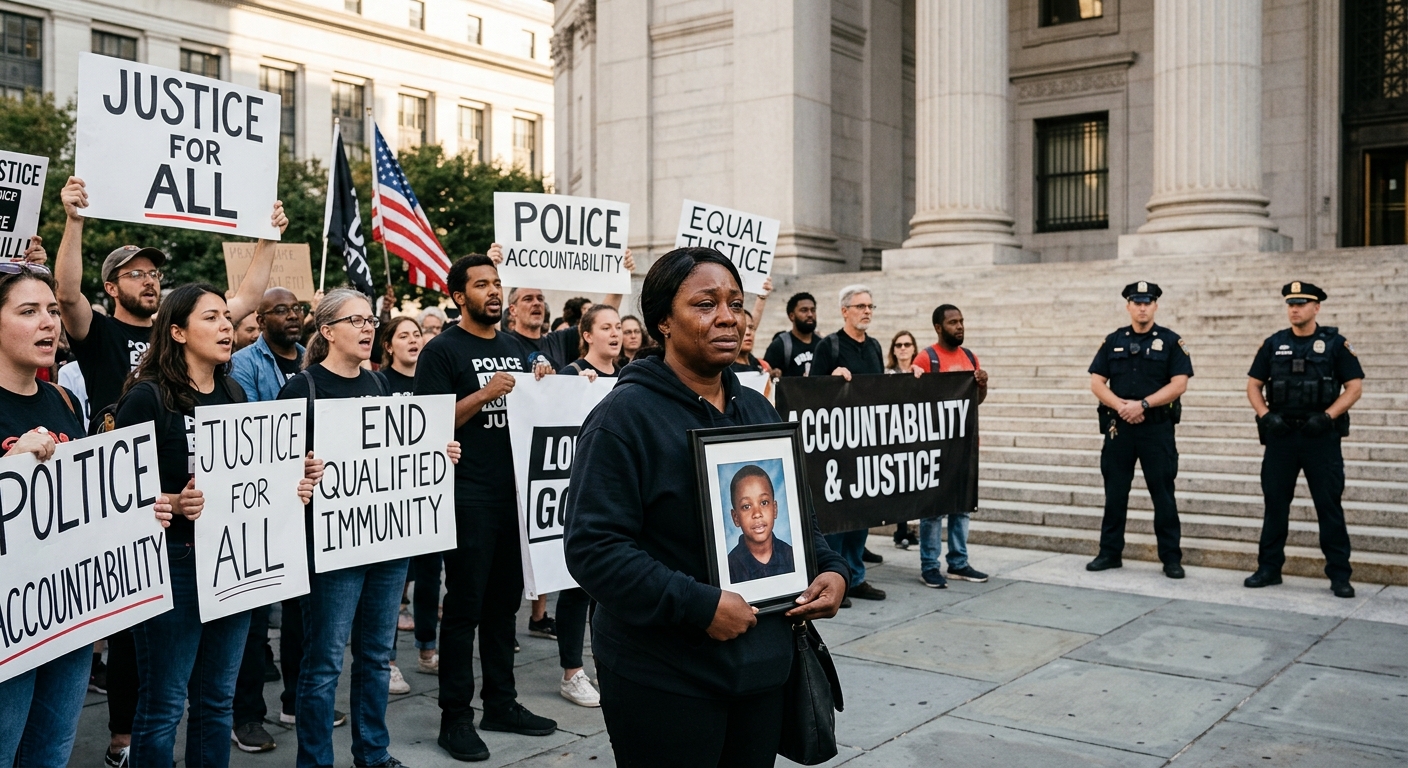
The Foundation of American Accountability
At the heart of the American legal system lies a foundational promise: no individual, regardless of their position or power, is above the law. Yet, for decades, a judicially manufactured loophole has effectively shielded government officials from accountability when they violate the constitutional rights of the very citizens they are sworn to protect. This doctrine, known as qualified immunity, has become one of the most fiercely debated topics in modern civil rights litigation. While the United States Supreme Court originally designed this legal standard to protect public servants from frivolous lawsuits, its modern application has morphed into an almost impenetrable fortress. Today, a profound shift is occurring within the judiciary itself. Lower court judges, legal scholars, and bipartisan lawmakers are forming an unprecedented consensus: the doctrine is legally baseless, practically disastrous, and fundamentally unjust. It is time for a comprehensive reevaluation of how we hold state actors accountable.
The Historical Promise of Section 1983
To understand the betrayal of qualified immunity, one must first examine the historical context of civil rights enforcement in the United States. Following the American Civil War, the federal government sought to protect newly emancipated Black citizens from a wave of terror and systemic oppression in the South. In response to rampant violence and the complicity of local law enforcement, Congress passed the Ku Klux Klan Act of 1871. A critical component of this legislation was codified as 42 U.S.C. Section 1983.
This statute provided a direct legal mechanism for individuals to sue state and local officials for financial damages if those officials deprived them of their constitutional rights. The text of Section 1983 is remarkably unambiguous. It explicitly states that any person acting under the color of state law who deprives another of their rights shall be liable to the party injured. For nearly a century, the statute operated without the broad exemptions that define modern litigation. The lawmakers who drafted the Act intended for it to be an uncompromising tool for justice, recognizing that local courts were often unwilling to hold their own officials accountable.
The Birth of a Judicial Shield
The trajectory of civil rights litigation changed drastically in the mid-to-late twentieth century. As civil rights lawsuits became more prevalent, the Supreme Court began to express concerns about the potential burden these lawsuits might place on government officials. The Court feared that the constant threat of personal financial liability would create a chilling effect, deterring capable individuals from entering public service or causing them to hesitate in high-stakes situations.
The modern framework of qualified immunity was formally cemented in the 1982 landmark case Harlow v. Fitzgerald. Ironically, this case did not involve police officers or physical violence; it centered on a whistleblower dispute involving aides in the Nixon administration. In Harlow, the Supreme Court ruled that government officials are shielded from civil liability for damages so long as their conduct does not violate clearly established statutory or constitutional rights of which a reasonable person would have known. This standard fundamentally rewrote Section 1983, replacing the statute’s absolute language with a subjective, judicially created defense. What began as a modest protection for officials making split-second, good-faith errors quickly expanded into a broad doctrine that forgave egregious misconduct.
The Paradox of the Clearly Established Test
The most heavily criticized aspect of qualified immunity is the clearly established requirement. In practice, this standard creates a Kafkaesque legal paradox that overwhelmingly favors defendants. For a plaintiff to defeat qualified immunity and proceed to trial, they must prove not only that their constitutional rights were violated, but also that a previous court had already ruled that the exact same conduct, under nearly identical circumstances, was unconstitutional.
This requirement often leads to absurd and heartbreaking outcomes. If an officer commits an egregious act of abuse, but no previous court case exists with the exact same factual scenario, the officer is granted immunity. The court can acknowledge that the officer’s actions were unconstitutional, yet still dismiss the case because the right wasn’t clearly established in that highly specific context. Furthermore, because courts often grant immunity without formally ruling on whether the underlying action was unconstitutional, the law never becomes clearly established for future cases. This cycle of constitutional stagnation ensures that victims of novel forms of misconduct are perpetually denied justice, while bad actors are repeatedly let off the hook.
The Uprising in the Lower Courts
While the Supreme Court has largely refused to overturn its own precedent, a growing and vocal rebellion is taking place among lower court judges. Appellate and district court judges across the ideological spectrum are increasingly using their legal opinions to express deep frustration with the doctrine they are legally bound to enforce.
Conservative judges, who typically prioritize textualism and original intent, criticize the doctrine because it has zero basis in the actual text of Section 1983 or the common law of 1871. They argue that the Supreme Court engaged in blatant judicial activism by inventing a defense that Congress never legislated. Conversely, liberal judges condemn the doctrine for its devastating impact on civil rights, noting that it disproportionately harms marginalized communities and leaves victims of severe state violence without any legal recourse.
This cross-ideological judicial consensus is a rare phenomenon. When organizations ranging from the Cato Institute on the right to civil liberties organizations on the left unite to condemn a legal doctrine, it signals a fundamental breakdown in the administration of justice. Lower court judges are effectively begging the Supreme Court or Congress to intervene, noting that they are trapped in a system that forces them to deny justice even when the facts of a case scream for accountability.
Debunking the Myths of Financial Ruin and Chilling Effects
Defenders of qualified immunity consistently rely on two primary arguments: that abolishing the doctrine would bankrupt individual public servants, and that it would prevent officials from performing their duties effectively. However, comprehensive legal and empirical research has systematically debunked both of these claims.
The reality of civil rights litigation is that individual officers almost never pay out of pocket for settlements or judgments. Extensive studies on police indemnification reveal that municipal governments or their insurance providers cover the financial costs in over 99 percent of cases. The fear of personal financial ruin is, therefore, a largely fabricated narrative.
Furthermore, the notion that accountability creates a dangerous chilling effect ignores the fundamental purpose of civil liability in every other profession. Doctors, engineers, and private security personnel are all subject to civil liability if their negligence or malice causes harm, and society does not collapse as a result. Instead, liability incentivizes proper training, adherence to protocols, and the dismissal of individuals who repeatedly violate safety standards. Shielding state actors from this basic feedback mechanism does not make society safer; it simply insulates institutional rot.
The Destructive Power of Interlocutory Appeals
Beyond the clearly established test, the procedural mechanics of qualified immunity also serve to exhaust plaintiffs and their legal counsel. In standard civil litigation, a defendant can usually only appeal a judge’s ruling after a final verdict has been reached. However, government officials invoking qualified immunity are granted a special privilege known as an interlocutory appeal.
If a district court judge denies a motion for qualified immunity, the government official can immediately halt the trial and appeal the decision to a higher court. This process can drag on for years, freezing the discovery process and drastically increasing the financial and emotional toll on the victim. For many plaintiffs who have already suffered severe trauma, the prospect of fighting a multi-year procedural battle against a heavily resourced government entity is simply too overwhelming. This structural advantage forces many victims to abandon their cases or accept deeply inadequate settlements long before a jury ever hears the facts.
Legislative Pathways and State-Level Triumphs
Given the Supreme Court’s reluctance to dismantle the doctrine, the responsibility for reform has increasingly fallen to the legislative branch. On the federal level, attempts to amend Section 1983 have faced fierce political gridlock. Despite broad public support for accountability, powerful lobbying groups have successfully stalled comprehensive federal reform.
However, the states are emerging as vital laboratories of democracy in the fight against qualified immunity. Recognizing that they cannot change federal law, progressive state legislatures are creating state-level analogues to Section 1983. Colorado led the nation in 2020 by passing legislation that explicitly bars the use of qualified immunity as a defense in state civil rights lawsuits. New Mexico quickly followed suit, enacting a sweeping civil rights law that ensures victims can seek redress in state courts without facing the impenetrable barrier of judicially created immunity.
These state-level victories provide a crucial blueprint for the rest of the country. They demonstrate that the sky does not fall when public officials are held to the same legal standards as ordinary citizens. As more states adopt similar measures, the pressure on the federal government to modernize its civil rights framework will only continue to mount.
A Call for Accountability and Democratic Integrity
The persistence of the qualified immunity doctrine represents a profound failure of the American judicial system. By prioritizing the convenience of government officials over the constitutional rights of the public, the courts have subverted the core principles of democracy. The doctrine undermines public trust in law enforcement, denies justice to the aggrieved, and sends a dangerous message that state actors can operate with impunity.
The mounting chorus of lower court judges demanding reform is a testament to the doctrine’s inherent unsustainability. When the very individuals tasked with administering justice openly condemn the rules they are forced to apply, society must listen. Whether through decisive action by the Supreme Court to correct its historical error, or through bold legislative intervention by Congress, the era of absolute impunity must come to a close. Restoring the original promise of civil rights legislation is not merely a legal necessity; it is a moral imperative essential for the survival of a just society.
Frequently Asked Questions (FAQ)
- What is the primary purpose of 42 U.S.C. Section 1983?
Enacted as part of the Ku Klux Klan Act of 1871, Section 1983 was designed to give private citizens the right to sue state and local government officials in federal court for constitutional violations. It was originally intended to be a robust tool to enforce the civil rights of newly emancipated Black Americans against oppressive state action. - Does eliminating qualified immunity mean individual police officers will go bankrupt?
Extensive legal research indicates this is a myth. In reality, police officers are almost universally indemnified by their municipal employers or municipal insurance policies. Studies have shown that in the overwhelming majority of successful civil rights lawsuits, the local government entity covers the financial damages, not the individual officer. - How does the ‘clearly established’ rule protect misconduct?
The rule requires a plaintiff to find a nearly identical, pre-existing court ruling to prove that an officer’s specific action was unconstitutional. If a past case doesn’t perfectly match the unique facts of the current civil rights violation, the officer is granted immunity, even if their actions were clearly wrong.
References
- Qualified Immunity — National Conference of State Legislatures. 2026-05-27. https://www.ncsl.org/civil-and-criminal-justice/qualified-immunity
- Harlow v. Fitzgerald, 457 U.S. 800 (1982) — Justia U.S. Supreme Court Center. 1982-06-24. https://supreme.justia.com/cases/federal/us/457/800/
- Qualified Immunity: A Legal, Practical, and Moral Failure — Cato Institute. 2020-09-14. https://www.cato.org/policy-analysis/qualified-immunity-legal-practical-moral-failure
- The Controversy Over Qualified Immunity — The Institute for Justice. 2021-06-01. https://ij.org/issues/project-on-immunity-and-accountability/frequently-asked-questions-about-ending-qualified-immunity/
- Qualified Immunity for “Just Following Orders” — Harvard Law Review. 2026-01-20. https://harvardlawreview.org/print/vol-139/qualified-immunity-for-just-following-orders/
Similar Articles








Read full bio of Sneha Tete




