
The Carceral Health Crisis: Outbreaks Behind Bars
Exploring the structural and public health challenges of pandemics behind bars.
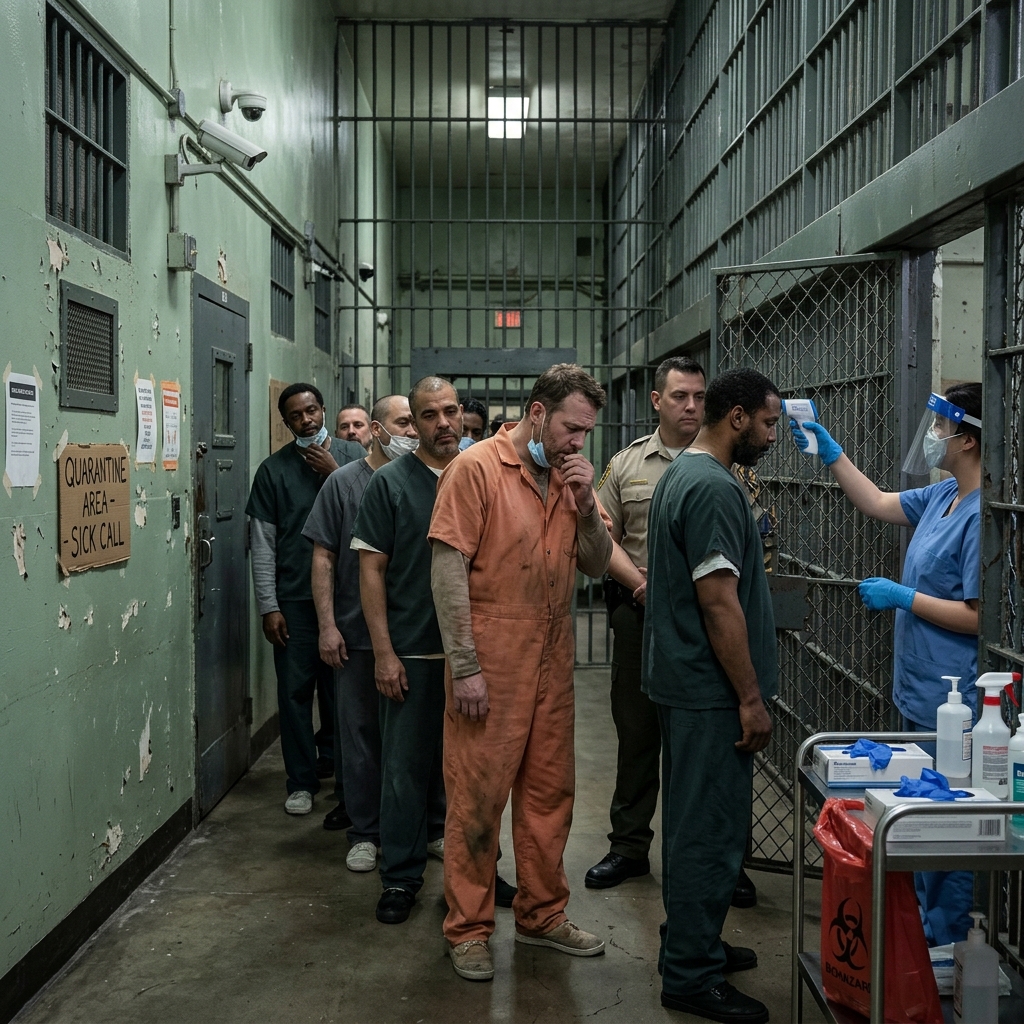
The Carceral Health Crisis: Managing Infectious Diseases in Confined Populations
When global health emergencies strike, the cascading consequences are felt across all segments of society. Yet, within one specific environment, the epidemiological risks are magnified exponentially: the carceral system. Correctional and detention facilities, by their very design, are structured to confine large groups of individuals in highly restricted, shared spaces. While this architecture serves the institutional purpose of incarceration, it inadvertently creates an ideal incubator for infectious pathogens. From the devastating spread of tuberculosis to the rapid transmission of novel respiratory viruses like COVID-19, confined populations constantly face heightened exposure to communicable diseases.
The challenges associated with managing public health crises behind bars are not merely logistical inconveniences; they represent deep, systemic flaws in our approach to collective well-being. Examining the harrowing realities of surviving a highly contagious outbreak while incarcerated reveals profound gaps in standard medical infrastructure. To effectively navigate and mitigate future pandemics, policymakers and public health officials must acknowledge the unique physical vulnerabilities of carceral settings, the intense psychological impact of aggressive outbreak management on inmates, and the undeniable epidemiological truth that prison health is inextricably linked to broader community health.
The Intersection of Public Health and Incarceration
Public health thrives on established principles of disease mitigation: physical distancing, enhanced environmental sanitation, and rapid, accessible medical intervention. The institution of incarceration, however, operates on opposing principles of containment, restriction, and control. This fundamental operational clash means that standard epidemiological recommendations often cannot be executed within prison walls without significant, sweeping overhauls to daily procedures.
According to the World Health Organization (WHO), individuals housed in prisons globally carry a significantly larger burden of infectious diseases compared to the general public. High prevalence rates of underlying, chronic comorbid conditions—such as asthma, unmanaged diabetes, and severe cardiovascular disease—further complicate the clinical picture for incarcerated demographics. When a highly communicable and virulent virus is introduced into such a medically vulnerable population, the resulting infection rate can be catastrophic. The initial, chaotic stages of a pandemic invariably highlight how traditional correctional models are fundamentally ill-equipped to act as healthcare sanctuaries, forcing an urgent ethical reevaluation of how the state’s duty of care is actively administered to those deprived of their liberty.
Structural Vulnerabilities: Why Facilities Fall Short
The architectural layouts and daily operational realities of most state, federal, and local correctional facilities directly contradict modern infection prevention protocols. Addressing these deep-rooted structural deficits is paramount to understanding why outbreaks spread with such terrifying velocity once they breach the facility walls.
Overcrowding and the Impossibility of Distancing
In standard societal settings, maintaining a physical distance of at least six feet from others serves as a primary, effective defense mechanism against droplet and airborne pathogens. In a standard prison environment, achieving this separation is a physical impossibility. Many facilities operate well over their originally designed architectural capacity, housing individuals in open, crowded dormitory-style settings or cramped, poorly ventilated double-occupancy cells. Essential daily activities taking place in dining halls, recreational yards, and communal shower blocks force constant, inescapable close proximity among hundreds of individuals. When an airborne pathogen enters a cellblock where spatial separation cannot be achieved, rapid transmission across the entire unit is virtually guaranteed.
Infrastructure Decay and Hygiene Deficits
Beyond the constraints of physical space, the basic tenets of hand hygiene and environmental sanitation face severe, systemic barriers behind bars. Alcohol-based hand sanitizers, a universally recommended staple in civilian pandemic defense, are strictly banned in nearly all correctional facilities due to their alcohol content, which administrators view as a critical security threat or contraband. Consequently, incarcerated individuals must rely entirely on traditional soap and water to protect themselves.
However, basic access to soap is frequently limited, rationed, or heavily commodified. In many institutions across the country, inmates must purchase basic hygiene items, including soap, from the prison commissary at inflated prices. For indigent individuals without external financial support, securing enough soap for frequent, thorough handwashing becomes a significant, sometimes insurmountable, daily challenge. Furthermore, the physical infrastructure of aging, underfunded prisons often includes failing plumbing, broken communal sinks, and critically outdated HVAC ventilation systems that merely recirculate contaminated, stagnant air rather than actively filtering it out of the environment.
Standard Directives vs. Correctional Realities
To clearly illustrate the jarring disparity between general public health mandates and carceral constraints, consider the following structural comparisons:
| Public Health Directive | Correctional Facility Reality | Resulting Epidemiological Consequence |
|---|---|---|
| Maintain physical distancing | Overcrowded dormitories and shared, cramped multi-person cells. | Accelerated airborne and droplet transmission among inmates. |
| Frequent hand sanitizing | Alcohol-based sanitizers are strictly prohibited as dangerous contraband. | Heavy reliance on limited, sometimes costly, low-quality bar soap. |
| Isolate when symptomatic | Medical isolation often mirrors harsh, punitive solitary confinement. | Widespread symptom concealment to avoid punitive isolation protocols. |
| Ensure proper air ventilation | Aging facilities with outdated HVAC systems and sealed, unbreakable windows. | Prolonged suspension of contagious viral particles in shared airspaces. |
The Psychological Toll of Outbreak Mitigation
The mental health implications of facing a potentially deadly virus while permanently locked in a confined, overcrowded space are profound and deeply damaging. The psychological burden carried by inmates extends far beyond the natural human fear of contracting the pathogen itself; it is intrinsically tied to the heavy-handed, restrictive methods used by facility administrators to manage the outbreak.
The Hidden Costs of Medical Isolation
When an infectious disease successfully infiltrates a prison, administrations often instinctively resort to drastic, facility-wide lockdown measures in a desperate attempt to halt the spread. While officially intended as a clinical quarantine or medical isolation strategy, these extreme measures practically replicate the traumatizing conditions of solitary confinement. Inmates may find themselves locked in their small cells for up to 23 hours a day, stripped entirely of recreational yard time, rehabilitative educational programming, and crucial family visitation rights.
Extensive research from behavioral health authorities indicates that prolonged quarantine, especially when it is involuntary and highly restrictive, leads to severe psychological distress. Severe anxiety, clinical depression, and overwhelming feelings of helplessness are significantly magnified when an individual is trapped in a locked cell, listening to neighboring inmates violently cough or desperately call for delayed medical help, all without the personal agency to protect themselves or seek immediate care. Furthermore, the deep stigma and intense dread associated with enduring these harsh isolation conditions often strongly disincentivize inmates from reporting early physical symptoms, ironically fueling further covert, uncontrolled spread of the disease throughout the population.
Spillover Effects: The Wall is Not a Barrier
A highly dangerous and pervasive misconception regarding carceral health is the belief that outbreaks remain neatly contained entirely behind prison walls. In reality, modern prisons and local jails are highly porous, constantly shifting environments. The concept that “prison health is public health” is not merely an ethical, humanitarian slogan; it is a recognized epidemiological fact consistently emphasized by the Centers for Disease Control and Prevention (CDC).
Every single day, thousands of individuals cross the secure threshold of correctional facilities. Correctional officers, contracted healthcare staff, administrative personnel, food service delivery workers, and legal counsel commute from their surrounding local communities directly into the prison environment, and then return home at the end of their designated shifts. If a facility becomes an amplification hub for an infectious disease, the working staff invariably become unintended vectors, inadvertently carrying the pathogen back to their families, grocery stores, and local neighborhoods. Consequently, failing to adequately protect the incarcerated population directly and inevitably threatens the overall public health resilience of the broader community.
Ethical and Legal Imperatives
The state assumes a profound, non-transferable duty of care when it legally strips individuals of their liberty and autonomy. From a legal standpoint, the failure of a government institution to provide adequate, timely medical care or actively protect inmates from known, severe environmental risks can be vigorously challenged under the Eighth Amendment of the United States Constitution, which strictly prohibits cruel and unusual punishment.
Compassionate Release and Decarceration
During severe, life-threatening health crises, public health experts, epidemiologists, and legal advocates uniformly emphasize decarceration as a primary, vital mitigation strategy. Rapidly reducing the prison population density is universally acknowledged as the most effective, immediate way to enable necessary physical distancing and alleviate the crushing strain on limited internal medical resources.
According to comprehensive guidelines issued by the Bureau of Justice Assistance, actively implementing and expanding compassionate release protocols is a critical, life-saving tool during pandemics. Compassionate release allows for the early, legally sanctioned release or immediate transfer to home confinement of specific individuals who pose a minimal security risk to the public but face maximum, critical medical vulnerability—such as the elderly population, the terminally ill, or those with severe immunocompromising conditions. By actively and safely reducing the absolute number of people living inside these confined facilities, administrators can significantly better protect those who remain incarcerated and properly fulfill their constitutional obligation to prevent entirely preventable deaths.
Diversion and Preventative Justice
In addition to releasing vulnerable inmates, limiting incoming populations is equally crucial. Law enforcement agencies and local prosecutors can successfully implement intelligent diversion protocols, ensuring that individuals arrested for non-violent, minor infractions are issued standard citations or future court summons rather than being immediately booked into an overcrowded local jail. This “front-door” preventative strategy successfully stops the unnecessary, dangerous circulation of new individuals through intake and booking areas, which historically act as primary, high-traffic vectors for bringing active community pathogens directly into the fragile jail ecosystem.
Charting a Path Forward: Preparing for the Next Crisis
The tragic, costly lessons extracted from recent global pandemics highlight the urgent, undeniable need for a massive paradigm shift in exactly how correctional systems approach infectious disease management and basic human health. Waiting passively for the next devastating outbreak to materialize before hastily implementing temporary structural changes virtually guarantees a disastrous repetition of past systemic tragedies.
Building a truly resilient justice system requires immediate, proactive financial investments in facility infrastructure. This includes thoroughly overhauling desperately outdated HVAC systems to drastically improve indoor air filtration, and retrofitting aging plumbing systems to ensure free, unrestricted, and sanitary access to basic handwashing stations. Furthermore, progressive policy adjustments must be permanently institutionalized across all jurisdictions. This comprehensive approach includes maintaining active, permanent legal mechanisms for rapid population reduction during officially declared health emergencies, utilizing pre-established law enforcement diversion programs to aggressively prevent low-level offenders from needlessly entering crowded jails, and establishing strict oversight ensuring that necessary medical isolation never devolves into abusive, punitive solitary confinement.
By proactively aligning carceral operations more closely with universal, proven public health standards, society can actively build a justice framework that genuinely respects fundamental human dignity, rigorously fulfills constitutional legal mandates, and comprehensively safeguards the health of both the incarcerated and the public at large.
Frequently Asked Questions (FAQs)
- What specifically makes prisons so vulnerable to infectious diseases?
Prisons are highly susceptible due to severe, systemic overcrowding, tightly shared living and sleeping spaces, grossly inadequate air ventilation, and significantly higher baseline rates of underlying, chronic health conditions among the incarcerated population. These compounding factors create a perfect environment where airborne pathogens can spread rapidly. - Why can’t incarcerated individuals just use standard hand sanitizer?
Standard alcohol-based hand sanitizers are universally considered dangerous contraband in nearly all correctional facilities due to strict security concerns regarding potential intoxication or flammability. Inmates must instead rely entirely on bar soap, which is not always freely or readily available. - How does an isolated outbreak in a prison affect the outside community?
Prisons are absolutely not closed systems. Thousands of vital staff members, including guards, administrative workers, and nurses, enter and exit the facility daily. If an outbreak occurs inside, these staff members can easily contract the illness and unknowingly transmit it to their families and local communities upon returning home. - What is the legal definition of compassionate release?
Compassionate release is a specific legal mechanism that allows for the approved early release or official transition to home confinement of incarcerated individuals who are highly vulnerable to severe illness (such as the elderly or medically compromised) and pose no significant physical threat to public safety. - How does medical quarantine differ from solitary confinement in prisons?
While clinical quarantine is strictly meant for temporary medical observation and care, in prison environments, it often operationally mimics solitary confinement. Sick individuals may be punitively locked in small cells for 23 hours a day without standard programming or human contact, which causes severe psychological distress and actively discourages sick inmates from reporting their symptoms.
References
- Creating supportive conditions to reduce infectious diseases in prison populations — World Health Organization (WHO). 2023-11-06. https://iris.who.int/handle/10665/373979
- Infection Prevention and Control in Correctional Settings — Centers for Disease Control and Prevention (CDC). 2023-03. https://stacks.cdc.gov/view/cdc/132410
- Preparing for the Next Pandemic: Lessons Learned from COVID-19 in Confinement Facilities — Bureau of Justice Assistance (OJP). 2023-04-10. https://bja.ojp.gov/doc/preparing-for-next-pandemic.pdf
- Mental Health of Prison Inmates During the COVID-19 Pandemic: A Systematic Review — National Center for Biotechnology Information (NCBI). 2024-11-21. https://www.ncbi.nlm.nih.gov/pmc/articles/PMC11578330/
- COVID-19 in Correctional and Detention Facilities — United States, February–April 2020 — Centers for Disease Control and Prevention (CDC). 2020-05-15. https://www.cdc.gov/mmwr/volumes/69/wr/mm6919e1.htm
Similar Articles








Read full bio of medha deb


