Advertisements promising hundreds of dollars a week just to display a logo on your car can sound like the perfect side hustle. But many of these so-called car wrap opportunities are really fake check scams designed to drain your bank account before your financial institution discovers the fraud.
This guide explains how these schemes work, the red flags to watch for, and what to do if you have already responded to a suspicious car wrap offer.
What Real Car Wrap Advertising Looks Like
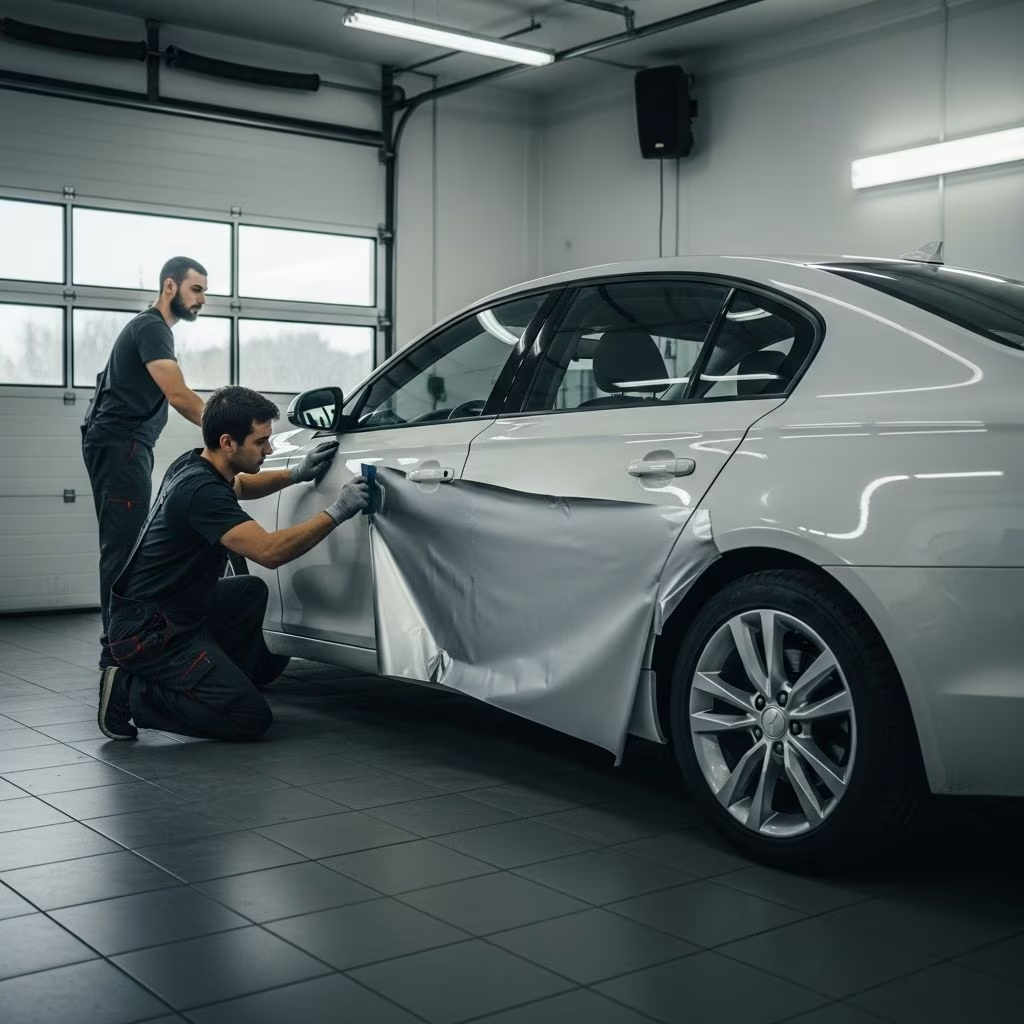
Understanding how legitimate vehicle advertising works makes it easier to spot fakes. Car wrapping itself is a genuine marketing strategy where businesses pay to place temporary vinyl graphics on vehicles.
- Modest pay: Verified programs tend to pay relatively small amounts, often around a hundred dollars or so per month, not thousands upfront.
- No unsolicited checks: Genuine companies do not mail large checks in advance or ask drivers to redirect payments to wrap installers.
- Specific vehicle questions: Real advertisers collect details about your car type, age, mileage, and where you usually drive before deciding if it fits their campaign.
- Direct vendor payments: Reputable advertisers pay installers or wrapping vendors directly, rather than routing money through you.
If an offer departs significantly from these norms—especially by sending you money and asking you to move it elsewhere—assume you are dealing with a scammer, not a marketing firm.
Common Car Wrap Scam Scenario
Although details vary, many car wrap scams follow a similar playbook built around a phony check and an overpayment request.
| Stage | What Scammers Do | Why It Works |
|---|---|---|
| Initial Contact | Send a text, email, or social media message claiming to represent a well-known brand and promising large weekly payments for wrapping your car. | Familiar brand names and big earnings create quick trust and excitement. |
| Fake Approval | Tell you that you are “selected” or “approved” with little or no screening. | Victims feel lucky and may ignore doubts because they think they passed some review. |
| Sending the Check | Mail or overnight a check for far more than your supposed first payment—often thousands of dollars. | The large amount helps overcome skepticism and pushes you to act quickly. |
| Instructions to Forward Money | Tell you to deposit the check, keep your share, and send the rest to the “installer” or “graphic house” via wire, money order, payment app, or cryptocurrency. | These payment methods move money fast and are hard or impossible to reverse. |
| Check Bounces | After you send the money, your bank later determines the check is counterfeit or altered and removes the funds from your account. | You are responsible for the entire amount of the bad check, plus any money you already sent away. |
Why Fake Check Car Wrap Scams Are So Effective
These schemes exploit how banking and payment systems operate, not just people’s trust.
- Check availability vs. final clearance: When you deposit a check, your bank may make the funds available quickly, but that does not mean the check has been fully verified. Counterfeit checks can take days or weeks to be rejected by the system.
- Consumer liability: Under U.S. banking rules, account holders are generally responsible for checks they deposit—including paying back money credited from a check that later turns out to be fake.
- Irreversible transfers: Wires, money orders, cryptocurrency transfers, and some payment app transfers are often final. Once the money leaves your account, it is extremely difficult to recover.
- Use of real logos and names: Scammers often misuse the names of popular drink brands or other well-known companies, along with fake “campaign manager” titles, to seem legitimate.
Because the scheme relies on system delays and irreversible payments rather than sophisticated technology, it continues to succeed even as awareness grows.
Key Warning Signs of a Car Wrap Scam
Recognizing red flags early can help you walk away before money is lost.
1. Out-of-the-blue offer with big promised earnings
- Unexpected texts, emails, or social media messages promising hundreds of dollars a week from well-known brands, even if you never applied.
- Vague explanations of how you were chosen, such as “we saw your profile” or “you were randomly selected”.
2. Large upfront check and instructions to “pass money on”
- A check that is higher than the amount you were told you would earn, with instructions to keep part as your pay and send the rest to an installer or another company.
- Requests to send money via:
- Wire transfer
- Money order or cashier’s check
- Cryptocurrency
- Payment apps designated as “friends and family” payments
3. Pressure and urgency
- Messages insisting that payment must be sent immediately so the campaign can start right away.
- Warnings that you will lose the opportunity if you wait for the check to fully clear.
4. Poor communication and inconsistencies
- Emails or letters with spelling errors, awkward grammar, or mismatched names and titles.
- Using free webmail addresses or phone numbers that do not match the domain of the company they claim to represent.
- Reluctance to answer basic questions about the business, the contract, or the installer.
5. Unverifiable company details
- Company names that do not appear in official business directories or cannot be confirmed through the brand’s official website.
- No physical address, or one that belongs to an unrelated business when checked on a map or directory.
How to Verify a Car Wrap Offer Safely
Before responding to any car wrap opportunity, take a few simple steps to validate it.
- Contact the brand directly: Use the official website of the brand (for example, an energy drink or major retailer) to find a verified customer service phone number or email. Ask if they are actually running a car wrap program.
- Search the program name plus “scam”: Many reports of fraudulent campaigns, including car wrap fraud, appear in consumer news and government warnings.
- Ask how payment and installation work: Legitimate campaigns should be able to explain clearly how installers are selected, how they are paid, and how your vehicle will be wrapped.
- Let checks fully clear: If you ever receive a check from someone you do not know well, do not spend or transfer any portion until your bank confirms, in writing if possible, that it is fully collected—not just “available” in your account.
- Consult your bank’s fraud department: Before depositing any large or unexpected check connected to a side gig, ask your bank to review it and explain your potential liability.
Steps to Take If You Already Deposited a Fake Check
If you have already deposited a check and suspect a scam, quick action may limit the damage.
- Contact your bank immediately
Tell them the full story, including who sent the check, how much it was, and where you were told to send money. Ask if any outgoing payments can be stopped or recalled. While wires and some app payments are hard to reverse, speed matters.
- Stop sending any more money
Do not send additional funds, gift cards, cryptocurrency, or personal information, no matter what the scammer claims. Their messages may become more aggressive once you hesitate.
- Preserve evidence
Keep envelopes, emails, texts, and copies of the check. This information can help investigators and may be necessary for filing formal reports.
- Report the fraud
Government consumer protection agencies encourage reports of fake checks, car wrap scams, and similar schemes. Their complaint systems also help identify patterns and protect other consumers.
- Monitor your accounts and credit
Check your bank and credit card accounts for unauthorized charges and consider reviewing your credit reports for unfamiliar accounts if you shared extensive personal details.
Practical Tips to Avoid Car Wrap and Fake Check Scams
- Reject any request to forward funds: Any job or opportunity that sends you money and asks you to send part of it somewhere else is extremely likely to be a scam, regardless of the story they tell.
- Guard your personal information: Do not share Social Security numbers, bank account numbers, or images of your driver’s license with anyone offering a car wrap job unless you have independently verified the company.
- Be skeptical of high pay for low effort: Offers claiming you can earn hundreds or thousands of dollars for simply driving normally should be treated with caution, especially if they come from unknown senders.
- Use official channels for side gigs: If you are looking for legitimate extra income, research established gig platforms and verify any employer through independent reviews and business records.
- Talk it through: Before acting on an offer that feels rushed or unusually generous, discuss it with a trusted friend or family member. A second opinion can reveal red flags you may have overlooked.
Frequently Asked Questions About Car Wrap Scams
Q: Are all car wrap offers scams?
A: No. Vehicle advertising and wraps are genuine marketing tools, and there are legitimate companies that pay drivers modest amounts to carry ads. The scams usually stand out because they involve large upfront checks and instructions to send money to someone else.
Q: How can I tell if a car wrap opportunity is legitimate?
A: Genuine programs do not send unsolicited large checks, do not pressure you to move money quickly, and typically ask detailed questions about your vehicle and driving habits. Always verify the offer directly with the brand using contact information from its official website.
Q: If my bank made funds from a check available, doesn’t that mean the check is good?
A: No. Banks must generally make some funds available quickly, but that does not mean the check has fully cleared. Counterfeit checks can be returned days or weeks later, and you are usually responsible for covering the loss.
Q: What should I do if I already wired money to a scammer?
A: Contact your bank or transfer provider right away to ask if the payment can be reversed or recalled. Then report the fraud to consumer protection authorities and keep all related documents. Recovery is difficult, but fast reporting provides the best chance of limiting harm.
Q: Can scammers really pretend to be big-name brands?
A: Yes. Reports show scammers often misuse logos, product names, and fake job titles to make their emails or letters appear official. That is why it is essential to confirm any offer through contact information you obtain independently from the brand’s real website.
References
- How to spot a car wrap scam — Federal Trade Commission (FTC). 2016-08-01. https://consumer.ftc.gov/consumer-alerts/2016/08/how-spot-car-wrap-scam
- How to avoid getting wrapped up in a car wrap scam — Federal Trade Commission (FTC). 2024-03-01. https://consumer.ftc.gov/consumer-alerts/2024/03/how-avoid-getting-wrapped-car-wrap-scam
- Car Wrap Scam Alert — Wrap Bullys. 2022-06-01. https://wrapbullys.com/car-wrap-scam-alert/
- How to spot, avoid, and report a car wrap check scam — WXYZ Detroit. 2023-05-10. https://www.wxyz.com/news/how-to-spot-avoid-and-report-a-car-wrap-check-scam
- Scam of the day – Car Wrap Scam — Scamicide (Steve Weisman). 2025-07-15. https://scamicide.com/2025/07/14/scam-of-the-day-july-5-2025-car-wrap-scam/