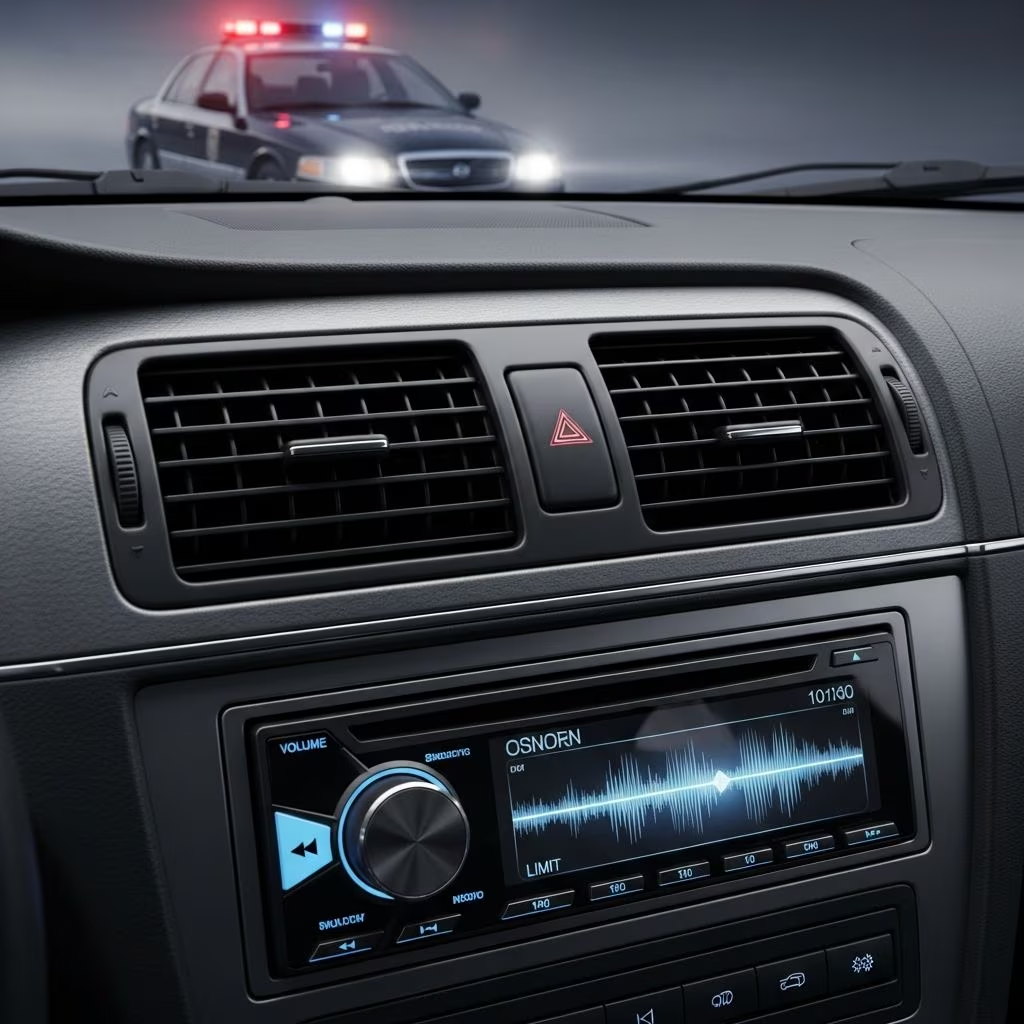
Vehicle audio systems enhance driving enjoyment, but excessive volume can violate public peace laws. Across the U.S., states define thresholds where sound becomes a disturbance, often measured by distance from the vehicle or decibel levels near sensitive areas.
Understanding Vehicle Noise Regulations Nationwide
Noise ordinances aim to balance personal freedom with community well-being. Most jurisdictions prohibit sounds from car stereos, radios, or devices that are plainly audible beyond a set distance, typically 25 to 50 feet, or exceed specific decibels. These rules prevent distraction to other drivers and protect residential tranquility.
Enforcement varies: some areas use sound meters for objective measurement, while others rely on officer discretion for ‘plainly audible’ assessments. Florida exemplifies this with Statute 316.3045, banning sounds plainly audible 25 feet or more from the vehicle, or louder than needed inside near residences, schools, churches, or hospitals.
Florida’s Specific Guidelines on Audible Vehicle Sound
Florida law, updated through 2025, covers a broad range of devices: radios, tape players, compact discs, portable music/video players, cell phones, tablets, laptops, stereos, TVs, and musical instruments. The key prohibition: no operation or amplification making sound plainly audible 25 feet away on streets or highways.
Near sensitive zones—private homes, churches, schools, hospitals—volume must not exceed what’s convenient for vehicle occupants. This dual standard addresses both general roads and quiet areas. Local governments can impose stricter rules, allowing tailored community responses.
- 25-Foot Rule: Primary statewide benchmark for audibility.
- Sensitive Area Clause: Protects institutions and homes from excess noise.
- Device Inclusivity: Applies to all electronic or mechanical sound sources.
Exemptions: When Loud Audio Is Permitted
Not all amplified sound draws penalties. Florida carves out exceptions for essential services:
- Law enforcement vehicles using communication tools for duties.
- Emergency vehicles during procedures.
- Horns or warning devices per Statute 316.271.
- Business or political vehicles in normal operations, subject to local time/manner rules.
These carve-outs recognize public safety needs override quiet mandates. The Department of Highway Safety and Motor Vehicles sets ‘plainly audible’ definitions and measurement protocols for consistent enforcement.
Penalties and Citations for Violations
Breaches qualify as noncriminal traffic infractions under Chapter 318, treated as nonmoving violations. Fines vary by locality but often range from $50 to $250 for first offenses, escalating with repeats. No criminal record attaches, easing long-term impacts.
| Violation Type | Classification | Typical Fine | Additional Consequences |
|---|---|---|---|
| First Offense | Nonmoving Infraction | $50–$100 | Warning possible |
| Repeat Offense | Nonmoving Infraction | $100–$250 | Points on license in some counties |
| Near Sensitive Area | Nonmoving Infraction | $100+ | Vehicle impound rare |
While noncriminal, tickets can lead to insurance hikes or court appearances if contested.
How Officers Measure and Enforce Sound Levels
Police assess ‘plainly audible’ subjectively: exiting the patrol car, approaching on foot to 25 feet without amplification aids. Florida mandates rules for this, ensuring fairness. Objective tools like decibel meters supplement in tech-equipped departments, targeting 85 dB(A) equivalents at distance.
Nighttime enforcement heightens near residences, aligning with quieter hours. Drivers can mitigate risks by using internal volume controls or sound-deadening materials.
State-by-State Comparison of Audio Restrictions
Florida’s 25-foot rule is common but not universal:
| State | Audibility Distance | Key Features |
|---|---|---|
| Florida | 25 feet | Sensitive areas protected; broad device list |
| Texas | 30 feet (cities vary) | Decibel caps in urban zones |
| California | Varies by city (25–50 feet) | Municipal ordinances dominant |
| New York | 50 feet urban | Quiet hours enforced strictly |
Patterns show residential proximity and distance as core metrics, with Southern states favoring 25 feet for practicality.
Societal Debates: Equity and Cultural Concerns
Loud music laws spark discussions on enforcement bias. Critics note disproportionate ticketing in minority communities, echoing ‘driving while Black’ histories tied to Jim Crow-era restrictions. A 2022 analysis highlighted fears of escalatory stops from minor infractions.
Advocates argue rules foster safer roads, reducing distractions. Parents urge youth awareness: know laws, moderate volume, carry ID. Bridging law enforcement-community gaps via education mitigates tensions.
Practical Advice for Drivers to Stay Compliant
Avoid violations with these steps:
- Test volume outside vehicle at 25 feet before highways.
- Lower sound near schools, hospitals, neighborhoods.
- Upgrade to directional speakers focusing inward.
- Respond calmly to stops: hands visible, music off promptly.
- Appeal tickets with dashcam evidence if measured unfairly.
Apps simulating decibel drop-off aid pre-drive checks.
Vehicle Modifications and Legal Audio Upgrades
Aftermarket systems must comply: subwoofers directed rearward minimize external leak. Soundproofing insulation cuts escape. Legal max: internal 90–100 dB yielding under 25-foot audibility outside.
Consult state DOT guidelines; professional installs ensure balance between bass thrill and law adherence.
Frequently Asked Questions
What distance defines excessive car stereo volume in Florida?
Sounds plainly audible 25 feet or more from the vehicle violate Statute 316.3045.
Are there exceptions for emergency or work vehicles?
Yes, law enforcement, emergency, business, and political uses are exempt under specific conditions.
Is a loud stereo ticket criminal?
No, it’s a noncriminal traffic infraction with fines, no jail time.
Can cities set tougher rules than the state?
Affirmative; local authorities may regulate more stringently.
How is ‘plainly audible’ determined by police?
Officers measure by ear from 25 feet on foot, per department standards.
Does this apply to passengers, not just drivers?
Yes, anyone operating or occupying the vehicle can be cited.
Future Trends in Noise Legislation
With rising EV quietness amplifying stereo noticeability, expect refined metrics like app-based reporting or AI sound monitors. Equity reforms may mandate bodycams for stops. Florida’s 2022 updates signal ongoing evolution toward balanced enforcement.
Drivers benefit from awareness: enjoy music responsibly, respect shared spaces. These laws evolve with tech and society, prioritizing harmony on roads.
References
- Chapter 316 Section 3045 – 2015 Florida Statutes — The Florida Senate. 2015-07-01. https://www.flsenate.gov/Laws/Statutes/2015/0316.3045
- The 2025 Florida Statutes – F.S. 316.3045 — The Florida Legislature. 2025. https://www.leg.state.fl.us/statutes/index.cfm?App_mode=Display_Statute&Search_String=&URL=0300-0399%2F0316%2FSections%2F0316.3045.html
- New Florida Law Limits the Loudness of Car Music — South Florida PBS (YouTube). 2022-07-27. https://www.youtube.com/watch?v=Iubu9xukdPk
- Florida law changes tune on loud car stereo music — Your Observer. 2022-07-07. https://www.yourobserver.com/news/2022/jul/07/florida-law-changes-tune-on-loud-car-stereo-music/
- NPC Law Library: Florida Traffic Noise Code — Noise Pollution Clearinghouse. Accessed 2026. https://www.nonoise.org/lawlib/states/florida/florida.htm