
Can You Wear a Halloween Mask While Driving?
Understand how traffic laws, mask bans, and public safety rules affect wearing costume masks while driving on Halloween or any other day.
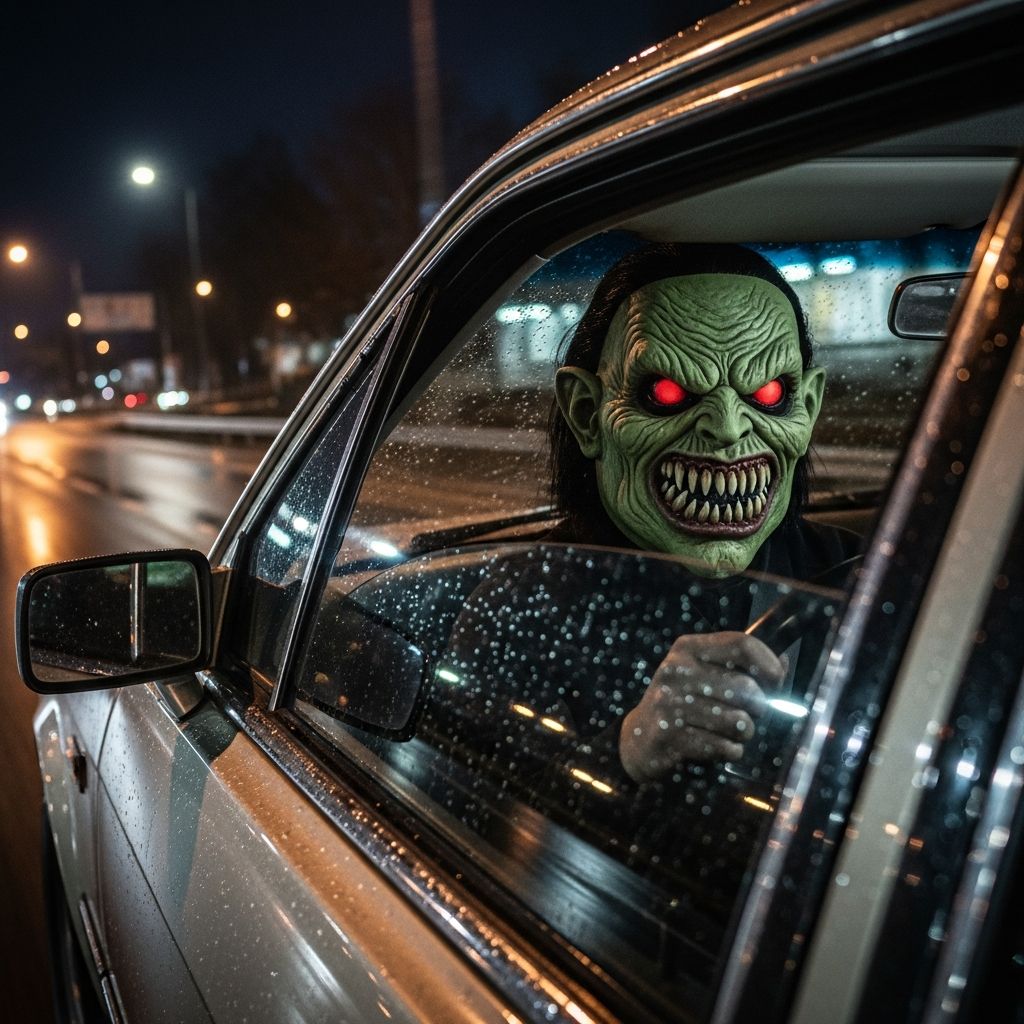
Halloween and costume parties often tempt people to keep their masks on from the front door all the way into the driver’s seat. But covering your face while driving is not just a fashion choice—it can raise safety concerns, traffic-law issues, and in some states, even questions about criminal liability.
This guide explains how U.S. laws and regulations treat face coverings behind the wheel, why public-safety rules matter more than the date on the calendar, and what you can do to enjoy spooky season without risking tickets, accidents, or criminal charges.
1. The Core Question: Is It Ever Illegal to Wear a Mask While Driving?
There is no single nationwide rule that bans or permits masks while driving. Instead, three overlapping areas of law will typically determine whether your face covering is lawful:
- Traffic and road-safety rules that require clear vision and full control of the vehicle.
- State and local mask-ban or anti-disguise laws that restrict face coverings in public places, often for anti-crime reasons.
- Criminal laws that increase penalties when someone hides their identity while committing a crime, such as robbery or assault.
In many locations, simply wearing a costume mask in the car is not explicitly illegal by itself. The legal risk comes from how the mask affects your driving, how it is perceived by law enforcement, and whether it violates any local mask restrictions or is used during criminal conduct.
2. Road-Safety Rules: Your Vision and Control Come First
Every U.S. state expects drivers to maintain a clear field of vision and full control of the vehicle. While the exact wording varies, traffic regulations generally require motorists to keep their attention on the road and avoid anything that interferes with safe driving.
Common safety principles that can affect mask use include:
- Unobstructed vision: Masks that narrow your field of view, fog up, or distort depth perception may be treated like driving with an obstructed windshield.
- Freedom of movement: Bulky headpieces or tight masks that limit neck movement, peripheral checks, or mirror use can be grounds for a citation similar to driving with unsafe equipment.
- Ability to respond quickly: If a mask makes it hard to breathe, talk, or react, a police officer may view it as unsafe behavior—even if there is no specific “mask while driving” law.
If your mask interferes with any of these functions, you risk being pulled over and possibly cited under general safety regulations, regardless of holiday or intent.
3. Mask Bans and Anti-Disguise Laws: When Face Coverings Are Restricted
Separate from traffic rules, several states and localities have mask bans or anti-disguise statutes that limit when people can cover their faces in public places. Many of these laws were written decades ago to combat politically motivated violence and intimidation by masked groups.
Key features of these laws often include:
- Age thresholds: Many bans apply to people 16 years or older, leaving younger children free to wear costumes.
- Public-place coverage: Restrictions typically cover streets, sidewalks, public buildings, and, in some states, private property that is not your own.
- Intent requirements: Some laws focus on masks worn to hide identity while committing crimes or intimidating others.
- Holiday exceptions: Many states carve out exceptions for holidays, theatrical productions, trades, or protective gear.
Where these rules exist, sitting in a car does not automatically exempt you. If the law treats being in a vehicle on a public street as being in a public place, a Halloween mask could technically fall under the ban unless a specific holiday or costume exception applies.
3.1 Examples of How Mask Bans Operate
| Type of Law | Typical Focus | Common Exceptions |
|---|---|---|
| General public mask ban | Wearing a mask in public by adults over 16 | Holidays, theater, protected trades, health reasons in some states |
| Crime-related disguise rule | Masking identity while committing or facilitating a crime | None, because the ban is tied to criminal conduct |
| Local county or city ordinance | Concealing identity in public spaces for intimidation or interference with rights | Religious, medical, holiday or celebratory, sometimes political exceptions |
If you live in or drive through a state with a general mask ban, wearing a costume mask in a car on a public street could attract attention from law enforcement. The practical risk may be low on Halloween night, but the underlying law may still technically apply.
4. How COVID-19 Changed (and Complicated) Mask Laws
The COVID-19 pandemic introduced widespread public health mask mandates, often requiring face coverings in indoor public spaces and on public transportation. Some states also addressed mask use in shared vehicles, ride-shares, or carpools.
The overlap of pandemic rules with older anti-mask statutes prompted states and cities to clarify that medical masks worn to prevent disease transmission generally do not violate anti-disguise laws. Recent legislative changes in several jurisdictions have added explicit health-related exceptions to previously broad mask bans.
However, these public health rules rarely focus on driving safety. Even where a mask is required for health reasons, drivers must still comply with traffic regulations requiring a clear field of view and safe control of the vehicle.
5. Criminal Charges: Masks and the Commission of a Crime
Even in states without broad public mask bans, many criminal codes treat wearing a mask during a crime as an aggravating factor. Laws may:
- Make it illegal to wear a mask “for the purpose of facilitating the commission of a crime.”
- Increase penalties if a defendant concealed their identity while committing a violent or property offense.
For example, a person who uses a realistic mask while committing robbery or assault from a vehicle may face both the underlying charge and additional penalties based on their effort to remain unidentifiable.
In short: driving in a mask is not a crime by itself, but if a crime occurs while the driver or passengers are masked, the legal consequences can escalate quickly.
6. Practical Safety Concerns: Why Police May Stop You
Even in the absence of a specific law, officers are responsible for maintaining road safety and preventing crime. A driver with a full-face mask may draw attention for several reasons:
- Suspicion of impaired driving: Erratic lane position, delayed reactions, or poor visibility caused by the mask might look like impairment or distraction.
- Public alarm: A realistic horror mask or weapon-style prop visible from the car can trigger calls from other drivers.
- Officer-safety concerns during stops: Law enforcement agencies emphasize the importance of clearly identifying individuals during encounters, including traffic stops.
If you are pulled over while wearing a mask, expect the officer to ask you to remove or lift it for identification. Refusing to comply could escalate the encounter, especially in jurisdictions that require removing masks on request from law enforcement.
7. Best Practices for Wearing Masks Around Cars
If you want to enjoy Halloween or another costume event and still drive legally and safely, consider these practical guidelines.
7.1 Safer Approaches
- Leave the full-face mask off while driving. Put it on only after you park, especially if it limits vision or hearing.
- Use makeup or partial masks instead. Face paint or masks that leave your eyes unobstructed reduce safety and legal concerns.
- Secure masks in the car. Keep the mask on a passenger seat or in the back until you reach your destination.
- Remove props that look like weapons. Imitation firearms, knives, or bats can create serious misunderstanding during traffic stops.
7.2 What to Avoid
- Driving in masks that block peripheral vision or cover both eyes with mesh or tinted material.
- Using costume contact lenses that drastically reduce night vision.
- Wearing heavy headgear that prevents shoulder checks or quick looks at mirrors.
- Refusing to show your face or ID when law enforcement asks during a lawful stop.
8. How to Check Your Local Laws Before You Drive
Because rules differ widely, the safest strategy is to verify your own state and city regulations before planning a masked drive. Consider the following steps:
- Review your state traffic code on the official legislative or motor vehicle department website for terms like obstruction of driver’s view or unsafe equipment.
- Search for “mask ban” or “anti-mask” law in your state code, paying attention to any exceptions for holidays, theater, or health reasons.
- Check recent public health guidance if emergency mask rules are in place, especially for public transit or ride-shares.
- Call a local traffic or criminal defense attorney if you still have questions, particularly if you plan an elaborate or realistic costume.
Current COVID-19 and mask guidance can also be found through public-health and disability-law resources, which track how mask rules intersect with disability accommodations and local mandates.
9. Special Situations: Ride-Shares, Carpools, and Public Transport
The rules can change depending on who controls the vehicle and what policies apply.
- Ride-share and taxis: Companies may prohibit face coverings that prevent drivers from identifying passengers, or they may require medical masks during health emergencies. Company policies operate on top of local law.
- Carpools: When multiple people share a vehicle, pandemic-era rules sometimes required masks for all occupants, especially when they are not from the same household.
- Buses and trains: Transit agencies often have their own codes of conduct that regulate masks, costumes, and items that might intimidate other passengers.
If you are not the one driving, your mask is less likely to implicate traffic-safety laws, but you can still be affected by mask bans, public-order rules, or transit-agency regulations.
10. Quick Risk-Assessment Checklist Before You Drive in a Mask
Before starting the engine in costume, ask yourself these questions:
- Can I see clearly in all directions? If not, remove the mask or modify it.
- Can I turn my head and check mirrors easily? If your mask restricts movement, leave it off while driving.
- Does my state or city have a mask ban? If yes, am I sure there is a holiday or health exception that safely covers my situation?
- Would this mask or prop scare other drivers or pedestrians? If so, expect possible calls to police and traffic stops.
- Could I quickly and safely remove the mask if asked by an officer? If the answer is no, reconsider your costume plan.
Frequently Asked Questions (FAQs)
Q1: Is it always illegal to drive with a Halloween mask on?
No. In many places, there is no explicit law against driving with a costume mask, but you can still be cited if the mask interferes with your vision, control of the vehicle, or violates a state or local mask ban.
Q2: Can I be arrested just for wearing a mask in my car?
Arrest solely for mask-wearing is uncommon, but possible in jurisdictions with strict mask bans, especially if officers suspect the mask is being used to facilitate a crime or intimidate others. More often, police use general safety or identification concerns to justify a stop.
Q3: Do public health mask mandates require me to wear a mask while driving?
Most public health mandates focus on indoor public spaces, shared vehicles, or public transportation, not private cars. Some rules may apply if you are driving with passengers from outside your household, but you still must comply with traffic-safety regulations.
Q4: What if I have a medical reason for wearing a face covering?
Many updated mask and anti-mask laws now include exceptions for bona fide medical needs, and disability law resources highlight the need for reasonable modifications in mask policies. However, even with a medical mask, you must drive safely and may need to show your face briefly for identification if requested.
Q5: How can I celebrate Halloween without legal risk when driving?
Use makeup or partial masks that leave your eyes unobstructed, keep any full-face mask off until the car is parked, secure props out of sight, and avoid behavior that could look threatening or criminal. Checking your local laws ahead of time is the best way to enjoy the holiday without trouble.
References
- Driving with a mask: a brief guide for drivers in times of Covid-19 — Wottocare. 2020-05-20. https://wottocare.com/en/driving-with-a-mask-a-brief-guide-for-drivers-in-times-of-covid-19/
- The ADA and Face Mask Policies — Southeast ADA Center. 2021-08-10. https://adasoutheast.org/legal/disability-issues/ada-and-face-mask-policies/
- Mask bans and proposed bans by state — The Sick Times. 2024-08-30. https://thesicktimes.org/mask-bans-and-proposed-bans-by-state/
- Masked and Unidentifiable: The Risks of Federal Law Enforcement Operating Without Identification — Center for American Progress. 2020-07-28. https://www.americanprogress.org/article/masked-and-unidentifiable-the-risks-of-federal-law-enforcement-operating-without-identification/
Similar Articles








Read full bio of Sneha Tete


