
Can You Sue A Vaccine Manufacturer: Practical Legal Guide
Understand when vaccine makers can be sued, how federal law limits lawsuits, and what options exist after a vaccine-related injury.
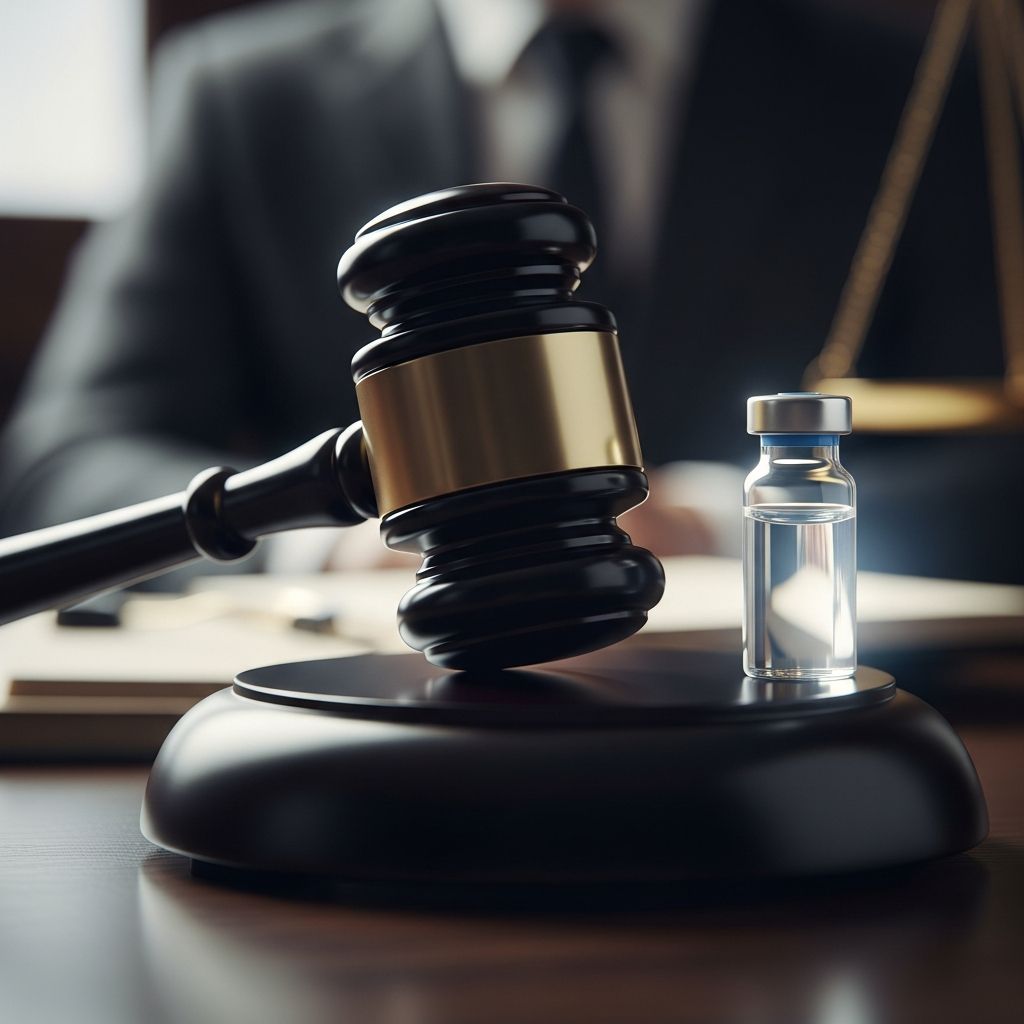
Vaccines are critical public health tools, but like any medical product, they can have side effects. When a serious injury follows vaccination, families often want to know whether they can sue the vaccine manufacturer and what legal protections exist for both patients and companies. This guide explains the basic framework of U.S. vaccine liability law, what the federal compensation system does, and in which circumstances a lawsuit against a manufacturer may still be possible.
Why Vaccine Lawsuits Are Different from Other Injury Claims
In most product liability cases, an injured person can sue a manufacturer directly for design defects, manufacturing problems, or inadequate warnings. Vaccines follow a different path because Congress created a special system in the 1980s to deal with the unique public health role of immunization and the growing number of lawsuits at the time.
- By the mid-1980s, vaccine injury lawsuits had risen from only a few cases to more than 200 per year, creating concern that manufacturers would leave the market.
- To keep vaccines available while still compensating people who are harmed, Congress passed the National Childhood Vaccine Injury Act of 1986 (NCVIA).
- The Act created the National Vaccine Injury Compensation Program (VICP), a no-fault system that sits between injured individuals and traditional civil lawsuits.
Because of this law, most vaccine-related injury claims must go through the VICP before any lawsuit against a manufacturer is even considered.
The National Childhood Vaccine Injury Act: Core Protections and Tradeoffs
The NCVIA reshaped how vaccine liability works in the United States. It balances three main goals:
- Encourage vaccine production by limiting unpredictable jury awards and some types of lawsuits against manufacturers.
- Provide compensation to people with recognized vaccine-related injuries without requiring proof of negligence or wrongdoing.
- Protect public health by keeping vaccines available and affordable while acknowledging rare but serious harms.
Under the statute and its codification in federal law:
- Manufacturers are generally not liable for “unavoidable” side effects of properly manufactured and properly labeled vaccines.
- In many situations, injured individuals must first file a claim in the VICP before suing a manufacturer in state or federal court.
- Certain types of claims—particularly broad design defect arguments—are heavily restricted by the Supreme Court’s interpretation of the Act.
How the Vaccine Injury Compensation Program (VICP) Works
The VICP is a federally administered, no-fault compensation system that covers many common vaccines. It is funded by an excise tax on each dose of covered vaccines, not by suing an individual company.
Main Features of the VICP
- No-fault structure: Claimants do not have to prove that a manufacturer or health professional was negligent; they must show that a covered vaccine likely caused the injury.
- Special court: Claims are filed in the U.S. Court of Federal Claims and decided by special masters familiar with vaccine science and law.
- Presumptive injuries: A Vaccine Injury Table lists specific injuries and time frames that are presumed to be caused by certain vaccines, unless another cause is shown.
- Streamlined procedures: The program is designed to be faster and less adversarial than traditional litigation.
Types of Compensation Available
Depending on the case, successful claimants may receive:
- Payment of past and future medical and rehabilitative costs related to the injury.
- Lost earnings or reduced earning capacity if the injury affects the person’s ability to work.
- Pain and suffering, subject to statutory caps.
- Reasonable attorneys’ fees and costs, in many situations, even if the claim is not ultimately compensated, as long as it was filed in good faith and with a reasonable basis.
Only after going through this process—known as exhausting remedies—does a claimant typically gain the option to consider a lawsuit against a manufacturer.
When Do You Have to Use the VICP First?
In most cases involving vaccines covered by the program, the VICP is the required first step. Federal law states that people seeking damages for a vaccine-related injury or death from a covered vaccine must first file a petition in the program.
| Situation | Must You File in VICP First? | Notes |
|---|---|---|
| Alleged injury or death from a covered childhood or adult vaccine | Yes, in most cases | Petition must be filed in the U.S. Court of Federal Claims before civil suit. |
| Claim seeks more than a minimal amount of damages | Yes | VICP is usually required unless a statutory exception applies. |
| Claim under $1,000 in damages | Not necessarily | For small claims, the Act allows certain suits without first using VICP. |
| Vaccine not covered by the VICP | No | Regular tort law may apply; legal standards differ by state. |
Exhausting VICP Remedies Before Suing
To move from the compensation program to a potential lawsuit, a claimant must first exhaust the remedies available under the VICP. That generally means one of the following must occur:
- The special master or the Court of Federal Claims issues a final decision, and the claimant formally rejects the judgment within the time allowed by law.
- The court does not issue a decision, or a judgment is not entered, within the statutory time limits, and the claimant chooses to withdraw the petition.
Only after one of these outcomes may the person typically file a state or federal lawsuit against a manufacturer or vaccine administrator for a covered vaccine.
How Federal Law Limits Lawsuits Against Manufacturers
Even after leaving the VICP, a lawsuit against a vaccine manufacturer faces special legal limits. The NCVIA and its codified provisions in 42 U.S.C. § 300aa-22 restrict certain types of claims.
Protection From Liability for Unavoidable Side Effects
Federal law provides that a vaccine manufacturer is not liable in a civil action for damages arising from a vaccine-related injury or death if the harm results from unavoidable side effects, as long as the vaccine was properly prepared and accompanied by proper directions and warnings.
- This means that if a side effect could not be eliminated without undermining the vaccine’s benefits or making it unavailable, it is treated as legally unavoidable.
- The law focuses on whether the product complied with federal standards and included appropriate warnings, not simply on the fact that an injury occurred.
Limits on Design Defect Claims
In the Supreme Court case Bruesewitz v. Wyeth, the Court held that the Act bars most state-law claims that challenge a vaccine’s design as defective, so long as the vaccine was properly manufactured and properly warned of its risks.
- The Court interpreted the statute to mean that all side effects associated with a properly made and labeled vaccine are insulated from design defect lawsuits.
- As a result, plaintiffs generally cannot argue in court that the manufacturer should have used a different vaccine design to avoid the injury, if the product met regulatory standards.
Claims relating to manufacturing defects or inadequate warnings may still be possible in some circumstances, but they must satisfy demanding evidentiary and legal standards and may be affected by the Act’s protections and preemption rules.
When a Manufacturer Might Still Face Liability
The NCVIA does not provide absolute immunity. Federal law contemplates certain situations in which a manufacturer may still be held liable in a civil case.
- Fraud or intentional misconduct: A manufacturer may be liable if it knowingly withholds or misrepresents safety information to regulators or others in a way that affects approval, labeling, or continued use of the vaccine.
- Failure to exercise due care: If a manufacturer fails to meet required standards of care—for example, by not complying with manufacturing regulations—civil liability may be possible.
- Defective manufacture: If a particular batch is not properly prepared or contaminated, claims may arise that are not shielded by the protections for unavoidable side effects.
- Inadequate warnings in specific contexts: Under some circumstances, courts may still examine whether warnings provided to healthcare professionals or recipients met legal duties, particularly in settings that do not follow the usual doctor–patient model.
However, these types of cases are complex and heavily fact-dependent. They typically require expert testimony on vaccine science, regulatory requirements, and causation.
Suing Vaccine Administrators Versus Manufacturers
People often confuse claims against vaccine manufacturers with claims against the healthcare professionals or clinics that administer vaccines. The NCVIA and VICP address both, but the paths may differ.
- Claims involving injuries from covered vaccines usually must go to the VICP first, whether the claim targets a manufacturer, a doctor, or both.
- In some instances—such as very small claims or certain conduct not directly tied to the vaccine itself—a civil suit against an administrator may proceed under ordinary malpractice or negligence rules.
- Once VICP remedies are exhausted, plaintiffs may choose to pursue traditional malpractice claims against healthcare providers if they believe errors in administration or medical judgment caused the harm.
Key Practical Considerations Before You Sue
Because vaccine-injury claims operate within a specialized legal and scientific framework, a careful assessment is essential before deciding whether to pursue a lawsuit against a manufacturer.
Questions to Ask
- Is the vaccine involved one of the covered vaccines listed under the VICP?
- Has a petition already been filed in the Vaccine Injury Compensation Program?
- Did the court issue a decision, or has there been enough delay to allow withdrawal of the petition under the Act?
- Are there facts suggesting manufacturing errors, fraud, or failure to exercise due care by the manufacturer, apart from the known risks of vaccination?
- Would the claim be primarily about design defects, which are usually barred, or about manufacturing and warnings, which might still be litigated?
Role of Legal and Medical Experts
Vaccine injury cases often require coordination between:
- Medical specialists who can assess whether the injury is medically consistent with known vaccine reactions and rule out alternative causes.
- Attorneys experienced in VICP practice who understand filing deadlines, evidentiary requirements, and how to navigate the special court.
- Product liability or pharmaceutical lawyers when moving beyond the VICP into traditional civil litigation.
Frequently Asked Questions (FAQs)
Q: Can I sue a vaccine manufacturer directly without using the VICP?
A: For most covered vaccines, no. Federal law generally requires you to first file a petition in the Vaccine Injury Compensation Program and either receive and reject a judgment or withdraw the claim after specific time periods before you can sue a manufacturer in court.
Q: Are vaccine manufacturers completely immune from lawsuits?
A: No. Manufacturers are protected from many claims, especially design defect lawsuits involving unavoidable side effects of properly made and properly labeled vaccines. However, they may still be liable if they engage in fraud, intentional misconduct, or fail to exercise due care in manufacturing or warnings.
Q: What if my injury is not on the Vaccine Injury Table?
A: You may still file a VICP claim, but you will need to present evidence—often expert medical testimony—that the vaccine likely caused the injury. Table injuries are presumed to be vaccine-related; off-table injuries require proof of causation.
Q: How long do I have to file a claim in the VICP?
A: The VICP has strict filing deadlines, typically measured from the date of the first symptom or death. Because time limits can vary and are subject to detailed rules, it is important to consult the program’s official guidance or an attorney familiar with vaccine claims as soon as possible.
Q: Does the VICP only cover children?
A: No. Although the program grew out of concerns about childhood vaccines, it covers many vaccines given to both children and adults, as long as they are listed as covered vaccines under the program.
Q: Can I still sue my doctor for malpractice after using the VICP?
A: In some cases, yes. After exhausting VICP remedies, you may be able to bring malpractice claims against healthcare providers if you believe negligent medical care or improper administration contributed to the injury. The availability and strength of such claims depend on the specific facts and state law.
References
- Liability for the Production and Sale of Vaccines — Institute of Medicine / National Academies Press. 1985-01-01. https://www.ncbi.nlm.nih.gov/books/NBK216813/
- Vaccine Injury Compensation Programs — The College of Physicians of Philadelphia, HistoryOfVaccines.org. 2022-01-01. https://historyofvaccines.org/vaccines-101/ethical-issues-and-vaccines/vaccine-injury-compensation-programs/
- The National Childhood Vaccine Injury Act and the Supreme Court’s Interpretation — AMA Journal of Ethics. 2012-01-01. https://journalofethics.ama-assn.org/article/national-childhood-vaccine-injury-act-and-supreme-courts-interpretation/2012-01
- Vaccine Injury Compensation Program: Frequently Asked Questions — Health Resources and Services Administration (HRSA). 2024-01-01. https://www.hrsa.gov/vaccine-compensation/faq
- National Childhood Vaccine Injury Act of 1986 (H.R.5546) — U.S. Congress. 1986-11-14. https://www.congress.gov/bill/99th-congress/house-bill/5546
- 42 U.S. Code § 300aa-22 – Standards of Responsibility — Legal Information Institute, Cornell Law School. 2023-01-01. https://www.law.cornell.edu/uscode/text/42/300aa-22
- Vaccine Injury Compensation Program — U.S. Department of Justice, Civil Division. 2023-06-01. https://www.justice.gov/civil/vicp
Similar Articles








Read full bio of medha deb


