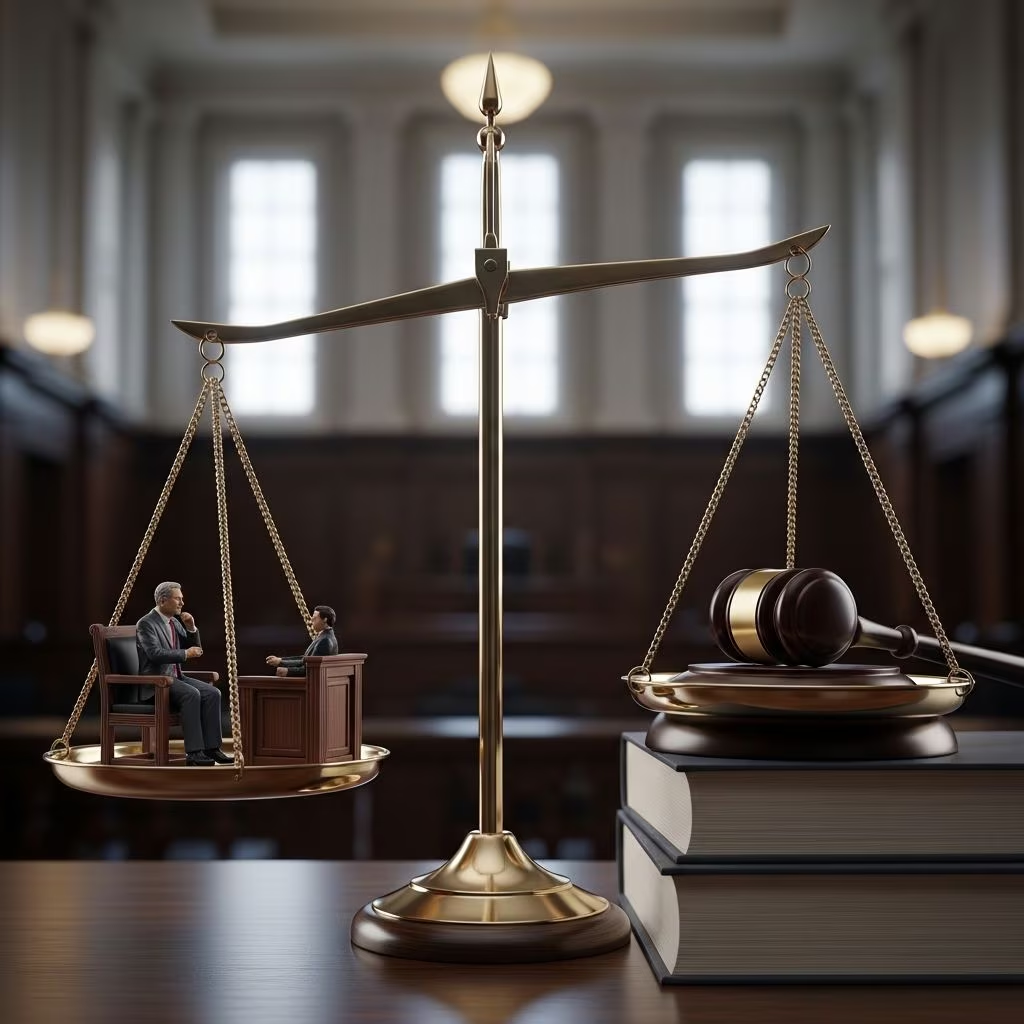
Many people ask whether it is legally possible to sue the president of the United States. The short answer is that in some situations you can, but in others the law gives the president strong immunity. This guide explains those differences in plain language and outlines realistic paths for challenging presidential actions.
Why Suing a President Is Different from Suing Anyone Else
The president is not just another public official. The office sits at the top of the executive branch and carries duties that affect national security, foreign affairs, and domestic policy. Courts are cautious about interfering with those responsibilities, so over time a series of legal doctrines have developed to protect the presidency.
Two core ideas shape any lawsuit involving a president:
- Immunity: Rules that shield presidents from certain types of lawsuits.
- Justiciability and standing: Rules about who is allowed to sue, when, and over what kind of harm.
Official Acts vs. Personal Conduct: The Key Distinction
In modern constitutional law, one of the most important distinctions is between a president’s official acts as president and his or her unofficial or personal conduct.
| Type of Conduct | What It Means | Can You Sue a Sitting President? | Key Points |
|---|---|---|---|
| Official acts | Decisions taken as part of the president’s constitutional or statutory duties | Generally no for civil damages, due to absolute immunity | Courts avoid second-guessing core executive decisions |
| Unofficial / private conduct | Actions taken before or during office that are not part of presidential duties | Yes, civil suits are allowed under Supreme Court precedent | Lawsuits can proceed, though courts may adjust schedules around presidential duties |
Presidential Immunity in Civil Lawsuits
The Supreme Court has recognized that the president enjoys absolute civil immunity from damages for acts within the “outer perimeter” of official responsibilities. This means:
- You cannot successfully sue a sitting or former president for money damages based on core official decisions, such as signing bills, vetoing legislation, or making high-level policy choices.
- This immunity is meant to prevent the constant threat of litigation from distorting presidential decision-making.
However, this immunity does not extend to everything a president does. When a president acts as a private person rather than as head of the executive branch, that conduct may be treated like anyone else’s under civil law.
When Presidents Can Be Sued for Private Conduct
The Supreme Court has held that a sitting president may face civil lawsuits in federal court for unofficial conduct, including acts that took place before he or she took office. Key implications include:
- Private disputes (such as business disagreements or personal injury) that arose before or outside the presidency can be litigated.
- Courts are expected to respect the president’s responsibilities, for example by adjusting deadlines or hearing schedules when official duties conflict with litigation.
- Presidents do not get a blanket postponement of all civil cases until they leave office.
State courts have also allowed suits for unofficial conduct, reasoning that they can accommodate presidential duties when necessary, for instance by not requiring the president to appear in person during a national security crisis.
Challenging Presidential Policies: Why You Usually Sue Subordinates
Most people who are harmed by federal policy will never sue the president personally. Instead, lawsuits target the agencies and officials who actually implement presidential directives, not the president who issues them.
There are several reasons for this approach:
- Executive orders often instruct agencies to act; they rarely change legal rights by themselves.
- When a federal agency implements an order, its actions can often be challenged under the Administrative Procedure Act (APA), which provides tools for reviewing unlawful agency decisions.
- The APA does not apply to the president personally, so suing the president directly can strip you of those procedural advantages.
Because of these dynamics, legal experts commonly advise that plaintiffs:
- Wait until an agency has taken a concrete action under an executive order.
- Sue the agency or agency head responsible for that action.
- Ask the court to invalidate or block the agency’s implementation if it violates the Constitution or federal statutes.
Standing: Who Is Allowed to Bring a Lawsuit?
Even when presidential conduct is potentially unlawful, not everyone has the right to sue. In federal court, a plaintiff must establish standing, which requires:
- Concrete injury: A real, particularized harm, not a generalized objection to presidential behavior.
- Traceability: A reasonably direct link between the president’s (or an official’s) actions and the harm suffered.
- Redressability: A court order is capable of remedying or meaningfully improving the situation.
These requirements make it difficult to bring lawsuits based only on broad constitutional concerns. For example:
- Members of Congress have sometimes struggled to show that institutional injuries from alleged separation-of-powers violations are sufficiently concrete for standing.
- Businesses and individuals are more likely to succeed when they can show specific economic or legal harm, such as lost revenue tied directly to a presidentially related business venture.
Can the President Be Prosecuted or Sued After Leaving Office?
Presidential immunity primarily shields sitting presidents from certain civil suits and from federal criminal indictment under long-standing Department of Justice opinions. Once a president leaves office, the legal landscape changes:
- Former presidents do not enjoy broad constitutional immunity from criminal prosecution; they may be charged like other citizens, subject to ordinary legal rules.
- The longstanding civil immunity for official acts generally remains in place, but it protects the official decision itself, not unrelated private conduct.
- Private acts taken before, during, or after the presidency can be litigated, so long as ordinary requirements like jurisdiction and statutes of limitations are met.
Typical Paths for Challenging Presidential Actions
If you believe presidential actions have harmed you, the law typically directs you toward one of several routes, rather than a direct civil suit against the president.
1. Suing Federal Agencies or Cabinet Officials
This is the most common strategy for policy challenges. Plaintiffs often:
- Identify the specific agency rule, policy, or enforcement action that harmed them.
- File suit against the agency or its head, arguing that the action is unconstitutional or violates federal law.
- Use the Administrative Procedure Act and related statutes to seek to vacate or enjoin the unlawful action.
This approach avoids many technical barriers associated with suing the president directly and fits within existing frameworks courts routinely apply in cases involving environmental regulations, immigration rules, healthcare policies, and more.
2. Individual or Business Lawsuits for Direct Harm
When a president, as an individual, allegedly harms a person or business through private conduct, that injured party may bring an ordinary civil case, such as defamation, contract, or tort claims.
Important considerations include:
- The claim must arise from non-official conduct.
- Courts may consider how the timing of the case interacts with presidential duties, but they are not required to postpone all litigation until the presidency ends.
- State and federal courts must still respect the supremacy of federal responsibilities, for example by modifying court appearances when they conflict with critical governmental functions.
3. Institutional Remedies Outside the Courts
In some situations, courts are not the primary mechanism for addressing presidential misconduct. Other constitutional tools include:
- Impeachment by the House of Representatives and trial in the Senate for “high crimes and misdemeanors.”
- Elections and political accountability through the democratic process.
- Congressional oversight, including hearings, investigations, and legislation aimed at constraining or clarifying presidential authority.
Because courts are cautious about stepping into political disputes, these non-judicial mechanisms often play a central role where legal standing is weak or immunity is strong.
Practical Obstacles in Suing a President
Even when a lawsuit against a president is theoretically possible, several practical obstacles often arise:
- Complex procedural doctrines: Issues like separation of powers, political question doctrine, and immunity must be resolved before a court even examines the merits.
- Time and cost: Litigation involving high-level officials tends to be slow, heavily contested, and expensive.
- Limited remedies: Courts may be willing to block or invalidate certain actions, but they are reluctant to micromanage ongoing executive decision-making.
When Legal Advice Is Essential
Anyone considering a lawsuit tied to presidential actions should obtain individualized legal counsel. An experienced civil rights or constitutional lawyer can:
- Analyze whether your alleged harm is concrete enough to support standing.
- Determine whether the conduct at issue is official or unofficial.
- Identify the most effective defendants (such as specific agencies or officials) and legal theories.
- Explain deadlines, evidentiary burdens, and possible outcomes.
Because these cases often implicate complex constitutional doctrines and national-level interests, they are not well suited to self-representation.
Frequently Asked Questions
Q1: Can I sue the president personally for signing a law I disagree with?
No. Signing or vetoing legislation is a core official duty. Courts treat this as an official act, and the president has absolute civil immunity from damages for such actions. To challenge the law itself, plaintiffs typically sue the agencies or officials enforcing it, not the president.
Q2: What if an executive order violates my rights—do I sue the president?
Usually you sue the agency or official implementing the order, not the president. Most executive orders direct subordinates to act, and those concrete actions—such as denying a visa, changing a regulation, or refusing a benefit—are what courts review, often under the Administrative Procedure Act.
Q3: Can a sitting president ever be sued in state court?
Yes, for unofficial conduct. Courts have held that state lawsuits based on a president’s private acts, such as statements made before taking office, can proceed, so long as state proceedings respect the president’s federal responsibilities—for example by adjusting schedules when necessary for national duties.
Q4: Is the president completely immune from criminal prosecution?
The Constitution does not explicitly grant criminal immunity to presidents. However, the U.S. Department of Justice has long taken the position that a sitting president may not be criminally indicted because criminal proceedings could incapacitate the office. That policy does not extend automatically to former presidents, who can face prosecution subject to ordinary legal constraints.
Q5: If many members of Congress sue the president, does that make the case stronger?
Not necessarily. Even a large number of legislators must still satisfy standing requirements, including showing a concrete, personal injury that a court can remedy. Courts have sometimes found that generalized complaints about constitutional structure are not specific enough, even when brought by numerous members of Congress.
References
- The Legality of Suing a Sitting President — LawShelf. 2020-02-10. https://www.lawshelf.com/blogentryview/the-legality-of-suing-a-sitting-president/
- Who Has Standing to Sue the President Over Allegedly Unlawful Actions? — Richard H. Pildes, University of Georgia School of Law (Digital Commons). 2018-01-01. https://digitalcommons.law.uga.edu/fac_artchop/1153/
- Can Presidents Be Prosecuted, or Sued? Professor Explains Differing Visions of Immunity — University of Virginia School of Law. 2023-01-19. https://www.law.virginia.edu/news/202301/can-presidents-be-prosecuted-or-sued-professor-explains-differing-visions-immunity
- Three-Minute Legal Talks: Can You Sue a President Over an Executive Order? — University of Washington School of Law. 2025-02-03. https://www.law.uw.edu/news-events/news/2025/executive-orders/
- Who Can Sue the President? — Common Cause. 2017-06-15. https://www.commoncause.org/articles/who-can-sue-the-president/