
Legally Shoot A Home Intruder: What You Need To Know
Understand when using deadly force against an intruder may be lawful, and why the answer depends heavily on your state’s self-defense rules.
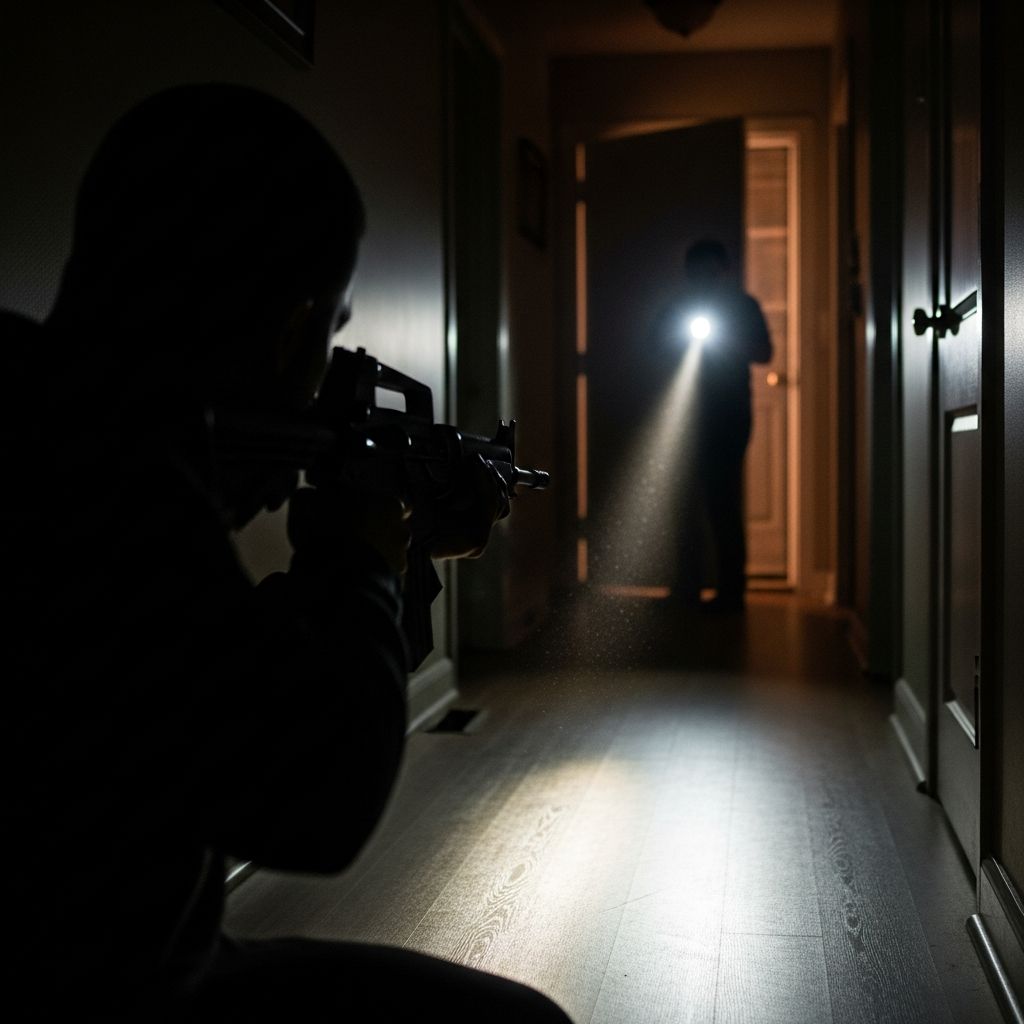
Many people assume that if someone breaks into their home, they are automatically allowed to shoot the intruder. In reality, whether that use of force is lawful depends on a complex mix of state self-defense laws, what the intruder is doing, and how reasonably you respond to the threat.
This guide explains the basic legal principles that apply when someone uses a firearm against a home intruder, highlights how rules differ between states, and offers practical points to consider before, during, and after any confrontation.
Core Legal Concepts Behind Self-Defense
Self-defense laws are intended to let people protect themselves from serious harm without turning every confrontation into a license to kill. While details vary by state, several common elements usually must be present before deadly force is justified.
| Legal Element | What It Generally Means |
|---|---|
| Imminent threat | You reasonably believe serious harm or death is about to occur, not just a vague or future risk. |
| Reasonable belief | An ordinary person in your situation would see the same danger, even if later facts show you were mistaken. |
| Proportional force | The degree of force you use is not excessive compared with the threat; deadly force is reserved for grave dangers like death or serious bodily injury. |
| Unlawful aggression | The other person is the aggressor; you did not provoke the encounter in order to claim self-defense. |
In many states, these principles are interpreted by judges and juries after the fact, which means the same situation can be viewed very differently depending on local law and community standards.
Castle Doctrine: Defending Your Home
The castle doctrine is a legal concept that allows people to defend their home (their “castle”) without an obligation to retreat when faced with an unlawful intruder. In many jurisdictions, this doctrine provides the strongest protection when force is used inside a dwelling.
Typical Features of Castle Doctrine Laws
- No duty to retreat inside the home: If someone unlawfully enters your dwelling, you are generally not required to run away before using force to protect yourself or others inside.
- Presumption of fear in some states: Certain states presume that a homeowner reasonably feared death or serious injury when an intruder forcibly enters, which can make criminal and civil liability less likely.
- Limited to specific locations: Many laws apply only within the home itself, not necessarily in driveways, yards, or parked cars, unless a statute extends protection to those places.
- Intruder must be unlawful: People who enter accidentally, with permission, or as law enforcement officers normally do not trigger castle protections unless they exceed their authority.
Even with these protections, the castle doctrine rarely grants unlimited authority to shoot. The force used usually still must be considered reasonable under the circumstances.
Stand-Your-Ground vs. Duty-to-Retreat States
States differ significantly on whether a person must try to escape before using deadly force in self-defense. These differences become critical when a confrontation begins in a home, then moves outside, or happens in areas like porches or yards.
Stand-Your-Ground Laws
Stand-your-ground laws remove the duty to retreat in places where you are lawfully present. Under these statutes, if you reasonably fear death or serious bodily injury, you may use deadly force without first trying to flee, as long as you are not engaged in criminal activity.
- Applies beyond the home: These laws often extend castle-like protections to public spaces where you are legally allowed to be.
- Reasonableness still required: Even in stand-your-ground states, the force used must be reasonable in light of the perceived threat.
- Controversial impact: Empirical research has found that some stand-your-ground laws are associated with increased firearm homicides, underscoring how legal rules can influence violent encounters.
Duty-to-Retreat States
In duty-to-retreat states, people must attempt to avoid or escape a confrontation if they can do so safely before resorting to deadly force, particularly outside the home.
- Retreat when safely possible: If you can withdraw in complete safety, the law may require you to do so rather than use lethal force.
- Home often treated differently: Even in retreat jurisdictions, many states eliminate the duty to retreat inside one’s dwelling, reflecting castle doctrine principles.
- Fact-specific analysis: Courts closely examine whether a safe escape route actually existed, which can be a key issue in any later prosecution.
When Is Shooting an Intruder Potentially Lawful?
Whether shooting a home intruder is legally justified hinges on how the facts line up with your state’s statutes and case law. While each situation is unique, several recurring factors influence legal outcomes.
Factors That Often Support Justification
- Forced, unlawful entry: An intruder breaks in or enters by stealth at night, clearly without permission, suggesting criminal intent.
- Immediate danger to life: The intruder is armed, threatens to kill or seriously injure, or moves aggressively toward you or family members.
- Limited ability to escape: You are cornered, responsible for protecting vulnerable occupants (such as children or elderly relatives), or cannot safely flee.
- Rapidly evolving emergency: Courts recognize that people in sudden emergencies must make split-second decisions without perfect information, and some degree of overreaction can still be viewed as reasonable.
Factors That Increase Legal Risk
- Threat appears minor or unclear: The intruder is unarmed, trying to run away, or already subdued when deadly force is used.
- Force continues after danger ends: Continued shooting after the intruder is incapacitated or no longer poses a threat can be seen as excessive or retaliatory.
- Dispute over who was the aggressor: If the incident began as a mutual conflict, fight, or escalated argument, prosecutors or jurors may doubt a pure self-defense claim.
- Intoxication or reckless conduct: Being under the influence or handling firearms carelessly can undermine the argument that your actions were reasonable.
Inside vs. Outside the Home
Location matters. Many legal protections that apply inside a dwelling weaken or disappear once the encounter moves to other areas, such as porches, driveways, or public sidewalks.
| Location | Typical Legal Considerations |
|---|---|
| Inside the dwelling | Castle doctrine often eliminates duty to retreat and may create a presumption you acted reasonably when confronting a violent intruder. |
| Attached areas (porches, garages) | Some states extend home protections; others treat these areas more like public spaces, applying broader self-defense rules. |
| Front yard / driveway | Protections vary widely; in duty-to-retreat states, you may need to withdraw if it is safe to do so. |
| Public places | Stand-your-ground states may allow deadly force without retreat if you reasonably fear serious harm; retreat states generally require avoidance when possible. |
Because these distinctions can be subtle, homeowners should not assume that conduct justified inside the house will be treated the same way once everyone is outside.
Proportionality: Matching Force to the Threat
Even in a terrifying break-in, the law expects you to use only the level of force that is reasonably necessary. Proportionality is a central feature of self-defense doctrine in both common law and statutory schemes.
- Deadly force reserved for severe threats: The classic justification is preventing death, serious bodily injury, or certain violent felonies (such as armed robbery or rape).
- Nondeadly options for lesser dangers: For intruders who are fleeing, appear disoriented, or pose no immediate physical threat, firing a gun is more likely to be seen as excessive.
- Mistaken but reasonable fear: If you honestly and reasonably believe the intruder is armed or intends to kill, deadly force may still be lawful even if it turns out you were mistaken.
Courts often look at what you knew at the time, not what later evidence reveals. That said, your belief cannot be wildly out of step with the facts visible to a reasonable person in the same situation.
Criminal vs. Civil Consequences
Even if prosecutors decide not to bring charges, or if a jury acquits you in a criminal trial, a separate civil lawsuit may still follow. Some intruders or their families sue homeowners, alleging wrongful death or excessive force.
- Criminal cases: Focus on whether your conduct violated a criminal statute (such as homicide or unlawful discharge of a weapon). The government must usually prove guilt beyond a reasonable doubt.
- Civil suits: Focus on financial compensation for alleged injuries or death. The standard of proof is typically lower (often “preponderance of the evidence”).
- Immunity in some states: Certain stand-your-ground or castle statutes provide civil immunity for justified defensive shootings, but the scope of protection varies widely.
Practical Steps During and After an Incident
No article can teach you how to respond in every emergency. However, several broad practices are often recommended by legal and law enforcement professionals when dealing with suspected intruders.
During a Possible Break-In
- Prioritize safety over confrontation: If you can safely lock yourself in a secure room, call 911, and avoid contact, that is often the safest course.
- Call law enforcement immediately: Early contact with emergency services documents the event and can bring assistance before it escalates.
- Clearly identify yourself: If you are armed, be sure family members know where you are, and avoid situations that could lead to mistaken identity shootings.
- Issue clear commands if safe: Some people announce that the police have been called and order the intruder not to move, which may de-escalate the situation.
After Force Has Been Used
- Request medical aid: Ask dispatchers to send medical help for anyone injured, including the intruder; this can reflect well on your intent and may save a life.
- Do not tamper with evidence: Avoid moving weapons or bodies except as necessary for safety.
- Cooperate but be cautious in statements: You will likely be stressed and disoriented. Many attorneys recommend giving basic identifying information and then waiting to provide a full statement until after consulting counsel.
- Contact an attorney promptly: Self-defense cases are often fact-intensive and emotionally charged; experienced legal advice is critical.
Planning Ahead: Legal and Safety Preparation
Responsible home defense planning involves both physical security measures and an understanding of how your state handles self-defense.
- Learn your state’s law: Review your state’s criminal code, official jury instructions, and public legal guides for terms like “self-defense,” “use of force,” and “defense of habitation.” Many attorney general or legislative websites summarize these rules.
- Take reputable training: Firearms and self-defense courses that emphasize de-escalation, safe storage, and legal boundaries can reduce the risk of tragic mistakes.
- Harden your home: Quality locks, lighting, and alarm systems may prevent intrusions altogether, avoiding the need to make life-or-death decisions in seconds.
- Discuss plans with family: Establish basic protocols—where to go, who calls 911, and how to avoid crossfire or mistaken-identity situations.
Frequently Asked Questions (FAQs)
Do I always have the right to shoot someone who breaks into my house?
No. In most states you may only use deadly force if you reasonably believe the intruder poses an imminent threat of death, serious bodily injury, or certain serious felonies. Simply entering without permission is not automatically a license to kill.
Is it true that I never have to retreat in my own home?
Many states with a castle doctrine remove the duty to retreat inside the dwelling, but requirements differ. Some jurisdictions still expect you to avoid using deadly force if a completely safe escape is obvious, even at home.
What if the intruder turns out to be unarmed?
Courts usually look at what you reasonably believed at the time. If facts justified thinking the intruder had a deadly weapon or intended grave harm, deadly force may still be lawful even if the person was actually unarmed. Unjustified assumptions, however, can lead to prosecution.
Can I be sued even if the shooting is ruled self-defense?
Yes. A criminal finding of justification does not always prevent civil lawsuits. Some states provide civil immunity for justified self-defense, but others allow surviving family members to bring wrongful death or injury claims.
Do these rules apply the same way in every state?
No. Self-defense and home protection laws are primarily state-based. Stand-your-ground provisions, castle doctrine scope, presumptions of reasonableness, and civil immunity all vary, so local legal advice is essential.
References
- Castle Doctrine — Wikipedia (summary of U.S. legal doctrine and state variations). 2024-06-10. https://en.wikipedia.org/wiki/Castle_doctrine
- Stand-your-ground law — Wikipedia (overview of legal standards and effects). 2024-03-22. https://en.wikipedia.org/wiki/Stand-your-ground_law
- How to Legally Deal With a Home Intruder in Massachusetts — The Fernandez Firm. 2022-08-15. https://thefernandezfirm.com/how-to-legally-deal-with-a-home-intruder-in-massachusetts/
- Massachusetts Self-Defense Law: A Comprehensive Guide — The Fernandez Firm. 2023-05-12. https://thefernandezfirm.com/self-defense-law/
- Intruder in Your Home – How to Defend Yourself Legally With a Firearm — U.S. Department of Justice, Office of Justice Programs (NCJRS Abstract). 1985-01-01. https://www.ojp.gov/ncjrs/virtual-library/abstracts/intruder-your-home-how-defend-yourself-legally-firearm
Similar Articles








Read full bio of medha deb


