
Can Someone Photograph You Without Consent?
Understand when others may legally take or share your photo, when it crosses legal lines, and what practical steps you can take.
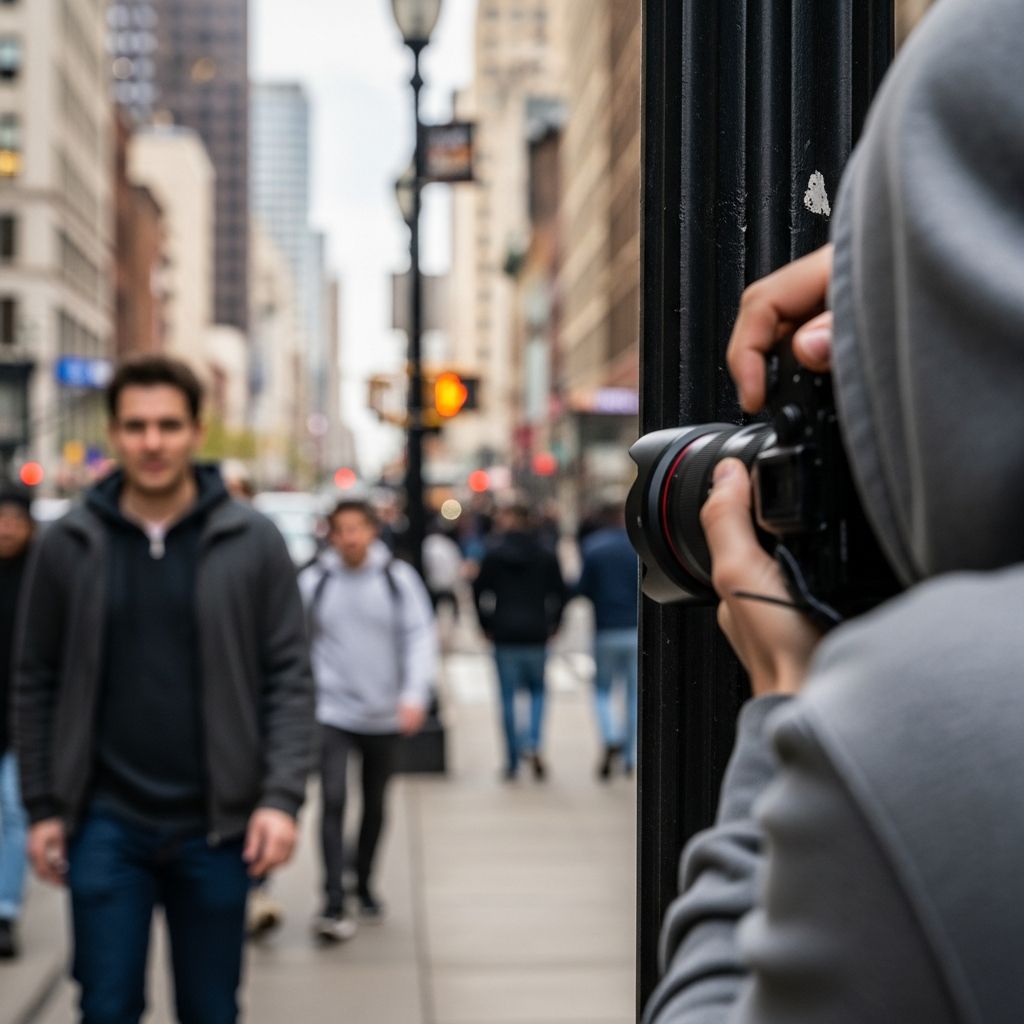
The spread of smartphones and social media means almost everyone is a potential photographer, and almost everyone is a potential subject. That raises an important question: when is it legal for someone to take or use your photo without asking you first, and when does it become a violation of your legal rights?
This guide explains the key legal concepts that govern photography, privacy, and publicity in the United States, and offers practical steps you can take if your image is captured or shared without consent. Because laws differ from state to state, this article is an overview, not individual legal advice.
Public vs. Private Places: Where You Are Matters
One of the most important factors in photo-related disputes is where the image was taken. Courts often focus on whether you had a reasonable expectation of privacy in the place and situation where you were photographed.
| Location Type | Expectation of Privacy | General Rule on Photography |
|---|---|---|
| Public spaces (streets, parks, sidewalks) | Low | Photos are usually allowed; images may often be published for non-commercial purposes. |
| Semi-public venues (stores, malls, private businesses open to the public) | Moderate | Property owners can set photography rules; violating posted rules can lead to removal for trespass, not usually arrest just for taking photos. |
| Private property not open to the public (homes, backyards) | High | Uninvited photography can amount to intrusion on privacy or trespass, especially if intimate spaces are involved. |
| Sensitive private areas (bathrooms, changing rooms, bedrooms) | Very high | Secret or non-consensual photography is often a crime under state “voyeurism” or similar statutes. |
- In public places, U.S. courts generally recognize a strong right to photograph what is plainly visible, including people, buildings, and even police officers performing their duties.
- In private or intimate spaces, people usually have a high expectation of privacy; secretly recording or photographing them may be both a civil wrong and a criminal offense under state law.
- On private property open to the public, such as stores or arenas, the owner can impose photography rules and ask you to stop or leave if you refuse.
Your Core Legal Protections Around Images
When someone captures or uses your image without permission, several different legal theories may apply. Which one fits depends on how the photo was taken, how it is used, and how it affects you.
1. Invasion of Privacy
Invasion of privacy is an umbrella term for several types of claims recognized by many states. In the context of photographs, three types are especially important:
- Intrusion upon seclusion: Intentionally intruding into your private life in a way that would be highly offensive, such as secretly filming you in your bedroom or bathroom.
- Publication of private facts: Sharing highly sensitive, non-newsworthy information or images about you (for example, medical or sexual details) that a reasonable person would find offensive.
- False light: Publishing an image in a misleading context that would offend a reasonable person, such as using your photo to suggest you committed a crime when you did not.
These claims are typically brought in civil court, and the person suing may seek money damages, removal of the image, or both.
2. Right of Publicity and Commercial Use of Your Image
Separately from privacy, many states recognize a right of publicity—the right to control the commercial use of your name, image, or likeness. Some states codify this in statutes, such as Virginia, which allows a person to sue if their name or picture is used for advertising or trade without written consent.
Misuse of your image in this way might occur when:
- Your picture is featured in an advertisement without your signed release.
- A business uses your photo on its website or social media to promote goods or services without consent.
- Your likeness is used to imply you endorse a product or brand.
While details vary by state, right of publicity claims usually focus on:
- Whether you are identifiable in the image.
- Whether the use is truly commercial (advertising, marketing, product packaging, etc.).
- Whether you consented—often through a written release.
3. Defamation and Misleading Use of Images
Even if a photograph itself is accurate, pairing it with misleading captions or contexts can sometimes lead to a defamation claim. Defamation involves a false statement presented as fact that harms your reputation.
- For example, using your photo next to an article about criminal behavior, implying you are the offender, may amount to a false statement about you.
- Defamation claims typically require proof that the false implication harmed your reputation and that the publisher was at fault.
4. Copyright in the Photo vs. Rights of the Subject
Another key issue is who owns the copyright in the photo. Under U.S. law, the person who presses the shutter generally owns the copyright in that image, not the person depicted.
- The photographer, as copyright owner, has the exclusive right to reproduce, distribute, and display the photograph.
- Copyright protection starts the moment the photo is taken in a fixed form; registration with the U.S. Copyright Office is optional but required to file a federal infringement lawsuit.
However, copyright is separate from privacy and publicity. A photographer may own a photo but still be restricted from using it in ways that violate privacy laws or right of publicity statutes.
When Taking a Photo Is Usually Legal
In many everyday situations, taking someone’s photograph is lawful, even without their explicit permission. Some common examples include:
- Street photography in public places, where people are in plain view and the photographer is not trespassing.
- News reporting or documenting public events, such as protests, parades, or emergencies, especially when done for journalistic or educational purposes.
- Artistic or editorial uses that do not imply endorsement or advertise a product, such as a photo essay in a magazine.
According to civil liberties organizations, taking photos of what you can see from public spaces is generally considered a form of free expression protected by the First Amendment, including photos of transportation facilities and government buildings.
When Taking or Using a Photo May Be Unlawful
Even if snapping photos in public is often allowed, there are clear boundaries. Taking or using a photo is more likely to violate the law when it involves:
- Secret or intimate recordings in locations where people undress or engage in private activities (bathrooms, locker rooms, bedrooms).
- Trespassing onto private property to obtain a photo, especially if done to capture someone in a vulnerable state.
- Commercial exploitation of your image without consent, such as using your photo in an ad, on product packaging, or as an implied endorsement.
- Harassment or stalking, where repeated photography or filming is part of a pattern of unwanted, threatening conduct.
- Defamatory context, where your photo is used to falsely suggest criminal or immoral behavior.
- Criminal voyeurism or non-consensual pornography laws (often called “revenge porn” statutes), which many states use to prosecute sharing explicit images without consent.
Rules for Posting Photos Online and on Social Media
Disputes today often arise not from taking photos, but from sharing them online. Posting an image to social media can implicate privacy, defamation, and right of publicity laws, especially if a wide audience sees it or it is linked to a brand or product.
Key points about social media and sharing images include:
- Platforms typically have community guidelines that prohibit harassment, non-consensual intimate images, and sometimes doxxing (revealing personal information).
- Removing a photo from a platform generally requires a request through the platform’s reporting tools; each site has its own process and criteria.
- Even after removal, screenshots and reuploads can make complete erasure difficult, which is why swift action is important.
- If the use is clearly commercial (for example, a business account using your picture to promote sales), right of publicity and unfair competition laws may offer additional remedies.
Special Considerations for Children and Vulnerable People
Photos of minors and other vulnerable individuals raise added concerns:
- Many states impose stricter criminal penalties for indecent or exploitative images of minors, including explicit photos or voyeuristic images.
- Schools, camps, and youth programs often require parental consent before using children’s photos in marketing or on websites.
- Sharing identifying information about children, such as names and locations, can create safety risks even when legal.
Parents and guardians may be able to assert both privacy and right of publicity claims on behalf of their children in appropriate cases, especially when images are used commercially or in harmful ways.
What To Do If Your Photo Is Taken or Shared Without Consent
If you discover that your image has been captured or posted without your permission, consider the following practical steps:
- Stay calm and gather information
Take screenshots or photos showing how and where the image appears, including dates, usernames, captions, and any comments. - Ask for voluntary removal
If it feels safe, contact the person who posted or is using your image and request that they delete it. Written messages are helpful as evidence later. - Use platform reporting tools
Most social networks have built-in tools to report harassment, privacy violations, or impersonation. Submit a detailed report and keep records of your submissions and any responses. - Assess whether the use is commercial
If your image is tied to advertising, endorsements, or a business page, you may have claims under right of publicity or unfair competition laws in your state. - Consult a qualified attorney
A lawyer familiar with privacy, media, or intellectual property law can evaluate potential claims such as invasion of privacy, defamation, or right of publicity, and explain what damages or injunctions may be available. - Consider law enforcement
If the images are intimate, sexually explicit, or appear to violate criminal statutes (such as voyeurism or non-consensual pornography), contacting local law enforcement may be appropriate.
Frequently Asked Questions (FAQs)
Can someone legally take my photo in a public place without asking?
In most U.S. jurisdictions, yes. When you are in a public place, you usually do not have a reasonable expectation of privacy, and others may photograph what is in plain view. However, using that image later for commercial advertising without your permission may still violate your right of publicity in some states.
Is it illegal to post someone’s photo on social media without consent?
Not automatically. Posting a non-defamatory, non-intimate photo taken in public is often lawful. It may become illegal if the image invades privacy, is used in a misleading or defamatory way, is sexually explicit and non-consensual, or is used for commercial promotion without required consent.
Who owns the copyright in a photo: the subject or the photographer?
Generally, the person who took the photo owns the copyright, not the person depicted, unless the photo was created as a work made for hire or there is a written agreement stating otherwise. That copyright grants control over copying and distribution, but it does not override privacy or publicity laws that protect the subject.
Can I force a photographer to delete images of me?
In many situations, you cannot legally force a photographer to delete photos taken lawfully in public. Authorities also generally may not demand deletion unless another law is being violated. The analysis changes if the images were taken in private spaces, obtained through trespass or harassment, or depict intimate content in violation of criminal law.
What kind of compensation is available if my photo is misused?
Available remedies vary by claim and state. In civil lawsuits, courts may award damages for emotional distress, harm to reputation, financial losses, and sometimes statutory damages where specific statutes apply. Courts may also order the defendant to stop using the image and, in some cases, to take reasonable steps to have it removed from distribution.
Do I need to register anything before suing over misuse of my image?
For privacy, defamation, or right of publicity claims, there is typically no registration requirement. But if you are suing for copyright infringement of a photo you took, U.S. law generally requires that your work be registered with the Copyright Office before you can file a federal lawsuit, and timely registration affects eligibility for certain damages and attorneys’ fees.
References
- How Much Can You Sue Someone for Taking Your Picture Without Permission? — Pusch & Nguyen Law Firm. 2023-06-01. https://puschnguyen.com/how-much-can-you-sue-someone-for-taking-your-picture-without-permission/
- What Photographers Should Know about Copyright — U.S. Copyright Office. 2022-03-15. https://www.copyright.gov/engage/photographers/
- Virginia Code § 8.01-40: Unauthorized Use of Name or Picture of Any Person — Code of Virginia. 2021-07-01. https://law.lis.virginia.gov/vacode/title8.01/chapter3/section8.01-40/
- Can a Person Take Legal Action if Someone Posts Unauthorized Photos or Videos on Social Media? — New York Personal Injury Law Blog. 2020-05-20. https://nyplaw.com/can-a-person-take-legal-action-if-someone-posts-unauthorized-photos-or-videos-on-social-media/
- Photography and the Law — Summary of legal principles. 2019-11-10. https://en.wikipedia.org/wiki/Photography_and_the_law
- If Stopped for Photographing in Public — ACLU of the District of Columbia. 2017-08-01. https://www.acludc.org/know-your-rights/if-stopped-photographing-public/
- Photographers’ Rights — American Civil Liberties Union. 2014-11-01. https://www.aclu.org/issues/free-speech/photographers-rights
Similar Articles








Read full bio of Sneha Tete


