
When Criminals Get Hurt: Can They Sue the Homeowner?
Explore when an injured burglar or trespasser can sue a homeowner, and how self-defense and premises liability rules really work.
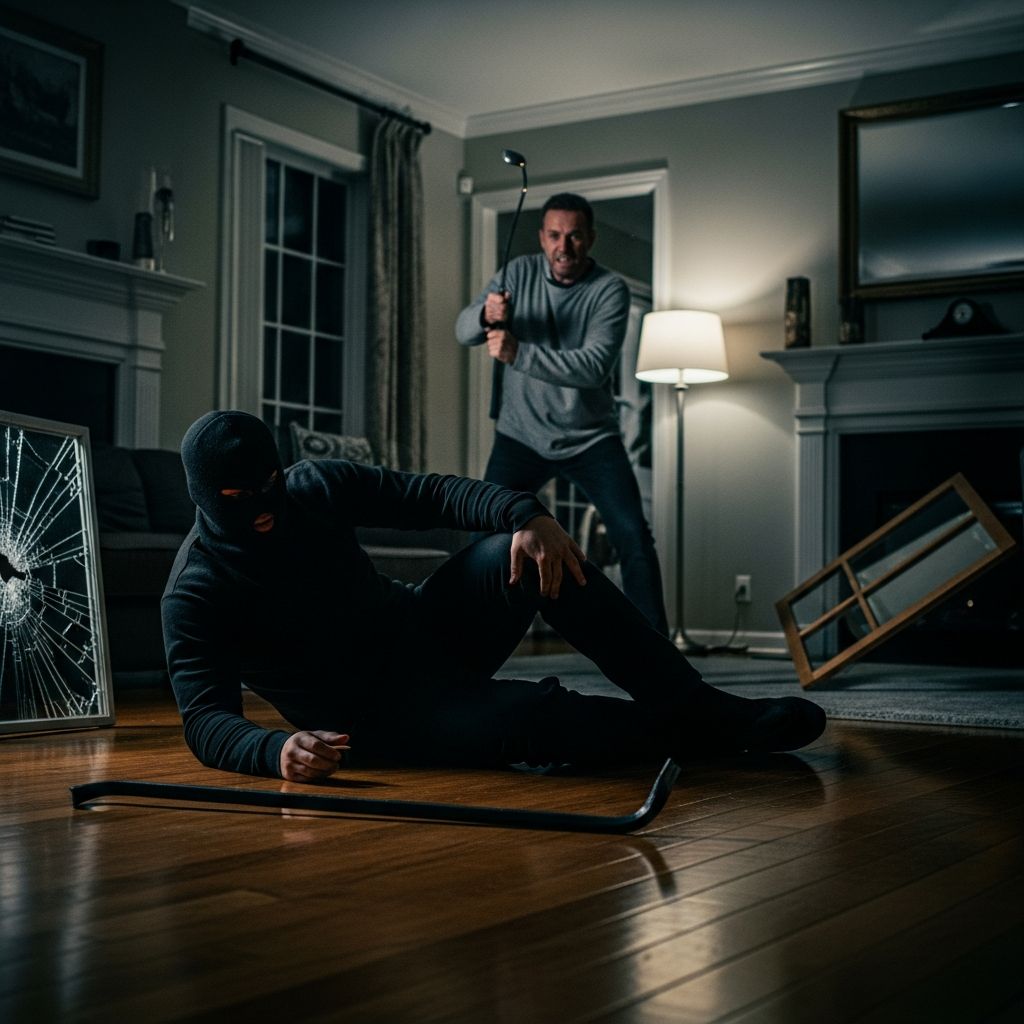
Stories about burglars winning big payouts after getting hurt during a break-in regularly circulate online and in the news. Some are exaggerated, but they raise a fair question: can someone committing a crime sue the homeowner if they are injured? The answer is complicated. In the United States, injured people can almost always file a lawsuit, but whether they can win depends on premises liability rules, self-defense laws, and the specific facts of the incident.
This article explains how courts treat injury claims by burglars and trespassers, when homeowners may still face civil liability, and practical steps to reduce legal risk.
Key Legal Ideas You Need to Understand
Several overlapping areas of law shape whether an injured criminal can recover money from a homeowner:
- Premises liability – the legal duty a property owner owes to people on their land.
- Trespasser rules – how the duty changes when someone is on the property without permission.
- Self-defense and defense of property – when a homeowner can lawfully use force to repel an intruder.
- Criminal conduct bars – in some states, statutes that limit or block lawsuits by people hurt while committing certain crimes.
Premises Liability Basics: Duties to Different Visitors
Premises liability law starts from a simple idea: people who control property must take reasonable steps to keep it safe for lawful visitors. Every state applies this in its own way, but a common approach divides visitors into categories.
| Visitor Type | Why They Are There | Typical Duty Owed by Owner |
|---|---|---|
| Invitees | On property for owner’s benefit (e.g., customers at a store) | Highest duty: inspect, fix hazards, and warn of dangers. |
| Licensees | Social guests or others allowed but not there for business | Duty to fix or warn about known dangers, but usually no duty to inspect. |
| Trespassers | On the property without permission | Usually, only a duty not to willfully or wantonly injure them. |
A burglar almost always fits the category of trespasser. That means the owner normally has no obligation to make the premises safe for them and is generally responsible only for intentional or reckless harm—for example, setting hidden deadly traps.
Can a Burglar File a Lawsuit? Yes, But Winning Is Hard
In the U.S. civil justice system, almost anyone can file a lawsuit. Courts do not screen out cases simply because the claimant committed a crime. The question is whether the law recognizes a valid claim for damages.
For a burglar to succeed in a civil case against a homeowner, they typically must show:
- The homeowner owed them some legal duty (despite the trespassing).
- The homeowner breached that duty (for example, through extreme or intentional misconduct).
- The breach directly caused the burglar’s injuries.
- The damages (medical bills, lost income, pain and suffering) can be proven with evidence.
Because the duty to trespassers is so limited, most injured burglars will lose unless the homeowner’s conduct was especially egregious—such as using a spring-gun or similar device designed to cause severe harm to intruders.
Why Premises Liability Usually Does Not Protect Burglars
Ordinary negligence claims—such as a slip-and-fall on a wet floor—are typically built on the duty owed to lawful visitors. Trespassers fall at the bottom of the protection ladder.
In many states, the general rules are:
- Homeowners are not required to inspect for dangers to protect trespassers.
- They usually do not owe a duty to warn trespassers about hazards they might encounter during illegal entry (such as dark stairs or cluttered garages).
- They can, however, be held liable if they deliberately create conditions designed to injure trespassers or if their conduct is considered willful or wanton.
Some states also have statutes that limit or prohibit recovery for injuries that occur while the injured person is committing certain serious crimes, further reducing the chance that a burglar’s lawsuit will succeed.
When a Burglar Might Have a Claim
Although such cases are rare, there are scenarios where a trespasser or even a burglar could potentially win a civil claim.
1. Intentional Traps and Extreme Measures
Courts have long disfavored “man traps” or devices that automatically inflict serious injury on anyone who enters, regardless of circumstances. A classic example is a spring-loaded gun wired to a door or gate.
- Setting up concealed deadly traps can be treated as intentional excessive force.
- Even if the target is an intruder, courts may find the homeowner liable because the law does not typically allow lethal force solely to protect property.
2. Force That Exceeds Self-Defense Limits
Most states recognize the right to use reasonable force, including deadly force in some circumstances, to defend yourself or others from serious threats. But that right is not unlimited.
- If a homeowner uses deadly force when there is no reasonable belief of imminent serious harm, they may face both criminal charges and civil liability for excessive force.
- Even if criminal prosecutors decline to file charges, the injured person (or their family) can still pursue a civil lawsuit.
3. Separate, Unrelated Negligence
Some jurisdictions make a distinction between injuries directly caused by the crime and those resulting from other unrelated negligence. For example, if an intruder is injured because a homeowner crashes a car into them in a road-rage incident unrelated to the break-in, the civil analysis may differ from one involving a booby-trapped window.
Self-Defense, Castle Doctrine, and Stand-Your-Ground Laws
Much of the public debate about burglars suing homeowners centers on self-defense rights. States vary significantly in how they balance a homeowner’s right to defend their home against an intruder’s potential civil remedies.
Castle Doctrine
Many states follow some form of the “castle doctrine,” which presumes that a person has a right to use force, sometimes including deadly force, to defend themselves against an intruder in their home.
- These laws often create a presumption that the homeowner reasonably feared death or serious injury when someone unlawfully entered their dwelling.
- Some states provide civil immunity when force is lawfully used under the doctrine, making it harder for an intruder or their family to sue successfully.
Stand-Your-Ground Provisions
In some jurisdictions, “stand-your-ground” laws remove the duty to retreat before using force in self-defense under certain conditions.
- These statutes primarily affect criminal liability, but they can also bolster a homeowner’s defense in civil lawsuits by framing the use of force as reasonable and lawful.
Limits on Self-Defense
Even in states with strong homeowner protections:
- Force must still be proportionate to the perceived threat.
- Using deadly force purely to protect property, with no reasonable fear of serious harm, can still lead to liability.
- Civil courts apply a “preponderance of the evidence” standard, which is lower than the “beyond a reasonable doubt” standard in criminal cases, so a homeowner acquitted criminally could still lose a civil lawsuit.
Special Rules for Children: The Attractive Nuisance Doctrine
A major exception to the minimal duty owed to trespassers involves children drawn onto property by something unusually dangerous and appealing, known as an attractive nuisance.
Examples include:
- Unfenced swimming pools
- Abandoned refrigerators or appliances
- Construction sites with accessible heavy equipment
Under this doctrine, a property owner may be liable if:
- The owner knows or should know that children are likely to trespass near a dangerous condition.
- The condition poses an unreasonable risk of serious harm to children who do not appreciate the danger.
- The burden of eliminating the danger is small compared with the risk.
- The owner fails to take reasonable steps to protect children (fences, locks, warnings, or removal of the hazard).
Even though these children are technically trespassers, the law often provides them greater protection because of their limited ability to understand risk.
State Variations and Criminal-Activity Bars
Premises liability and self-defense are largely matters of state law. Legislatures in some states have gone further by enacting statutes that restrict civil suits by people injured while committing serious crimes.
Typical features of such statutes can include:
- Preventing a person convicted of certain felonies from recovering damages for injuries suffered while committing that crime.
- Allowing lawsuits only when the injury arises from conduct unrelated to the prevention or apprehension of the crime.
- Making the convicted person responsible for the property owner’s court costs and attorney’s fees if they sue and lose.
Because these laws vary dramatically, the outcome in one state may be very different from another, even with similar facts.
Practical Steps for Homeowners to Reduce Legal Risk
While homeowners cannot control every scenario, they can take sensible steps that protect both safety and legal interests.
Avoid Illegal or Dangerous Traps
- Do not install spring guns, concealed pits, or other hazardous devices aimed at injuring intruders; courts have historically treated such measures harshly.
- Consult local law or an attorney before adopting any security measure that could seriously injure someone.
Use Reasonable, Lawful Security Measures
- Reinforced locks, alarms, safe lighting, and surveillance cameras generally reduce risk without raising liability concerns.
- Visible deterrents may reduce the chance that a break-in happens at all.
Understand Self-Defense Rules in Your State
- Know when your state allows deadly force inside the home and what conditions must be met.
- Be aware that what feels morally justified in the moment may still be legally questioned later.
Maintain Adequate Insurance
- Homeowners and renters insurance policies can provide a defense attorney and coverage for many negligence claims.
- Review your policy to understand exclusions, especially for intentional acts.
Document Incidents Carefully
- If a break-in or confrontation occurs, contact law enforcement immediately.
- Preserve security footage, photos, and any physical evidence.
- Record your recollection of events while it is fresh; this can be important if a civil lawsuit arises later.
Frequently Asked Questions (FAQs)
Q: Can a burglar sue me if they get hurt breaking into my house?
A: They can almost always file a lawsuit, but winning is difficult. In most states, homeowners owe trespassers only a limited duty and are generally liable only for intentional or reckless harm, such as setting dangerous traps.
Q: Am I responsible if a trespasser slips and falls in my yard?
A: Typically, no. Premises liability duties toward trespassers are very limited. Most states do not require homeowners to inspect or correct conditions to protect trespassers from ordinary hazards, though they must avoid willful or wanton injury.
Q: What if I use a weapon in self-defense against a burglar?
A: Whether you face civil liability depends on your state’s self-defense and castle doctrine laws and on whether your use of force is judged reasonable under the circumstances. Some states offer civil immunity for justified self-defense, but excess or unnecessary force can still lead to civil claims.
Q: Can the burglar’s family sue me if the burglar dies?
A: In many states, surviving family members can bring wrongful death claims. However, statutes that bar recovery for injuries or death occurring during serious crimes, plus strong self-defense protections, often make such lawsuits difficult to win, especially if the homeowner’s actions were lawful.
Q: Do I have more responsibility if children trespass onto my property?
A: Possibly. Under the attractive nuisance doctrine, property owners may have a higher duty to protect children from dangerous features that are likely to draw them in, such as unfenced pools or accessible machinery, even when the children are technically trespassing.
References
- Texas Civil Practice and Remedies Code, Chapter 86: Recovery of Damages for Injury to Convicted Person Prohibited — Texas Legislature. 1995-09-01. https://statutes.capitol.texas.gov/Docs/CP/htm/CP.86.htm
- O.C.G.A. § 51-3-1 to § 51-3-3: Duties of Owners and Occupiers of Land — State of Georgia. 2023-01-01. https://law.justia.com/codes/georgia/2022/title-51/chapter-3/
- Restatement (Second) of Torts §§ 329–343 — American Law Institute. 1965-01-01. https://web2.westlaw.com
- Model Penal Code § 3.04: Use of Force in Self-Protection — American Law Institute. 1985-01-01. https://web2.westlaw.com
- Premises Liability: A Guide for Property Owners — Cornell Legal Information Institute. 2022-06-15. https://www.law.cornell.edu/wex/premises_liability
- Stand Your Ground and Castle Doctrine Laws — National Conference of State Legislatures. 2023-03-10. https://www.ncsl.org/research/civil-and-criminal-justice/self-defense-and-stand-your-ground.aspx
Similar Articles








Read full bio of medha deb


