
Rental Car Liability: How To Get Compensation After A Crash?
Learn when a rental company may share fault after a crash, and how insurance and liability rules usually work.
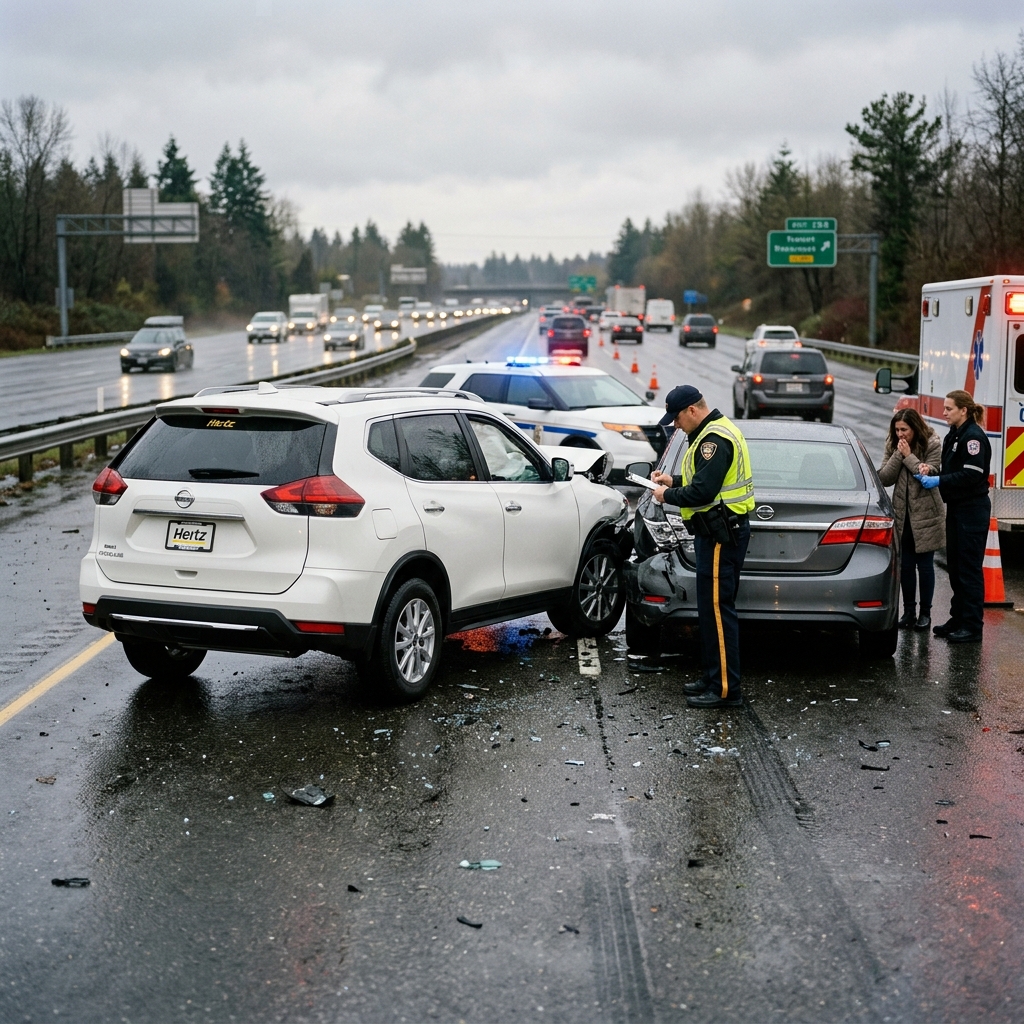
When a Rental Car Crash Raises Liability Questions
Rental car accidents can create confusion because multiple insurance policies and legal duties may overlap. In most cases, the driver who caused the crash is the first person responsible for the resulting losses, but there are situations where a rental company may also face liability if its own conduct contributed to the wreck. That usually depends on whether the company failed to maintain the vehicle, rented out a defective car, or otherwise acted negligently.
The key issue is not simply that the vehicle was rented. The real question is whether the rental company did something, or failed to do something, that helped cause the accident. If the company had no role in the crash beyond owning the car, liability is less likely. If there was negligent maintenance, poor inspection, or another safety failure, the analysis changes.
Understanding this distinction matters because it affects who may pay for medical bills, property damage, lost income, and related losses. It also affects where an injured person should look first for compensation.
Who Usually Pays After a Rental Car Accident?
In many crashes, liability starts with ordinary negligence rules. That means the at-fault driver is typically responsible for the harm caused. If another motorist hit the rental car, that driver’s insurance may be the primary source of recovery. If the renter caused the crash, the renter’s own auto policy may respond first, depending on the policy terms and any optional rental-related coverage.
Insurance can also shift the practical order of payment. A renter may need to use personal coverage first, then seek reimbursement later from the at-fault driver’s insurer. If the renter purchased collision damage waiver, supplemental liability protection, or rental reimbursement coverage, those benefits may reduce out-of-pocket costs.
Because rental agreements and insurance contracts vary widely, two similar accidents can produce very different outcomes. The label on the car does not determine payment by itself; the applicable policy language, fault findings, and state law usually do.
When the Rental Company May Share Responsibility
A rental company may be liable if its own negligence contributed to the accident. That can happen when the company fails to inspect or maintain the vehicle properly, ignores known mechanical problems, or rents a vehicle that is unsafe to drive. In that setting, the company is not being blamed for the renter’s driving; it is being held accountable for its own conduct.
Examples of possible company-side negligence include brake failure, tire defects that should have been discovered during inspection, malfunctioning lights, steering issues, or a known recall that was not addressed. A company may also face claims if it rented a vehicle with a dangerous condition that should have been fixed before the car went back on the road.
In practice, proving company negligence usually requires evidence such as maintenance logs, inspection records, recall notices, repair orders, and mechanic testimony. Without proof connecting the defect or maintenance lapse to the crash, a claim against the rental company is much harder to sustain.
How Federal Law Can Limit Claims Against Rental Companies
Claims against rental businesses are also shaped by federal law, especially when a plaintiff tries to hold the company liable simply because it owned the vehicle. The federal Graves Amendment generally prevents holding a rental or leasing company vicariously liable for harm caused solely by a renter’s negligence, so ownership alone is usually not enough to create liability. The statute does not protect a company from its own negligence, however, which leaves room for claims based on poor maintenance, defective vehicles, or other company conduct.
This distinction is important. A person injured in a rental car crash may still sue the company, but the theory of the case must usually rest on the company’s independent fault rather than on a claim that the company is responsible just because it supplied the car.
Evidence That Can Support a Claim
Strong evidence can make the difference between a viable claim and a weak one. After a crash involving a rental vehicle, documentation should begin immediately, because vehicle condition can change fast once repairs start.
- Photographs of vehicle damage, skid marks, road conditions, and warning lights
- Police reports and crash reports prepared at the scene
- Witness names and contact information
- Rental agreement documents and insurance paperwork
- Repair estimates and towing records
- Maintenance or service records, if they can be obtained
- Recall notices or manufacturer safety bulletins
These materials help answer two separate questions: who caused the crash, and whether the rental company failed to do something it should have done. Even when another driver appears clearly at fault, vehicle defects can still matter if they helped make the accident worse.
Insurance Coverage That May Come Into Play
Rental accidents often involve several layers of coverage. The renter may have personal auto insurance, a credit card benefit, a policy purchased at the counter, or coverage through another driver’s insurer. Each layer may apply differently depending on fault and policy wording.
| Possible coverage source | Typical role |
|---|---|
| At-fault driver’s liability insurance | May pay for injuries and property damage caused by that driver |
| Renter’s personal auto policy | May cover the rental car, the renter’s liability, or both depending on the policy |
| Rental company protection products | May reduce or eliminate certain charges or losses |
| Credit card rental benefits | May help with damage to the rental vehicle if the card terms allow it |
| Uninsured or underinsured motorist coverage | May help when the at-fault driver has little or no usable insurance |
The order of payment is often more important than the total amount of coverage. A person may have benefits available but still need to submit claims in a specific sequence. That is one reason rental crashes can take time to resolve.
What To Do Right After the Accident
The best time to protect a potential claim is immediately after the crash. Even a valid claim can become harder to prove if basic details are missing.
- Check whether anyone is injured and call emergency services if needed
- Move to a safe location if traffic or debris creates a hazard
- Call the police and ask for an official report
- Exchange information with all drivers involved
- Photograph the scene, the vehicles, and any visible defects
- Report the incident to the rental company as soon as required by the contract
- Notify your insurer promptly and provide accurate facts
If the rental car seemed to have a mechanical problem before or during the collision, that detail should be preserved in writing. A vague complaint is less useful than a note that the brakes felt soft, the steering locked, or a tire failed before impact.
Could a Defect Be More Important Than Driver Error?
Sometimes yes. A driver may make a mistake, but a defect may still be a legal cause of the crash or the severity of the injuries. For example, a tire blowout on an otherwise straight road can turn a manageable mistake into a serious collision. Likewise, failed brakes can prevent a driver from avoiding impact even when the driver reacts appropriately.
That does not mean every malfunction creates liability for the rental company. The defect must usually be linked to a safety duty the company failed to meet, and the injury must be connected to that failure. If the problem came from wear and tear that should have been caught during maintenance, the case is stronger. If the problem was sudden and unforeseeable, the company may have a defense.
Questions That Often Decide These Cases
Several legal and factual questions tend to drive the outcome in rental car accident claims.
- Who caused the crash under ordinary negligence rules?
- Did the rental company have notice of a defect or maintenance issue?
- Was there a mechanical problem that helped cause or worsen the collision?
- What does the rental agreement say about coverage and reporting duties?
- Which insurance policy is primary, and which one is secondary?
- Does state law limit liability for rental companies in this situation?
These issues are usually evaluated together rather than one at a time. A company may avoid liability for the crash itself but still face a separate claim for a preventable vehicle defect. Likewise, a renter may be responsible for the accident yet still have coverage available to offset some losses.
Why Legal Help Can Be Useful
Rental car claims often involve more paperwork than ordinary collisions because several companies may be involved at once. The rental agency, the renter’s insurer, the other driver’s insurer, and sometimes a vehicle manufacturer may all point in different directions. A careful review of the facts can help determine which claims are worth pursuing and which ones are likely blocked by contract terms or liability rules.
Legal help can also be useful when the rental company argues that the renter accepted responsibility through the agreement. Standard contract language does not always eliminate a valid negligence claim, especially when the company’s own safety failure may have played a role. A lawyer can also help secure records before they are lost or overwritten.
Common Situations and Likely Responsibility
The following chart shows how responsibility often works in practice, although the actual result always depends on the facts and the policy language.
| Scenario | Likely first place to look for payment |
|---|---|
| Another driver caused the collision | The other driver’s liability insurer |
| Renter caused the crash while driving safely maintained car | Renter’s policy and any optional rental coverage |
| Brake failure contributed to the wreck | Rental company, if maintenance negligence can be shown |
| Rental car was damaged by a hidden defect | Rental company or manufacturer, depending on the source of the defect |
| At-fault driver has no usable insurance | Uninsured or underinsured motorist coverage, if available |
FAQs
Can I sue a rental company just because I crashed in its car? Not usually. Ownership alone is generally not enough; there must usually be some negligence by the company itself, such as a maintenance failure or unsafe vehicle condition.
What if the rental agreement says I’m responsible for everything? Contract language matters, but it does not necessarily erase liability rules or insurance protections. The agreement may affect repayment obligations, yet negligence claims can still depend on the facts and state law.
What if the car had a problem before the crash? Report it immediately and preserve evidence. A mechanical defect can support a claim if it can be tied to the collision or to the severity of the injuries.
Do I have to pay the rental company before the claim is resolved? Sometimes payment is requested early, especially for damage to the vehicle. Whether reimbursement is available later depends on insurance coverage, fault findings, and the rental agreement.
Can more than one party be responsible? Yes. A crash can involve shared fault, especially if one driver caused the collision and the rental company also failed to maintain the vehicle properly.
References
- Protection of Consumers of Rental Cars and Towing Vehicles — Legal Information Institute, Cornell Law School. 2026-07-10. https://www.law.cornell.edu/uscode/text/49/30106
- Rental Car Insurance and What It Covers — Consumer Reports. 2025-01-01. https://www.consumerreports.org/cars/car-insurance/rental-car-insurance-a1305250783/
- After a Car Crash — National Highway Traffic Safety Administration. 2024-12-01. https://www.nhtsa.gov/after-a-crash
- Consumer Guide to Auto Insurance — Insurance Information Institute. 2025-06-01. https://www.iii.org/article/consumer-guide-auto-insurance
- Vehicle Recalls — National Highway Traffic Safety Administration. 2026-07-10. https://www.nhtsa.gov/recalls
Similar Articles








Read full bio of Sneha Tete


