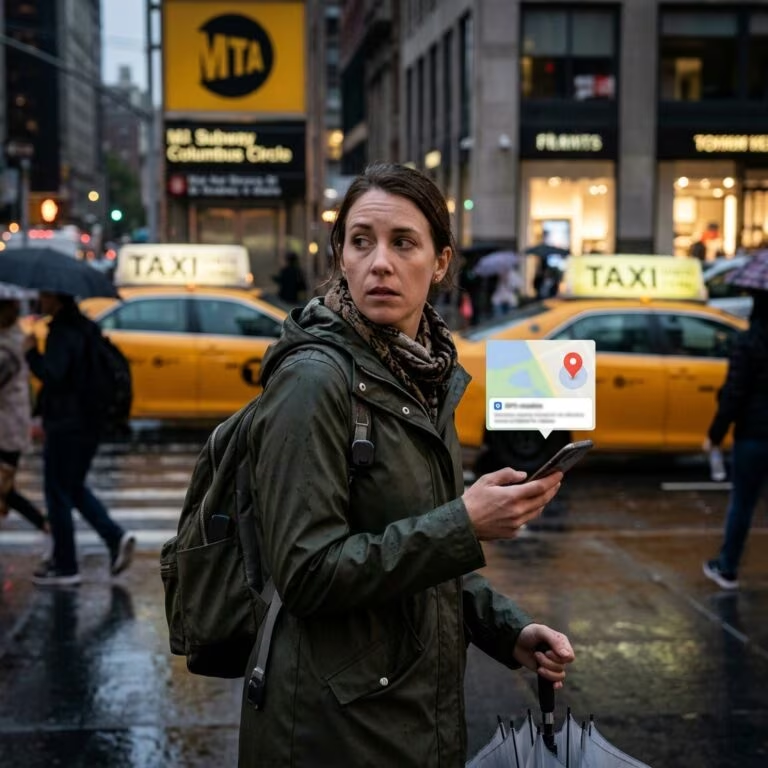
Your phone holds a detailed record of your life – messages, photos, browsing history, location data, financial apps, and more. Because of this, the law treats cell phone searches very differently from quick pat-downs or wallet checks. Understanding when police need a warrant, what exceptions apply, and how to respond if an officer asks for your phone is critical to protecting your privacy.
The Legal Foundation: Fourth Amendment Protection
In the United States, cell phone searches are governed primarily by the Fourth Amendment, which protects people against unreasonable searches and seizures by the government. The general rule is that police must obtain a warrant supported by probable cause before searching your phone’s contents. This rule reflects the idea that digital devices contain vast amounts of personal information, often more than what officers could access during traditional searches of pockets or bags.
This principle was cemented in 2014 when the U.S. Supreme Court decided Riley v. California. The Court unanimously held that, in most circumstances, police may not search the digital contents of a cell phone seized during an arrest unless they first obtain a warrant from a judge. The Court compared phones to homes, emphasizing that the volume and sensitivity of data stored on modern devices requires strong constitutional safeguards.
Warrants: The Default Rule for Cell Phone Searches
Outside of special situations, officers need a valid warrant before they can examine data on your phone. A lawful warrant must:
- Be issued by a neutral judge or magistrate.
- Be based on probable cause that evidence of a crime will be found on the device.
- Describe with particularity what may be searched and the types of data to be seized (for example, text messages or call logs connected to a specific investigation).
Even when police have a warrant, they are not allowed to search your phone for anything and everything. The scope of the warrant limits where officers can look and what information they may collect.
| Situation | Can Police Access Phone Data? |
|---|---|
| Officer has a valid search warrant | Generally yes, within the limits of the warrant. |
| You voluntarily consent to a search | Yes, even without a warrant, if consent is truly voluntary. |
| Emergency (exigent circumstances) | Possibly, if an urgent situation justifies immediate action. |
| Border inspection by federal agents | Often yes, under broader border-search powers. |
| Routine traffic stop with no warrant, no consent, no emergency | Generally no, officers may not search your phone’s data. |
Seizing vs. Searching: Important Distinction
It is crucial to distinguish between seizing a phone and searching it. Seizing means physically taking and holding the device; searching means accessing its digital contents.
- Seizure incident to arrest: Police may seize a phone found on you when you are lawfully arrested, even before they obtain a warrant. They can hold the phone to prevent evidence from being destroyed while they seek court approval.
- Search of data: Even after seizure, officers generally must secure a warrant before reviewing messages, photos, or other stored information, unless an exception applies.
This means that an officer might legally take your phone during an arrest but cannot automatically scroll through your apps and files without additional legal authorization.
Key Exceptions to the Warrant Requirement
Although the default rule requires a warrant, there are several recognized exceptions that may allow police to search a phone without first going to court.
1. Consent: Voluntary Permission to Search
If you freely and voluntarily agree to let officers search your phone, they usually do not need a warrant. For consent to be valid, it must be:
- Given knowingly, with an understanding that you have a right to refuse.
- Free from coercion, threats, or undue pressure.
- Clearly expressed, either verbally or through actions (such as unlocking the phone and handing it over).
Because consent waives significant privacy protections, many lawyers advise against ever agreeing to a cell phone search, regardless of whether you believe you have done anything wrong.
Practical tip: If an officer asks to look through your phone, you may respond calmly with a statement like, “I do not consent to a search of my phone.” Saying this clearly and politely helps protect your rights if later there is a dispute about whether you gave consent.
2. Exigent Circumstances: Emergencies Requiring Immediate Action
The law recognizes that in truly urgent situations, waiting for a warrant could lead to serious harm or the loss of critical evidence. These exigent circumstances can permit warrantless searches. Examples include:
- Preventing imminent danger to life or serious injury (such as locating a kidnapping victim or responding to a bomb threat).
- Pursuing a fleeing suspect where the phone may reveal live location information or immediate threats.
- Stopping the imminent destruction or remote wiping of digital evidence.
Courts later review these situations carefully to determine whether the emergency was genuine and whether the scope of the search was limited to what the circumstances reasonably required.
3. Border Searches by Federal Agents
At international borders and certain airports, U.S. Customs and Border Protection and related agencies have broader authority to inspect electronic devices. Border searches are an established exception to many ordinary Fourth Amendment rules.
While some courts have restricted unlimited device searches at the border, federal officers can often examine phones and laptops without a traditional warrant, particularly when screening for customs violations, contraband, or national security threats. However, legal challenges continue to shape the limits of this power, and standards may vary by jurisdiction.
4. Searches Involving Probationers or Parolees
Individuals on probation or parole often agree to conditions that reduce their privacy protections, sometimes including consent to searches by supervising officers or law enforcement. Depending on the specific terms imposed by the court or parole board, authorities may have broader rights to search a probationer’s or parolee’s phone without obtaining a warrant, particularly if there is suspicion of a violation of release conditions.
What If Police Ask for Your Password or Biometric Unlock?
Separate from the right to search the phone is the question of whether officers can force you to unlock it. This area of law is evolving, and rules may differ by state and by whether the unlocking mechanism is a password, PIN, fingerprint, or facial recognition.
Many courts treat compelled disclosure of memorized passcodes as potentially protected by the Fifth Amendment privilege against self-incrimination, because the act of revealing a password may communicate facts about your control and knowledge of the device. Biometric unlocking (such as scanning a fingerprint) may be viewed differently in some jurisdictions, though the law is not uniform and continues to develop.
Because this is a complex issue that often depends on specific facts and local case law, it is generally advisable to request legal counsel before responding to any demand to unlock your device.
How to Respond If Police Want to Search Your Phone
Knowing how to react in real time is as important as understanding the law in theory. Here are practical steps recommended by many defense attorneys.
Step-by-Step Response Guide
- Stay calm and respectful: Avoid arguing or physical resistance. Your demeanor can influence how the encounter unfolds.
- Ask if you are being detained or are free to leave: If you are not under arrest and not legally detained, you may be able to walk away.
- Refuse consent clearly: If an officer asks to “take a quick look” at your phone, respond with, “I do not consent to a search of my phone.”
- Do not hand over or unlock the device voluntarily: Physically giving the phone or entering the passcode can be treated as consent.
- Ask whether the officer has a warrant: If the answer is yes, you can request to see it. Do not interfere with execution of a valid warrant, but you can note its scope.
- Invoke your right to remain silent: You generally have no obligation to answer questions about your phone or its contents.
- Request to speak with an attorney: Ask for legal counsel as soon as you believe you may be a suspect or at risk.
Common Scenarios Involving Cell Phone Searches
The rules above apply in different ways depending on where and how you encounter law enforcement. Consider these frequent situations:
Traffic Stops
During a routine traffic stop, an officer may ask questions, request your license and registration, and sometimes look inside the vehicle. However, they generally may not search your phone’s data without a warrant, valid consent, or a recognized exception.
- If an officer casually asks to see your phone, you have the right to decline.
- Simply holding your phone in view or using it while stopped does not, by itself, justify a search.
- In rare cases involving serious threats, exigent circumstances might support a limited, immediate search.
Arrests
After an arrest, police may seize your phone as part of a search incident to arrest, but they usually must obtain a warrant before reviewing its contents. They may keep the phone while they prepare and submit a warrant application supported by probable cause.
Investigations Without Arrest
Officers sometimes seek information from phones during investigative encounters where no arrest has yet taken place. In these situations, you retain the same core rights:
- You can refuse to consent to a search.
- Officers must rely on a warrant or an exception to access data.
- Remaining polite and requesting legal counsel can help you avoid inadvertently waiving rights.
Protecting Your Digital Privacy Proactively
Beyond reacting to police requests, you can take proactive steps to safeguard your information.
- Use strong authentication: Enable secure passcodes and consider encryption features to protect stored data.
- Limit sensitive data on your device: Regularly review which apps and accounts are linked and what information they retain.
- Review device-sharing practices: Sharing your passcode widely can complicate questions about ownership and control of data.
- Stay informed about local law: Some states have additional privacy protections or specific statutes governing digital searches.
- Consult counsel after serious encounters: If your phone has been seized or searched, promptly speak with a criminal defense attorney.
FAQs: Police Searches of Cell Phones
Can police ever search my phone without a warrant?
Yes, but only under limited exceptions. If you voluntarily consent, if there are exigent circumstances like immediate danger or risk of evidence destruction, at certain border crossings, or if you are subject to special probation or parole conditions, officers may be allowed to search without a warrant. In most other situations, a warrant is required.
Should I ever consent to a phone search?
From a rights-protection standpoint, many attorneys recommend never consenting to a search of your phone. Consent opens the door to broad review of your data, and you may not predict what an officer will consider relevant or incriminating.
If my phone is seized, does that mean officers can read my messages?
Not necessarily. Seizing a phone is different from searching it. Police may hold your phone, especially after an arrest, but in general they must obtain a warrant or rely on a valid exception before they can read your messages or examine other stored data.
What if officers threaten consequences if I don’t unlock my phone?
Pressuring you to unlock your phone may undermine any claim that your consent was voluntary. You remain entitled to decline consent, invoke your right to remain silent, and request an attorney. How courts later view the situation can depend on the specific facts and local law, so documenting what happened and seeking legal advice is important.
Do these rules apply the same way in every state?
The core Fourth Amendment protections recognized in Riley v. California apply nationwide, but individual states may have additional statutes or court decisions that affect how phone searches are handled. For example, some jurisdictions emphasize particular standards for warrants or recognize additional privacy rights. Consulting a local attorney can clarify the rules where you live.
References
- Can Police Search Your Phone Without a Warrant? — Ejiofor Law Firm. 2023-05-01. https://www.ejioforlaw.com/blog/can-police-search-your-phone-without-a-warrant/
- Can Police Search My Phone After an Arrest? — Nolo. 2022-04-15. https://www.nolo.com/legal-encyclopedia/if-the-police-arrest-me-can-search-cell-phone.html
- Digital Device Searches: When Police Can Access Your Phone — Surovell Isaacs & Levy PLC. 2023-08-10. https://surovellfirm.com/criminal-law/digital-device-searches-when-police-can-access-your-phone/
- Can the Police Search Your Cell Phone in PA? — The Fishman Firm. 2023-03-20. https://www.thefishmanfirm.com/search-cell-phone/
- How Much Can Police Go Through Your Phone? — Kyle Whitaker Law. 2021-10-18. https://www.kylewhitaker.com/2021/10/how-much-can-police-go-through-your-phone-when-you-are-arrested/
- Can Police In Tennessee Search Your Phone Without A Warrant? — Marcos Garza Law Firm. 2023-02-01. https://knoxcrimdefense.com/can-police-in-tennessee-search-your-phone-without-a-warrant/