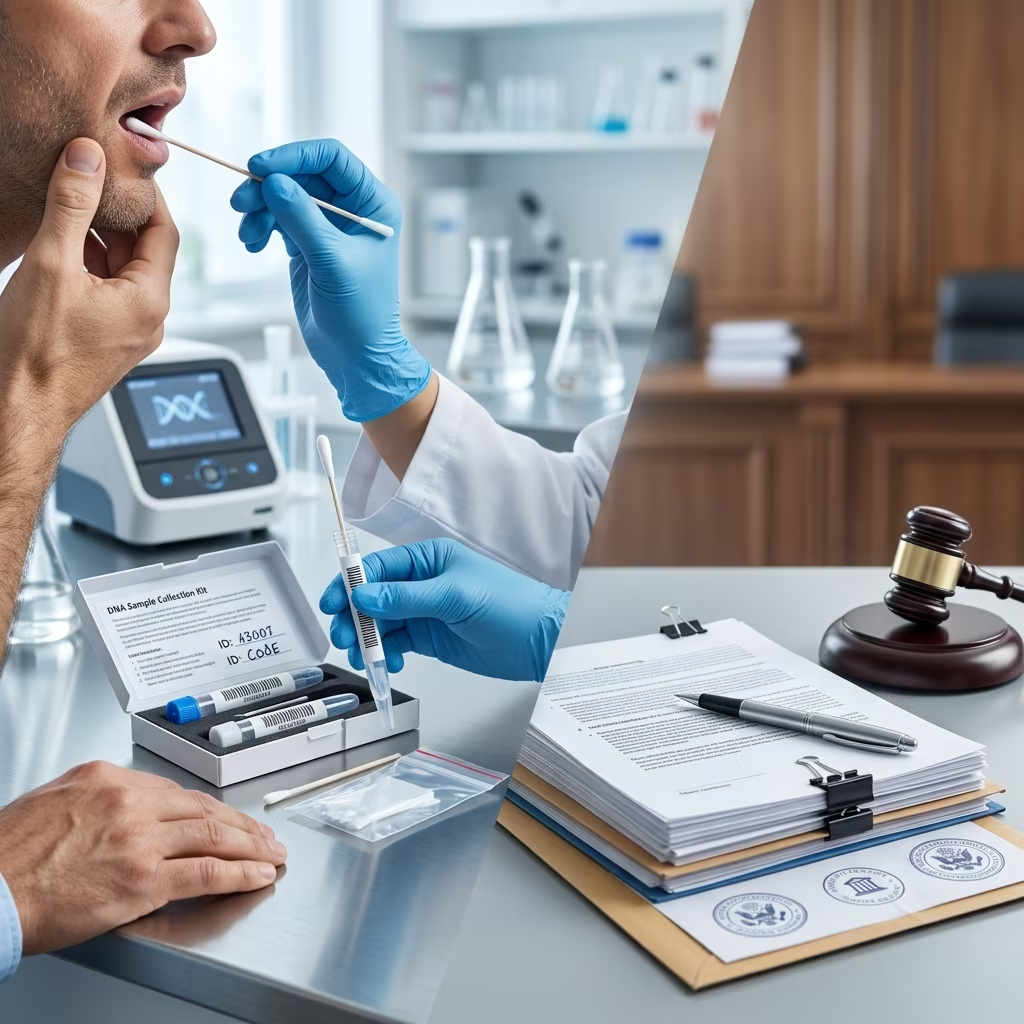
Establishing who a child’s biological father is can have major consequences for custody, child support, inheritance, and a child’s sense of identity. A legal DNA paternity test provides a scientifically sound and court-recognized way to answer paternity questions with high accuracy, while meeting strict legal rules for admissible evidence.
This guide explains how legal paternity testing works, how it differs from at-home tests, what to expect before and after testing, and how results can affect your legal rights and obligations.
What Is a Legal DNA Paternity Test?
A DNA paternity test compares the genetic material of a child with that of an alleged father to determine whether they share a biological parent–child relationship. When the test is performed under legally controlled conditions, by an accredited laboratory, and following specific documentation procedures, the result is considered a legal paternity test and can be used in court.
Key Features of a Legal Test
- Scientific analysis of DNA: The lab examines multiple genetic markers (often 16 or more) inherited from both parents to evaluate biological relationship.
- Accredited laboratory: Testing must be done by a lab meeting recognized accreditation standards (such as AABB accreditation in the United States).
- Chain of custody: Every step—from sample collection to result reporting—is documented to show samples were not tampered with and belong to the correct individuals.
- Identity verification: Participants show valid identification and provide consent forms; minors normally require a legal guardian’s consent.
- Court admissibility: When these conditions are met, the test results can be presented as evidence in child support, custody, and other family law proceedings.
Legal vs. At-Home Paternity Tests
Many companies sell mail-in DNA kits that claim to determine paternity quickly and privately. While these tests can answer personal questions, they generally do not meet legal standards and are not admissible in court.
| Feature | Legal DNA Paternity Test | At-Home DNA Paternity Test |
|---|---|---|
| Who collects samples? | Trained collection professional at approved site. | Test participants collect their own samples. |
| Identity verification | Government-issued ID and photographs; signatures on consent forms. | Usually none; lab may not verify who provided the sample. |
| Chain of custody | Documented from collection through lab analysis and reporting. | Not formally documented, so courts cannot rely on the results. |
| Court admissibility | Yes, if all legal requirements are met. | Typically no; considered informational only. |
| Common uses | Child support, custody, inheritance, birth certificate changes, immigration. | Personal reassurance, family history inquiries, informal disputes. |
| Accuracy | Generally 99% or higher probability of paternity when father is included. | Can be scientifically accurate but lacks legal safeguards. |
How DNA Paternity Testing Works Scientifically
DNA paternity testing is based on the principle that a child inherits half of their genetic material from each biological parent. By comparing DNA profiles, laboratories can determine whether the alleged father could be the child’s biological parent.
DNA Collection Methods
Most legal paternity tests use a simple cheek (buccal) swab from the inside of the mouth. This method is painless and suitable for both adults and children.
- Buccal swabs: Cotton or synthetic swabs are rubbed inside the cheek to collect cells containing DNA.
- Blood draws: Less commonly used, but possible when medically necessary or as part of prenatal procedures.
- Prenatal testing: In some circumstances, DNA can be collected from the fetus using specialized procedures while following medical guidelines.
Laboratory Analysis
According to public laboratory guidance, most tests examine multiple DNA markers—unique sequences of DNA—and compare them between the child, alleged father, and sometimes the mother.
- Each person has pairs of markers, one inherited from each parent.
- Half of the child’s markers should match the mother; the other half should match the biological father.
- The lab calculates a probability of paternity based on how strongly the child’s markers align with those of the alleged father.
Results are typically reported as either 0% (the man is excluded as the father) or around 99% or higher probability, which courts accept as strong evidence of paternity.
Legal Reasons to Establish Paternity
Determining paternity is not only about biological truth; it is closely tied to legal rights and responsibilities. Courts and child support agencies routinely require paternity to be established before making orders involving a child.
Why Paternity Matters Legally
- Child support: Identifying the legal father allows child support agencies and courts to order financial support for the child.
- Custody and visitation: Once paternity is established, the father can seek parenting time and decision-making authority.
- Inheritance and benefits: Children may gain rights to inherit property and qualify for benefits such as Social Security survivorship benefits through their legal parent.
- Medical history: Knowing biological parentage can help identify genetic health risks and inform medical care.
- Identity and family connections: Paternity testing can help a child understand their family background and build relationships with relatives.
Situations Where Legal Paternity Testing Is Used
Legal paternity tests appear in many family law and administrative contexts. The specific procedures can vary by jurisdiction, but common scenarios include:
- Court-ordered testing: When parents disagree about who the father is, a judge may order a paternity test as part of a court case.
- Child support agency requests: State agencies may ask the court to order testing to determine who is financially responsible for a child.
- Voluntary testing: Alleged fathers or mothers can request a legal test to clarify paternity before filing for custody or support.
- Multiple possible fathers: When more than one person could be the biological father, courts or agencies may order testing of each possible father.
- Administrative corrections: Tests may support changes to birth certificates and other records when previous paternity determinations are questioned.
The Legal Process: Step-by-Step Overview
Although procedures differ across states and countries, most legal paternity tests follow a similar overall process.
1. Requesting or Ordering the Test
- Through the court: A parent, alleged father, or state agency files legal papers asking a judge to order paternity testing.
- Through a child support agency: Agencies often have established forms and protocols for requesting DNA testing.
- Direct scheduling: In some cases, parties voluntarily arrange a legal test with an accredited lab and later present the results to the court or agency.
2. Scheduling the Collection Appointment
Once a test is ordered or agreed to, the laboratory or agency schedules appointments at a certified collection site.
- Parents and child typically attend an appointment at a clinic, child support office, or designated facility.
- In certain situations, collection may occur in court under supervision.
3. Identity Verification and Consent
Proper identification is central to legal testing. At the appointment, the collection professional must verify who is being tested and obtain consent.
- Adults present valid government-issued identification (such as a driver’s license, passport, or military ID).
- Children may be identified through documents like a birth certificate or hospital record.
- Photos of each participant are often taken, and consent forms are signed; legal guardians sign on behalf of minors.
4. Sample Collection and Chain of Custody
The collection professional gathers DNA samples and ensures the paperwork accurately links each sample to the correct participant.
- Cheek swabs are taken from each tested person, typically in a matter of minutes.
- Samples are sealed in labeled containers or envelopes immediately after collection.
- Chain of custody documents track who handled the samples, when, and how they were stored and transported to the lab.
5. Laboratory Testing and Results
The accredited laboratory completes the DNA analysis and issues a written report.
- Turnaround times vary; some legal tests are reported within a few business days, while others take several weeks.
- Results state whether the alleged father is excluded or included as the biological father and provide a probability of paternity.
- The lab report is sent securely to the court, agency, attorney, or parties, depending on the legal arrangement.
Understanding the Results
Legal paternity test reports are designed to be clear enough for courts and non-specialists to interpret. They typically provide both a conclusion and supporting data.
How Results Are Expressed
- Exclusion: A probability of paternity of 0% indicates the man tested is not the biological father.
- Inclusion: A probability of paternity at or above about 99% is considered strong evidence that the man is the biological father.
- Genetic marker table: Some reports include detailed tables showing the DNA markers analyzed and how they compare among participants.
What Happens After Paternity Is Established
Once paternity is defined, courts and agencies can move forward with decisions that rely on knowing who the legal father is.
- Child support orders may be entered or modified.
- Court orders can address custody, visitation schedules, and parental responsibilities.
- Official records like birth certificates may be updated to reflect the established father.
Costs, Responsibilities, and Practical Considerations
Legal paternity testing usually costs more than an at-home test because of the professional collection and documentation requirements, but the added expense reflects the legal reliability of the results.
Who Pays for the Test?
- Courts may order one or both parents to pay for the test, depending on the case.
- Child support agencies sometimes cover the cost initially, then seek reimbursement from one of the parents.
- Additional expenses, such as court filing fees and the cost of serving legal papers, may arise during court proceedings.
Time Frames
- Some agencies report results within 4–6 weeks after samples are collected.
- Private labs offering legal tests may provide faster turnaround, such as within several business days, depending on their capacity.
Common Misunderstandings About Legal Paternity Testing
Because paternity testing deals with sensitive family issues, misunderstandings are common. Clarifying these points can help parents make informed decisions.
- Myth: At-home tests are enough for court.
Courts generally require a legal test with documented chain of custody; at-home kit results are usually not accepted as evidence. - Myth: The mother must always be tested.
Including the mother can improve interpretation, but many labs can establish paternity using only the child and alleged father, with appropriate methods and safeguards. - Myth: DNA tests are invasive or painful.
Standard legal paternity tests mainly rely on painless cheek swabs. - Myth: A negative result ends all legal obligations.
While an exclusion result may affect legal paternity, courts must still review the circumstances, including prior acknowledgments or orders, before changing existing legal responsibilities.
Frequently Asked Questions (FAQs)
Do I need a lawyer to get a legal paternity test?
You do not always need a lawyer to request testing. Many courts and child support agencies provide standardized forms that individuals can use on their own, though legal advice can help you understand the consequences of establishing or contesting paternity.
Can a court force someone to take a DNA paternity test?
In many jurisdictions, if paternity is disputed and the issue is before the court, a judge can order testing. Refusing a court-ordered test may lead to legal consequences, and the court may make decisions based on other evidence if testing is not completed.
Is prenatal legal paternity testing available?
DNA collection during pregnancy is possible, but it must follow medical guidelines and may involve specialized procedures. Non-invasive prenatal testing and other methods exist; they should be arranged through healthcare providers and accredited labs if legal use is intended.
How accurate are legal paternity tests?
Legal DNA paternity tests administered by accredited labs are highly accurate. When the alleged father is tested, the probability of paternity is typically 99% or higher in inclusion cases, or 0% in exclusion cases.
Are there places where at-home tests are restricted?
Regulations vary. For example, guidance from a major health system notes that some jurisdictions, such as New York State, do not allow at-home paternity tests and instead require testing at approved facilities.
Can one of the father’s relatives be tested instead?
When the alleged father cannot be tested—for instance, if he is unavailable or deceased—courts or agencies may consider testing biological relatives, such as alleged grandparents, to infer paternity. These situations require special analysis and may not be available everywhere.
Preparing for a Legal Paternity Test
Families facing paternity questions can take practical steps to prepare for testing and its possible outcomes.
- Gather identification documents: Ensure all participants have valid ID or other required documents to confirm identity at the collection appointment.
- Clarify goals: Consider whether you are seeking child support, custody rights, or simply clarity, and understand how results may be used by the court or agency.
- Discuss expectations: Paternity determinations can affect family relationships; consider counseling or support if the results may be emotionally difficult.
- Consult professionals: Legal and medical professionals can help you understand local procedures, potential outcomes, and any health-related questions linked to genetic information.
References
- A Guide to Court-Admissible Paternity Tests — Fastest Labs. 2023-05-01. https://www.fastestlabs.com/blog/in-the-news/a-guide-to-court-admissible-paternity-tests/
- Paternity Test — Cuyahoga County Medical Examiner. 2022-08-10. https://cuyahogacounty.gov/medical-examiner/departments/parentage-and-id/paternity-test
- Court-Ordered Paternity — Office of the Texas Attorney General. 2023-03-15. https://www.texasattorneygeneral.gov/child-support/paternity/court-ordered-paternity
- How to Get a Court-Ordered Paternity Test (And Who Pays) — Custody X Change. 2023-02-20. https://www.custodyxchange.com/topics/custody/family-members/court-ordered-paternity-test.php
- DNA Paternity Test: Procedure, Accuracy & Results — Cleveland Clinic. 2022-09-30. https://my.clevelandclinic.org/health/diagnostics/10119-dna-paternity-test
- DNA Paternity Test — American Pregnancy Association. 2022-01-05. https://americanpregnancy.org/unplanned-pregnancy/dna-paternity-test/
- What is a paternity test? — Illinois Legal Aid Online. 2021-06-01. https://www.illinoislegalaid.org/legal-information/paternity-test-basics