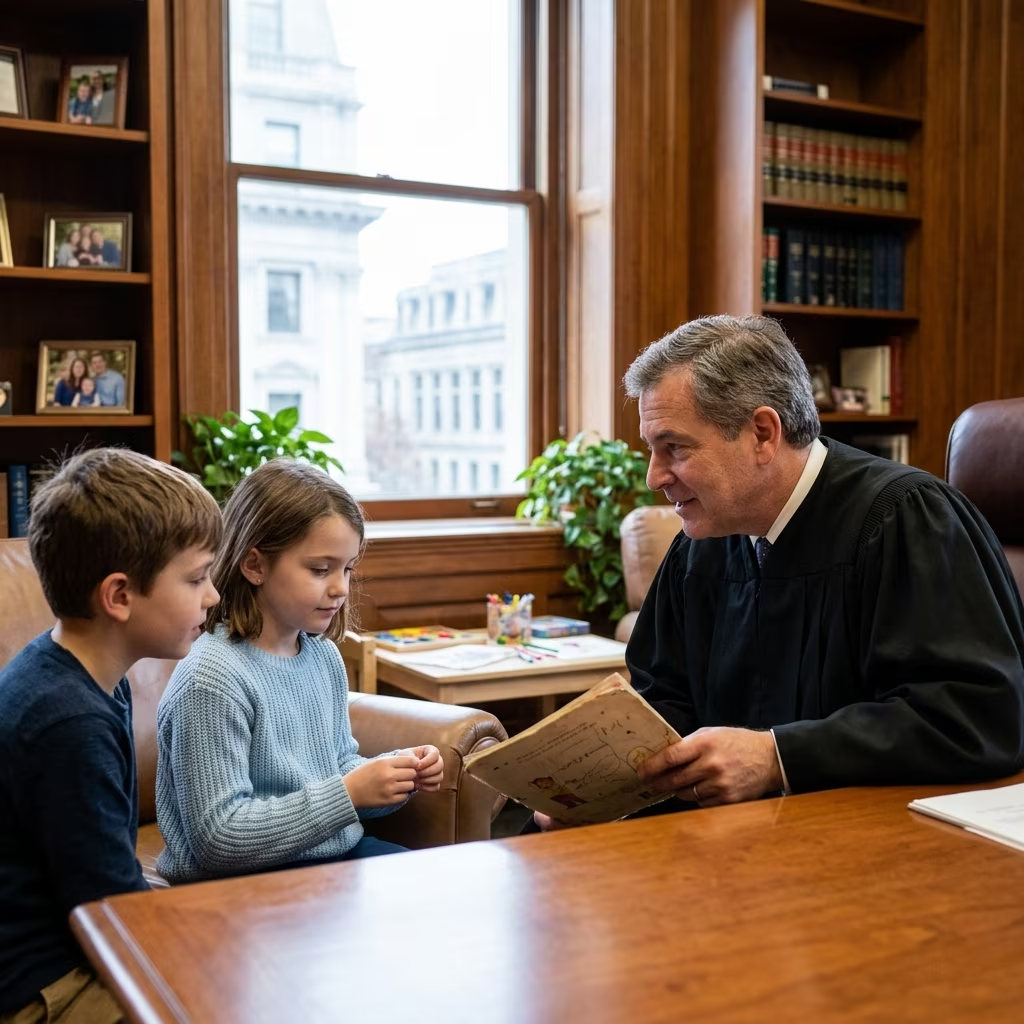
When parents separate or divorce, one of the most sensitive questions is how the court understands what life is like for the children. In some custody disputes, judges may meet with children, listen to their experiences, and consider their wishes, all while trying to protect them from the stress of litigation.
Why Judges Sometimes Talk Directly with Children
Family courts in the United States are guided by the best interests of the child standard, which requires judges to focus on the child’s safety, stability, and overall well-being rather than the parents’ preferences.
Judicial meetings with children can help courts:
- Gain first-hand insight into the child’s daily life and relationships.
- Learn whether there are concerns about neglect, conflict, or abuse in either household.
- Understand the child’s maturity level and capacity to express a reasoned preference.
- Verify or clarify information provided by parents, experts, or mediators.
At the same time, courts are cautious about involving children. The process must minimize emotional harm and avoid placing the child in the middle of parental conflict.
Common Ways a Child’s Voice Reaches the Court
Judges do not rely on a single method to hear from children. Depending on state law, the child’s age, and the complexity of the case, different approaches may be used.
1. In-Chambers Judicial Interviews
In many custody cases, if a judge decides to meet with a child, the interview takes place in the judge’s office (chambers) rather than in open court.
- Setting: Usually only the judge, a court reporter, and sometimes a guardian ad litem or minor’s counsel are present.
- Purpose: To discuss the child’s experiences in each home, relationships with parents, and any worries they may have.
- Tone: Questions are age-appropriate, conversational, and non-threatening, focused on the child’s comfort and emotional safety.
2. Testimony in Court
Formal testimony by children in open court is much less common, because it can be intimidating and potentially harmful.
- Court rules often limit when children can be called as witnesses to avoid exposing them to conflict.
- Judges may allow testimony if it is essential to resolve serious factual disputes and if protections (such as closed hearings) are available.
3. Custody Mediation and Child-Inclusive Processes
Many states use custody and visitation mediation programs to help parents reach agreements outside of a full trial, and these programs sometimes incorporate children’s perspectives.
- Family court mediation: A trained mediator helps parents discuss parenting time and decision-making, often in court-sponsored programs.
- Child-inclusive mediation: In some jurisdictions, mediators may meet with children (typically with parents’ consent) to learn about their experiences and share non-blaming feedback with the parents.
- Benefits:
- Less adversarial than court testimony.
- Focuses on future cooperation rather than past conflict.
- Gives children a structured way to be heard without choosing sides.
4. Third-Party Professionals and Reports
Children’s views can also reach the judge through qualified professionals who interview them and summarize findings in written reports.
- Child custody evaluators (such as psychologists or social workers).
- Guardians ad litem or minor’s counsel appointed to represent the child’s best interests.
- Mediators or family court services staff who conduct structured interviews.
Age, Maturity, and the Weight of a Child’s Preference
Whether, and how strongly, a child’s stated preference influences the outcome depends on age, maturity, and statutory rules. Many states use flexible guidelines rather than strict age cutoffs.
| Age Range | Typical Court Approach | Key Considerations |
|---|---|---|
| Under 10 | Courts rarely rely on preference; focus on safety and developmental needs. | May gather information indirectly through professionals; avoid placing child in conflict. |
| 10–13 | Courts may consider views as part of broader evidence. | Assess maturity, emotional impact of speaking, and risk of pressure from either parent. |
| 14 and older | In some states, children of 14+ must be allowed to address the court if they wish, unless it would harm their best interests. | Preference is considered and given weight but does not control the outcome. |
For example, California law explicitly states that if a child is of sufficient age and capacity to form an “intelligent preference,” the court must consider and give due weight to that preference in custody or visitation orders. However, the statute also clarifies that the child’s preference is one factor among many, and must be grounded in healthy reasons rather than loyalty conflicts or manipulation.
How Judges Conduct Child-Friendly Interviews
Judicial meetings with children are carefully structured to make the experience as safe and comfortable as possible. Judges aim to build rapport before addressing more difficult topics.
Establishing Comfort and Rapport
Judges typically begin with neutral, everyday questions:
- What the child enjoys doing for fun.
- School, friends, sports, or hobbies.
- General questions about routines, such as homework or activities.
This approach helps the child relax and signals that the conversation is about them as a person, not just about the conflict between their parents.
Transitioning to Family and Custody Topics
Once some rapport is established, judges carefully shift to questions about home life and the impact of the divorce.
- How the separation has felt for the child emotionally.
- What daily life looks like with each parent—meals, homework, discipline, and support.
- Whether the child feels safe, listened to, and supported in each household.
Questions are phrased to avoid forcing the child to “choose” a parent. Instead, judges focus on specific experiences and patterns, such as reliability, presence at important events, and responsiveness to needs.
Respecting Developmental Limits
Judges and other professionals avoid complex legal terms or moral judgments when speaking with children.
- Language is tailored to the child’s age and cognitive level.
- The child is reassured that they are not responsible for the outcome or for their parents’ disputes.
- Interviewers watch for signs of distress and may pause or stop if the child becomes overwhelmed.
Legal Boundaries: Letters, Courtroom Attendance, and Parental Conduct
Parents often wonder whether their child can write directly to the judge or attend court to share their perspective. Most courts impose strict limitations for the child’s protection.
Child Letters or Declarations to the Judge
Judges generally do not accept letters written by children as evidence in custody disputes.
- Letters may be influenced by one parent or other family members.
- They do not allow for objective questioning or follow-up.
- Rules of evidence and ethical obligations discourage judges from considering unsworn, informal communications.
Bringing Children to Court Hearings
Courts typically prohibit parents from bringing children into the courtroom during custody hearings without explicit permission.
- Children may be turned away from the courtroom if they appear without prior approval, especially younger minors.
- This protects children from being exposed to arguments, accusations, and adult-level legal proceedings.
Limits on Using Children in Adult Conflict
Family court orders often include language preventing parents from involving children in litigation or bad-mouthing the other parent.
- Parents are usually barred from discussing court papers with children or using them as messengers.
- Judges view ongoing negative comments about the other parent as harmful and may consider this behavior when making custody decisions.
How Judicial Meetings Fit Within the “Best Interests” Framework
Judges must weigh the information obtained from children against a broad set of factors that define what arrangement is in the child’s best interests.
- Safety and well-being: History of abuse, neglect, or exposure to violence.
- Parent-child relationships: Emotional bonds, responsiveness, and consistency of care.
- Health and stability: Physical and mental health of each parent, stability of housing, and school continuity.
- Co-parenting capacity: Ability of parents to cooperate and shield the child from conflict.
- Child’s wishes: Considered, but never the sole factor, and evaluated for maturity and independence.
Practical Guidance for Parents
Parents can take specific steps to support their children if a judge, mediator, or evaluator will be speaking with them.
- Explain, in simple terms, that a professional may ask about their life and that there are no “right” or “wrong” answers.
- Avoid coaching or rehearsing responses; courts can often detect when a child has been pressured.
- Reassure the child that adults—not the child—will make the decisions.
- Model respectful behavior toward the other parent, especially in front of the child; judges pay close attention to whether children are exposed to ongoing conflict.
Frequently Asked Questions (FAQs)
Can my child ask to speak directly to the judge?
In some states, older children can request to address the court about custody and visitation, and judges may be required to allow it unless doing so would harm the child’s best interests. However, the court might choose an in-chambers interview or another protected setting instead of open court.
Is there a specific age at which my child’s preference controls the custody outcome?
No. While laws in some jurisdictions highlight ages such as 14 for giving greater weight to a child’s preference, the preference never automatically decides the case. Judges always consider the preference alongside safety, stability, and other best-interest factors.
Can my child write a letter to the judge instead of being interviewed?
Courts generally do not rely on letters from children. Judges will usually refuse to read or accept such letters, because they are unsworn and may reflect adult influence. If the child’s perspective is important, the court will use structured interviews, testimony, or professional evaluations instead.
What if the judge denies my request for my child to speak in court?
If a judge decides that direct participation would not be appropriate, the child’s voice may still be represented through mediators, minor’s counsel, guardians ad litem, or custody evaluators who interview the child and report to the court.
Do judges ever ignore what children tell them?
Judges take children’s statements seriously but must weigh them against other evidence and legal standards. If a child’s preference appears heavily influenced by conflict, fear, or pressure, the court may give it less weight and focus more on objective indicators of welfare.
References
- Child Custody and Visitation Mediation Program — North Carolina Judicial Branch. 2023-01-01. https://www.nccourts.gov/programs/child-custody-and-visitation-mediation-program
- Custody Legal Assistance in Colorado — Colorado Legal Services. 2022-06-01. https://www.coloradolegalservices.org/family-and-children/custody/
- Can My Child Talk to the Judge Regarding Custody Cases? — Contreras Law Firm. 2020-07-01. https://www.contreraslawfirm.com/blog/2020/07/can-my-child-talk-to-the-judge-regarding-custody-cases/
- How and Why Judges Question Children During Custody Hearings — Keith B. Rocca, Attorney at Law. 2019-01-01. https://www.kbroccolaw.com/questioning-children-in-contested-child-custody-hearings/
- How Do Judges Talk to Children in Custody Cases? — RGH Law. 2022-10-01. https://www.rghlawyers.com/blog/2022/10/how-do-judges-talk-to-children-in-custody-cases/
- Having Your Child Speak During a Custody Case in NJ — Cytryn & Velazquez. 2019-05-07. https://cytrynlaw.com/2019/05/07/having-your-child-speak-during-child-custody-case/
- Involving Children in Custody Decisions and Information Gathering — A Healthy Divorce. 2021-04-01. https://ahealthydivorce.com/involving-children-in-custody-decisions-and-information-gathering/