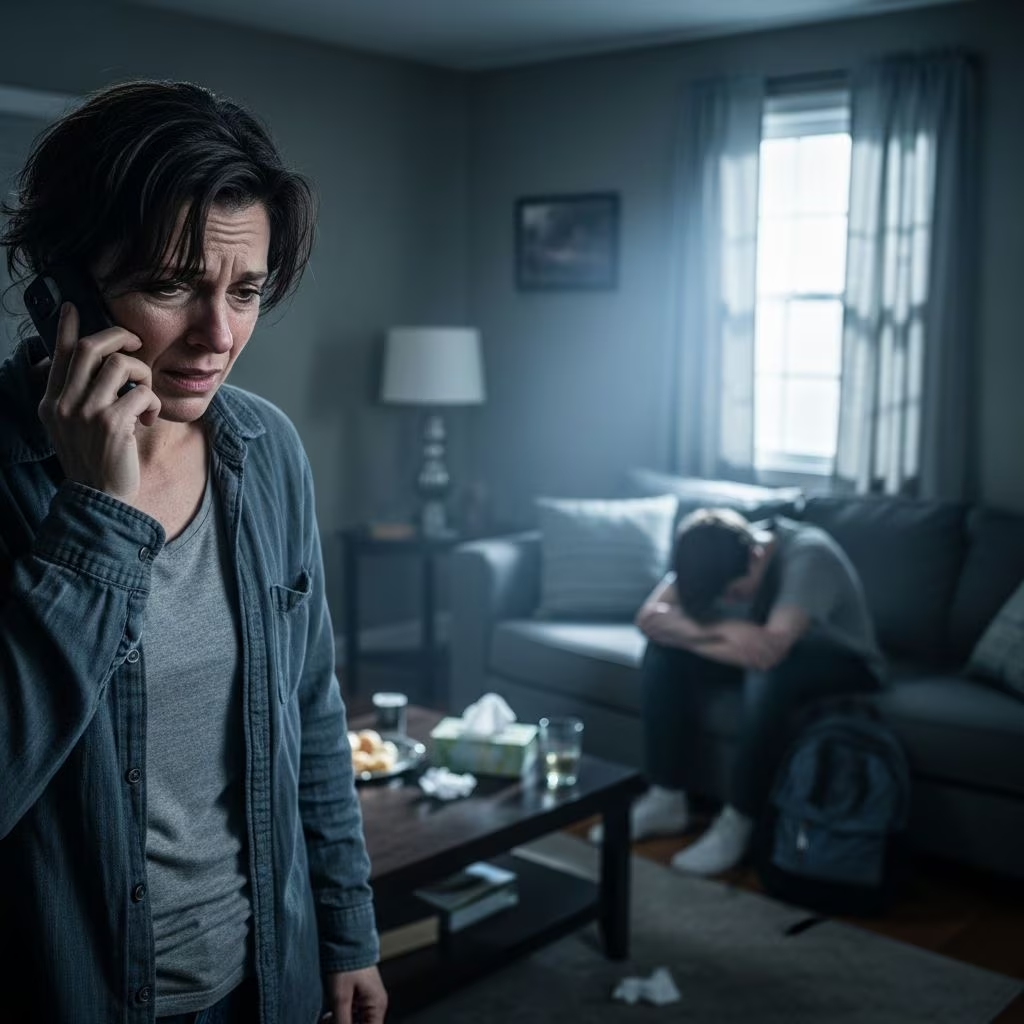
Parenting involves countless decisions, but few are as agonizing as deciding whether to involve law enforcement when your own child engages in harmful or illegal behavior. This choice pits love and protection against the need for accountability and safety, raising questions about family bonds, legal ramifications, and long-term outcomes. While no parent wants to see their child handcuffed, certain situations demand immediate action to prevent escalation or greater harm.
Recognizing Critical Moments Requiring Intervention
Every family dynamic is unique, but patterns emerge where parental authority alone falls short. When a child’s actions threaten physical safety—yours, theirs, or others’—the threshold for external help rises sharply. For instance, persistent theft of household items or valuables signals deeper issues like addiction or defiance that conversations may not resolve. Similarly, introducing illegal substances into the home creates an unsafe environment, potentially endangering siblings or violating laws on controlled materials.
Violence within the family amplifies urgency. If arguments escalate to threats, physical attempts, or injuries, the risk of repeat incidents grows. Law enforcement data shows that unchecked domestic disputes often recur, with initial calls influencing future responses. Parents must assess if their presence alone can de-escalate or if professional intervention is essential to break cycles of abuse or danger.
- Imminent harm: Situations where self-harm, suicide risk, or attacks on family members are immediate.
- Property crimes: Ongoing theft or destruction that persists despite warnings.
- Substance involvement: Bringing drugs or paraphernalia home, risking legal liability for all residents.
- Escalating aggression: Verbal threats turning physical, especially against vulnerable family members.
Legal Framework: What Happens When Police Respond
Once summoned, police treat family-related calls with gravity, particularly those hinting at domestic violence or juvenile offenses. Officers arrive prioritizing safety, separating parties, and gathering statements from all present. They scrutinize for visible injuries, property damage, or other evidence, documenting everything meticulously since records persist and shape future interactions.
In many jurisdictions, policies mandate arrests if probable cause exists for violence, even in familial contexts. California, for example, requires officers to detain the ‘primary aggressor’ based on evidence like injuries or witness accounts. For juveniles, outcomes vary: minors might face juvenile court rather than adult charges, but arrests still create permanent records affecting education, employment, and opportunities.
| Situation | Police Action | Potential Charges |
|---|---|---|
| Theft or substance possession | Investigation, possible arrest if evidence found | Theft, possession of controlled substances |
| Physical threats or assaults | Mandatory separation, arrest of aggressor | Domestic assault, aggravated assault |
| Verbal arguments only | Statements taken, possible no arrest | Monitoring for escalation |
| Self-harm risk | Emergency services, possible hold | Mental health evaluation |
Post-response, protective orders may issue, barring contact and imposing conditions like counseling. Violations compound charges, underscoring the gravity of initial decisions.
Your Rights as a Parent During Police Interactions
Even in distress, parents retain constitutional protections. The ACLU advises invoking the right to silence immediately: state ‘I want to remain silent’ and ‘I want a lawyer’. Provide only basic identifying information; explanations can be twisted against you or your child. Police may lie or intimidate—stay composed.
If arrested alongside your child, request calls for childcare arrangements, especially with minors present. Recording encounters legally protects all parties, capturing context for later legal use. Consult attorneys promptly; do not discuss details over potentially monitored lines.
Key Actions During Police Arrival
- Remain calm and non-confrontational.
- Invoke silence and lawyer rights clearly.
- Arrange childcare if needed before separation.
- Document the interaction if safe and legal.
- Avoid signing anything without counsel.
Potential Consequences for Your Child and Family
Arrests trigger profound ripples. Juveniles enter systems emphasizing rehabilitation but imposing probation, community service, or detention. Convictions label records, hindering college admissions or jobs. Families face fractured trust, financial strains from legal fees, and emotional turmoil.
Domestic charges, even if later dropped, linger in databases, prompting stricter responses to repeat calls. Parents grapple with guilt, while children may resent authority, deepening divides. Yet, intervention can catalyze change, accessing counseling or programs absent otherwise.
Alternatives to Police Involvement
Before dialing 911, explore non-law enforcement paths. Family counseling addresses root causes like mental health or peer pressure. School resources, including counselors or intervention teams, handle behavioral issues discreetly. Community programs for substance abuse offer confidential support, preventing criminalization.
Crisis hotlines provide immediate guidance without records. For violence risks, domestic shelters or family justice centers mediate safely. These preserve family unity while enforcing boundaries, often yielding better long-term results than arrests.
- Counseling services: Licensed therapists specializing in adolescent behavior.
- Mental health hotlines: 24/7 support for de-escalation.
- School interventions: Behavioral plans avoiding legal escalation.
- Community nonprofits: Youth mentorship and diversion programs.
Long-Term Strategies for Prevention and Recovery
Proactive parenting mitigates crises. Foster open communication, monitoring digital and social influences. Set firm boundaries with consistent consequences, modeling accountability. Early signs of trouble—truancy, mood shifts—warrant professional evaluation.
Post-incident, rebuild through family therapy, focusing on forgiveness and growth. Legal expungement, where possible, clears juvenile records. Track progress, celebrating milestones to reinforce positive paths.
Frequently Asked Questions (FAQs)
What if my child is stealing from me but promises to stop?
Document incidents and seek counseling first. If theft continues or escalates, police involvement protects assets and signals seriousness.
Will calling police ruin my relationship with my child forever?
Not necessarily; many families recover stronger through therapy. Unaddressed issues risk worse outcomes like addiction or violence.
What if the argument was just yelling—no hitting?
Police may still investigate for threats. Invoke rights and consider mediation to avoid arrests.
Can I get charges dropped after calling police?
As reporter, you can’t unilaterally drop; prosecutors decide based on evidence. Consult a lawyer immediately.
Are juvenile records permanent?
Often sealed or expungeable upon conditions met, but access varies by state and offense severity.
Conclusion: Balancing Love with Accountability
Deciding to call police on your child demands weighing immediate safety against enduring relationships. While painful, it can be a pivotal intervention halting destructive trajectories. Pair with support systems for holistic recovery, prioritizing family healing amid legal navigation.
References
- In What Situations Might I Call the Police on my Child? — Partnership for Drug-Free Kids. Accessed 2026. https://drugfree.org/article/situations-might-call-police/
- What Happens If Your Partner Calls the Police on You? — Scott Palmer Law. Accessed 2026. https://www.scottpalmerlaw.com/blog/what-happens-if-partner-calls-the-police-on-you/
- What Happens When Someone Else Calls the Police During a Domestic Issue? — Lotze Mosley LLP. Accessed 2026. https://lotzemosley.com/domestic-violence-defense-attorney-washington-dc/what-happens-when-someone-else-calls-the-police-during-a-domestic-issue/
- Know Your Rights: Police Interactions — ACLU of Northern California. Accessed 2026. https://www.aclunorcal.org/know-your-rights/police-interactions/
- My Spouse Called 911 While We Were Arguing. What’s Going to Happen? — Prizzia Legal Team. Accessed 2026. https://www.prizzialegalteam.com/blog/my-spouse-called-911-while-we-were-arguing-whats-going-to-happen/
- Dealing with Law Enforcement — ACLU of Southern California. Accessed 2026. https://www.aclusocal.org/dealing-law-enforcement/
- Domestic-Related Repeat Calls for Service — U.S. Department of Justice, COPS Office. 2021-01-01. https://portal.cops.usdoj.gov/resourcecenter/content.ashx/cops-w0969-pub.pdf