
California Small Claims Guide: File and Win
Master the California small claims process: from filing claims to collecting judgments with step-by-step strategies for success.
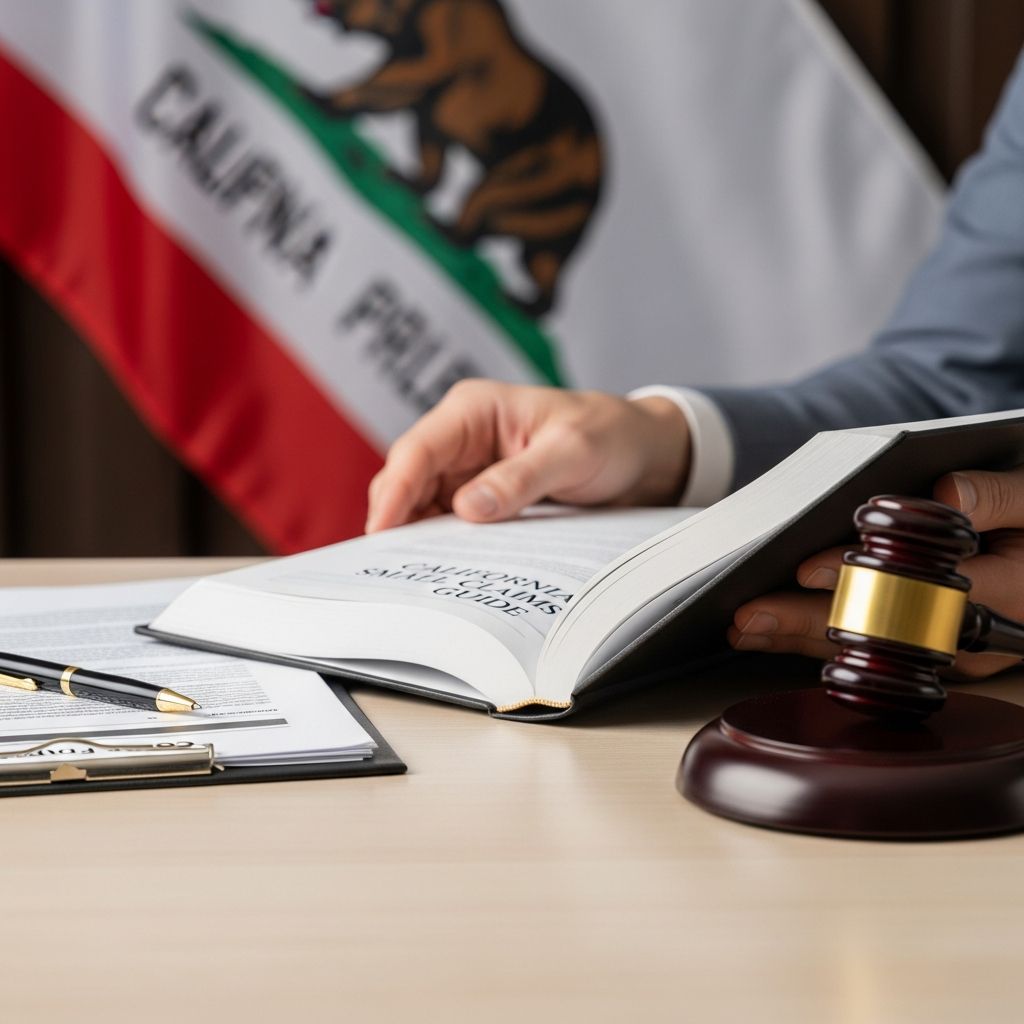
California’s small claims court offers a streamlined way for individuals and small businesses to resolve disputes involving limited amounts of money or property without the need for attorneys. This accessible system handles cases up to $12,500 for most claims, making it ideal for everyday issues like unpaid debts, faulty services, or minor property damage. Unlike traditional courts, small claims emphasizes simplicity, low costs, and quick resolutions, typically concluding within 30-70 days from filing.
Understanding Small Claims Jurisdiction and Limits
Small claims divisions exist in every superior court across California, governed by Code of Civil Procedure sections 116.210-116.950. These courts address civil matters such as breach of contract, property damage, or personal injury where the disputed amount stays below statutory caps. Individuals can claim up to $12,500, while businesses are limited to $6,250, and guarantor claims cap at $4,000. Claims exceeding these must go to regular civil court.
- Eligible disputes: Unpaid loans, defective repairs, security deposit disputes, or neighbor property issues.
- Ineligible matters: Family law, evictions, libel, or cases over monetary limits.
- Frequency restrictions: Plaintiffs face limits on claims; no more than two filings per year exceeding $2,500 each in the same court.
Before proceeding, confirm your case fits by reviewing local rules, as some counties impose additional guidelines.
Determining Proper Venue and Timing
Select the correct court location to avoid dismissal. File in the superior court nearest where the defendant resides, the business operates, the contract was signed, or the incident occurred. Use online locators from county court websites to pinpoint venues.
| Dispute Type | Recommended Filing Location |
|---|---|
| Individual Defendant | Defendant’s residence county |
| Business Defendant | Business address or incident site |
| Contract Breach | Where contract signed/performed |
| Injury/Damage | Where harm occurred |
Statutes of limitations are strict: two years for oral contracts or personal injury, three years for written contracts or property damage/fraud (from discovery), and four years for written contracts. Missing deadlines results in dismissal.
Initiating Your Claim: Forms and Filing
Begin by completing Form SC-100, Plaintiff’s Claim and Order to Go to Small Claims Court, available from California Courts Self-Help sites or clerk offices. Provide accurate defendant details—full name, address, and account if applicable—to ensure collectibility. Include a clear explanation of the dispute, amount claimed (under limits), and supporting facts.
- Gather evidence: Contracts, receipts, photos, emails.
- Fill forms: SC-100 primary; add SC-100A for details if needed.
- Pay fees: $30-$100 based on claim size; request waiver via FW-001 if low-income.
- File: In-person, mail, e-file, or drop-box per county rules.
Upon filing, the court assigns a hearing date, typically 20-70 days out, and issues copies for service. Filing generates a case number essential for all steps.
Essential Service of Process Rules
Proper notification is mandatory; defendants must receive papers at least 15 days before hearing (20 for out-of-county). You cannot serve personally—use sheriff, process server, or eligible adult (18+, non-party).
- Methods: Personal delivery, substituted service (leave with responsible adult + mail), or certified mail for businesses.
- Proof: File SC-104 (Proof of Service) or server-specific forms within five days post-service.
- Consequences: Invalid service halts the case; refile if needed.
For multiple defendants, serve each individually. Virtual options exist in many counties post-2021 updates.
Requesting Continuances if Needed
Circumstances may require postponement. Submit SC-150 at least 10 days prior, with $10 fee unless unserved. Mail originals plus SC-112A Proof of Service by Mail. Courts grant reasonable requests for evidence gathering or scheduling conflicts.
Building a Strong Case: Evidence Preparation
Success hinges on compelling proof. Submit copies to court and opponent 10 days pre-hearing via digital portals (preferred) or mail with LASC CIV 278/279 in applicable counties. Bring originals and duplicates to trial.
- Key evidence types:
- Documents: Invoices, agreements, correspondence.
- Visuals: Damage photos, repair estimates.
- Financial: Checks, bank statements.
- Witnesses: Those with direct knowledge (subpoena via SC-107 if needed).
Organize chronologically; practice a concise narrative. Virtual/telephonic appearances require pre-submitted evidence.
What to Expect at the Hearing
Hearings last 15-30 minutes before a judge or commissioner—no jury. Arrive early, dressed professionally. Plaintiff presents first: state facts, show evidence, question witnesses. Defendant responds similarly. Judges question both sides, review submissions, and rule immediately or shortly after.
- Tips for success: Be polite, stick to facts, avoid emotions.
- Options: Settle on-site, mediate, or proceed to decision.
Accommodations for language or disability available via request.
Post-Judgment: Collecting Your Award
If victorious, judgment is final 30 days post-ruling unless appealed. Defendant must pay voluntarily; if not, enforce via:
- Writ of Execution (EJ-130): Levy bank accounts/assets.
- Creditor’s Exam (SC-134): Question defendant under oath.
- Wage Garnishment: Deduct from paychecks.
Interest accrues at 10% annually. Fees for enforcement recoverable.
Defending Against a Claim
If served, review SC-100 within 20 days. Respond via SC-120, pay counter-fee if filing. Prepare defenses: dispute facts, prove payment, or counterclaim (SC-100 as defendant). Attend hearing or risk default judgment.
Appeals and Special Considerations
Plaintiffs cannot appeal their loss, but defendants can request trial de novo in superior court within 20-30 days via SC-140. Businesses face stricter rules. Mediation often resolves 70% of cases pre-trial.
Frequently Asked Questions
Can I represent my business in small claims?
Yes, owners or officers can; no attorneys allowed except for corporations in appeals.
What if the defendant doesn’t show up?
Court may grant default judgment; prove your case fully.
Are lawyers permitted?
No, to keep it simple; violations lead to case transfer.
How long to collect after winning?
Immediate enforcement possible, but process takes weeks; renew judgment every 10 years.
Virtual court available?
Yes, free in many counties since 2021; check local rules.
This guide equips you for efficient dispute resolution. Consult court self-help centers for county specifics.
References
- The small claims process – California Courts | Self Help Guide — Judicial Council of California. 2025. https://selfhelp.courts.ca.gov/small-claims
- How to Sue in Small Claims Court — Los Angeles County Department of Consumer and Business Affairs. 2024-09-02. https://dcba.lacounty.gov/portfolio/how-to-sue-in-small-claims-court/
- Small claims in California – California Courts | Self Help Guide — Judicial Council of California. 2025. https://selfhelp.courts.ca.gov/small-claims-california
- Self-Help Small Claims | Superior Court of California, County of Orange — Superior Court of Orange County. 2025. https://www.occourts.org/self-help/self-help-small-claims
- Everything Small Claims: Home – San Diego Law Library — San Diego Law Library. 2024. https://sdlawlibrary.libguides.com/smallclaims
Similar Articles








Read full bio of Sneha Tete


