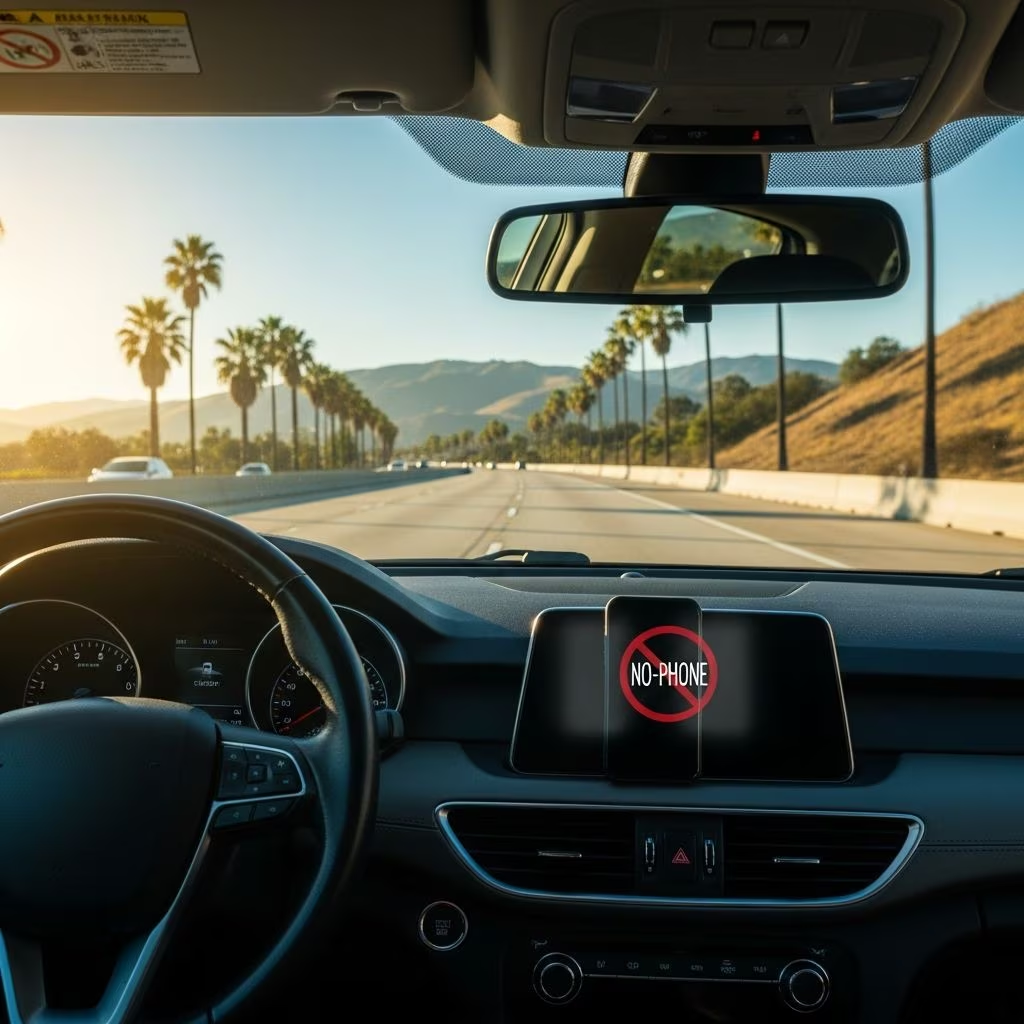
California’s roadways demand full driver attention, with stringent laws prohibiting handheld phone use to combat distracted driving. As of mid-2025, a pivotal court ruling solidified the ‘no-touch’ policy, banning drivers from holding phones for any purpose while operating a vehicle. This guide details the rules, penalties, exceptions, and practical advice for compliance in 2026.
Core Prohibitions Under Current Law
The foundation of these regulations stems from California Vehicle Code sections 23123 and 23123.5, which explicitly forbid holding a wireless device while driving. A June 2025 appellate court decision clarified that even non-communication uses—like checking maps or music—violate the statute if the phone is handheld. This applies universally: on highways, at stoplights, or in traffic jams.
- Holding a phone to view GPS, notifications, or apps, regardless of motion.
- Swiping, tapping, or manipulating an unmounted device.
- Grasping the phone in one hand, even passively while driving.
- Any physical interaction requiring hand contact beyond mounting.
Devices covered extend beyond smartphones to tablets, e-readers, or similar electronics used for communication or entertainment. The intent is clear: eliminate all handheld distractions to prioritize road safety.
Permitted Hands-Free Methods
Compliance hinges on hands-free setups. Phones must be secured in mounts on the dashboard, windshield (lower corner), or center console before driving begins. Once mounted:
- Voice commands control calls, texts, navigation, and music.
- A single tap or swipe is allowed for minimal interaction, without prolonged focus.
- Pre-configuration—such as setting routes or playlists—is recommended prior to motion.
Advanced vehicle integrations, like built-in infotainment systems, align with these rules if they enable voice or touch-free operation. Drivers should test setups in safe, stationary conditions to avoid violations.
Special Rules for Young Drivers
Teen drivers face even tighter restrictions under Vehicle Code 23124. Those under 18 cannot use any wireless device—handheld or hands-free—while driving. This zero-tolerance approach aims to curb novice errors amid rising smartphone distractions.
Violations trigger fines plus potential license suspension, traffic school mandates, or point additions. Parents and guardians bear responsibility for enforcement, as provisional licenses amplify consequences.
Defined Exceptions to the Ban
While broad, the law carves out limited exemptions to balance safety with necessity:
- Emergencies: Calls to 911, medical services, or roadside assistance are always permitted, even handheld.
- First Responders: Police, firefighters, and paramedics may use devices during official duties.
- Passengers: Non-drivers face no restrictions and can handle phones freely.
- Mounted Single Actions: Quick taps on secured devices for essential functions.
Notably absent: exemptions for rideshare, delivery, or commercial drivers. These professionals must adopt mounts and voice tech despite app dependencies.
Enforcement and Penalty Breakdown
These are primary enforcement offenses—officers can pull over solely for suspected violations, no additional infraction required. Fines escalate quickly with add-ons like court fees and assessments.
| Offense | Base Fine | Total Cost (w/ Fees) | DMV Point? |
|---|---|---|---|
| First Violation | $20 | ~$136–$170 | No |
| Second (within 36 months) | $50 | ~$272–$300 | Yes |
| Under 18 | Varies | $100+ + School/Suspension | Yes |
Repeat infractions within 36 months add DMV points, hiking insurance premiums or risking suspension. Distracted driving also presumes negligence in crash lawsuits, easing plaintiff claims.
Upcoming 2026 Changes and Trends
Looking to 2026, California eyes further innovations. New laws mandate vehicle communication devices and target obstructive tech like license plate covers with $1,000 fines. Automated enforcement via cameras may roll out with initial warnings. These build on 2025’s no-touch momentum, signaling a tech-enforced future for safer roads.
Real-World Safety Rationale
Distracted driving kills and injures thousands yearly. Phone use impairs reaction times by 1–2 seconds, extends braking distances, and reduces signal/pedestrian awareness—per federal safety data. California’s laws correlate with declining fatalities, validating the strict stance.
A quick glance equates to driving blind for 20+ feet at highway speeds. Cumulative micro-distractions compound risks, especially in dense urban traffic like Los Angeles or San Francisco.
Practical Compliance Strategies
Adopt these habits for seamless adherence:
- Invest in reliable suction or vent mounts; avoid makeshift holders.
- Enable ‘Do Not Disturb’ driving modes on iOS/Android.
- Use Bluetooth earpieces or car kits for audio.
- Delegate phone tasks to passengers.
- Practice voice apps like Siri, Google Assistant, or Alexa.
Parking lots count as ‘driving’ zones—stay vigilant. Apps like DriveMode or setup checklists reinforce discipline.
Impacts on Crashes and Insurance
Post-2025 enforcement, citations surged, curbing risky behaviors. Insurers scrutinize phone records in claims, often denying coverage or raising rates for violators. Crash victims leverage violations to prove fault, securing higher settlements.
Frequently Asked Questions (FAQs)
What counts as ‘holding’ a phone?
Any grasp or touch while the vehicle operates, including at stops. Mounted devices exempt single swipes.
Can delivery drivers use phones?
No exemptions; mounts and voice required, despite job needs.
Is a parked car exempt?
No—if engine runs and you’re in control, rules apply.
What about tablets or smartwatches?
Tablets follow phone rules; watches often exempt if not held.
Will 2026 bring phone bans in cars?
New mandates focus on built-in tech and anti-obscuration devices.
Staying Ahead: Resources for Drivers
Consult the California DMV site, Office of Traffic Safety campaigns, or legal experts for updates. Prioritizing focus saves lives—keep hands on wheel, eyes on road.
References
- California’s New No-Touch Cell Phone Law Explained (2025) — Dolan Law Firm. 2025-07-10. https://www.dolanlawfirm.com/blog/2025/07/10/california-s-new-no-touch-cell-phone-220216/
- New California Law Cracks Down on Distracted Driving — Chain | Cohn | Clark. 2025-06-18. https://www.chainlaw.com/new-california-law-cracks-down-on-distracted-driving-holding-your-phone-for-any-reason-while-driving-is-now-illegal/
- California’s No Touch Phone Law — Fielding Law Firm. 2025. https://fieldinglawfirm.com/californias-no-touch-phone-law/
- Distracted Driving – Go Safely CA — Go Safely CA. 2025. https://gosafelyca.org/just-drive/
- Distracted Driving Laws Are Getting Tougher — Big Ben Lawyers. 2025. https://www.bigbenlawyers.com/distracted-driving-laws-are-getting-tougher-how-new-penalties-cellphone-records-and-witness-evidence-can-help-your-car-accident-case/
- Distracted Driving – California Office of Traffic Safety — California Office of Traffic Safety (.gov). 2025. https://www.ots.ca.gov/media-and-research/campaigns/distracted-driving-april/
- DMV Highlights New Laws in 2026 — California DMV (.gov). 2026. https://www.dmv.ca.gov/portal/news-and-media/dmv-highlights-new-laws-in-2026/