
California Car Accident Laws 2026: Key Updates & Claim Steps
Essential guide to California's updated car accident regulations, insurance rules, and victim rights in 2026 for safer roads and fair compensation.
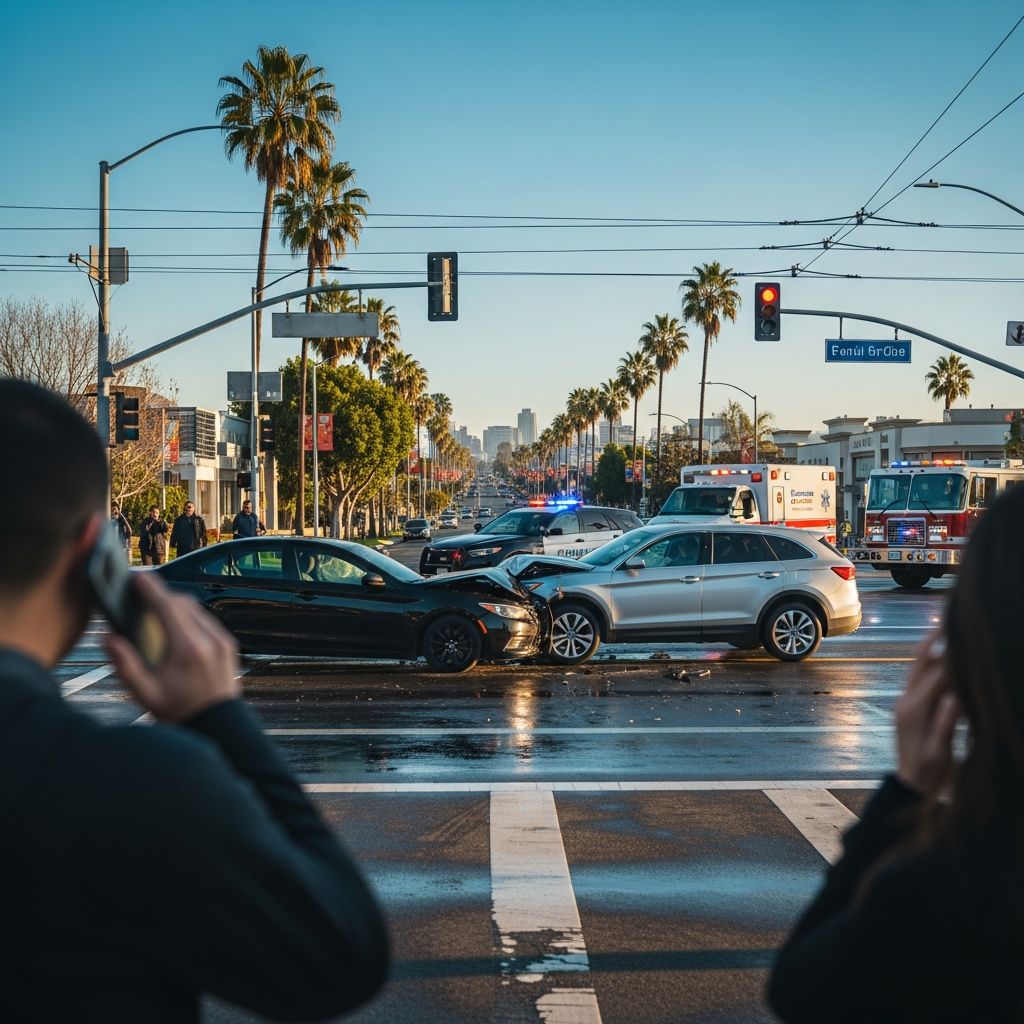
California’s roadways see thousands of collisions annually, making it vital for drivers and victims to understand the governing legal framework. In 2026, the state upholds its at-fault system where the responsible party bears financial responsibility for damages, bolstered by recent insurance hikes and expanded safety protocols. This guide details key regulations, from fault assignment to claim timelines, empowering you to protect your rights effectively.
Understanding Fault in California Collisions
California operates under an at-fault or tort system, meaning the driver who causes the crash must compensate for resulting losses like medical bills, vehicle repairs, and lost wages. Unlike no-fault states, victims file claims directly against the at-fault driver’s insurer, supported by evidence such as police reports and witness accounts.
This approach ensures accountability but requires proving negligence. Common causes include distracted driving, speeding, and DUI, each strengthening liability claims when documented properly.
Pure Comparative Negligence Explained
One of California’s distinctive features is
pure comparative negligence
, allowing recovery even if you’re partially responsible. Compensation reduces by your fault percentage—for instance, 20% fault means 20% deduction from the award.- If you’re 10% at fault, recover 90% of damages.
- No recovery threshold exists; even 99% fault permits 1% compensation.
- Courts assess fault via evidence like dashcam footage and expert testimony.
This rule promotes fairness, encouraging all parties to drive cautiously while ensuring partial victims aren’t wholly denied aid.
Immediate Reporting Requirements
After any crash involving injury, death, or over $1,000 in property damage, submit a SR-1 report to the DMV within 10 days. Failure risks license suspension and claim denials.
Additionally, notify your insurer promptly to avoid policy issues. Key steps include:
- Exchange info with other drivers.
- Call police for official reports.
- Seek medical evaluation, even for minor injuries.
- Photograph the scene comprehensively.
Timely action preserves evidence and meets legal duties.
Updated Auto Insurance Minimums
California mandates liability coverage, updated in 2025 and effective through 2034 at 30/60/15 levels: $30,000 per person/$60,000 per accident for bodily injury, $15,000 for property damage. This triples property coverage from prior 15/30/5 limits.
| Coverage Type | Previous (Pre-2025) | Current (2026-2034) | Future (2035+) |
|---|---|---|---|
| Bodily Injury per Person | $15,000 | $30,000 | $50,000 |
| Bodily Injury per Accident | $30,000 | $60,000 | $100,000 |
| Property Damage | $5,000 | $15,000 | $25,000 |
These boosts aid victims but underscore uninsured motorist coverage’s value, given 17% uninsured drivers. Proof of insurance is required at registration.
Statutes of Limitations for Claims
Time limits are strict: two years for personal injury, three for property damage from the incident date. Missing these bars lawsuits forever.
- Injury claims: File within 2 years.
- Government vehicles: 6 months notice required.
- Minors/disabled: Tolling may extend deadlines.
Consult professionals early to track deadlines amid investigations.
Recent 2026 Traffic Law Updates
2026 brings enhancements for road safety. The expanded Move Over law mandates slowing or lane-changing near any hazard-lit stopped vehicle, protecting roadside workers and stranded motorists. Violations heighten negligence liability in crashes.
Other changes:
- Banned license plate obstructions (fines up to $1,000), aiding hit-and-run probes.
- Stricter DUI penalties with prolonged ignition interlocks.
- Automated red-light cameras under Safer Streets Act.
These target collision reduction, bolstering victim claims.
Types of Compensation Available
Victims pursue economic and non-economic damages.
- Economic: Medical costs, lost earnings, repairs.
- Non-Economic: Pain, suffering, emotional distress.
- Punitive: Rare, for egregious conduct like DUI.
Document everything; experts value future losses accurately.
Special Cases: Minors and Parental Liability
Parents/guardians share liability for minors’ crashes via license consent forms. Injured parties sue either/both, ensuring recovery from responsible adults.
Filing and Settling Claims
Start with the at-fault insurer; if denied, litigate. Most settle pre-trial, but attorneys negotiate maximally. Factors influencing settlements:
- Evidence strength.
- Injury severity.
- Policy limits.
Higher 2026 minimums improve payouts for moderate claims.
Frequently Asked Questions
Can I recover if partially at fault?
Yes, under pure comparative negligence, reduced by your fault share.
What if the at-fault driver is uninsured?
Your uninsured motorist coverage applies if purchased.
Do I need a lawyer for claims?
Not always for minor cases, but recommended for disputes or serious injuries.
How long to report to DMV?
10 days for qualifying accidents.
What are new 2026 Move Over rules?
Slow/move for any hazard-lit stopped vehicle.
Protecting Yourself Post-Accident
Prioritize safety: exit traffic, call 911 if needed. Avoid admitting fault; let evidence decide. Preserve proof and seek medical care promptly to counter lowball offers.
With evolving laws like 30/60/15 insurance and broader Move Over protections, 2026 prioritizes victim recovery and prevention. Stay informed to navigate incidents confidently.
References
- California Car Accident Laws 2026 Explained — HWLLP Law. 2026. https://www.hwllplaw.com/california-car-accident-laws/
- California Traffic Laws and Employment Law Changes in 2026 — Arshakyan Law. 2026-01. https://www.arshakyanlaw.com/blog/2026/january/california-traffic-laws-and-employment-law-chang/
- California Auto Insurance Laws 2026: What Drivers Need to Know — Castillo Law. 2026. https://www.castillolaw.us/california-auto-insurance-laws-2026-what-drivers-need-to-know/
- California Car Accident Laws [2026 Explained] — Easton Law Offices. 2026. https://www.eastonlawoffices.com/blog/california-car-accident-laws/
- New California Traffic Laws for 2026: What Drivers Need to Know — Harris Personal Injury. 2026. https://harrispersonalinjury.com/new-california-traffic-laws-for-2026-what-drivers-need-to-know/
Similar Articles








Read full bio of medha deb


