
Can Businesses Refuse Service Based on Sexual Orientation?
Navigating the legal boundaries of customer service refusals amid free speech protections and anti-discrimination laws.
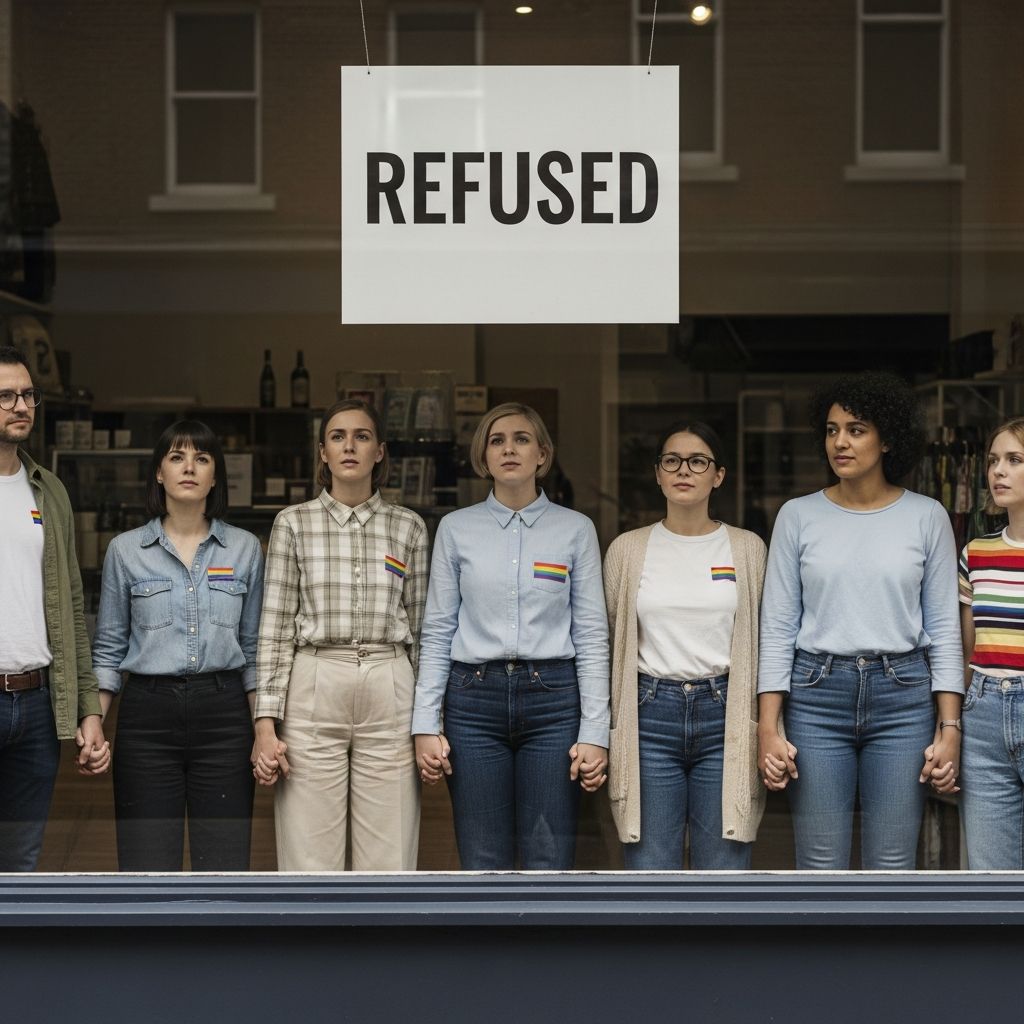
Small business owners often grapple with balancing personal beliefs, customer expectations, and legal obligations when deciding whom to serve. In the United States, federal and state laws generally prohibit discrimination in public accommodations, but recent Supreme Court decisions have carved out exceptions for expressive services tied to free speech rights. This creates a nuanced landscape where businesses cannot broadly refuse service based on sexual orientation, yet specific scenarios involving creative expression may allow refusals under First Amendment protections.
Understanding Public Accommodations Laws
Public accommodations laws require businesses open to the public—such as restaurants, stores, hotels, and professional services—to serve customers without discrimination based on protected characteristics like race, religion, sex, and in many states, sexual orientation or gender identity. These statutes aim to ensure equal access to goods and services, preventing the exclusion of marginalized groups from everyday commerce.
At the federal level, Title II of the Civil Rights Act of 1964 bans discrimination in places of public accommodation based on race, color, religion, or national origin, but it does not explicitly cover sexual orientation. However, many states and localities have expanded protections. For instance, California law explicitly prohibits businesses from discriminating based on sexual orientation, gender identity, gender expression, or even perceived traits, applying to establishments with as few as five employees in employment contexts and broadly to public-facing services.
- Federal Baseline: No blanket protection for sexual orientation in public accommodations, leaving gaps filled by states.
- State Variations: Over 20 states plus numerous cities mandate non-discrimination for LGBTQ+ customers in businesses.
- Penalties for Violations: Fines, lawsuits, and injunctions can result from proven discrimination.
The Impact of Key Supreme Court Decisions
Two landmark rulings have reshaped the debate: Bostock v. Clayton County (2020) and 303 Creative LLC v. Elenis (2023). Bostock extended Title VII of the Civil Rights Act—originally prohibiting sex discrimination in employment—to cover sexual orientation and gender identity. The Court reasoned that firing someone for being gay or transgender inherently involves sex-based distinctions, making such actions illegal in workplaces with 15 or more employees.
While Bostock focuses on employment, its logic has influenced broader discrimination discussions. In contrast, 303 Creative addressed public accommodations directly. Lorie Smith, a web designer, challenged Colorado’s anti-discrimination law, arguing it compelled her to create custom wedding websites for same-sex couples, violating her First Amendment free speech rights. The 6-3 decision sided with Smith, holding that states cannot force artists or creators to produce expressive content endorsing messages they oppose.
| Case | Year | Key Holding | Impact on Businesses |
|---|---|---|---|
| Bostock v. Clayton County | 2020 | Title VII covers sexual orientation/gender identity | Protects LGBTQ+ employees federally |
| 303 Creative v. Elenis | 2023 | Free speech trumps anti-discrimination for expressive services | Allows refusals for custom, message-conveying work |
These cases highlight a tension: anti-discrimination laws promote equality, but free speech protections shield against compelled expression. Businesses offering off-the-shelf products cannot refuse based on customer identity, but those providing bespoke, speech-like services may invoke First Amendment defenses.
Distinguishing Expressive Services from Standard Goods
Not all business refusals qualify for legal protection. Courts distinguish between “purely commercial” conduct and activities involving “pure speech.” Selling a pre-made cake or hotel room is conduct, subject to non-discrimination rules. However, designing a custom website, painting a portrait, or composing music that conveys a specific message may be protected expression.
In 303 Creative, the majority emphasized that Smith’s websites were original creations reflecting her views, not generic items. Dissenters, led by Justice Sotomayor, warned this could enable businesses to post notices excluding LGBTQ+ customers for certain services, potentially marking them as “second-class” citizens. Post-ruling, similar arguments have arisen in employment terminations and other service denials.
- Protected Examples: Custom wedding invitations, photography with thematic elements, graphic design promoting specific ideologies.
- Unprotected Examples: Routine photography, standard catering, rental of venues without customization.
- Test for Protection: Does the service require the business owner to create and disseminate a unique message?
State-Specific Protections and Variations
Laws vary significantly by jurisdiction. California offers robust safeguards, barring discrimination in business establishments based on sex, gender identity, sexual orientation, and even association with LGBTQ+ individuals. This includes healthcare providers and nonprofits serving the public.
In contrast, states without explicit public accommodation protections for sexual orientation rely on general principles or local ordinances. Business owners must check local laws; for example, New York and Illinois mirror federal expansions but add layers for gender expression.
Religious exemptions exist in some statutes, allowing faith-based businesses to refuse services conflicting with doctrines, but these rarely extend to secular enterprises. The “ministerial exception” further shields religious organizations from employment discrimination suits involving spiritual roles.
Practical Advice for Business Owners
To minimize legal risks, owners should:
- Review Policies: Implement clear, inclusive non-discrimination statements aligned with local laws.
- Assess Services: Identify expressive vs. commercial offerings; document creative processes for potential defenses.
- Train Staff: Educate employees on compliant customer interactions to avoid inadvertent violations.
- Consult Attorneys: Seek jurisdiction-specific advice, especially for custom services near weddings or events.
- Monitor Developments: Track ongoing litigation, as 303 Creative‘s scope is being tested nationwide.
Proactively fostering inclusive environments not only complies with law but builds customer loyalty in diverse markets. Conversely, public refusals can invite boycotts, lawsuits, and reputational harm.
Risks and Consequences of Refusals
Improper refusals expose businesses to civil rights complaints, state attorney general actions, and private lawsuits. Successful claims can yield damages, attorney fees, and mandated policy changes. Even if a free speech defense succeeds, litigation costs are substantial for small operations.
LGBTQ+ consumers now navigate added uncertainty: Will a photographer or florist accept their event? While 303 Creative empowers some refusals, it does not greenlight blanket discrimination. Courts will scrutinize whether refusals target identity or specific messages.
Employment vs. Customer Service: Parallel Protections
Employment discrimination is more uniformly protected federally post-Bostock. Employers cannot fire, refuse to hire, or harass based on sexual orientation or gender identity. California extends this to smaller firms (5+ employees).
However, 303 Creative has sparked arguments for workplace applications, like refusing to design materials for LGBTQ+ events. Religious employers benefit from broadened exemptions, but secular businesses face stricter scrutiny.
Frequently Asked Questions (FAQs)
What if my business is religious?
Religious organizations enjoy exemptions under laws like the Religious Freedom Restoration Act, but commercial enterprises generally do not. Consult specific doctrines and state rules.
Can I post a sign stating my service limits?
The Court in 303 Creative allowed notices clarifying refusals for certain messages, but wording must avoid targeting protected traits directly to evade claims.
Does this apply nationwide?
No; states without LGBTQ+ public accommodation laws offer less protection, but federal free speech claims can arise anywhere.
How has Bostock affected my hiring?
It prohibits sexual orientation/gender identity discrimination in larger workplaces, with many states covering smaller ones.
What should I do if challenged?
Document interactions, avoid identity-based statements, and contact a lawyer immediately.
Broader Implications for Society and Commerce
These rulings reflect ongoing cultural debates over equality versus individual rights. While empowering personal expression, they risk eroding marketplace access for LGBTQ+ individuals, echoing historical exclusions. Businesses must weigh ethical stances against legal and economic realities in an interconnected economy.
Advocacy groups like the ACLU urge vigilance, noting no federal public accommodations law exists for sexual orientation, pushing for comprehensive reforms. Owners can lead by modeling inclusion, countering potential second-class treatment.
References
- Did the Supreme Court Say Businesses Can Now Discriminate Against LGBT People? — Prinz Law Firm. 2023-07. https://www.prinz-lawfirm.com/our-blog/2023/july/did-the-supreme-court-say-businesses-can-now-dis/
- LGBTQ employment discrimination in the United States — Wikipedia (citing SCOTUS decisions). 2024. https://en.wikipedia.org/wiki/LGBTQ_employment_discrimination_in_the_United_States
- LGBTQ+ Rights in California Amidst Recent Executive Orders — ACLU SoCal. N/A. https://www.aclusocal.org/know-your-rights/lgbtq-rights-california-amidst-recent-executive-orders/
- Sexual Orientation and Gender Identity Discrimination and Harassment — Legal Aid at Work. N/A. https://legalaidatwork.org/factsheet/sexual-orientation-and-gender-identity-discrimination-and-harassment-2/
- California Protects The Civil Rights of LGBTQ+ People — California Civil Rights Department. 2020-06. https://calcivilrights.ca.gov/wp-content/uploads/sites/32/2020/06/LGBTQ-Fact-Sheet_ENG.pdf
- Prohibited Employment Policies/Practices — U.S. Equal Employment Opportunity Commission (EEOC). N/A. https://www.eeoc.gov/prohibited-employment-policiespractices
- Know Your Rights | LGBTQ Rights — American Civil Liberties Union (ACLU). N/A. https://www.aclu.org/know-your-rights/lgbtq-rights
Similar Articles








Read full bio of Sneha Tete


