
Can Businesses Refuse Racist Customers? 4 Legal Policies
Explore the legal boundaries for small businesses refusing service to discriminatory customers while protecting against civil rights violations.
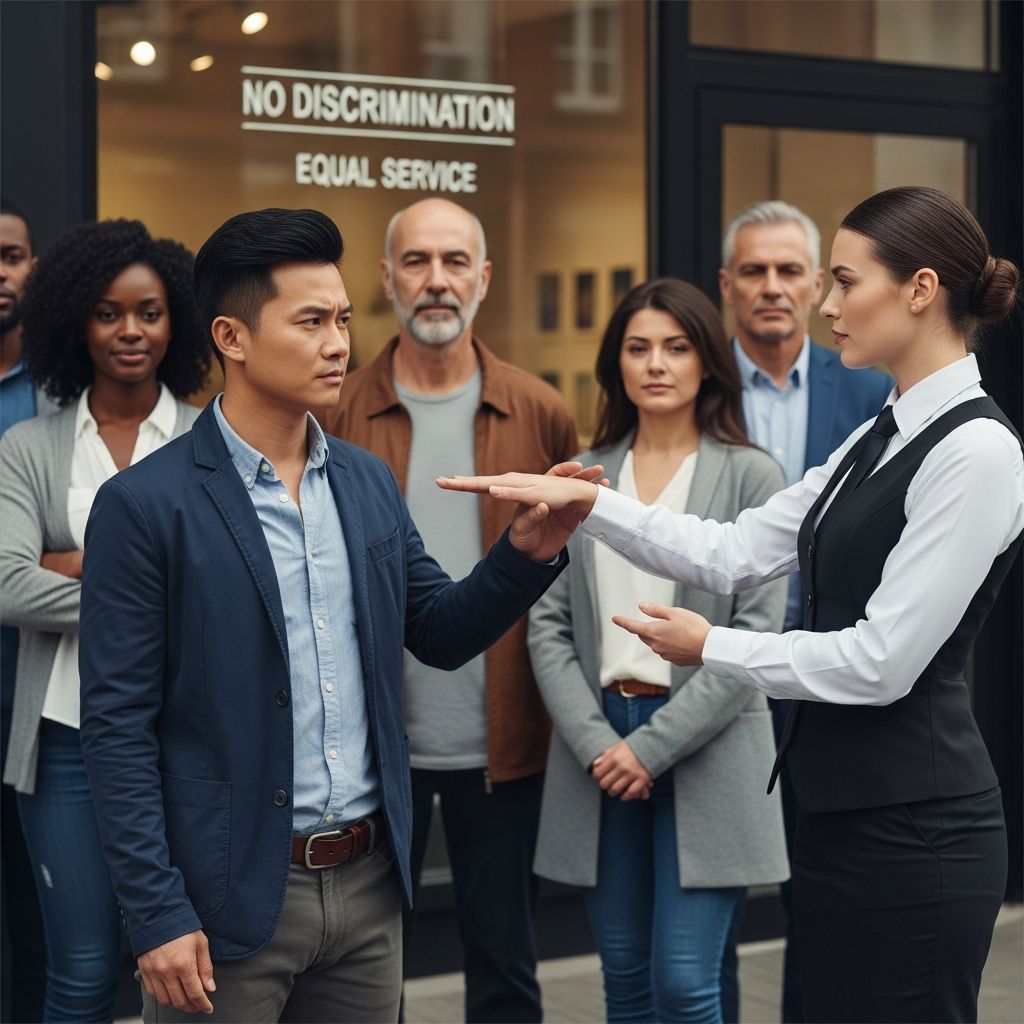
Small business owners frequently encounter challenging customers whose behavior crosses into harassment, abuse, or overt racism. While the instinct to protect staff and other patrons is understandable, federal and state laws impose strict limits on refusing service. This article examines the legal framework allowing businesses to eject discriminatory individuals, key protections under civil rights statutes, real-world examples, and practical steps to safeguard your operations.
Understanding the Right to Refuse Service
Private businesses generally hold the authority to choose their customers, rooted in property rights and the freedom to operate without undue interference. This principle permits owners to deny entry or service to those causing disruptions, such as verbal altercations, property damage, or threats to safety. For instance, policies like “no shirt, no shoes, no service” are commonplace and upheld as long as they apply uniformly.
However, this right is not absolute. It must not infringe on protected characteristics outlined in federal law, including race, color, religion, sex, national origin, disability, and in some jurisdictions, sexual orientation or gender identity. Refusing service based on these traits invites lawsuits under statutes like Title II of the Civil Rights Act of 1964, which mandates equal access to public accommodations such as restaurants, hotels, and retail stores.
- Permissible refusals: Disruptive behavior, intoxication, failure to follow dress codes, or mask/vaccine policies during health crises.
- Prohibited refusals: Denying service solely due to a customer’s race, ethnicity, or religious attire.
Businesses issuing bans often treat them as trespass notices, ideally documented in writing to facilitate enforcement with law enforcement support.
Federal Laws Governing Discrimination in Public Spaces
The cornerstone of anti-discrimination protections is the Civil Rights Act of 1964. Title II prohibits places of public accommodation from discriminating based on race, color, religion, or national origin. Section 1981 of the 1866 Civil Rights Act extends similar protections, ensuring equal contract rights regardless of race.
These laws target outright denial of service or contracts, but courts have interpreted them narrowly. Actions like excessive surveillance of minority customers or subpar service do not constitute illegal discrimination unless they prevent a purchase, creating what some scholars term a “customer caste” where people of color face routine mistreatment without legal recourse.
| Law | Protected Classes | Applies To |
|---|---|---|
| Title II, Civil Rights Act 1964 | Race, color, religion, national origin | Public accommodations (hotels, restaurants, stores) |
| Section 1981, Civil Rights Act 1866 | Race | Contract rights in public/private commerce |
| Americans with Disabilities Act (ADA) | Disability | Public accommodations with reasonable accommodations |
| Title VII, Civil Rights Act 1964 | Race, color, religion, sex, national origin | Employment (relevant for staff protections) |
State and local laws may expand protections, adding age, marital status, or LGBTQ+ categories, requiring owners to check jurisdiction-specific rules.
When Racist Behavior Justifies Refusal
Racist customers—those using slurs, threats, or intimidation targeting protected groups—can be refused service if their conduct disrupts operations or endangers others. Courts distinguish between the customer’s immutable traits and their actions. Verbal abuse or harassment qualifies as a non-discriminatory reason for ejection, similar to banning a brawling patron.
Key considerations include:
- Documenting incidents with video, witness statements, or logs to prove behavior-based decisions.
- Applying policies consistently to avoid “pretext” claims where refusal masks bias.
- Using de-escalation first: warnings, requests to leave calmly, then escalation to trespass if ignored.
During the COVID-19 era, businesses successfully refused unmasked or unvaccinated customers under safety rationales, provided accommodations for medical/religious exemptions were offered. Analogously, racist outbursts pose safety risks, justifying similar measures.
Risks of Improper Refusals and Litigation Pitfalls
Mishandling refusals exposes businesses to costly lawsuits. A customer claiming discrimination can sue for damages, injunctions, and attorney fees. Even if victorious, defending claims drains resources and harms reputation via social media backlash.
Judicial trends narrow discrimination claims: following shoppers or slow service isn’t actionable unless it blocks transactions. Yet, overt racial ejection invites scrutiny. Owner beliefs, even religious, cannot override anti-discrimination mandates; courts prioritize equal protection.
High-profile cases illustrate boundaries: bakers refusing LGBTQ+ cakes on faith grounds faced losses when refusing based on customer identity, not conduct. Businesses must frame refusals around universal rules.
Practical Policies for Managing Problem Customers
To balance rights, implement clear protocols:
- Customer Code of Conduct: Post signs outlining expected behavior, e.g., no harassment, threats, or hate speech.
- Training Staff: Educate employees on de-escalation, documentation, and legal limits.
- Trespass Procedures: Use written notices, involve police for repeat offenders.
- Accommodations: Offer alternatives like curbside pickup for edge cases.
Corporate policies can proactively curb issues; large chains train against biased surveillance, setting examples for small businesses. Consult attorneys for tailored advice, especially in diverse communities.
State Variations and Emerging Trends
Laws differ by state. California and New York impose broader protections, including sexual orientation. Some locales criminalize hate speech in businesses, strengthening refusal grounds. Monitor updates, as Supreme Court rulings could broaden Title II/1981 interpretations.
Public sentiment evolves: consumers favor inclusive businesses, but support ejecting toxic individuals. Reputation management—transparent communication post-incident—mitigates backlash.
Frequently Asked Questions (FAQs)
Can I ban a customer for using racial slurs?
Yes, if the slurs create a hostile environment or threaten safety, as this targets behavior, not protected status.
What if the racist customer claims discrimination?
Strong documentation of conduct protects you; courts focus on whether service was denied due to actions versus traits.
Do dress codes allow refusing service?
Yes, if applied neutrally (e.g., no gang attire), but not if targeting cultural/religious garments.
How do I issue a trespass ban?
Provide written notice detailing violations; involve law enforcement for service and enforcement.
Are there exceptions for religious objections to customers?
No, federal law prohibits refusing based on religion, race, etc.; owner beliefs don’t override.
Best Practices for Long-Term Protection
Proactive measures reduce conflicts: foster inclusive cultures, use security cameras, and build customer loyalty through fair policies. When refusals occur, communicate empathetically to bystanders. Legal audits ensure compliance, turning potential liabilities into strengths.
In summary, businesses can and should refuse racist customers to maintain safe environments, provided decisions rest on conduct. Navigating this requires vigilance against discrimination traps.
References
- Lawful discrimination by businesses creates ‘customer caste’ — University of Illinois News Bureau. 2023-10-12. https://news.illinois.edu/paper-lawful-discrimination-by-businesses-creates-customer-caste/
- Legally Speaking: Banning a Problem Customer — Retailers.com. 2022-07-01. https://www.retailers.com/news/2022/07/legally-speakingproblem-customer
- Can a Business Legally Refuse a Customer? — AmTrust Financial. 2023-01-15. https://amtrustfinancial.com/blog/small-business/can-a-business-legally-refuse-a-customer
- When Do Business Owner’s Beliefs Violate Discrimination Law? — PML Legal. 2022-05-20. https://www.pmllegal.com/business-owners-beliefs-violate-discrimination-laws/
- Race/Color Discrimination — U.S. Equal Employment Opportunity Commission (EEOC). 2024-06-28. https://www.eeoc.gov/racecolor-discrimination
Similar Articles








Read full bio of medha deb


