
Business Liability In Truck Crashes: 4 Company Failures
Understand how truck accidents can expose your business to lawsuits, liability risks, and strategies for protection.
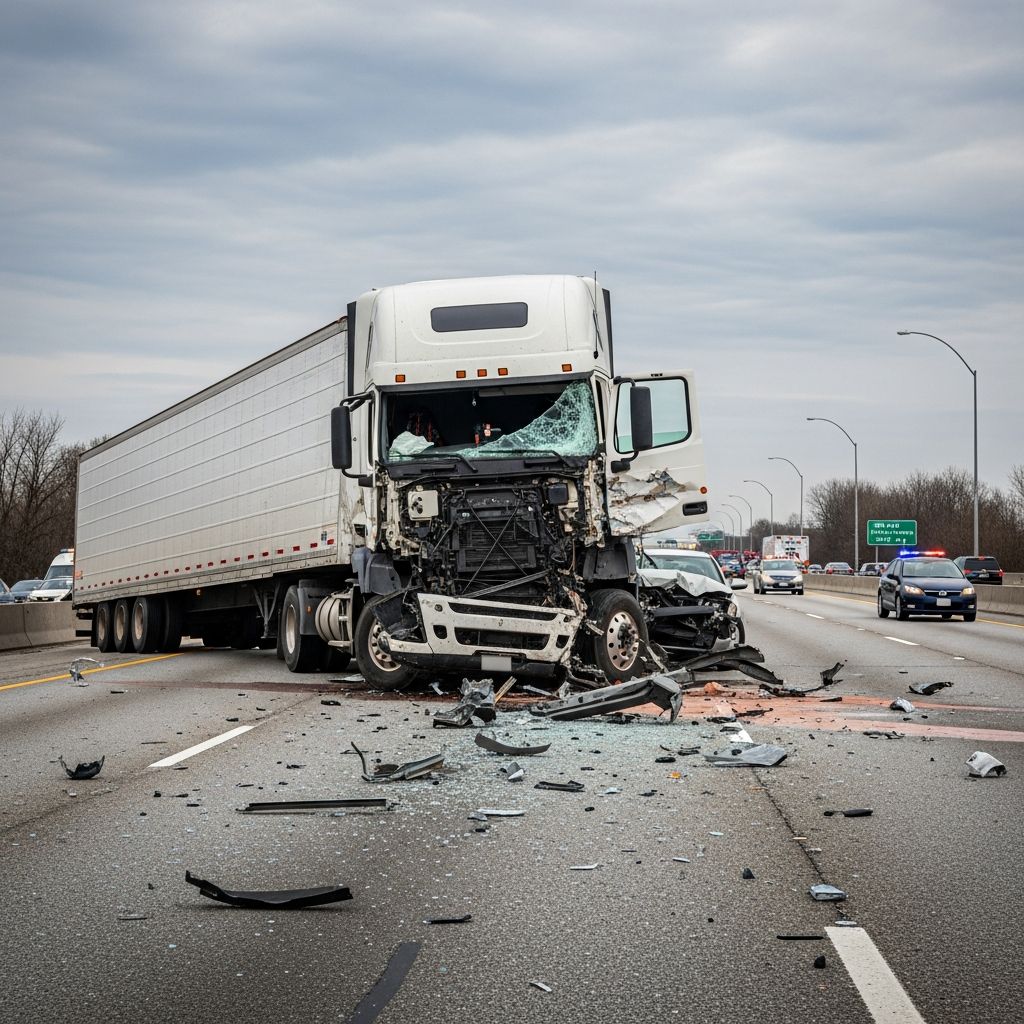
Commercial truck accidents often lead to significant legal exposure for the operating business, as courts frequently hold companies accountable for crashes involving their vehicles or drivers. This liability can stem from direct negligence or indirect responsibility, potentially resulting in costly settlements or judgments that threaten financial stability.
Legal Foundations of Liability in Commercial Vehicle Incidents
At the heart of any truck crash lawsuit lies the concept of negligence, requiring proof of four key elements: duty of care, breach of that duty, causation, and resulting damages. Truck drivers owe a heightened duty to operate safely due to their vehicles’ size and impact potential, while businesses must ensure compliance with safety standards. A breach occurs if a driver speeds or fatigues, or if the company overlooks maintenance. Causation links the breach to the crash, supported by black box data or eyewitness accounts, and damages cover medical costs, lost income, and pain.
Federal Motor Carrier Safety Administration (FMCSA) regulations impose strict duties on interstate carriers, including hours-of-service limits and vehicle inspections. Violations provide strong evidence in lawsuits, as they demonstrate breached duties. State laws mirror these, often amplifying penalties for commercial operators.
Vicarious Liability: When Businesses Answer for Drivers
Under respondeat superior—Latin for “let the master answer”—employers bear responsibility for employees’ negligence during work-related activities. If a driver causes a crash while on a delivery route, the business is typically liable regardless of its own fault. This doctrine incentivizes companies to hire responsibly and supervise effectively.
Courts assess employment status by factors like scheduling control, payment methods, and insurance responsibilities. True employees trigger vicarious liability; independent contractors may not, though companies can still face direct claims for poor oversight. For instance, if a business dictates routes and deadlines, courts often classify the driver as an employee.
| Factor | Employee Indicator | Contractor Indicator |
|---|---|---|
| Control over work | Company sets hours/routes | Driver chooses independently |
| Payment | Hourly/salary | Per load/mileage |
| Equipment costs | Company provides/insures | Driver owns/maintains |
| Exclusivity | Works only for company | Hauls for multiple firms |
This table outlines common distinctions, helping determine vicarious exposure.
Direct Negligence Claims Against Businesses
Beyond vicarious liability, companies face suits for their own misconduct. Negligent hiring occurs when businesses employ drivers with poor records without checks, such as prior DUIs or accidents. Inadequate training on load securement or hazardous materials handling breaches the duty to prepare drivers.
Pressuring drivers for tight schedules often leads to fatigue-related crashes. FMCSA limits driving to 11 hours after 10 off-duty, but quota-driven policies encourage violations. Poor maintenance—like uninspected brakes or overloaded cargo—directly contributes to incidents, with records proving neglect.
- Negligent hiring: Skipping background or DOT checks.
- Inadequate training: No simulator practice or regulation updates.
- Unsafe scheduling: Ignoring rest mandates.
- Vehicle neglect: Delayed repairs or improper loading.
These acts create independent liability, potentially increasing damages via punitive awards.
Multiple Parties in the Lawsuit Arena
Truck crashes rarely involve one defendant. Victims sue drivers, businesses, cargo owners, manufacturers, and repair shops. Product liability targets faulty parts like defective brakes, with manufacturers liable if defects caused failure. Cargo owners may share blame for improper loading shifting during turns.
In multi-vehicle pileups, other drivers’ negligence factors in, apportioned by comparative fault rules. Most states reduce awards by the plaintiff’s fault percentage; pure contributory jurisdictions bar recovery if any fault exists. Businesses benefit from identifying co-defendants to share liability.
Insurance Mandates and Coverage Gaps
Federal law requires minimum liability coverage: $750,000 for general freight, $5 million for hazmat haulers. States mandate similar or higher limits, but these often fall short of severe crash damages. Businesses must secure excess policies; underinsurance exposes personal assets.
Claims process insurance first, but if limits exhaust, direct suits pursue remainder. Insurers defend vigorously, disputing employment status or scope of work to limit payouts. Bobtail policies cover non-work use, critical for owner-operators.
Building a Strong Defense Strategy
Businesses counter suits by challenging negligence elements. Prove no duty breach via logs showing compliance, or break causation with expert reconstructions. Employee status disputes hinge on contract language and operations. Affirmative defenses include plaintiff fault or third-party intervention.
Preserve evidence immediately: secure dashcams, download electronic logs (ELDs), and photograph scenes. Notify insurers promptly to avoid coverage denial. Expert witnesses—accident reconstructionists, mechanics—bolster defenses.
Financial Stakes: Settlements and Verdicts
Average settlements range $100,000–$500,000+, but catastrophic cases exceed millions due to lifelong care needs. Pain and suffering multipliers amplify economic losses. Punitive damages punish egregious conduct like falsified logs.
Trials are rare; 95% settle. Strong evidence sways negotiations favorably. Small businesses risk bankruptcy without reserves or insurance.
Prevention: Safeguarding Your Operations
Proactive steps mitigate risks. Implement rigorous hiring with MVRs, drug tests, and reference checks. Ongoing training via FMCSA-approved programs ensures competency. Enforce ELD use for HOS compliance and telematics for behavior monitoring.
Regular inspections per CVSA standards prevent mechanical failures. Foster safety cultures with incentives, avoiding quota pressures. Legal audits review contracts for liability shields.
Frequently Asked Questions
Can a business be sued if the driver was at fault?
Yes, via vicarious liability if the driver was on duty, or directly for company negligence.
What if the driver is an independent contractor?
Companies may avoid vicarious liability but face claims for supervision failures.
Does insurance fully protect the business?
No, policy limits can be exceeded, leading to personal asset risks.
How to prove the company wasn’t negligent?
Use maintenance logs, training records, and compliance audits.
Can cargo owners be liable?
Yes, if improper loading contributed to the crash.
Common Pitfalls for Business Owners
- Delaying incident reporting to insurers.
- Assuming contractors absolve all liability.
- Neglecting ELD data preservation.
- Ignoring FMCSA violation patterns.
Avoiding these preserves defenses and reduces exposure.
References
- Truck Accident Lawsuits and Liability: Who Is Responsible? — Finch McCranie LLP. 2023-05-15. https://www.finchmccranie.com/blog/truck-accident-lawsuits-and-liability-who-is-responsible/
- Who Can Be Sued in a Truck Accident Case? — Law Firm Davidoff. 2024-02-10. https://www.lawfirmdavidoff.com/blog/who-can-be-sued-in-a-truck-accident-case/
- Whom to Sue After a Truck Accident — Justia. 2025-01-08. https://www.justia.com/truck-accidents/truck-accident-lawsuits/whom-to-sue-after-a-truck-accident/
- Driver and Company Liability for Commercial Truck Accidents — Nolo. 2024-11-20. https://www.nolo.com/legal-encyclopedia/truck-accident-lawsuits.html
- Is the Trucking Company Responsible in a Truck Accident? — Ben Crump Law. 2024-07-12. https://bencrump.com/truck-accident-lawyer/is-the-truck-driver-or-trucking-company-responsible-in-a-truck-accident/
Similar Articles








Read full bio of medha deb


