
Lease Or Buy Business Equipment: Expert Guide For Owners
Discover key factors to decide between leasing or buying business equipment for optimal cash flow and long-term savings.
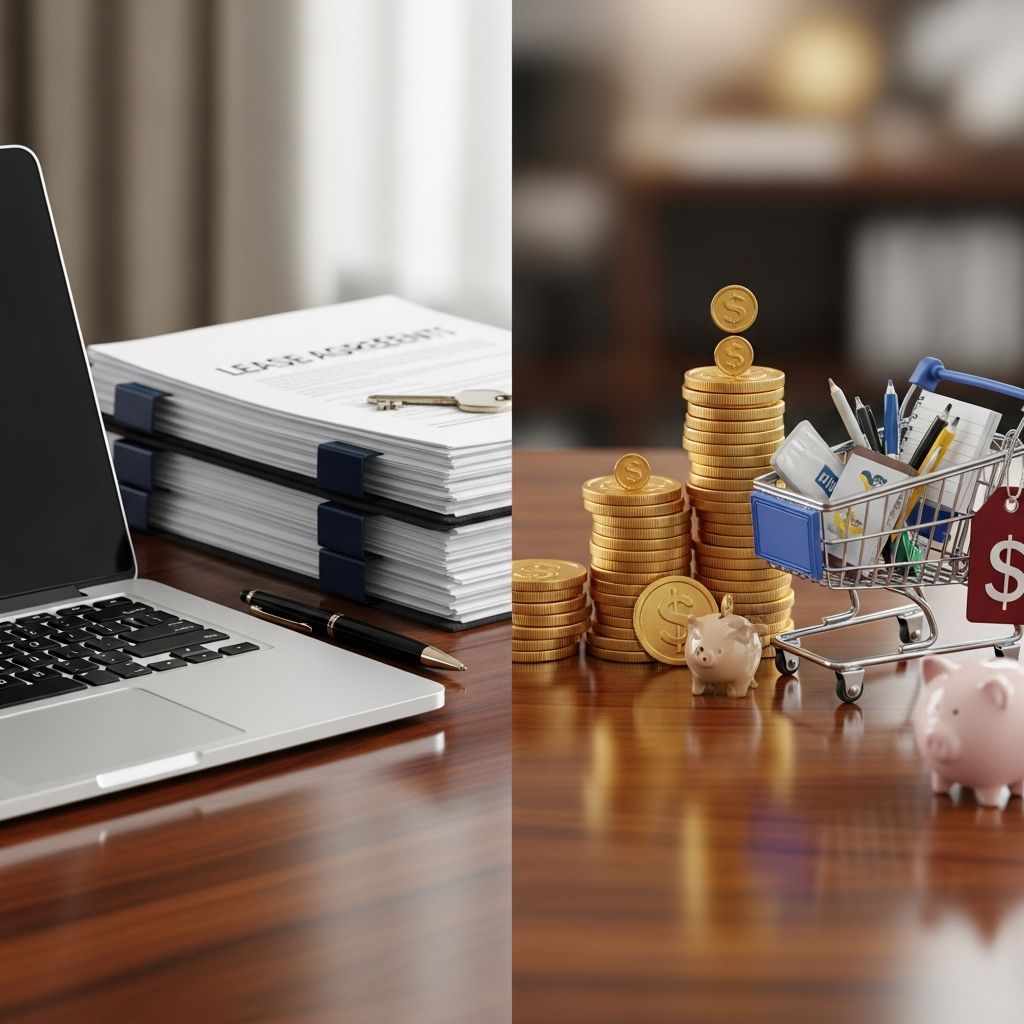
Acquiring essential machinery, vehicles, or technology for your business often boils down to a pivotal choice: lease or purchase. This decision impacts cash flow, tax obligations, operational flexibility, and profitability over time. While leasing offers immediate access with minimal upfront investment, buying builds equity and potential savings in the long run. Understanding these dynamics helps business owners align equipment strategies with their financial health and growth objectives.
Core Financial Implications of Equipment Acquisition
The initial outlay sets leasing apart from buying. Leasing typically demands little to no down payment, freeing up capital for other priorities like inventory or marketing. In contrast, purchasing often requires a substantial upfront sum or loan collateral, straining short-term liquidity but positioning the business for ownership benefits.
Over the asset’s lifespan, total costs diverge significantly. Leasing spreads payments monthly but can accumulate to exceed the equipment’s market value due to interest-like fees embedded in contracts. Buying, especially via financing, allows depreciation deductions that offset taxable income, often making it cheaper long-term for durable assets.
| Aspect | Leasing | Buying |
|---|---|---|
| Upfront Cost | Low or none | High (cash or loan downpayment) |
| Total Long-Term Cost | Potentially higher | Usually lower with ownership |
| Balance Sheet Impact | Off-balance for operating leases | Asset and liability recorded |
| End of Term | Return, renew, or buyout | Full ownership |
Advantages of Leasing Business Equipment
Leasing shines for businesses prioritizing flexibility and conservation of capital. Key benefits include:
- Preserved Liquidity: Minimal initial payments keep cash available for core operations or unexpected expenses.
- Technology Refresh Cycles: Short-term leases enable frequent upgrades to state-of-the-art models, vital in fast-evolving fields like IT or manufacturing.
- Included Services: Many agreements cover maintenance, repairs, and insurance, reducing administrative burdens and downtime risks.
- Easier Qualification: Less stringent credit checks compared to loans, aiding startups or firms with variable revenue.
- Tax Treatment: Monthly payments are often fully deductible as operating expenses, simplifying accounting.
For seasonal operations or project-based needs, leasing avoids commitment to underutilized assets, allowing returns at term end without resale hassles.
Drawbacks of Leasing and When to Avoid It
Despite attractions, leasing carries pitfalls. Businesses may overpay cumulatively, especially for equipment with long useful lives where ownership yields equity. Customization restrictions limit modifications, and end-of-lease fees for wear-and-tear can surprise users. Moreover, leased assets rarely build balance sheet strength, complicating future borrowing.
Industries with stable, high-value equipment—like heavy machinery or vehicles—often find leasing suboptimal, as residual values favor buyers.
Benefits of Purchasing Equipment Outright or Financed
Ownership appeals to established businesses seeking control and cost efficiency. Primary upsides are:
- Equity Accumulation: At loan payoff, the asset is yours to use, sell, or trade, potentially recouping investments.
- Depreciation Advantages: IRS Section 179 and bonus depreciation allow accelerated write-offs, boosting tax savings in purchase year.
- Customization Freedom: Modify, upgrade, or repurpose without lessor approval, enhancing operational fit.
- Lower Lifetime Expense: For assets holding value, total payments undercut leasing equivalents after interest and fees.
- Collateral Value: Owned equipment strengthens loan applications and business valuations.
Financing options like equipment loans or lines of credit mirror mortgages, with terms matching asset life for predictable payments.
Potential Downsides to Buying Equipment
Purchasing demands more upfront capital and exposes owners to obsolescence risks if technology advances rapidly. Maintenance falls squarely on the business, incurring unpredictable costs, and resale markets can fluctuate, delaying liquidity.
During economic uncertainty, tied-up capital in depreciating assets heightens vulnerability compared to leasing’s pay-as-you-go model.
Strategic Factors Influencing Your Decision
Business Stage and Cash Flow Stability
Startups or high-growth firms with tight cash flows benefit from leasing’s low entry barrier, preserving funds for scaling. Mature enterprises with steady revenue favor buying to minimize total costs and leverage assets.
Equipment Lifespan and Usage Intensity
Short-life tech (e.g., computers) suits leasing for upgrades; long-lasting items (e.g., CNC machines) justify purchase for enduring value.
Industry-Specific Considerations
Construction or logistics often buy durable vehicles; tech firms lease servers. Analyze usage hours against depreciation curves for clarity.
Tax and Accounting Nuances
U.S. tax code differentiates sharply. Leases deduct 100% of payments as expenses; purchases claim depreciation (e.g., MACRS over 5-7 years) plus interest if financed. Consult IRS Publication 946 for details, and Section 179 for up to $1.22 million expensing in 2026 (adjusted annually).
Operating leases keep liabilities off books, aiding ratios; capital leases mirror loans. GAAP/IFRS rules apply similarly.
Practical Analysis Tools for Lease vs. Buy
Perform a net present value (NPV) calculation: Discount future lease payments against purchase costs, factoring residuals and taxes. Tools like Excel’s NPV function simplify this.
Example scenario: $50,000 machine, 5-year life.
| Option | Year 1 Cost | Total 5-Year Cost | End Value |
|---|---|---|---|
| Lease ($1,000/mo) | $12,000 | $60,000 | $0 |
| Buy (Financed) | $15,000 down + $700/mo | $42,000 | $20,000 residual |
Buying nets savings post-resale. Adjust for your rates.
Leasing vs. Financing: Key Distinctions
Leasing is rental-like; financing is debt for ownership. Leases may cost less monthly but lack equity; loans build it with higher payments.
Frequently Asked Questions
What if my business has poor credit?
Leasing often approves faster with looser criteria, unlike loans requiring strong scores.
Can I customize leased equipment?
Rarely—contracts limit changes to preserve resale value. Buying allows full freedom.
Are there grants for equipment?
Some government programs offer grants or low-interest loans; check SBA.gov for eligibility.
How does obsolescence factor in?
Lease for rapid tech changes; buy for stable, durable gear.
What’s the break-even point?
Typically 3-5 years; calculate total ownership cost including maintenance.
Steps to Make the Right Choice
- Forecast cash flow and usage needs.
- Compare quotes from lessors and lenders.
- Run cost models with tax implications.
- Assess upgrade frequency and resale potential.
- Consult accountant or advisor for tailored advice.
Hybrid approaches—lease short-term, buy later—work for many. Revisit decisions as business evolves.
References
- Leasing vs Purchasing Equipment for Businesses — SoFi. 2023. https://www.sofi.com/learn/content/lease-vs-purchase-equipment/
- Should I buy or lease my business equipment? — BDC (Business Development Bank of Canada). 2024-01-15. https://www.bdc.ca/en/articles-tools/money-finance/get-financing/buy-lease-business-equipment
- Buying or Leasing IT Equipment? Which Makes More Sense — GoWorkWize. 2023-05-10. https://www.goworkwize.com/blog/buying-vs-leasing-equipment
- Leasing Versus Buying Equipment — SCORE. 2022. https://www.score.org/cincidayton/resource/article/leasing-versus-buying-equipment-score-453
- Lease, Don’t Buy, Capital Equipment — The Hartford. 2024. https://www.thehartford.com/business-insurance/strategy/growing-business/lease-dont-buy-equipment
- Buying or Leasing Equipment — HomeTrust Bank. 2023-08-20. https://htb.com/financial-literacy/buying-or-leasing-equipment/
- Equipment Leasing vs Buying — Comerica. 2024-02-01. https://www.comerica.com/insights/commercial-banking/specialized-industries/equipment-leasing-vs-buying.html
- Should Your Business Lease or Buy Equipment? — Regions Bank. 2023-11-12. https://www.regions.com/insights/small-business/article/should-your-business-lease-or-buy-equipment
Similar Articles








Read full bio of medha deb


