
Bridging the Gap: Understanding Disability Rights in Police Encounters
Discover the critical intersection of disability rights and law enforcement interactions, and learn how awareness protects vulnerable communities.
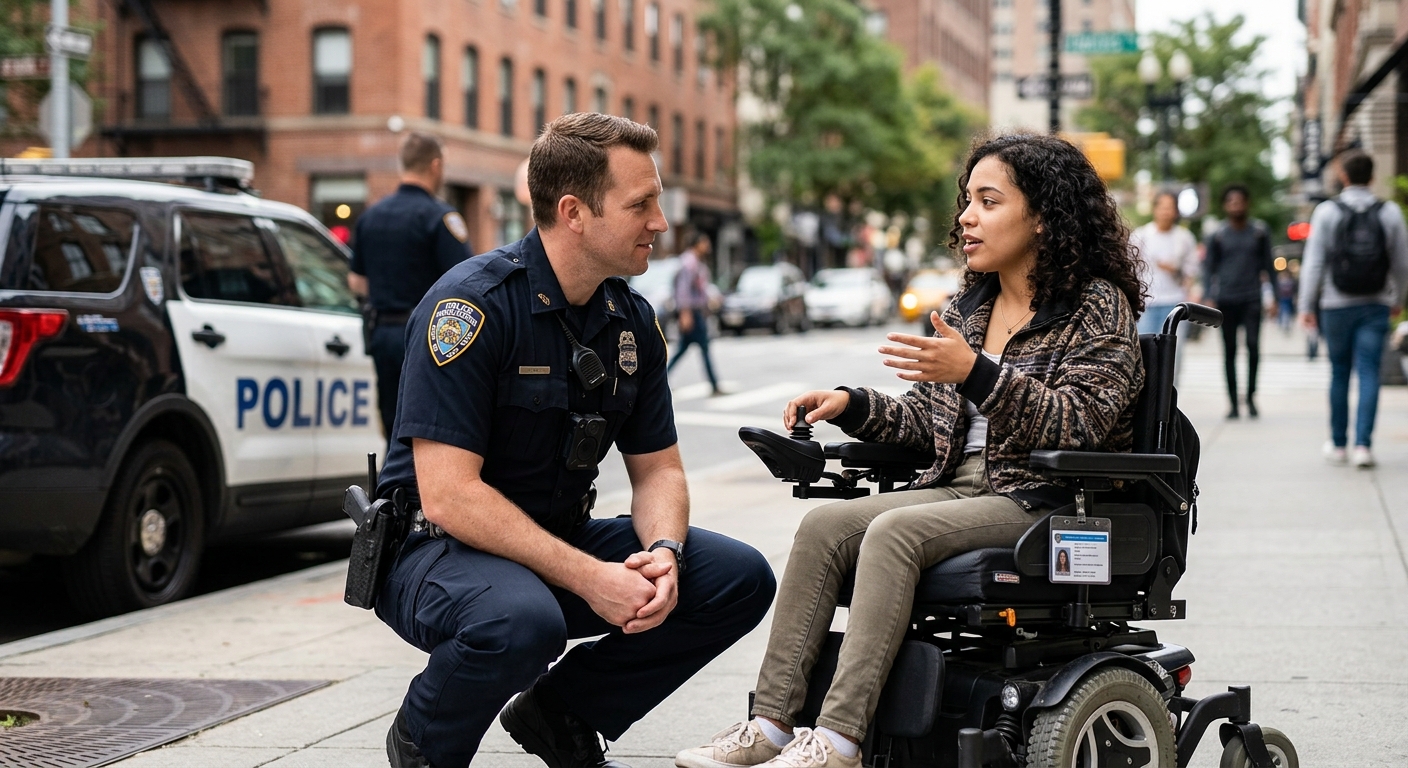
Introduction: The Intersection of Civil Liberties and Disability
In a society built on the foundational principles of justice, equality, and civil liberties, the expectation is that law enforcement agencies will serve, protect, and respect all citizens equally. However, for the millions of Americans living with physical, sensory, or cognitive disabilities, a routine encounter with police or first responders can quickly spiral into a misunderstanding, a traumatic event, or worse, a dangerous tragedy. The fundamental rights guaranteed by the United States Constitution apply unconditionally to every individual, yet the practical application of these rights often falters in high-stress moments involving vulnerable populations.
This is an issue that touches every corner of our society, impacting millions of families and individuals across the country. As advocacy groups continue to push for sweeping reforms within the justice system, it is up to every citizen to educate themselves. Understanding your civil rights—and the specific protections afforded to individuals with disabilities—is not just a matter of legal knowledge; it is a critical tool for survival and self-advocacy. This comprehensive guide explores the complexities of disability rights in the context of law enforcement, detailing the systemic challenges faced by the disabled community, the legal frameworks designed to protect them, and actionable steps individuals can take to assert their rights safely.
The Statistical Reality: Disability in the Criminal Justice System
To fully grasp the magnitude of the issue, one must examine the stark data surrounding disability and the criminal justice system. Individuals with disabilities are vastly overrepresented in police encounters, arrests, and incarcerations. This disparity points to a systemic pipeline where minor infractions, misunderstandings, or mental health crises are criminalized rather than treated through a public health, community care, or social services lens.
According to the Bureau of Justice Statistics, an estimated 30 percent to 40 percent of incarcerated individuals report having at least one disability. This rate is staggeringly high—three to four times higher than the prevalence of disabilities within the general civilian population. Furthermore, a rigorous peer-reviewed study published in the American Journal of Public Health highlights a disturbing ‘disability penalty’ ingrained in the United States criminal justice system.
The research found that individuals with disabilities are nearly 44 percent more likely to be arrested by the age of 28 compared to their non-disabled peers. This disparity is deeply compounded by intersectional factors such as race and gender, underscoring how systemic racism and ableism combine to create uniquely perilous environments for marginalized communities.
| Demographic Group | Probability of Arrest by Age 28 |
|---|---|
| General Population (No Disability) | ~30% |
| Individuals with Disabilities (Overall) | ~44% |
| Black Men with Disabilities | ~55% |
Communication Barriers: The Deaf and Hard of Hearing Experience
One of the most prominent and frequently documented examples of how police interactions can go awry involves the Deaf and Hard of Hearing (DHH) community. The gap between standard police training and Deaf culture is wide and often exceptionally hazardous. Law enforcement officers are trained to rely heavily on verbal commands to establish control of a scene, and they are taught to view a civilian’s non-compliance as a potential threat or active resistance. Conversely, Deaf individuals rely on visual cues, lip-reading, and American Sign Language (ASL) to navigate the world.
Consider a high-stress scenario, such as a traffic stop at night. A police officer shouting commands from behind a vehicle might interpret a Deaf driver’s failure to respond as active defiance. If the driver reaches for a pen and paper in the glovebox to communicate, or uses animated hand gestures indicative of ASL, an officer unfamiliar with Deaf culture might misinterpret these sudden movements as aggressive or as an attempt to reach for a concealed weapon.
These misinterpretations are not merely theoretical; they have led to tragic, highly publicized incidents involving the use of excessive force against DHH individuals. The lack of qualified ASL interpreters during roadside stops, arrests, or interrogations further compromises the civil liberties of the Deaf individual, preventing them from understanding their Miranda rights, the reason for their detention, or the nuanced questions being asked of them during an investigation.
Navigating Cognitive and Developmental Disabilities
Beyond sensory disabilities like deafness or blindness, individuals with intellectual and developmental disabilities (I/DD)—such as autism spectrum disorder or Down syndrome—face their own unique hurdles during police encounters. For someone with autism, the sensory overload caused by flashing sirens, loud police radios, bright flashlights, and shouting officers can trigger a severe meltdown or cause the individual to shut down completely and become non-responsive.
Officers who lack comprehensive, specialized training in recognizing the signs of cognitive or developmental disabilities may view a lack of eye contact, repetitive self-soothing movements (often called stimming), or echolalia (repeating the officer’s words back to them) as signs of intoxication, evasion, or blatant disrespect. In mental health crises, police are frequently dispatched as the primary responders. When these situations escalate, individuals experiencing psychiatric or developmental emergencies are often met with physical force and arrest rather than de-escalation, empathy, and medical care, resulting in devastating outcomes.
It is absolutely imperative that the criminal justice system shifts its approach from punitive enforcement to trauma-informed crisis intervention when dealing with cognitive and developmental differences.
The Legal Framework: The Americans with Disabilities Act
The protections for individuals with disabilities are enshrined in federal civil rights law, most notably the Americans with Disabilities Act (ADA) of 1990. Specifically, Title II of the ADA prohibits discrimination against qualified individuals with disabilities in all programs, activities, and services of public entities. This broad mandate unequivocally includes state and local law enforcement agencies, municipal police departments, county sheriffs, and correctional facilities.
Under Title II, police departments are legally obligated to make ‘reasonable modifications’ to their policies, practices, and procedures to ensure that people with disabilities are treated equally. Furthermore, the law explicitly mandates ‘effective communication.’ This means that law enforcement must provide appropriate auxiliary aids and services to ensure that communication with an individual with a disability is as effective as communication with others.
Key ADA obligations for law enforcement include:
- Providing Auxiliary Aids: Supplying qualified sign language interpreters, assistive listening devices, or exchanging written notes when interacting with DHH individuals.
- Honoring Preferences: Giving primary consideration to the communication method preferred by the disabled individual, unless an alternative is proven to be equally effective.
- Modifying Procedures: Adjusting standard operating procedures—such as handcuffing a Deaf person in front of their body rather than behind their back so they can still utilize sign language—provided it does not compromise core officer safety.
- Accessible Transportation: Ensuring that accessible vehicles are dispatched if an individual utilizing a wheelchair is detained or arrested.
While the ADA does include a ‘direct threat’ exception—meaning officers are not required to provide accommodations if doing so would pose a significant, immediate risk to the health or safety of others—this exception cannot be used as a blanket excuse to ignore civil rights during routine stops, interrogations, or standard arrest procedures.
Bridging the Gap: The Vital Role of Officer Training
Legislative mandates and federal laws alone are insufficient without robust, practical application on the ground. Bridging the gap between the disabled community and law enforcement requires deep systemic reform, starting with comprehensive, scenario-based training for all first responders across the nation.
Many advocacy groups and community leaders emphasize that visual tools and voluntary disclosure programs are helpful stepping stones. For example, ‘Blue Envelope’ initiatives—where drivers keep their registration and insurance documents in a highly recognizable envelope that alerts officers to their cognitive or sensory disability—can immediately change the tone of a traffic stop. However, the burden of ensuring a safe interaction should never fall solely on the shoulders of the disabled individual.
True equity requires police departments to adopt mandatory de-escalation protocols, implicit bias training, and specific disability awareness curriculums. Officers must be taught how to accurately recognize the signs of various disabilities, how to communicate effectively without unnecessarily escalating the situation, and how to utilize community mental health resources and specialized Crisis Intervention Teams (CIT) rather than defaulting to handcuffs and jail cells.
Actionable Advice: Knowing and Asserting Your Rights
While systemic reform is paramount, individuals with disabilities and their advocates must also equip themselves with the knowledge to navigate these potentially fraught encounters. Knowing your civil rights is the very first step in defending them successfully.
- Prepare in Advance: Consider carrying a medical alert bracelet, a wallet disclosure card, or a visor card for your vehicle that clearly states your disability and preferred method of communication. Keep your hands visible on the steering wheel and avoid sudden movements when presenting these items to an officer.
- Assert Your Right to Accommodations: If you are stopped, questioned, or arrested, you have the legal right to request a reasonable accommodation. If you are Deaf, clearly request a qualified ASL interpreter before answering any investigative questions or signing any legal documents.
- Understand Your Miranda Rights: You cannot be legally forced to waive your Miranda rights without fully understanding them. If communication barriers prevent comprehension, any statements made under duress may potentially be challenged and suppressed in a court of law.
- Do Not Rely on Family as Interpreters: The ADA explicitly stipulates that law enforcement should not rely on family members, friends, or minors to interpret, except in extreme, life-threatening emergencies. You have the right to an impartial, professional interpreter.
- Document the Encounter: If you believe your rights were violated, remain as calm as possible during the interaction to ensure your physical safety. Afterward, immediately document the officer’s name, badge number, patrol car number, the agency name, and the specific details of the incident.
- File a Formal Grievance: You have the right to file a formal complaint with the law enforcement agency’s internal affairs division, your state’s civil rights commission, or directly with the United States Department of Justice Civil Rights Division.
Frequently Asked Questions (FAQs)
Are police officers required to provide an interpreter if I am pulled over?
Under the ADA, law enforcement agencies must provide effective communication. While a minor, routine traffic stop may only require the exchange of written notes to issue a warning or a ticket, complex interactions—such as interrogations, reading Miranda rights, or conducting field sobriety tests—generally require the dispatch of a qualified interpreter to ensure civil liberties are not violated.
Do I have to legally disclose my disability to a police officer?
You are not legally obligated to disclose your disability to law enforcement. However, disclosing it can help the officer understand your behavior and legally obligates them to provide reasonable accommodations under the ADA. Disclosure is a highly personal choice based entirely on individual safety and the context of the situation.
Can a police officer use my child to interpret for me during an encounter?
No. Law enforcement officers should never use minors as interpreters. Furthermore, even adult family members or bystanders should only be utilized in immediate, life-threatening emergencies where waiting for a qualified, impartial interpreter is simply not an option.
What exactly is considered a ‘reasonable modification’ by law enforcement?
A reasonable modification is an adjustment to standard police procedures that allows a disabled person equal access to justice and safety. Examples include moving a victim interview to a quiet, sensory-friendly room for someone with autism, allowing someone with a mobility impairment extra time to safely exit a vehicle, or handcuffing a Deaf person in front of their body so they can continue to communicate via sign language.
Conclusion: Forging a Path Toward True Equality
The intersection of civil liberties and disability rights is a critical battleground for justice in the modern era. When the mechanisms of law enforcement fail to accommodate the unique needs of individuals with disabilities, the fundamental promise of equal protection under the law is broken. No one should have to fear for their life during a routine traffic stop simply because they cannot hear a command or process sensory input in a neurotypical manner.
By thoroughly understanding the profound protections offered by the Americans with Disabilities Act, advocating for mandatory and comprehensive officer training, and empowering vulnerable populations to assert their rights, society can actively bridge the dangerous gap between the disabled community and the criminal justice system. True equity requires a collaborative, educated, and trauma-informed approach, ensuring that knowing your rights is not just a defensive measure, but a pathway to a safer, more inclusive, and more just society for all.
References
- Commonly Asked Questions About the ADA and Law Enforcement — U.S. Department of Justice, Civil Rights Division. 2020-02-28. https://www.ada.gov/law-and-enforcement/
- Disabilities Among Prison and Jail Inmates, 2011–12 — Bureau of Justice Statistics, U.S. Department of Justice. 2015-12-14. https://bjs.ojp.gov/library/publications/disabilities-among-prison-and-jail-inmates-2011-12
- The Cumulative Probability of Arrest by Age 28 Years in the United States by Disability Status, Race/Ethnicity, and Gender — American Journal of Public Health. 2017-11-08. https://www.ncbi.nlm.nih.gov/pmc/articles/PMC5636688/
Similar Articles








Read full bio of medha deb




