
Breastfeeding Rights: Legal Protections Across America
Understand your constitutional and statutory rights to breastfeed in public and at work.
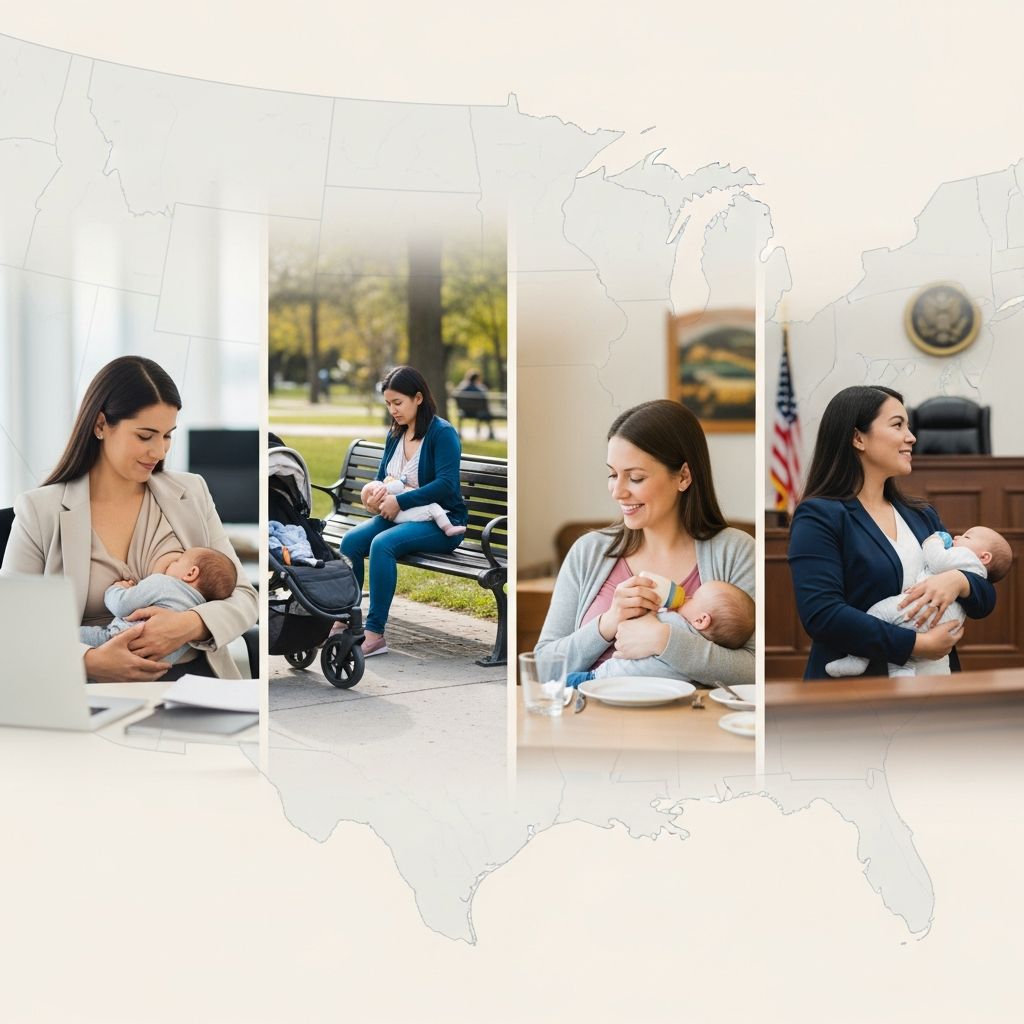
Understanding Your Legal Rights as a Nursing Mother
Motherhood involves countless decisions, and one significant choice many women make is breastfeeding their infant. While breastfeeding is a natural process, mothers often worry about their legal standing when nursing in public or requesting accommodations at work. The good news is that comprehensive legal frameworks now exist across the United States to protect breastfeeding mothers from discrimination and ensure they can feed their children with dignity and confidence.
The landscape of breastfeeding legislation has evolved dramatically over the past few decades. What began as scattered state-level protections has developed into a robust system of federal and state laws that explicitly recognize and safeguard the rights of nursing mothers in virtually every setting—from restaurants and retail centers to workplaces and government buildings.
Federal Legislation Protecting Breastfeeding
At the federal level, several key laws establish baseline protections for breastfeeding mothers. The foundation was laid in 1999 when Congress passed legislation through an appropriations bill that permits breastfeeding on all federal property and in federal buildings. This groundbreaking provision made clear that no government funds could be used to enforce any prohibition on women breastfeeding their children in federal facilities.
The federal law explicitly states that “a woman may breastfeed her child at any location in a federal building or on federal property, if the woman and her child are otherwise authorized to be present at the location.” This language provided crucial clarity that breastfeeding cannot be restricted simply because a mother and child happen to be in a government facility.
Perhaps the most significant federal employment protection came through the Patient Protection and Affordable Care Act (ACA). Section 4207 of the ACA amended the Fair Labor Standards Act (FLSA) to require employers to provide reasonable break time for nursing mothers to express breast milk during the workday. This provision applies to employees whose children are under one year old. Importantly, employers must provide a private space for pumping that is not a bathroom, and while employers are not required to pay employees during pumping breaks, the time must be provided as a reasonable accommodation.
Recently, this protection expanded significantly through the PUMP Act (Providing Urgent Maternal Protections), which extended workplace lactation rights to previously uncovered workers including teachers, nurses, and farmworkers. These expansions demonstrate the growing recognition that breastfeeding support benefits both mothers and society.
Public Breastfeeding: Your Right to Nurse Anywhere
A fundamental right established across all 50 states is the ability to breastfeed in public. As of recent legislative efforts, every state in the nation—along with the District of Columbia and the Virgin Islands—has passed laws explicitly allowing women to breastfeed in any public or private location where they are otherwise authorized to be present.
This broad protection applies to numerous settings:
- Restaurants, cafes, and dining establishments
- Retail stores and shopping centers
- Public transportation and transit stations
- Libraries, parks, and recreational facilities
- Government buildings and municipal offices
- Schools and educational institutions
- Churches and religious facilities
- Hospitals and medical facilities
Importantly, these laws do not require mothers to cover themselves while breastfeeding, nor do they recommend doing so. The legal standard recognizes that a mother’s decision about how to breastfeed—whether openly or with a cover—is entirely her own choice and cannot be dictated by law, policy, or social pressure.
At least 29 states have gone further by explicitly exempting breastfeeding mothers from indecent exposure and public indecency statutes. This additional protection prevents mothers from being charged with crimes simply for nursing their children in public.
State-Level Protections and Variations
While federal law provides baseline protections, individual states have frequently enacted more comprehensive legislation. California exemplifies this approach, establishing some of the nation’s strongest breastfeeding protections. California law explicitly permits mothers to breastfeed in any public or private location (except the private residences of others) where both mother and child are authorized to be present.
California further protects breastfeeding mothers through several additional measures:
- Jury duty postponement for up to one year for nursing mothers
- School accommodations requiring reasonable facilities for lactating students to express milk
- Airport requirements mandating lactation rooms at major airports
- Hospital requirements to provide breastfeeding guidance and support
- Workplace protections beyond federal minimums
Other states have implemented comparable protections tailored to their populations. Some states specifically address breastfeeding in healthcare settings, requiring hospitals to provide education and support for mothers establishing nursing relationships with newborns. Several states mandate workplace accommodations that exceed federal requirements, such as providing paid break time for pumping or requiring employers of all sizes—not just those with 50+ employees—to provide accommodation.
Workplace Rights and Lactation Accommodations
For many working mothers, navigating lactation rights at work presents the most pressing legal concern. Federal law requires covered employers to provide breastfeeding accommodations, but understanding what constitutes adequate compliance is essential.
Space Requirements: Employers must provide a private location suitable for expressing milk. Critically, this space cannot be a bathroom. The designated space should be functional and provide mothers with dignity and privacy to pump without interruption or observation.
Break Time Provisions: Employers must allow reasonable break time each time an employee needs to express milk. What constitutes “reasonable” depends on individual circumstances, but the law recognizes that expressing milk typically requires 15-30 minutes depending on the mother’s needs and the equipment she uses.
Coverage Limitations: Under the original FLSA amendment, employers with fewer than 50 employees could be exempt if compliance would impose undue hardship. However, the expansion through the PUMP Act significantly broadened protections for previously excluded worker categories, making exemptions increasingly rare.
Some state laws provide even more robust protections than federal law requires. These may include requirements for paid pumping time, provisions for maintaining milk supply during work absences, or mandates that lactation spaces be equipped with refrigeration for storing expressed milk.
Addressing Discrimination and Violations
Despite clear legal protections, breastfeeding mothers sometimes encounter discrimination. Responses range from being asked to cover while nursing to being denied access to pumping spaces at work, to being treated unfavorably in employment decisions due to their breastfeeding status.
When violations occur, mothers have several avenues for legal recourse. Employment discrimination claims can be filed with the Equal Employment Opportunity Commission (EEOC) when breastfeeding-related harassment or adverse actions occur in the workplace. Public accommodations violations—such as being told to leave a restaurant while breastfeeding—can be addressed through state attorney general offices or private legal action.
Documentation is critical in these situations. Mothers who experience discrimination should record details including the date, time, location, individuals involved, and specifics of what occurred. Gathering witness information and preserving communications about the incident strengthens any potential legal claim.
Hospital and Healthcare Settings
Federal and state laws increasingly recognize that proper breastfeeding support begins at birth. Many states now require hospitals to provide new mothers with evidence-based breastfeeding guidance and information before discharge. These requirements ensure that mothers receive professional lactation support during the critical early days of establishing nursing relationships.
Healthcare providers are also bound by laws protecting breastfeeding in their facilities. Mothers have the right to breastfeed in any area of a hospital or medical facility where they are authorized to be present. This includes labor and delivery units, postpartum recovery areas, pediatric departments, and waiting rooms.
School Accommodations for Young Mothers and Nursing Infants
Student mothers and school employees who are breastfeeding also receive legal protections. School districts and charter schools in states with comprehensive breastfeeding legislation must provide reasonable accommodations for lactating students and staff. These accommodations may include designated spaces for pumping, flexible scheduling to allow time for expressing milk, and support for mothers who wish to breastfeed infants brought to campus.
These protections recognize that education access should not be compromised by the decision to breastfeed, and that schools have a responsibility to support nursing mothers in pursuing their educational and professional goals.
Travel and Airports
Recognizing that mothers travel while nursing or pumping, federal law now requires major airports to provide lactation rooms accessible to the public. These rooms must be located beyond security checkpoints to serve all travelers, including those waiting for departures.
Public Law 116–190 extended these requirements nationally, ensuring that even smaller airports provide lactation facilities. These spaces offer mothers privacy and cleanliness standards suitable for expressing milk during travel, removing a significant barrier that previously made air travel challenging for nursing mothers.
Jury Service and Civic Participation
Breastfeeding mothers often worry about jury duty obligations and how to balance them with their infant’s feeding schedule. Recognizing this conflict, several states now allow nursing mothers to postpone jury service for specified periods. California law, for example, permits mothers of breastfed children to postpone jury duty for up to one year, with provisions for further postponement if needed.
International Perspectives on Breastfeeding Rights
The United States is not alone in recognizing breastfeeding rights. International jurisdictions have also enacted protective legislation. The United Kingdom’s Equality Act 2010 prohibits businesses from discriminating against breastfeeding mothers, while Ireland’s Equal Status Act 2000 provides similar protections against discrimination and harassment based on gender grounds, including breastfeeding.
Brazil has implemented state and municipal laws establishing rights to breastfeed in public and private spaces, with significant financial penalties for those who prevent mothers from nursing. These global examples demonstrate widespread recognition that breastfeeding protection is a fundamental right deserving legal safeguards.
Frequently Asked Questions About Breastfeeding Rights
Q: Can a business ask me to stop breastfeeding or cover up?
A: No. All 50 states have laws protecting your right to breastfeed in public places. Businesses cannot legally ask you to stop nursing, move to another location, or cover yourself. Doing so may violate state public accommodations laws.
Q: What should I do if my employer denies me time or space to pump at work?
A: Document the denial, including dates and details. Contact your HR department in writing requesting the required accommodation. If the issue persists, file a complaint with the EEOC or your state’s labor department. You may also consult an employment attorney.
Q: Are smaller employers exempt from providing pumping accommodations?
A: Small employers with fewer than 50 employees may claim undue hardship under limited circumstances, but exemptions are increasingly rare. State laws often provide protections regardless of employer size. The PUMP Act expanded coverage to previously excluded worker categories.
Q: Can I breastfeed in a government building?
A: Yes. Federal law explicitly permits breastfeeding in any federal building or on federal property where you and your child are otherwise authorized to be present. This protection applies regardless of the specific agency or facility.
Q: What if I’m asked to leave a store while breastfeeding?
A: This violates state public accommodations law in all 50 states. If this occurs, report it to store management, request to speak with corporate compliance, and contact your state attorney general’s office or a local advocacy organization that specializes in breastfeeding rights.
Q: Does my state provide additional protections beyond federal law?
A: Many states do. Research your specific state’s laws regarding jury service, school accommodations, hospital requirements, and other protections. State breastfeeding coalitions and public health departments can provide detailed information about your state’s provisions.
Q: Can I be discriminated against in hiring or promotion because I breastfeed?
A: No. Discrimination based on breastfeeding status violates federal employment law and many state laws. If you experience such discrimination, document the incidents and report them to the EEOC or your state’s employment agency.
References
- Know Your Rights — Alameda County Public Health Department. Accessed 2026. https://acphd.org/acbreastfeeds/know-your-rights/
- Your Breastfeeding Rights — USDA WIC Breastfeeding Support. Accessed 2026. https://wicbreastfeeding.fns.usda.gov/your-breastfeeding-rights
- Lactation Rights — California Breastfeeding Coalition. Accessed 2026. https://californiabreastfeeding.org/lactation-rights/
- Lactation and Breastfeeding Laws in the U.S. — Mamava. Accessed 2026. https://www.mamava.com/breastfeeding-laws
- Breastfeeding State Laws — National Conference of State Legislatures. Accessed 2026. https://www.ncsl.org/health/breastfeeding-state-laws
- Existing Legislation — U.S. Breastfeeding Committee. Accessed 2026. https://www.usbreastfeeding.org/existing-legislation.html
Similar Articles








Read full bio of medha deb


