
Brass Knuckles and U.S. Law: What You Need to Know
Understand how federal, state, and local laws treat brass knuckles before you buy, carry, or use them.
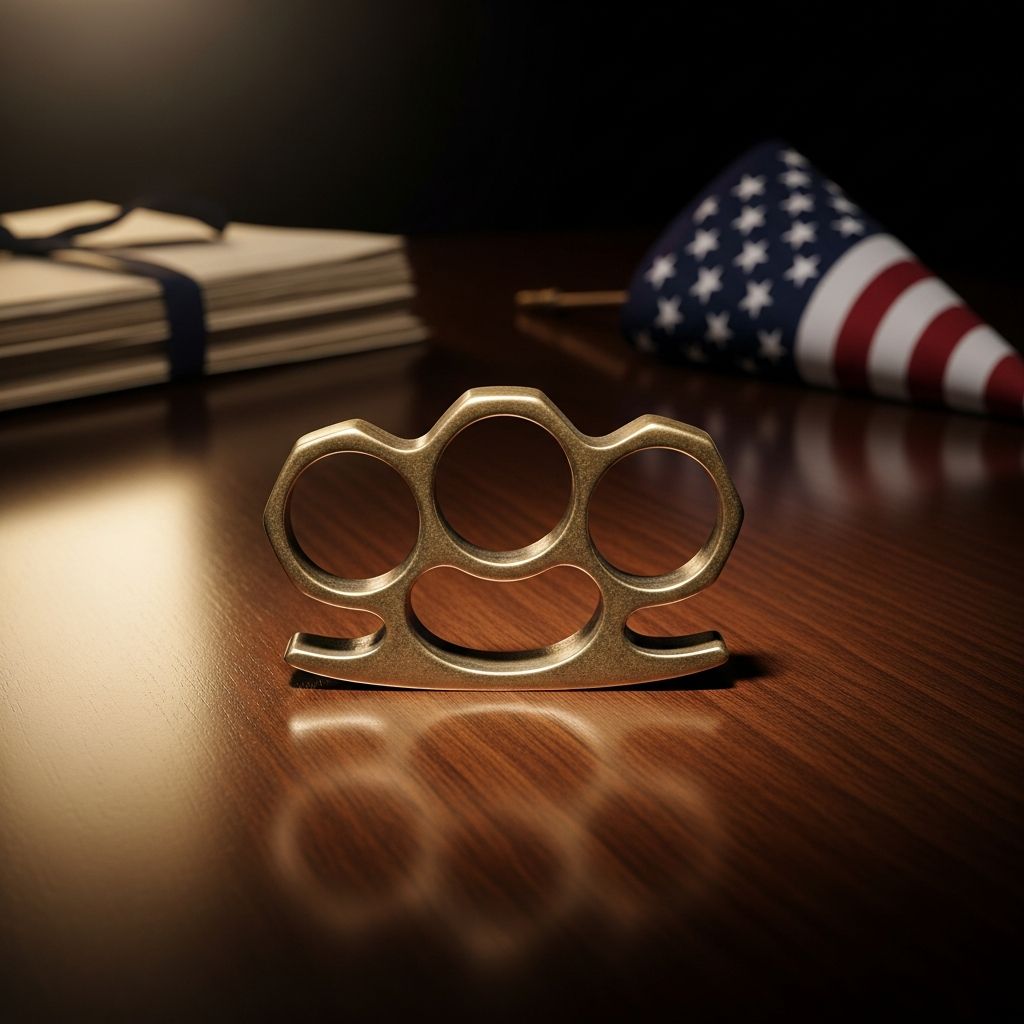
Brass knuckles occupy a legal gray area that surprises many people who buy them as novelty items, collectibles, or self-defense tools. In the United States there is no single nationwide rule. Instead, a patchwork of state and local laws decides whether these devices are legal to own, carry, sell, or use in any given place.
This guide explains how U.S. law typically treats brass knuckles, why they are so heavily regulated, and what legal risks you face if you possess or use them. It is for general information only and is not a substitute for advice from a licensed attorney in your state.
What Are Brass Knuckles?
Brass knuckles are commonly understood as a rigid frame designed to fit around the fingers and rest against the knuckles to increase the force of a punch. They are often made of metal, but many laws also cover similar devices made from hard plastics, composites, or other materials.
- Design: A finger loop or bar structure that slips over the hand.
- Purpose: To concentrate impact and amplify damage during a strike.
- Variants: Keychains, jewelry, and multi-tools that function like brass knuckles, even if marketed differently.
Because they are compact and capable of causing significant injury, lawmakers frequently classify them alongside other dangerous or prohibited weapons.
Why Brass Knuckles Attract Legal Restrictions
Brass knuckles have a long association with street fights, assaults, and gang-related violence. Legislatures and courts often reason that their primary function is offensive rather than defensive, and that they have limited legitimate sporting or recreational use compared with other weapons like firearms or knives. As a result, many states either ban them outright or tightly regulate their possession.
Key reasons lawmakers cite for strict rules include:
- High potential for severe injuries such as broken bones, lacerations, and facial fractures.
- Ease of concealment in pockets, clothing, or as disguised accessories.
- Lack of common lawful uses compared with tools like pocketknives or utility blades.
Federal Law vs. State and Local Rules
There is no general federal statute that specifically bans or regulates brass knuckles in the United States. Instead, most of the relevant rules appear at the state, county, and city levels. However, brass knuckles can still intersect with federal law in some situations, such as when they are mailed or transported across borders.
| Level of law | Typical role regarding brass knuckles |
|---|---|
| Federal | No broad nationwide ban; may apply to import/export or transport in certain contexts (for example, through federal facilities or aircraft). |
| State | Defines whether brass knuckles are legal, restricted, or banned; sets criminal penalties. |
| Local (city/county) | May add extra restrictions such as local bans, park rules, or special ordinances. |
Because these levels overlap, compliance in one jurisdiction does not guarantee you are legal in another. A person driving through multiple states with brass knuckles in their vehicle can move from lawful possession to a criminal offense simply by crossing a state line.
Common Ways States Classify Brass Knuckles
States rarely use identical language, but many adopt one of several recurring approaches when defining brass knuckles under their criminal codes.
1. Total or Near-Total Bans
Some states make it a crime to manufacture, sell, possess, or carry brass knuckles under almost any circumstance. These laws often apply regardless of whether the knuckles are metal or plastic, and they may cover items that merely resemble traditional brass knuckles.
- Possession alone may be enough for a misdemeanor or felony charge.
- Penalties can include fines, jail time, probation, and forfeiture of the device.
- Using brass knuckles during a crime can trigger sentence enhancements or separate charges.
2. Conditional Legality with Permits or Licensing
Other states allow limited possession, often treating brass knuckles as a form of concealed weapon. Individuals may be required to hold a concealed carry license, weapons permit, or similar authorization in order to carry them legally.
- Carrying without the required permit can result in criminal charges.
- Even with a permit, brandishing or using brass knuckles unlawfully can still lead to prosecution.
- Licensing rules and eligibility requirements differ substantially between states.
3. Broad Legality with Narrow Exceptions
A smaller number of states allow adults to possess brass knuckles with relatively few restrictions, sometimes treating them similarly to other defensive tools. Even in those jurisdictions, using them to commit an assault or other offense remains illegal and may be treated more harshly than a simple unarmed fight.
Illustrative Legal Categories
The following table illustrates broad categories that commonly appear in state laws. It is not a substitute for checking the actual statutes in your jurisdiction.
| Category | Typical legal approach | Possible consequences |
|---|---|---|
| Prohibited weapon | Manufacture, sale, or possession usually banned. | Misdemeanor or felony charges; fines and jail or prison time. |
| Dangerous/deadly weapon | Possession may be legal, but carrying concealed or using in a crime is restricted. | Weapon enhancement in sentencing; loss of firearm or weapons rights in some cases. |
| Concealed weapon | Permitted only for those with a valid license, similar to handguns in some states. | Unlicensed carry can be a crime even if the device is never used. |
State-by-State Variations
Because state laws are constantly updated and sometimes conflict with popular online summaries, it is important to use current, official sources such as state statutes or recent court decisions. Research compiled in 2025 shows that states range from complete bans to broad legality.
Typical patterns across the states include:
- Outright bans: Some states make it illegal to own or carry brass knuckles under most circumstances, including if they are disguised as jewelry, keychains, or fashion accessories.
- Permit-based rules: Others allow possession but require a concealed weapons license or similar permit to carry them outside the home.
- Relatively permissive rules: A smaller group of states permits adult possession with fewer restrictions, though assault or other misuse still brings serious penalties.
Even within a single state, major cities may adopt stricter ordinances than surrounding counties, especially in areas with high rates of violent crime. Rules may also differ for minors, individuals with felony convictions, or people subject to protective orders.
Criminal Penalties and Collateral Consequences
Penalties for illegal brass knuckle possession or use vary widely, but several themes recur across state codes.
Criminal Charges
- Misdemeanors: In some states, simple possession or first-time offenses are treated as misdemeanors, punishable by fines, probation, and short jail terms.
- Felonies: Manufacturing, selling, or using brass knuckles in an assault can be charged as a felony, especially when serious injury occurs or other aggravating factors are present.
- Sentence enhancements: Courts may impose additional penalties when a weapon is involved, even if the underlying crime is otherwise non-weapon related.
Beyond Fines and Jail Time
Convictions involving weapons often carry long-term consequences that go beyond the immediate sentence.
- Forfeiture of the brass knuckles and any related weapons.
- Potential loss of the right to possess firearms under state or federal law.
- Criminal record entries that can affect employment, housing, immigration status, and professional licensing.
Because these collateral effects can be severe and long-lasting, individuals facing charges related to brass knuckles should strongly consider speaking with a qualified criminal defense lawyer.
Brass Knuckles and Self-Defense Claims
Many people purchase brass knuckles believing they provide a lawful means of self-protection. However, the fact that a person claims self-defense does not automatically make possession or use of an otherwise prohibited weapon legal.
Key points about self-defense and brass knuckles include:
- Illegal possession remains illegal: If state law bans brass knuckles, arguing that you carried them for self-defense usually does not excuse the possession offense itself.
- Use of force must be reasonable: Even where possession is legal, using brass knuckles can be considered excessive or disproportionate force depending on the circumstances.
- Prosecutorial discretion: Police and prosecutors may be more likely to file charges when a prohibited weapon is involved, even in a chaotic or ambiguous confrontation.
In short, relying on brass knuckles as a primary self-defense tool is legally risky in many jurisdictions. Some state and local governments encourage the use of less-lethal options or formal training in lawful self-defense instead of carrying prohibited or tightly regulated weapons.
Special Considerations for Minors, Travelers, and Collectors
Minors and Age Restrictions
Many states impose additional restrictions on minors, making it unlawful to sell or provide brass knuckles to individuals under a certain age. Violating these provisions may expose sellers, parents, or guardians to criminal liability, especially when the device is later used in a fight or school-related incident.
Travel and Transportation
Travelers who move between states with brass knuckles in their luggage or vehicles face heightened risk because rules differ drastically between jurisdictions.
- Airlines and airport security typically treat brass knuckles as prohibited items that cannot be carried in the cabin, and often not in checked luggage either.
- Entering courthouses, federal buildings, or schools with brass knuckles can trigger additional charges under separate security-related laws.
Collectors and Enthusiasts
Some individuals collect historical or replica brass knuckles for display. Where state law provides no exception for antiques or collectibles, simple possession of these items can still violate the law. Collectors should carefully review their state’s statutes and consider legal alternatives such as inert models that clearly do not function as weapons.
How to Check the Law in Your State
Because online summaries can be incomplete or outdated, the safest approach is to review primary legal sources and, when necessary, obtain professional guidance. Reliable steps include:
- Consulting the official state code or annotated statutes published by the state legislature or a recognized legal publisher.
- Reviewing any relevant attorney general opinions or state supreme court decisions interpreting weapons laws.
- Contacting a licensed criminal defense attorney for tailored advice if you currently own brass knuckles or face charges.
Several public data projects compile up-to-date information about state weapons laws and highlight that brass knuckles are handled very differently between jurisdictions. However, these resources are a starting point, not a replacement for reading the actual law or seeking counsel.
Practical Risk-Management Tips
If you are considering purchasing or currently possess brass knuckles, the following practical measures can help reduce legal risk:
- Verify legality first: Identify whether your state and city treat brass knuckles as prohibited weapons, dangerous weapons, or lawful tools.
- Understand permit requirements: If a license is necessary to carry them, learn the application process and any training or background checks involved.
- Avoid disguised items: Keychains, jewelry, or accessories that function like brass knuckles can be covered by the same laws and may attract additional scrutiny.
- Consider alternatives: Depending on local law, devices such as personal alarms or certain defensive sprays may present fewer legal problems.
- Seek legal advice promptly: If you are arrested or questioned about brass knuckles, contacting an attorney early can help protect your rights.
Frequently Asked Questions About Brass Knuckles Laws
Q: Are brass knuckles legal anywhere in the United States?
A: Yes. Some states allow adults to possess brass knuckles with relatively few restrictions, while others either ban them or require permits. Because laws change, you should consult your current state statutes or a lawyer for up-to-date information.
Q: Can I carry brass knuckles for self-defense if my state allows them?
A: Even in states where possession is legal, you must still comply with any licensing requirements and general self-defense rules. Using brass knuckles in a way that the law considers excessive can still result in criminal charges.
Q: Do plastic or composite knuckles count as brass knuckles under the law?
A: Many statutes cover devices that function like brass knuckles regardless of material, including plastic or composite versions and items shaped like knuckles used as jewelry or accessories.
Q: What if I only keep brass knuckles at home and never carry them?
A: In states that classify brass knuckles as prohibited weapons, simple possession in your home can still be a criminal offense. In other jurisdictions, home possession may be legal while public carry is restricted. The answer depends entirely on local law.
Q: Should I talk to a lawyer if I am charged with possessing brass knuckles?
A: Yes. Weapons charges can carry significant penalties and lasting consequences. A licensed criminal defense attorney can review the statute, examine the facts, and advise you about defenses, plea options, or eligibility for diversion programs.
References
- Brass Knuckles Legality by State 2025 — World Population Review. 2025-01-10. https://worldpopulationreview.com/state-rankings/brass-knuckles-legality-by-state
- Brass Knuckles Legality By State 2025 — Data Pandas. 2025-02-03. https://www.datapandas.org/ranking/brass-knuckles-legality-by-state
- The Legal Implications of Brass Knuckles — Stunster. 2023-06-15. https://www.stunster.com/blog/the-legal-implications-of-brass-knuckles/
- Is It Legal to Use Brass Knuckles in Self Defense? — Crate Club. 2023-08-21. https://crateclub.com/blogs/loadout/is-it-legal-to-use-brass-knuckles-in-self-defense
- Are Brass Knuckles Illegal? U.S. Laws, Penalties, and Legal Consequences — Spodek Law Group. 2024-04-11. https://www.federallawyers.com/criminal-defense/brass-knuckles-are-illegal/
- Brass Knuckles: Legal or Illegal? A State-by-State Breakdown — Swordsswords Blog. 2023-09-05. https://swordsswords.com/blog/brass-knuckles-legal-or-illegal-a-state-by-state-breakdown/
Similar Articles








Read full bio of medha deb


