
Boating Under the Influence: Laws, Risks, and Consequences
Understand how boating under the influence laws work, the dangers involved, and the penalties you can face on state and federal waters.
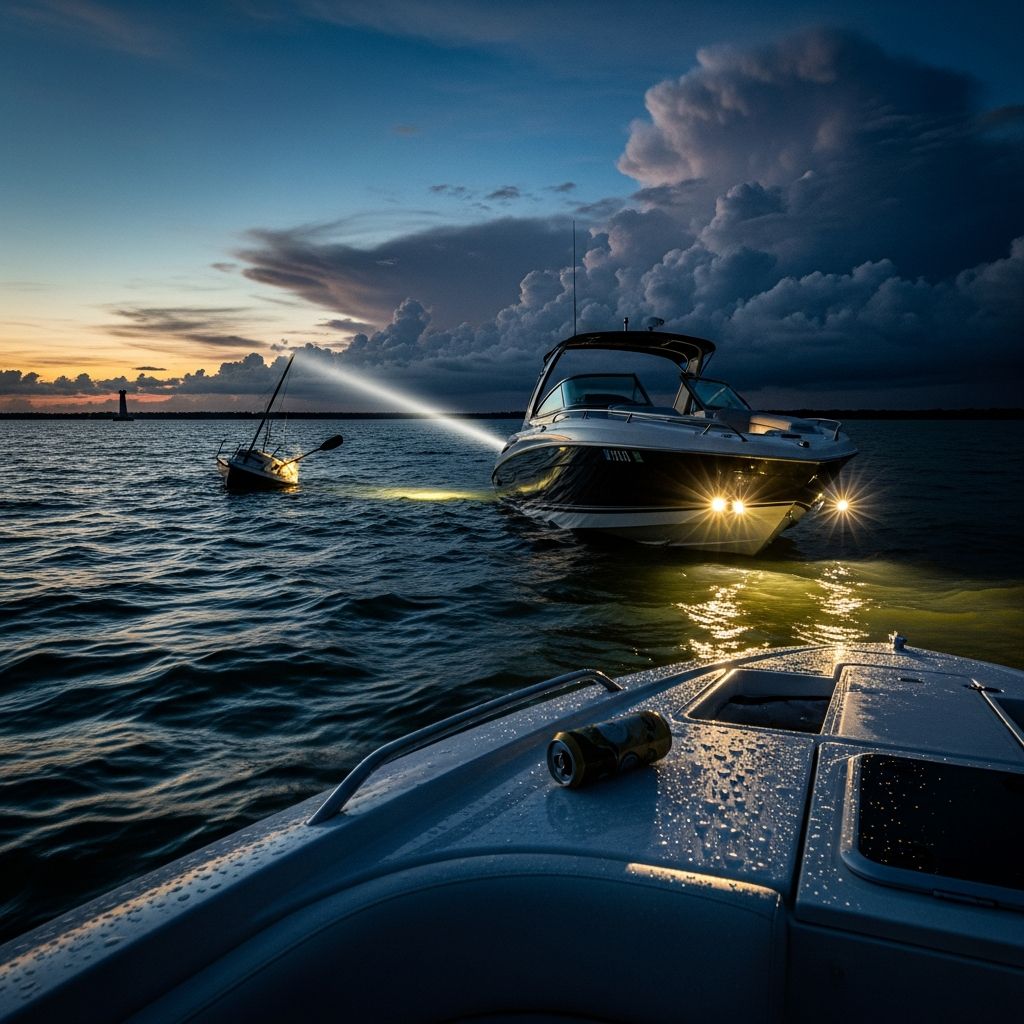
Boating is often associated with relaxation, sunshine, and social gatherings, but mixing alcohol or drugs with boat operation can quickly turn a pleasant day on the water into a criminal case or a serious tragedy. In the United States, boating under the influence (BUI) is treated much like driving under the influence on the road, with strict limits, aggressive enforcement, and potentially severe penalties.
This guide explains how BUI laws generally work, what counts as impairment, how officers enforce those laws, and the kinds of penalties and long-term consequences an offender may face.
What Is Boating Under the Influence?
Boating under the influence typically refers to operating a watercraft while impaired by alcohol, illegal drugs, or even certain prescription medications that affect safe operation. These laws apply to many types of vessels, including:
- Motorboats and personal watercraft (such as jet skis)
- Sailboats with auxiliary engines
- Fishing boats and cabin cruisers
- In many states, other powered vessels capable of transporting people
Most states define impairment for BUI in a way that is similar to their DUI standards on land, often using a blood alcohol concentration (BAC) limit of 0.08% for adult recreational operators. Some jurisdictions impose stricter limits for commercial operators or specific high-risk waterways.
How Alcohol Affects Boaters
Alcohol is involved in a significant proportion of serious boating accidents and fatalities in the United States, and federal officials consistently identify alcohol use as a leading contributing factor in recreational boating deaths. The boating environment amplifies the effects of alcohol due to:
- Sun and heat exposure, which can accelerate dehydration and fatigue
- Wind and engine noise, which increase sensory overload and stress
- Motion and vibration from waves and wakes, which affect balance and coordination
- Glare off the water, which reduces visual clarity and depth perception
These stressors can cause a sober boater to tire more quickly and react more slowly; combined with alcohol or drugs they may significantly erode judgment, balance, and reaction time.
| Ability | Effect of Alcohol on the Water |
|---|---|
| Judgment & decision-making | Higher likelihood of risk-taking, speed, and ignoring navigation rules |
| Balance & coordination | Increased chance of falls overboard or missteps on a moving deck |
| Vision & depth perception | Difficulty spotting other boats, swimmers, or hazards in time |
| Reaction time | Slower responses to sudden wakes, weather changes, or emergencies |
| Cold water survival | Reduced ability to swim, self-rescue, or climb back on board |
Key Legal Standards in BUI Cases
Because boating rules are a mix of state and federal law, the precise standards vary by location. However, several recurring concepts appear across many jurisdictions.
Blood Alcohol Concentration Limits
In most states, it is unlawful to operate a recreational vessel with a BAC of 0.08% or higher. Many laws also allow a prosecution where the operator is impaired, even if the BAC is measured below 0.08% or the person refuses testing.
- Recreational operators: Commonly subject to 0.08% BAC limits.
- Commercial operators: Often face lower thresholds, such as 0.04% BAC.
- Underage operators: Some states apply “zero tolerance” or very low BAC limits.
“Per Se” BUI vs. Impairment-Based BUI
Many statutes create two parallel ways to prove a violation:
- Per se BUI: Boating with BAC at or above the legal limit, regardless of visible signs of impairment.
- Impairment-based BUI: Operating while affected by drugs or alcohol to the extent that safe operation is diminished, even below the numerical limit or when a test is refused.
Federal vs. State Jurisdiction
The U.S. Coast Guard enforces federal BUI laws on federally controlled waters, and states enforce their own statutes on waters within their jurisdiction.
- Federal law: Operating a vessel while intoxicated on U.S. waters is a federal offense, and penalties can include civil fines, criminal fines up to several thousand dollars, and possible imprisonment.
- State law: States typically mirror DUI laws, with criminal penalties, suspensions of boating privileges, mandatory safety courses, and other sanctions.
How BUI Laws Are Enforced
Both state marine units and the U.S. Coast Guard actively patrol busy waterways and popular recreation areas. Officers may stop a vessel for a visible violation or conduct safety inspections and then investigate further if impairment is suspected.
Typical Signs That Trigger a Stop
Boating officers are trained to look for signs of unsafe or erratic operation such as:
- Weaving, abrupt course changes, or operating too close to other vessels
- Excessive speed in no-wake zones or at night
- Ignoring navigation rules, buoys, or markers
- Passengers riding on unsafe parts of the boat
On-Water Investigation
Once a vessel is stopped, officers may evaluate the operator for signs of impairment, which can include:
- Slurred speech or difficulty answering questions
- Difficulty maintaining balance on deck
- Odor of alcohol or visible open containers near the helm
- Inconsistent or confused responses about location or safety equipment
Depending on the jurisdiction, officers may administer field sobriety tests adapted for the marine environment, collect breath samples using a preliminary device, or transport the operator ashore for an evidentiary breath or blood test.
Possible Criminal and Administrative Penalties
Penalties for BUI vary widely by state and by the circumstances of the incident, but they can be severe, especially when injuries, fatalities, or prior convictions are involved.
Typical Sanctions for a BUI Conviction
- Fines: State fines can start in the hundreds of dollars and climb into the thousands, especially for repeat offenses.
- Jail time: Even first-time offenders may face jail, and federal law allows for imprisonment in serious cases.
- Loss of boating privileges: Many states suspend or revoke the right to operate a vessel, sometimes for a year or more, with longer suspensions for repeat violations.
- Mandatory education or treatment: Courts frequently require completion of a boating safety course, substance abuse education, counseling, or assessment.
- Probation and community service: Some offenders must complete community service, pay supervision fees, or comply with strict probation terms.
Enhanced Penalties for Aggravating Factors
In many jurisdictions, penalties escalate sharply when aggravating circumstances are present, such as:
- Prior BUI or DUI convictions within a specified time frame
- Very high BAC levels well above the legal limit
- Accidents that cause serious injury or death to another person
- Operating in restricted areas or at extreme speeds
- Having underage passengers on board
Where intoxicated operation leads to serious bodily harm or death, some laws authorize felony-level penalties and multi-year prison sentences.
Collateral Consequences Beyond the Courtroom
A BUI case does not end when fines are paid or a jail term is completed. The conviction can create ripple effects that touch other areas of life.
- Insurance implications: Insurers may raise boat or auto premiums, cancel certain coverage, or treat a BUI similarly to a DUI for rating purposes.
- Driving record cross-over: Some states allow boating convictions to influence a person’s driving status; others treat boating separately, but impaired driving and boating offenses may still count as priors for sentencing.
- Professional impact: People with commercial maritime roles or professional licenses may face employer discipline, licensing investigations, or difficulty advancing in their careers.
- Travel and immigration issues: In some cases, foreign travel or immigration applications can be complicated by a history of alcohol-related offenses.
Using Alcohol Safely Around Boats
Law enforcement agencies and safety organizations encourage boaters to treat alcohol with extra caution in the marine environment. Some recommended strategies include:
- Designate a sober operator: Choose a person who remains alcohol- and drug-free for the entire time they are responsible for the vessel.
- Delay alcohol consumption: Save drinking for after the boat is secured at the dock or on the trailer.
- Hydrate and rest: Drink water frequently and take breaks from sun and heat to reduce fatigue and dehydration.
- Watch your passengers: Impaired passengers can fall overboard, misjudge depth when swimming, or interfere with the operator’s ability to respond to hazards.
- Limit nighttime operations: Darkness, glare, and fatigue already make navigation more difficult; alcohol adds unnecessary risk.
When to Seek Legal Help
Anyone arrested or cited for boating under the influence should understand that BUI is usually a criminal offense with lasting consequences. Because each state uses slightly different definitions, procedures, and penalty ranges, the assistance of a local attorney experienced in DUI and BUI law can be important.
An attorney may help by:
- Explaining the specific charges and potential penalties in that state
- Reviewing whether the stop, investigation, and testing procedures complied with local and constitutional standards
- Negotiating with prosecutors for reduced charges, alternative sentencing, or treatment-focused dispositions when appropriate
- Advising on collateral issues, such as boating privilege suspensions and interactions with prior DUI or BUI convictions
Frequently Asked Questions About Boating Under the Influence
Q: Is the legal alcohol limit for boating always 0.08% BAC?
A: No. Many states use 0.08% BAC for recreational operators, but commercial operators may face lower limits such as 0.04%, and some jurisdictions have special rules for underage operators or particular waters.
Q: Can I be arrested for BUI if my BAC is below the limit?
A: Yes. In many jurisdictions, prosecutors can prove a BUI by showing that alcohol or drugs impaired your ability to operate safely, even if your measured BAC is below the statutory limit or you declined testing.
Q: Does a BUI affect my driver’s license?
A: It depends on the state. Some states link boating and driving records, while others mainly restrict boating privileges. However, prior DUI and BUI convictions often interact for sentencing purposes, even when licensing systems are separate.
Q: Who enforces BUI laws on the water?
A: Enforcement is shared. The U.S. Coast Guard enforces federal laws on navigable waters, while state and local marine units enforce state BUI statutes on lakes, rivers, and coastal areas. They often cooperate through joint patrols and shared operations.
Q: Are passengers allowed to drink alcohol on a boat?
A: In many states, adults may legally consume alcohol as passengers, but the operator is still subject to BUI laws. Even when legal, heavy drinking on board increases overall safety risks, including falls overboard and poor decision-making in emergencies.
References
- Penalties for Boating Under the Influence — Boat Ed / U.S. Coast Guard Auxiliary. 2023-01-01. https://www.boat-ed.com/paddlesports/paddlesports/studyGuide/Penalties-for-Boating-Under-the-Influence/11109901_52148/
- New York’s Boating Under the Influence (BUI) Laws and Penalties — Nolo / DUIDrivingLaws.org. 2022-08-15. https://dui.drivinglaws.org/resources/new-york-boating-under-the-influence.html
- Boating Under the Influence: Laws and Penalties — DUI.org. 2023-06-10. https://www.dui.org/resources-and-articles/boating-under-the-influence-laws-penalties/
- Boating Under the Influence (BUI) Initiatives — U.S. Coast Guard Boating Safety Division. 2021-07-01. https://www.uscgboating.org/recreational-boaters/boating-under-the-influence.php
- Boating and Alcohol in the USA — BOATsmart! USA. 2022-05-20. https://www.boatsmartexam.com/knowledge-base/article/boating-and-alcohol-in-the-usa/
- Alcohol and Boating — BoatUS Foundation for Boating Safety & Clean Water. 2022-03-30. https://www.boatus.org/alcohol-and-boating
- Boating and Alcohol in the USA: Penalties for Serious Injury or Death — BOATsmart! USA. 2022-05-20. https://www.boatsmartexam.com/knowledge-base/article/boating-and-alcohol-in-the-usa/
Similar Articles








Read full bio of medha deb


