
Trustees vs Directors: Key Governance Roles
Unravel the distinctions between boards of trustees and directors in nonprofits, corporations, and trusts for effective governance.
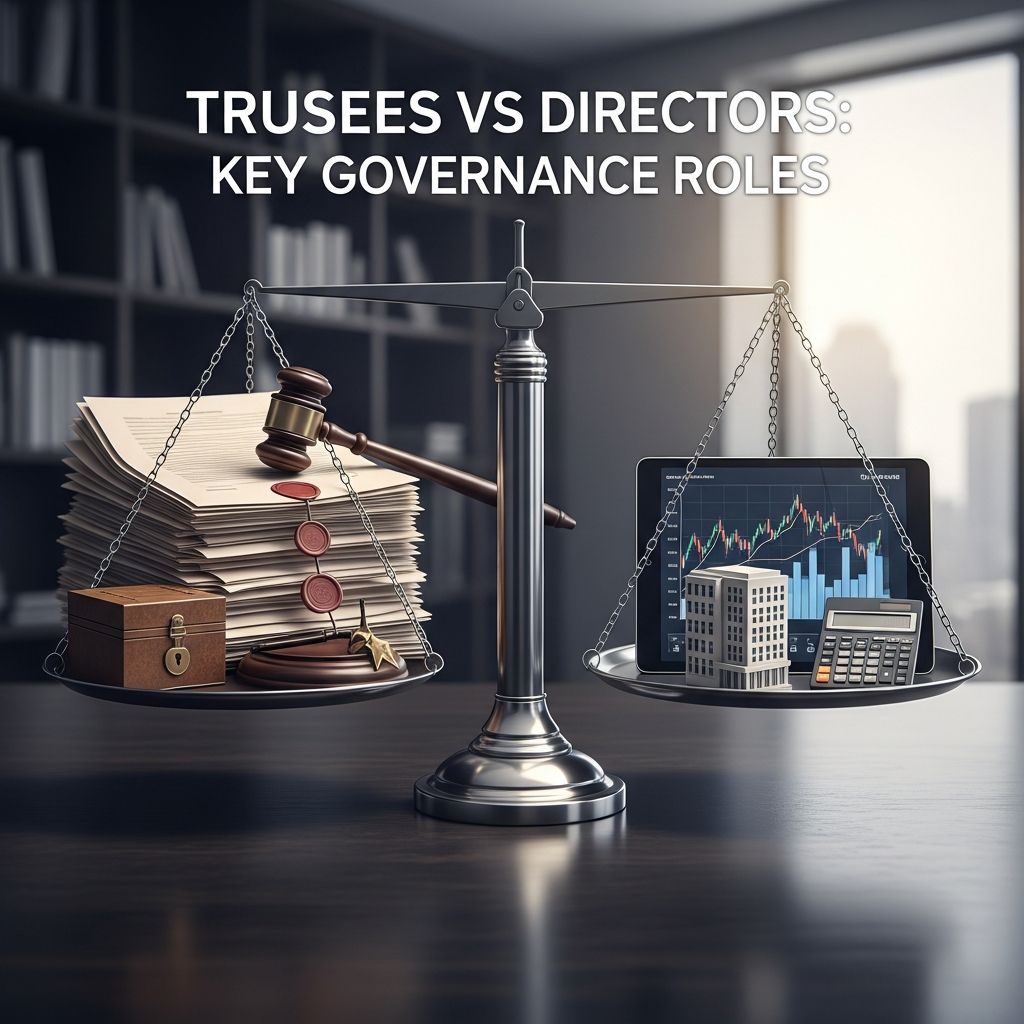
Governing bodies like boards of trustees and boards of directors play pivotal roles in steering organizations toward success, yet their functions, legal frameworks, and operational scopes differ significantly based on the entity’s structure.
Defining the Foundations of Oversight Bodies
Organizational governance relies on structured leadership groups that ensure accountability, strategic alignment, and resource stewardship. A
board of trustees
typically oversees entities designed for public benefit, such as charitable foundations, universities, hospitals, or religious institutions, focusing on mission preservation and asset protection. In contrast, aboard of directors
manages for-profit corporations, public companies, or certain nonprofits, prioritizing stakeholder value, profitability, and operational efficiency.These distinctions arise from foundational legal setups: trustees operate under trust laws emphasizing beneficiary interests, while directors function within corporate statutes geared toward shareholder or member benefits. Understanding these basics helps leaders select the appropriate model for their organization’s goals.
Core Responsibilities and Daily Functions
Both groups share oversight duties, but their emphases diverge. Trustees emphasize long-term mission integrity, advising on finances while safeguarding endowments and ensuring compliance with charitable mandates. Directors, however, drive decision-making, from CEO selection to policy formulation and risk assessment.
- Trustee Priorities: Mission upholding, donor relations, asset management, and ethical compliance.
- Director Priorities: Strategic planning, executive evaluation, financial oversight, and growth initiatives.
Trustees often serve in advisory capacities, deferring final calls to executives, whereas directors hold direct authority over major decisions. This advisory stance for trustees fosters collaborative leadership in mission-driven settings.
Legal Frameworks and Fiduciary Standards
Trustees face stringent standards under state trust laws, liable for negligence beyond mere willful acts, such as suboptimal investments. Directors, governed by corporate laws, typically face liability only for gross misconduct, offering relatively more protection.
Fiduciary duties—care, loyalty, and obedience—apply universally, but trustees’ heighten for public-serving entities. Nonprofits may interchangeably use terms, yet legal nuances persist.
Compensation Structures and Volunteer Commitment
Trustees predominantly volunteer, forgoing salaries to maintain impartiality, though stipends or reimbursements occur in some cases. Corporate directors often receive compensation, including stock options, aligning incentives with performance.
| Aspect | Board of Trustees | Board of Directors |
|---|---|---|
| Compensation | Usually volunteer; occasional stipends | Often paid, with equity stakes |
| Service Basis | Volunteer-driven | Professional, potentially remunerated |
| Motivation | Mission and public good | Stakeholder returns and profits |
Organizational Contexts and Ideal Applications
Trustees suit nonprofits, endowments, and public institutions where mission trumps profit. Directors fit corporations aiming for revenue maximization. Hybrids exist in nonprofits with director-led boards.
- Nonprofits/Charities: Trustees for trust-like oversight.
- For-Profits: Directors for shareholder representation.
- Hospitals/Universities: Trustees for community focus.
Composition, Selection, and Key Positions
Boards range from 3-31 members, elected or appointed via bylaws. Common roles include:
- Chairperson: Leads meetings, sets agendas.
- Secretary: Manages records and communications.
- Treasurer: Oversees finances.
- General Members: Contribute expertise and votes.
Trustees prioritize financial/legal acumen; directors seek industry leaders. Committees—finance, governance, fundraising—aid efficiency.
Strategic Contributions to Long-Term Success
Trustees craft visions aligning with public benefit, managing risks and policies. Directors analyze markets, set budgets, and evaluate leadership. Both foster ethical cultures and compliance.
Effective boards meet regularly, leveraging software for governance. Independence and engagement enhance performance.
Navigating Challenges and Best Practices
Common hurdles include role confusion and liability risks. Best practices: Clear bylaws, training, and D&O insurance. Regular evaluations ensure alignment.
- Define scopes explicitly.
- Promote diversity for robust input.
- Use tech for secure collaboration.
Frequently Asked Questions
Can a board of trustees make binding decisions?
Typically advisory, but authority varies by bylaws; they focus on mission oversight rather than daily operations.
Are trustees always unpaid?
Mostly volunteers, but compensation policies differ by organization.
What laws regulate these boards?
Trustees follow trust laws; directors adhere to corporate statutes, with state variations.
Can nonprofits use ‘directors’ instead of ‘trustees’?
Yes, terms are often interchangeable, but legal contexts matter.
How do boards handle conflicts of interest?
Both enforce loyalty duties, recusing members from biased decisions.
References
- The Role of the Board of Trustees vs. the Board of Directors — BoardEffect. 2023-05-15. https://www.boardeffect.com/blog/role-board-trustees-vs-board-directors/
- What Is a Board of Trustees? — iBabs. 2024-02-10. https://www.ibabs.com/en/glossary/board-of-trustees/
- Board of Directors vs. Board of Trustees: What’s the Difference? — OnBoard Meetings. 2023-11-20. https://www.onboardmeetings.com/blog/difference-board-of-directors-board-of-trustees/
- Board of Trustees vs Board of Directors: Differences — Azeus Convene. 2024-01-05. https://www.azeusconvene.com/articles/board-of-trustees-vs-board-of-directors
- Key differences between a board of trustees and a board of directors — Aprio Board Portal. 2023-08-12. https://aprioboardportal.com/news/key-differences-between-a-board-of-trustees-and-a-board-of-directors/
- What is a Board of Trustees (Versus a Board of Directors)? — Nolo. 2023-07-18. https://www.nolo.com/legal-encyclopedia/what-is-a-board-of-trustees-versus-a-board-of-directors.html
Similar Articles








Read full bio of medha deb


