
Blocked Driveways and Neighborhood Parking Rules
Learn how the law treats blocked driveways, what you can do when access is obstructed, and practical ways to avoid neighbor parking disputes.
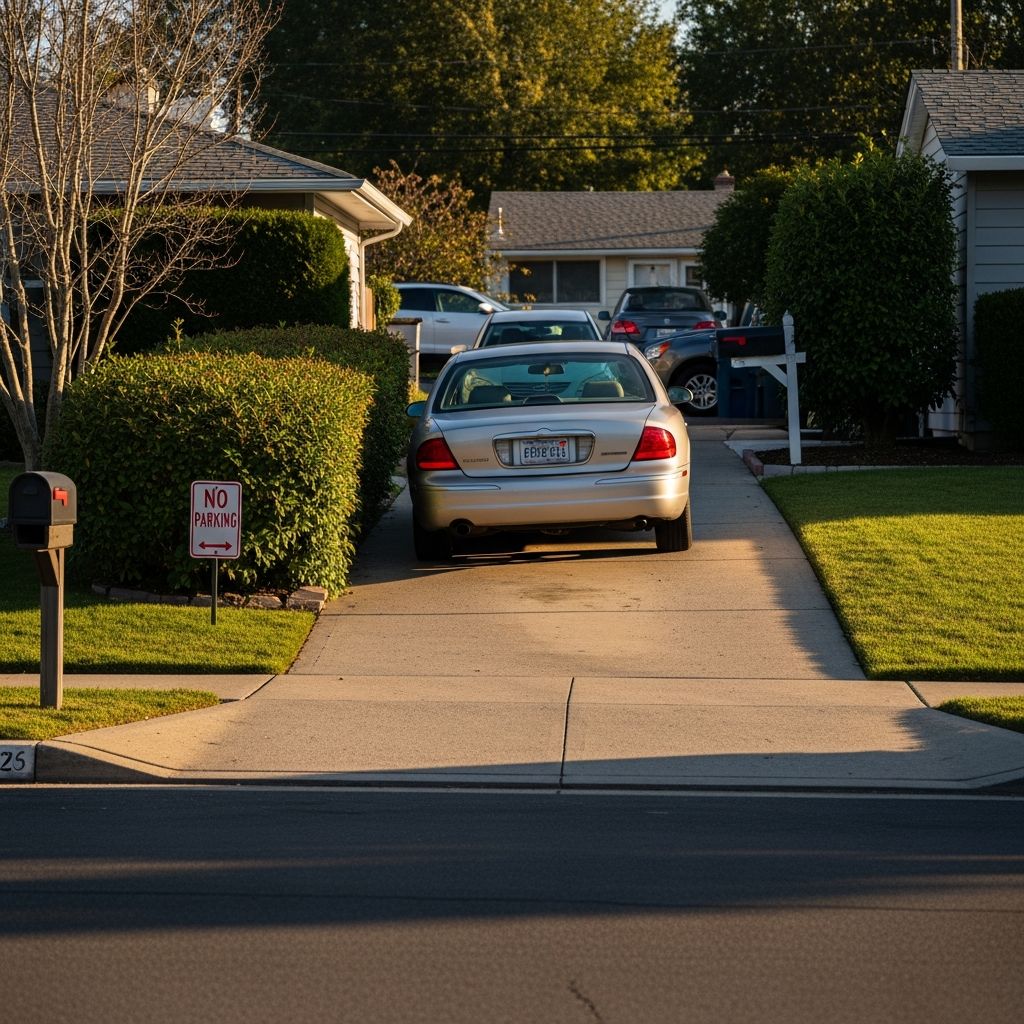
Few neighborhood issues escalate as quickly as a blocked driveway. Whether it is a visiting contractor, a delivery driver, or a neighbor who habitually parks too close, obstructed access can interfere with your daily life and, in some cases, create safety risks. This guide explains how laws typically treat blocked driveways, what you can do when your access is obstructed, and how to prevent disputes before they sour relations on your street.
1. Why Driveway Access Matters Under the Law
Most legal systems view the ability to move vehicles safely on and off private property as more than mere convenience. It is often treated as an issue of public safety and property rights.
- Emergency access: Fire trucks, police, and ambulances need clear streets and unobstructed curb cuts to reach homes quickly.
- Safe entry and exit: Drivers must be able to see oncoming traffic and pedestrians when leaving a driveway, which is harder if other vehicles are blocking sightlines.
- Use and enjoyment of property: Property law generally protects your right to reasonably use and access your land, including driveways and garage entrances.
Because of these concerns, many local traffic and parking codes explicitly prohibit blocking residential driveways, even if the car’s owner is the property owner.
2. Key Legal Concepts: Public Street vs. Private Driveway
How the law applies often depends on where the obstructing vehicle is located.
| Location of Vehicle | Typical Legal Characterization | Common Enforcement Approach |
|---|---|---|
| On your private driveway | Possible trespass on private property; may also violate local parking rules. | Police may treat it as a civil matter unless safety is at risk; towing rights often depend on state or local law. |
| On the public street, blocking your curb cut | Usually a parking violation under traffic or municipal code. | Parking enforcement or police can ticket and may tow, often after a complaint. |
| Partially on sidewalk or crosswalk near driveway | Often a separate infraction (blocking sidewalk or pedestrian right-of-way). | Higher fines and quicker enforcement in many cities, especially where pedestrian safety is prioritized. |
Because rules vary widely, local ordinances and state vehicle codes are usually the controlling authority. Many municipalities publish their parking rules in online municipal codes or traffic department guidance.
3. When Blocking a Driveway Is Illegal
Although details differ by jurisdiction, some patterns are common.
3.1 Typical Prohibitions in Local Codes
In many cities, it is an offense to stop, stand, or park a vehicle:
- In front of a public or private driveway or garage entrance.
- Within a specified distance of a curb cut (for example, a certain number of feet or meters) if it impedes entry or exit.
- So that any part of the vehicle blocks a sidewalk, crosswalk, or pedestrian ramp, even if the driveway itself remains partly usable.
Authorities can usually issue a ticket for these violations, and in some areas repeated or dangerous violations may lead to towing and impound at the owner’s expense.
3.2 Trespass and Nuisance on Private Property
When someone actually parks on your private driveway without permission, the issue may go beyond parking rules and into property law:
- Trespass: Parking on private land without consent can qualify as trespass in many jurisdictions, giving owners a potential civil claim for damages.
- Nuisance: Repeated obstruction that interferes with normal use of property may support a nuisance claim in some circumstances.
However, police often treat this as a low-priority civil matter unless there is an immediate safety concern, meaning homeowners may have to pursue private remedies or court orders for recurring problems.
4. Your Rights as a Homeowner or Tenant
If you lawfully use a driveway—as an owner or a tenant—you typically have a right to reasonable, unobstructed access. That right is enforced in different ways, depending on where the obstruction occurs.
4.1 Access Rights to Your Driveway
In many jurisdictions, homeowners or lawful occupants are entitled to:
- Enter and exit their property using their driveway at all reasonable times.
- Expect that other drivers on public streets comply with local parking codes and do not block curb cuts.
- Seek enforcement by local authorities when access is illegally obstructed.
In some U.S. states, codes explicitly state that blocking a private driveway from the street is a violation, regardless of whether the homeowner is currently trying to leave.
4.2 Responsibilities That Come With Those Rights
Property rights are usually balanced with duties toward neighbors and the public. Homeowners often have responsibilities such as:
- Keeping the driveway entrance reasonably visible (for example, trimming vegetation and maintaining clear curb lines).
- Ensuring that their own parking does not block sidewalks, bike lanes, or neighboring driveways.
- Posting lawful signage where required before arranging private towing on certain properties (especially commercial lots).
Ignoring these responsibilities can weaken your position if a dispute escalates, and may itself lead to citations or fines.
5. What You Can Do When Someone Blocks Your Driveway
When you walk outside and find your driveway blocked, it is tempting to react emotionally. A structured approach reduces risk and improves the chance of a quick, lawful resolution.
5.1 Immediate, Low-Conflict Steps
- Stay calm and assess safety: If a person in distress or an emergency vehicle is clearly involved, call emergency services first.
- Look for the driver: If the car appears to belong to a known neighbor or visitor, a polite conversation is usually the fastest solution.
- Leave a written note: A non-confrontational note on the windshield explaining how the car blocked your access can be effective, especially for delivery or service vehicles that may not realize the impact.
5.2 Document the Obstruction
If the issue is serious or recurring, documentation helps authorities and can be important if a civil dispute follows.
- Take clear photos or video showing the vehicle, license plate, and how it blocks the driveway or sidewalk.
- Record the date, time, and approximate duration of the obstruction.
- Note any conversations with the driver or neighbors about the incident.
Many police departments and local parking agencies recommend documentation because it clarifies what happened and can show a pattern of repeated conduct.
5.3 Contacting Local Authorities
If the driver is unavailable or refuses to move, your next step usually involves local enforcement.
- Non-emergency police or parking enforcement: In many U.S. cities, blocking a driveway from the street is a ticketable offense, and officers may tow the vehicle if necessary.
- Municipal complaint channels: Some cities encourage residents to report parking violations through dedicated phone lines or smartphone apps, which route issues to parking enforcement rather than police.
- Explain the impact: When calling, clearly describe that your driveway is blocked and you cannot safely enter or exit with your vehicle, and provide your documentation when asked.
Response times vary with call volume and the seriousness of other incidents in the area. In lower-crime or high-density neighborhoods, some departments may be more responsive to parking complaints.
6. Towing and Self-Help: What You Can and Cannot Do
Towing is one of the most misunderstood aspects of driveway disputes. Acting without understanding local rules can expose you to liability.
6.1 Towing from Private Driveways
Some jurisdictions allow property owners to arrange towing of unauthorized vehicles from residential driveways, while others impose strict requirements or limit this right to commercial properties.
- In parts of the United States, state law lets a residential owner call a licensed tow company immediately when a car blocks their driveway entrance, particularly if the car is fully on private property.
- Commercial lots often must post clear signage describing parking rules and warning that unauthorized vehicles will be towed at the owner’s expense, with citation to the relevant statute.
- Without required signage—or where the law does not clearly authorize private towing—calling a tow truck on your own may risk claims of wrongful towing or property damage.
Because rules differ greatly, it is prudent to review your state’s vehicle code or speak with local law enforcement or an attorney before authorizing a tow, especially if this is a recurring issue rather than a one-time emergency.
6.2 Why You Should Avoid Illegal “Self-Help”
Frustrated owners sometimes consider blocking the offending car in, attaching chains, or even damaging the vehicle. These responses are risky.
- Intentionally damaging a vehicle is generally a criminal offense and may also expose you to civil liability for repairs and related losses.
- Blocking a vehicle on a public street can itself violate traffic and parking rules, even if you are responding to someone else’s misconduct.
- Attempting to move a car without permission (for example, by pushing it with another vehicle) can lead to damage and liability.
In most cases, working through formal enforcement channels and, if necessary, pursuing a civil claim is safer than taking matters entirely into your own hands.
7. Preventing Parking Disputes Before They Start
Many blocked-driveway conflicts can be avoided with proactive steps. Prevention is often easier than enforcement.
7.1 Communication and Neighbor Agreements
Informal understandings with neighbors can be highly effective:
- Discuss parking needs and patterns, including visitors and large events.
- Agree on basic rules, such as not parking within a certain distance of each other’s driveways.
- Share contact information so a quick text or call can resolve accidental blockages.
Local housing and planning agencies sometimes encourage residents to resolve minor parking disagreements amicably to reduce the load on enforcement bodies and courts.
7.2 Physical and Visual Measures
Non-confrontational physical and visual cues can discourage improper parking around your driveway:
- Use clear, lawful signage reminding drivers not to block your driveway entrance (where permitted by local rules).
- Maintain bright curb paint or clear demarcation where allowed; some cities authorize special markings at driveways to indicate no-parking zones.
- Improve lighting so the driveway entrance is clearly visible at night, making accidental obstruction less likely.
If parking misuse is chronic, some private property owners install driveway barriers or bollards on their land, provided these comply with building and traffic regulations.
8. When to Consult a Lawyer
Occasional blocked driveways are usually handled through informal resolution or local enforcement. Legal advice becomes more important when:
- A neighbor repeatedly blocks your driveway despite warnings and citations.
- The conduct appears targeted or retaliatory, raising harassment concerns.
- Towing or other enforcement has led to disputes over damage or costs.
- Shared driveways or easements are involved and the language of deeds or leases is unclear.
A lawyer familiar with local property and traffic law can evaluate whether claims for trespass, nuisance, or injunctive relief (a court order requiring certain behavior) are appropriate, and can advise on evidence and negotiation strategies.
9. Frequently Asked Questions (FAQs)
Q1: Is it always illegal to park in front of someone else’s driveway?
In many cities, parking so that any part of your vehicle blocks a driveway curb cut is a parking violation, even if the property owner is not currently using the driveway. However, specific rules and distances vary, so you should check your local traffic code.
Q2: Can my car be ticketed for blocking my own driveway?
Yes, in some jurisdictions blocking any driveway from the public street is prohibited, even if you own the property, because the rule is aimed at maintaining clear public rights-of-way and emergency access.
Q3: If someone parks on my private driveway without permission, can I tow them immediately?
Some state laws allow immediate towing from residential property, while others require certain signage, waiting periods, or police authorization, especially for commercial properties. You should review your state’s vehicle code or contact local law enforcement before arranging a tow.
Q4: What if the police say it is a “civil matter”?
Police may decline involvement if they view the situation as primarily a property dispute, especially when the car is on private land and no safety risk is apparent. In that case you may need to pursue civil remedies, work with your local parking authority, or seek legal advice.
Q5: Can I block a car in my driveway to keep the driver from leaving?
Blocking another car, particularly on a public street, can itself violate parking and obstruction rules and may escalate conflict. It may also raise legal concerns if the driver feels restrained from leaving. Calling enforcement or towing services within the law is usually safer than physically trapping a vehicle.
References
- What Can I Do If Someone Blocks My Driveway? – Full Guide — Parklio. 2023-04-18. https://parklio.com/en/blog/what-can-i-do-if-someone-blocks-my-driveway
- Blocking Private Driveway Laws: What Your Neighbors Should Know — Camera Source. 2022-08-30. https://www.camerasource.com/industry-news/blocking-private-driveway-laws-what-your-neighbors-should-know/
- What to Do If a Car Is Blocking Your Driveway — Deep Sentinel. 2023-07-12. https://www.deepsentinel.com/blogs/home-security/car-blocking-driveway/
- Can You Tow a Car Blocking Your Driveway in California? — Saar Shani Towing. 2023-01-05. https://www.saarshanitowing.com/post/can-you-tow-a-car-blocking-your-driveway-in-california
Similar Articles








Read full bio of Sneha Tete


