
Bicycle Stop Sign Laws: Rolling Through or Stopping?
Exploring the debate on whether cyclists should be permitted to roll through stop signs.
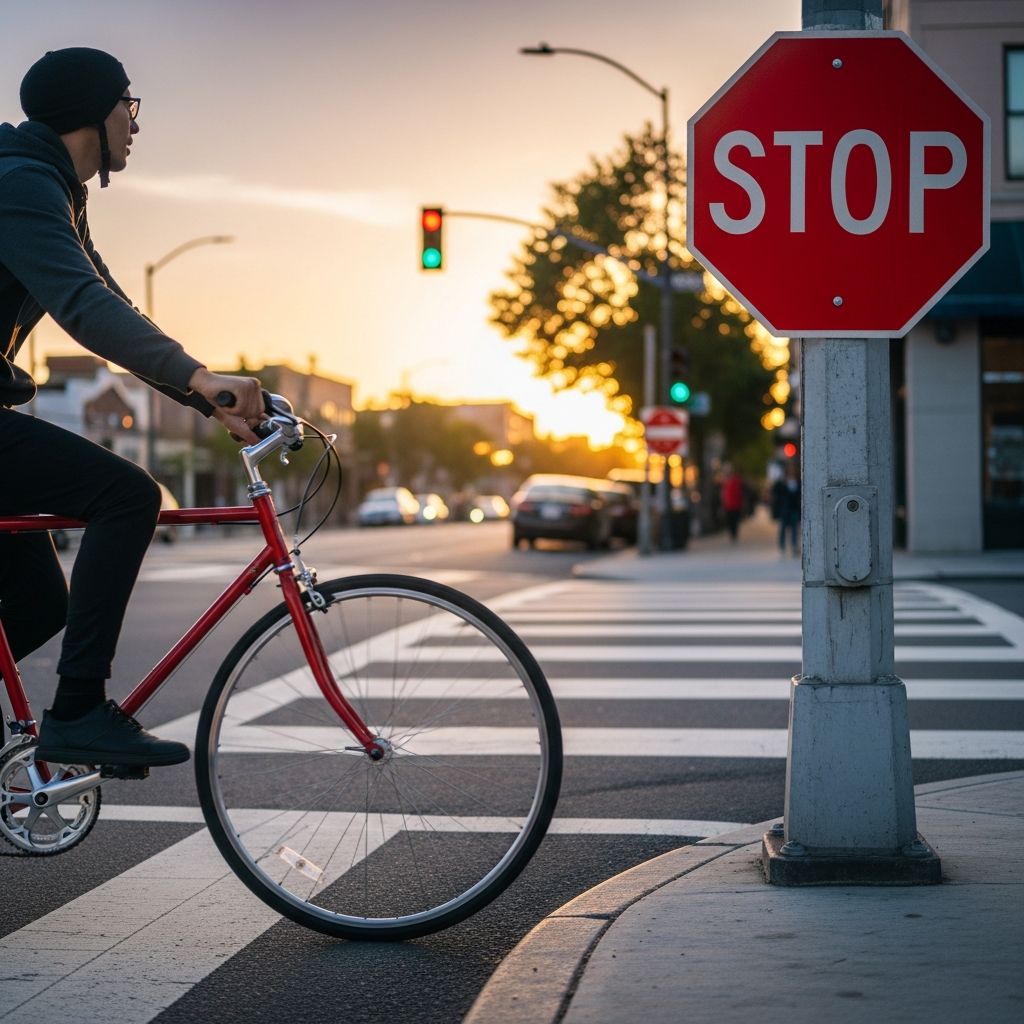
Traffic laws have traditionally applied uniformly across all vehicles sharing public roadways, including automobiles, motorcycles, and bicycles. However, the question of whether cyclists should operate under different rules—particularly regarding stop signs—has become increasingly prominent in transportation policy discussions. The fundamental tension lies between maintaining consistent traffic flow and safety protocols while acknowledging the unique operational characteristics of bicycles. This analysis examines the existing legal frameworks, explores jurisdictional variations, and evaluates the arguments both for and against permitting cyclists to proceed through stop signs without coming to a complete halt.
The Foundation of Stop Sign Requirements for All Vehicles
Historically, traffic control devices like stop signs were designed with motor vehicles in mind. The basic principle is straightforward: stop signs serve as critical safety mechanisms at intersections where multiple roads converge. They establish a clear hierarchy of who has the right of way, preventing collisions and protecting pedestrians crossing streets. In most jurisdictions, including California and Pennsylvania, cyclists are categorically required to treat bicycles as vehicles under the law, meaning they must comply with the same traffic control devices that govern automobiles.
The rationale behind universal stop requirements centers on predictability and order. When all road users—motorists, cyclists, and pedestrians—follow identical rules, there is less ambiguity about expected behavior at intersections. This uniformity theoretically reduces confusion and minimizes accident risk. Law enforcement agencies and traffic safety advocates in jurisdictions maintaining strict stop requirements argue that any deviation from uniform standards creates unpredictable scenarios that endanger everyone using the roadway.
The Case for Differentiated Cycling Regulations
Despite traditional uniformity requirements, a growing number of jurisdictions have questioned whether blanket stop sign compliance makes practical sense for bicycles. Proponents of modified regulations highlight several distinctive characteristics of bicycle operation that differentiate them from motor vehicles. Unlike cars, bicycles require significantly more physical exertion to accelerate from a complete stop. A cyclist must rebuild momentum entirely after coming to rest, consuming substantially more energy and time to resume normal cruising speed.
Additionally, cyclists operate at speeds considerably lower than motorized traffic, providing greater visibility and reaction time to unexpected obstacles or hazards. The reduced mass and slower acceleration of bicycles mean they pose fundamentally different collision risks compared to automobiles. These advocates argue that traffic laws designed primarily for vehicles weighing thousands of pounds at speeds exceeding 30 miles per hour may not optimize safety when applied to human-powered transportation moving at 10 to 20 miles per hour.
From an energy efficiency perspective, requiring cyclists to stop completely at every stop sign creates unnecessary physical strain and discourages bicycle commuting and recreation. If traffic laws could be tailored to reflect the actual dynamics of bicycle travel, supporters contend that more people might choose cycling as a transportation mode, with broader environmental and public health benefits.
Regional Legal Variations: The Idaho Stop Model
Idaho became the first state to legalize what became known as the “Idaho Stop Law,” which permits cyclists to treat stop signs as yield signs when the intersection is clear. Under this framework, cyclists may proceed through a stop sign without coming to a complete halt, provided they slow to a safe speed, verify that no vehicles or pedestrians have right-of-way at the intersection, and exercise appropriate caution.
The implementation of this law in Idaho produced measurable outcomes that influenced policy discussions nationwide. Within one year of enactment, bicycle-related injuries decreased by 14.5 percent, suggesting that the modified regulation did not compromise—and may have actually enhanced—cyclist safety. Delaware followed with a comparable statute and reported a 23 percent reduction in bicycle collisions at stop sign intersections after implementing stop-as-yield provisions. These data points provided empirical support for the argument that cyclists could safely navigate intersections under more flexible rules.
Several additional states, including Arkansas, Delaware, and Minnesota, have adopted variations of the Idaho model. Each jurisdiction tailored the specific provisions to local conditions, but the fundamental concept remains consistent: cyclists may proceed through stop signs if they slow to a safe speed and verify intersection safety rather than requiring complete stops.
California’s Proposed Bicycle Safety Stop Bill
California represents an instructive case study in the ongoing legislative struggle over cyclist stop sign compliance. Assembly Bill 73, commonly referred to as the Bicycle Safety Stop Bill, sought to permit cyclists aged 18 and older to treat stop signs similarly to yield signs. The bill recognized the operational distinctions between bicycles and motor vehicles and aimed to create a regulatory framework that balanced cyclist mobility with safety considerations.
The proposed legislation included a five-year sunset provision, terminating on January 1, 2031, which would have allowed comprehensive data collection regarding safety impacts. The California Highway Patrol was tasked with submitting an evaluation report by 2029 to inform whether the provision should be renewed, modified, or discontinued based on empirical evidence.
Despite support from cycling advocacy organizations and evidence from other jurisdictions, California’s governor vetoed the measure on multiple occasions, citing safety concerns about pedestrians who might be endangered by cyclists proceeding through stop signs. This resistance demonstrates significant political and institutional opposition to modifying traditional traffic law uniformity, even when alternative jurisdictions report positive safety outcomes.
Arguments Against Permitting Bicycle Stop Sign Rolling
Opponents of modified cyclist regulations present several compelling counterarguments. The paramount concern focuses on pedestrian safety. Pedestrians crossing intersections rely on understanding that all vehicles will obey stop signs. If cyclists can legally proceed without stopping, pedestrians must suddenly contend with an additional variable when attempting to safely cross streets. An elderly pedestrian or a parent with children might not anticipate that a cyclist will pass through an intersection at a speed that creates collision risk.
Critics also question whether the reduced injury statistics from Idaho and Delaware truly reflect the impact of the legislative change or whether they result from other factors such as increased cycling infrastructure, improved driver awareness, or sampling variations. Without rigorous controlled studies isolating the legal change as the causal variable, skeptics argue that the data may not reliably demonstrate safety benefits.
Another concern involves enforcement complexity and consistency. If cyclists have discretion to proceed through stop signs when “safe,” determining whether a cyclist appropriately assessed intersection conditions becomes difficult for police and prosecutors. Subjective judgments about what constitutes a “safe speed” or “clear intersection” create legal ambiguity that could lead to inconsistent enforcement or litigation disputes.
Furthermore, uniformity advocates contend that maintaining identical rules for all vehicles simplifies traffic law education and reduces confusion among diverse road users. When everyone operates under the same regulatory framework, there are fewer exceptions to remember, fewer rules to teach in driver education programs, and less potential for miscommunication between different road user groups.
Comparative Analysis of Safety Records and Outcomes
| Jurisdiction | Legal Status for Cyclists | Safety Outcome | Implementation Timeline |
|---|---|---|---|
| Idaho | Stop-as-Yield Permitted | 14.5% reduction in bicycle injuries (first year) | Established law |
| Delaware | Stop-as-Yield Permitted | 23% reduction in bike collisions at stop signs | Established law |
| California | Complete Stop Required | Ongoing injuries and collisions at intersections | Current standard |
| Pennsylvania | Complete Stop Required | No alternative framework approved | Current standard |
| Minnesota | Stop-as-Yield Permitted | Data collection ongoing | Recently adopted |
The Operational Realities of Cycling Versus Motor Vehicles
Understanding the physical and mechanical differences between bicycles and automobiles provides essential context for evaluating stop sign policy. A cyclist traveling at 15 miles per hour requires approximately 3 to 5 seconds to come to a complete stop, assuming optimal braking conditions. Reaccelerating from zero to 15 miles per hour requires substantial muscular effort and typically takes 10 to 15 seconds or longer, depending on the cyclist’s fitness level and bicycle type.
In contrast, a motor vehicle traveling at the same speed stops almost instantaneously through mechanical braking systems and resumes motion through engine power in a fraction of the time required for cyclists. The energy expenditure differential is enormous: a cyclist must expend significant caloric energy to repeatedly accelerate from stops, whereas a motor vehicle’s engine handles acceleration with minimal relative fuel consumption change.
Visibility differences also merit consideration. A cyclist’s seated or upright position and lack of windows or enclosed cabin typically provide superior panoramic visibility compared to a motor vehicle driver whose perspective is constrained by the vehicle’s design. This enhanced visibility enables cyclists to detect potential hazards more readily and respond to changing intersection conditions with less reliance on complete stops for safety assessment.
Pedestrian Safety: The Central Tension
The intersection between cyclist mobility preferences and pedestrian safety represents the fundamental challenge in this policy debate. Pedestrians deserve protection from injury regardless of the vehicle type or its operational characteristics. A collision between a cyclist and a pedestrian at an intersection can result in serious injury or death for the pedestrian, particularly if the pedestrian is elderly, very young, or disabled.
However, the severity and probability of cyclist-pedestrian collisions may differ substantially from motor vehicle-pedestrian collisions. A cyclist traveling at 12 miles per hour causes less damage than a motor vehicle at equivalent speed due to reduced mass and different impact dynamics. Additionally, cyclists approaching at slower speeds have enhanced ability to brake or swerve, reducing collision likelihood if they detect a pedestrian in their path.
Policy frameworks must weigh these nuanced considerations rather than treating all vehicles as equivalent risks. Some jurisdictions have addressed this by permitting cyclists to slow to safe speeds and proceed only when pedestrian areas are clearly unoccupied, rather than creating blanket permission for rolling through stop signs without caution.
Public Health and Environmental Implications
Beyond immediate safety considerations, stop sign regulations influence broader public health and environmental outcomes. Restrictive cycling regulations that require complete stops at frequent intersections create friction that discourages bicycle commuting and recreational riding. When cycling becomes physically demanding and time-consuming due to repeated acceleration requirements, fewer people choose bicycles for transportation.
Conversely, jurisdictions that implement cyclist-friendly traffic regulations, including flexible stop sign provisions, report increased cycling participation rates. Higher cycling rates reduce vehicle miles traveled, decreasing air pollution, greenhouse gas emissions, and traffic congestion. These environmental benefits have public health implications through improved air quality and reduced pollution-related illnesses.
Additionally, increased cycling participation contributes to individual physical fitness and reduced sedentary disease prevalence. Communities that encourage cycling through thoughtful regulatory design experience improved population health metrics related to obesity, cardiovascular disease, and mental health outcomes.
Frequently Asked Questions
Are cyclists required to stop at stop signs in all states?
No. Most states require cyclists to stop at stop signs like motor vehicles, but several jurisdictions including Idaho, Delaware, Arkansas, and Minnesota permit cyclists to treat stop signs as yield signs when the intersection is clear and safe.
What is the Idaho Stop Law and why is it significant?
The Idaho Stop Law allows cyclists to slow to a safe speed and proceed through stop signs without complete stops if the intersection is clear. It is significant because it became the first state law permitting this practice, and subsequent data showed a 14.5% reduction in bicycle injuries, influencing policy discussions across the country.
What are the main safety arguments against allowing cyclists to roll through stop signs?
The primary concern involves pedestrian safety, as pedestrians must adapt to unpredictable cyclist behavior at intersections. Additional concerns include enforcement complexity, legal ambiguity about what constitutes “safe speed,” and questions about whether safety data from other states applies universally.
What happened with California’s Bicycle Safety Stop Bill?
Assembly Bill 73 sought to permit cyclists aged 18 and older to treat stop signs as yield signs, with a five-year evaluation period. The governor vetoed the measure multiple times citing safety concerns, despite support from cycling advocates and evidence from other jurisdictions.
How do cyclist stop sign modifications affect pedestrian crossing safety?
Modified cyclist regulations create new variables for pedestrians assessing intersection safety. However, cyclists’ slower speeds, enhanced visibility, and superior braking responsiveness compared to motor vehicles may present different risk profiles than traditional vehicle collisions.
What physical differences between bicycles and motor vehicles justify different traffic regulations?
Bicycles require significantly more time and energy to accelerate from complete stops compared to motor vehicles. Cyclists also have superior visibility, operate at lower speeds, and pose reduced mass-impact forces, characteristics that some argue justify modified traffic regulations.
Conclusion: Balancing Mobility, Safety, and Equity
The question of whether cyclists should be permitted to roll through stop signs involves genuine tensions between legitimate competing interests. Enhanced mobility for cyclists and reduced barriers to bicycle adoption present real public health and environmental benefits. Simultaneously, pedestrian safety and traffic law consistency represent essential values worthy of protection.
Emerging evidence from jurisdictions that have implemented flexible cyclist regulations suggests that carefully designed frameworks—permitting slowed passage through intersections rather than unrestricted rolling—may offer pathways to balance these concerns. These modifications must include robust yield requirements to pedestrians, enforcement mechanisms ensuring compliance with safe speed standards, and ongoing data collection to verify safety outcomes in diverse contexts.
As communities continue grappling with this policy question, examining actual outcomes in jurisdictions that have already implemented changes, rather than relying solely on hypothetical concerns or traditional assumptions, should inform decision-making. The ultimate goal—creating transportation systems that simultaneously maximize mobility, protect all road users, and encourage sustainable transportation choices—requires nuanced policies that acknowledge the distinctive operational characteristics of different vehicle types.
References
- Do Cyclists Need to Stop For Stop Signs? — Advocacy Advance. 2023-05-15. https://www.advocacyadvance.org/2023/05/do-cyclists-need-to-stop-for-stop-signs/
- Do Cyclists Have to Stop at Stop Signs? Essential Guidelines — Cycling Law. Accessed January 2026. https://cyclinglaw.com/do-cyclists-have-to-stop-at-stop-signs-everything-you-need-to-know/
- Bicycle law in the United States — Wikipedia. Accessed January 2026. https://en.wikipedia.org/wiki/Bicycle_law_in_the_United_States
- Bicycle Safety Stop FAQs — California Bicycle Coalition (CalBike). Accessed January 2026. https://www.calbike.org/bicycle-safety-stop-faqs/
- Are bicyclists allowed to roll through Stop Signs? — Bicycle Coalition of Greater Philadelphia. Accessed January 2026. https://bicyclecoalition.org/resources/bike-laws/
Similar Articles








Read full bio of medha deb


