
Bicycle Accidents With Motor Vehicles: Legal Guide
Learn how fault, insurance, and personal injury law affect your rights and potential compensation after a bicycle accident with a motor vehicle.
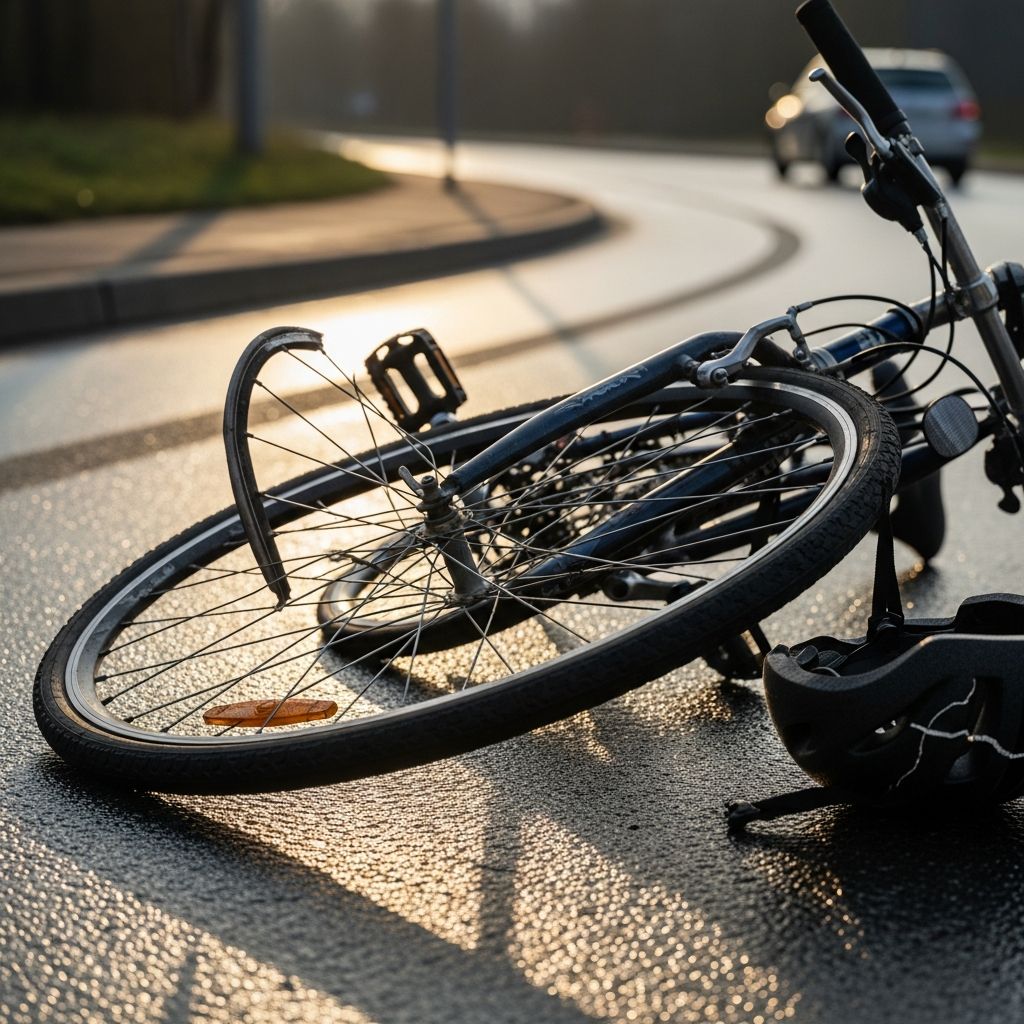
Bicyclists share the road with cars, trucks, and other motor vehicles, but they lack the protection that enclosed vehicles provide. When a collision occurs, the cyclist often sustains far more serious injuries than the driver, and the legal and insurance issues that follow can be complex.
This guide explains how fault is determined, what insurance may apply, what types of compensation are available, and which steps to take after a bicycle crash to protect your legal rights.
Why Bicycle Collisions Are So Legally Complex
At first glance, a bike–car crash may seem similar to any other traffic accident, but several factors make these cases uniquely complicated:
- Severe injuries and long recovery are common because cyclists lack a protective vehicle frame, seatbelts, and airbags.
- Disputes over traffic rules often arise when drivers or insurers claim the cyclist was not following the law.
- Multiple insurance policies can be involved, including auto, health, and sometimes homeowner’s or renter’s coverage.
- Shared fault rules (comparative or contributory negligence) can reduce or even bar compensation depending on the state.
- Strict deadlines (statutes of limitations and special notice rules for government entities) limit how long you have to bring a claim.
Understanding these issues early helps you avoid missteps that can weaken or destroy your claim.
Common Causes of Bicycle–Motor Vehicle Crashes
Most bike collisions with vehicles arise from some form of negligence—failure to use reasonable care under the circumstances. Examples include:
- Drivers failing to yield to cyclists in bike lanes or at intersections
- Motorists turning right across a bike lane without checking mirrors and blind spots
- Opening car doors into the path of a cyclist (“dooring” incidents)
- Speeding or aggressive driving near bike routes
- Driving while distracted by phones, infotainment systems, or passengers
- Driving under the influence of alcohol or drugs
- Cyclists riding against traffic, ignoring signals, or failing to use lights at night
Proving exactly how the crash occurred is central to establishing fault and unlocking insurance coverage.
Injuries and Losses Cyclists Commonly Suffer
Bicycle accidents frequently cause serious trauma because the cyclist’s body often directly contacts the vehicle or roadway. Studies show high rates of head injuries, fractures, and internal injuries among injured cyclists.
Common physical injuries include:
- Traumatic brain injuries and concussions
- Spinal cord trauma, herniated discs, or paralysis
- Broken bones in the arms, legs, ribs, or pelvis
- Deep lacerations, road rash, and soft-tissue damage
- Organ damage and internal bleeding
Beyond physical harm, cyclists may also experience:
- Time away from work and lost income
- Chronic pain or reduced mobility
- Psychological effects such as anxiety and post-traumatic stress
- Loss of enjoyment of cycling and other activities
These consequences form the basis for the damages that may be recovered through an insurance claim or lawsuit.
How Fault and Negligence Are Determined
To hold a driver or other party financially responsible, you generally must prove that their negligence caused the crash and your injuries. Key elements include:
- Duty of care – Every road user, including drivers and cyclists, must act reasonably to avoid harming others.
- Breach of duty – A violation of traffic laws or unsafe behavior, such as speeding or failing to yield.
- Causation – A direct link between the breach and the collision.
- Damages – Measurable losses like medical bills, lost income, or pain and suffering.
Evidence often used to decide fault includes:
- Police or collision reports
- Photographs and video (dash cams, security cameras, or bystanders)
- Witness statements
- Physical evidence such as bike and vehicle damage or skid marks
- Medical records linking injuries to the crash
Shared Fault and Comparative Negligence
Many states apply some form of comparative negligence, meaning fault can be divided between the driver and cyclist. Under pure comparative systems, a cyclist can recover compensation even if mostly at fault, but their award is reduced by their percentage of responsibility.
Other states use modified comparative or contributory negligence rules, which may bar recovery if the cyclist’s share of fault exceeds a specified threshold or if they are even minimally at fault. The specific rule in your state has a major impact on the value of your claim.
Insurance Coverages That May Apply
Multiple insurance policies can help pay for losses after a bike–car crash. Depending on the facts and your location, available coverage may include:
| Type of Coverage | Who Provides It | What It May Pay For |
|---|---|---|
| Liability insurance | At-fault driver’s auto insurer | Medical bills, lost wages, and other damages of the injured cyclist, up to policy limits |
| Uninsured/underinsured motorist (UM/UIM) | Injured cyclist’s auto policy (if any) | Losses when the driver has no coverage or insufficient limits |
| Medical payments or personal injury protection (PIP) | Injured cyclist’s or driver’s auto policy, depending on state law | Medical expenses regardless of fault, up to a stated limit |
| Health insurance | Cyclist’s health insurer | Ongoing medical care, often subject to deductibles and potential reimbursement (subrogation) |
| Property insurance | Homeowner’s or renter’s policy in limited situations | Damage to the bicycle or personal items such as helmets or electronics |
Because each policy has its own rules and exclusions, coordinating coverage is often one of the most challenging aspects of a bicycle injury claim.
Compensation You May Be Entitled To
Bicycle accident claims generally fall under personal injury law. Damages are intended to make the injured person as whole as money can reasonably achieve.
Recoverable categories commonly include:
- Medical costs
- Emergency room treatment and ambulance transportation
- Hospital stays, surgery, and diagnostic imaging
- Physical therapy, occupational therapy, and rehabilitation
- Future medical care for chronic or permanent conditions
- Income losses
- Lost wages during time away from work
- Reduced earning capacity if you cannot return to the same type of job
- Property damage
- Repair or replacement of your bicycle
- Damaged safety gear, clothing, or other personal property
- Non-economic losses
- Pain and physical suffering
- Emotional distress and mental anguish
- Loss of enjoyment of life and hobbies
In rare cases involving extreme misconduct—such as intentional harm or highly reckless behavior—some states also allow punitive damages to punish the wrongdoer and deter similar conduct.
Key Steps to Take After a Bicycle Accident
Actions taken in the minutes, days, and weeks after a crash can profoundly affect your ability to recover compensation. Consider the following steps where it is safe and practical to do so:
Immediately After the Crash
- Move to safety if you are able, and avoid further traffic hazards.
- Call 911 to request medical assistance and law enforcement.
- Accept medical evaluation at the scene; some serious injuries are not immediately obvious.
- Obtain driver details, including name, contact information, license number, and insurance company.
- Gather witness information whenever possible.
- Photograph the scene, including road conditions, traffic signals, your bike, the vehicle, and visible injuries.
In the Days Following the Collision
- Seek comprehensive medical care and follow all treatment recommendations.
- Request a copy of the police or collision report once it is available.
- Notify your own insurers (auto and health) about the crash, following policy reporting requirements.
- Keep a written journal documenting pain levels, limitations, missed work, and the impact on daily life.
- Store damaged equipment (bike, helmet, clothing) without repair, as it can serve as important evidence.
As You Consider a Legal Claim
- Be cautious about recorded statements to the driver’s insurer before you understand your rights.
- Organize bills and receipts for all accident-related expenses.
- Consult a personal injury attorney experienced with bicycle claims to evaluate potential fault issues, insurance coverage, and case value.
Deadlines and Special Rules You Should Know
Every state sets a statute of limitations—a legal deadline by which you must file a personal injury lawsuit. Missing this deadline generally bars you from ever bringing the claim, no matter how strong your case may have been.
Additional timing rules may apply when:
- The at-fault driver was a government employee or was driving a government vehicle.
- The accident involved defective roadway design or maintenance by a public agency.
- A minor child was injured; some states extend or “toll” limitation periods for minors.
Because these rules are highly state-specific, early legal advice is particularly important for crashes involving public entities or children.
How a Bicycle Accident Lawyer Can Help
While some minor property-damage-only incidents may be resolved directly with an insurer, serious injury cases often benefit from legal representation. A lawyer can:
- Review police reports, medical records, and physical evidence to assess liability.
- Identify all possible sources of coverage, including UM/UIM and medical payments.
- Calculate the full value of your claim, including future medical needs and long-term loss of earning capacity.
- Negotiate with insurance companies and respond to low initial settlement offers.
- File a lawsuit and prepare for trial if a fair resolution cannot be reached.
Many personal injury attorneys work on a contingency-fee basis, meaning their fee is a percentage of the recovery rather than an upfront charge. Fee structures and specific percentages vary and should be clearly explained in a written agreement.
Frequently Asked Questions About Bicycle Accident Claims
Q1: Do I still have a case if I was not wearing a helmet?
In many states, failure to wear a helmet does not automatically bar recovery, but the defense may argue that it contributed to your injuries. How this affects compensation depends on local comparative fault rules and whether helmet use is legally required for your age group.
Q2: What if the driver who hit me had no insurance?
If the at-fault driver is uninsured or flees the scene, you may be able to pursue benefits under your own uninsured/underinsured motorist coverage, if you have an auto policy. In some situations, crime victim compensation programs or other limited sources of recovery may also be available.
Q3: Can I recover compensation if I was partly at fault?
In states with comparative negligence, you may still receive compensation even if you share responsibility, but your award is typically reduced according to your percentage of fault. In contributory negligence states or under certain modified rules, even small degrees of fault can significantly limit or eliminate recovery, making legal advice crucial.
Q4: Should I talk to the driver’s insurance company myself?
You usually must report the collision, but you are not required to accept a quick settlement or provide detailed recorded statements without understanding your rights. Insurers work to minimize payouts, so many injured cyclists consult an attorney before substantive discussions.
Q5: How long will my bicycle accident claim take to resolve?
The timeline varies widely. Straightforward cases with clear liability and modest injuries may settle within months, while disputes over fault, serious injuries, or complex insurance issues can take a year or more, especially if a lawsuit and trial become necessary.
References
- Bicycle and Pedestrian Safety — National Highway Traffic Safety Administration (NHTSA). 2024-04-05. https://www.nhtsa.gov/road-safety/bicycle-safety
- Characteristics of Bicycle-Related Head Injuries — Centers for Disease Control and Prevention (CDC). 2023-06-15. https://www.cdc.gov/headsup/bicycles/index.html
- Comparative Negligence — Legal Information Institute, Cornell Law School. 2023-01-10. https://www.law.cornell.edu/wex/comparative_negligence
- Statutes of Limitations in Civil Cases — United States Courts. 2022-09-01. https://www.uscourts.gov/educational-resources/educational-activities/statutes-limitations
- Average Bicycle Accident Settlement in California — Easton & Easton, LLP. 2025-01-10. https://www.eastonlawoffices.com/blog/average-bicycle-accident-settlement-in-california/
- Average Bicycle Accident Settlement in California (2025 Update) — LawLinq. 2025-02-01. https://www.lawlinq.com/average-bicycle-accident-settlement-california/
- Bicycle Accidents: Legal Rights and Steps to Take for Compensation — Warren Allen LLP. 2023-08-21. https://warrenallen.com/bicycle-accidents-legal-rights-and-steps-to-take-for-compensation/
Similar Articles








Read full bio of medha deb


