
Bible Education in Florida Public Schools: Legal Boundaries
Analyzing Florida's push for Bible study in public schools amid First Amendment challenges and evolving state policies.
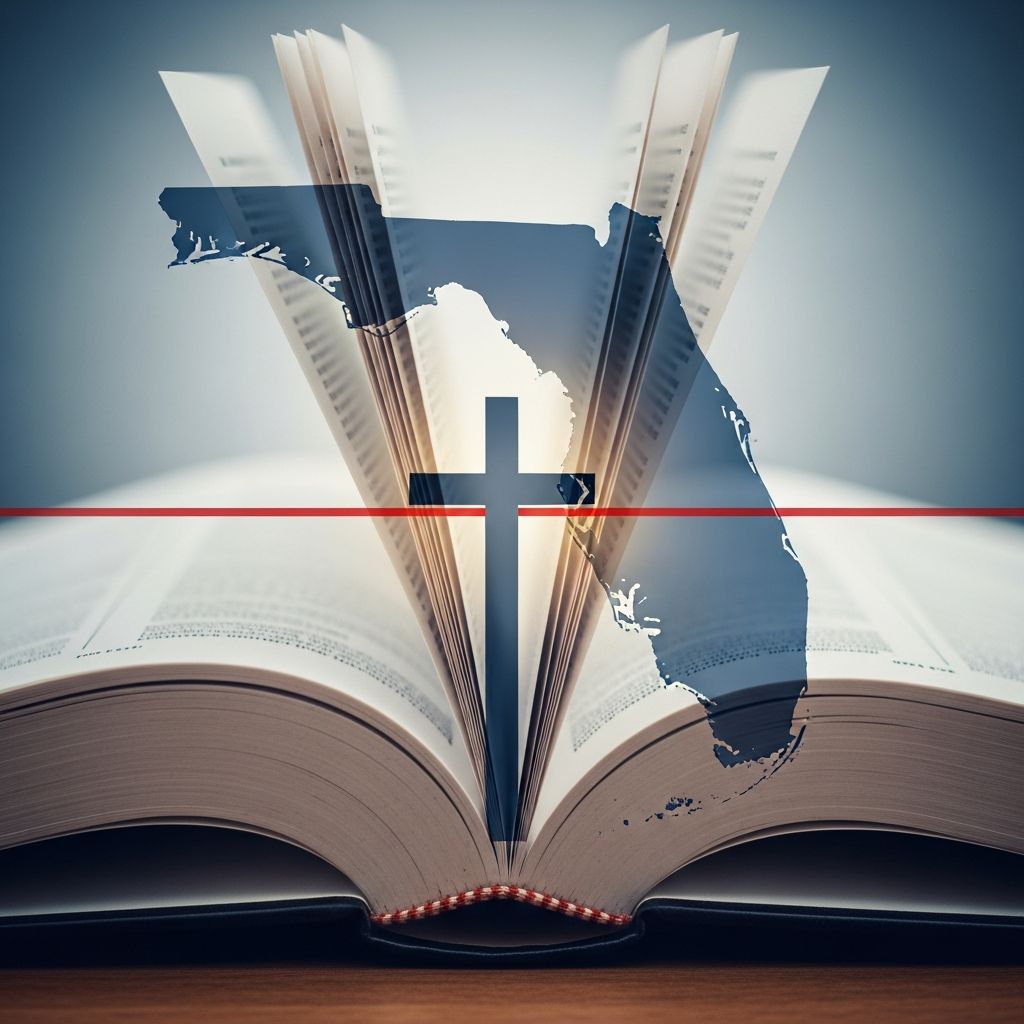
Public schools in Florida navigate a delicate balance between permitting objective study of religious texts like the Bible and avoiding unconstitutional endorsement of religion. Florida Statute 1003.45 explicitly allows district school boards to implement secular programs that include objective studies of the Bible and religion, provided they remain educational rather than devotional. This provision underscores a long-standing tension in American education law, where courts have repeatedly scrutinized school-sponsored religious activities under the First Amendment’s Establishment Clause.
Historical Context: Early Challenges to Bible Courses
Efforts to integrate Bible-based curricula into public school schedules have faced significant legal hurdles dating back decades. In the late 1990s, parents and civil liberties groups in Lee County, Florida, launched a federal lawsuit against the local school district for offering a ‘Bible History’ course. Critics argued that the curriculum treated the Bible as a literal history textbook, incorporating materials from groups like the National Council on Bible Curriculum in Public Schools, which promoted the text as foundational to American society and the Constitution. The suit highlighted how such classes could introduce religious exercises into classrooms, violating prohibitions on school endorsement of sectarian views.
Lead attorneys emphasized that while the Bible holds historical and literary value, presenting its narratives as undisputed fact crosses into faith-based territory unsuitable for public education. This case mirrored a successful challenge in Mississippi, where courts halted a similar program, reinforcing that public schools cannot use taxpayer-funded time to proselytize. These precedents established that any Bible study must be rigorously academic, focusing on cultural impact rather than theological truth claims.
Current Florida Statutes: Permissions and Limitations
Today’s legal framework in Florida permits—but does not require—schools to offer Bible and religion studies as part of a neutral, secular curriculum. Under Section 1003.45(1), boards may ‘install in the public schools… an objective study of the Bible and of religion,’ distinguishing this from mandatory prayer or devotional reading. Subsection (2) also mandates a daily moment of silence, allowing personal reflection without school-directed religious content.
Recent legislative actions have expanded protections for religious expression. A 2026 bill analysis outlines safeguards for teachers engaging in private prayer or Bible study among colleagues, equating it to other non-disruptive personal activities. Meanwhile, policies on student expression aim to shield religious, political, and ideological viewpoints from grading penalties, provided they align with academic standards. These measures respond to concerns that educators might penalize faith-based perspectives in assignments.
Released Time Programs: Off-Campus Religious Instruction
Florida joins at least 11 other states in authorizing ‘released time’ programs, where students may leave campus for off-site religious instruction with parental consent. This approach, recently affirmed in laws across Iowa, Montana, Ohio, and Texas, shifts religious education away from school control, potentially evading Establishment Clause violations. In Florida, such programs like LifeWise Academy in Duval County have sparked debate, as they pull students from regular classes for Bible lessons during school hours.
Proponents argue this respects parental rights without compelling participation or using public resources. Critics, however, worry about indirect school endorsement and disruption to the school day. Federal courts have generally upheld released time when voluntary and non-coercive, as seen in the Supreme Court’s 1952 Zorach v. Clauson decision, but recent pushes test these limits amid broader religious integration efforts.
Chaplains and Counselors: New Frontiers in School Religion
Amid a national trend, Florida’s law permits volunteer religious chaplains in public schools as counselors, but with strict safeguards: parental permission is required, and families must receive disclosure of the chaplain’s religious affiliation. This contrasts with states like Texas and Louisiana, which lack such provisions, raising higher risks of proselytizing. Legal experts suggest Florida’s model may withstand scrutiny if chaplains avoid evangelizing, aligning with guidelines for neutral religious accommodation.
These policies emerge as courts strike down more overt mandates, such as Louisiana’s Ten Commandments displays, deemed exclusionary and tied to Protestant traditions. Florida’s cautious approach—emphasizing voluntariness—positions it to potentially avoid similar fates.
Comparative State Approaches: Bible in the Curriculum
| State | Policy Type | Key Features | Legal Status |
|---|---|---|---|
| Florida | Permissive Bible Study | Objective study allowed; released time; volunteer chaplains with consent | Statutory; ongoing debates |
| Oklahoma | Mandatory Integration | Bible lessons in grades 5-12; academic focus claimed | Challenged in state court |
| Texas | Optional Curriculum | Bible literacy elective; private funding | Implemented; criticism over bias |
| Louisiana | Displays & Chaplains | Ten Commandments posters; chaplains without restrictions | Injunction on displays |
This table illustrates varying strategies: Florida opts for flexibility, while others pursue bolder integrations facing litigation. Success may hinge on Supreme Court reinterpretations of the Establishment Clause post-Kennedy v. Bremerton (2022), which favored school prayer accommodations.
Constitutional Framework: Establishment Clause Tests
- Lemon Test (Modified):** Programs must have secular purpose, neither advance nor inhibit religion, and avoid excessive entanglement. Bible history classes failing this—e.g., Lee County—were deemed devotional.
- Endorsement Test: Courts assess if a reasonable observer perceives school promotion of religion. Optional, objective study typically passes; mandatory or sectarian content does not.
- Coercion Test: Students must not feel pressured to participate, crucial for released time and chaplain programs.
These tests, refined over decades, guide Florida districts. The Freedom Forum’s guidelines stress academic teaching about religion, not indoctrination, providing a ‘legal safe harbor’ for diverse expressions.
Stakeholder Perspectives and Ongoing Debates
Supporters view Bible literacy as essential for understanding Western literature, history, and civics, citing its influence on founders like Jefferson. Opponents, including ACLU and interfaith groups, fear curricula skewed toward Christianity marginalize non-Christian students and erode church-state separation. In Duval County, LifeWise’s opt-in model drew concerns over academic impacts, though parents’ rights prevail legally.
Educators must train to deliver neutral content, perhaps using peer-reviewed resources on biblical scholarship rather than advocacy materials. As states experiment, Florida’s balanced statutes offer a model, but lawsuits loom if lines blur.
Frequently Asked Questions
Can Florida public schools require Bible study classes?
No, statutes permit but do not mandate them; any offering must be objective and secular.
Is released time for off-campus Bible study legal in Florida?
Yes, with parental consent; it avoids direct school involvement.
What rules apply to chaplains in Florida schools?
Volunteers only, requiring parental approval and affiliation disclosure.
Has the Supreme Court ruled on Bible in public schools?
Yes, upholding objective study (Abington School Dist. v. Schempp, 1963) but striking devotional use.
How does Florida differ from Oklahoma or Texas on Bible education?
Florida emphasizes permission and safeguards; others mandate or fund more aggressively, inviting challenges.
(Word count: 1678, excluding metadata and references)
References
- Florida Citizens Challenge Unconstitutional “Bible History” Classes — ACLU. 1990s (exact date not specified). https://www.aclu.org/documents/florida-citizens-challenge-unconstitutional-bible-history-classes
- Florida Statute 1003.45 – Online Sunshine — Florida Legislature. Current as of 2026. https://www.leg.state.fl.us/Statutes/index.cfm?App_mode=Display_Statute&Search_String=&URL=1000-1099%2F1003%2FSections%2F1003.45.html
- New Laws on Religion in Schools Face First Amendment Tests — Freedom Forum. 2024-2025. https://www.freedomforum.org/religion-in-schools-laws/
- More States Guarantee Students the Right to Religious Instruction Off-Campus — Education Week / Stateline.org. 2025-09. https://www.edweek.org/policy-politics/more-states-guarantee-students-the-right-to-religious-instruction-off-campus/2025/09
- Protection of Religious Expression in Public Schools – Florida Senate — Florida Senate. 2026. https://flsenate.gov/Session/Bill/2026/583/Analyses/h0583.EAS.PDF
Similar Articles








Read full bio of medha deb


