
Beyond the Reversal: Ending Discriminatory Travel Bans
Revoking discriminatory travel bans is just the first step in true reform.
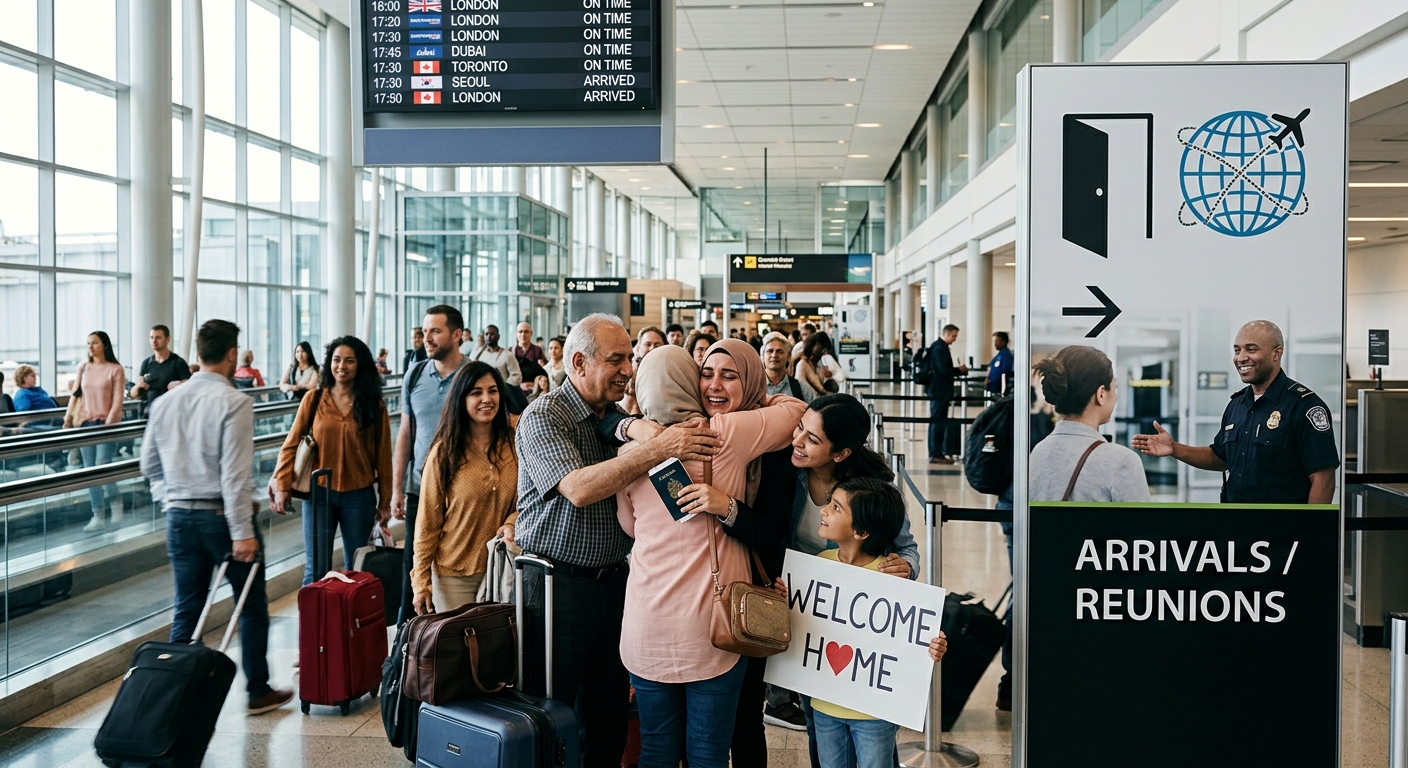
The Immediate Aftermath of a Policy Reversal
When a new presidential administration takes office, the initial policy shifts are often swift and symbolic, designed to broadcast a sharp departure from the predecessor’s agenda. On January 20, 2021, the Biden administration executed one such monumental shift by signing Proclamation 10141, an executive order ending a series of deeply controversial travel restrictions. For years, these restrictions had effectively barred millions of individuals from predominantly Muslim-majority and African nations from entering the United States. For civil rights advocates, immigration lawyers, and affected communities, the revocation of these policies was a moment of immense relief and jubilation.
However, the immediate reversal of a discriminatory policy is merely the closing of one chapter in a much larger struggle. The overarching battle for an equitable and just immigration system requires far more than the stroke of a presidential pen. It demands legislative fortifications, structural overhauls, and a profound reckoning with the historical prejudices that allowed such exclusionary policies to materialize in the first place.
A Look Back: The Anatomy of Discriminatory Travel Policies
The genesis of these sweeping restrictions dates back to early 2017, plunging international airports into chaos and sparking widespread protests across the country. The initial executive action abruptly halted entry for nationals from seven predominantly Muslim countries and suspended the U.S. refugee resettlement program. This initial order faced immediate legal challenges, resulting in nationwide injunctions as federal courts scrutinized its constitutionality and adherence to established immigration laws.
What followed was a protracted legal strategy described by legal scholars as administrative “whac-a-mole.” The executive branch iteratively revised the travel restrictions to circumvent judicial roadblocks. The second iteration removed certain countries and clarified exemptions, while the third—Presidential Proclamation 9645—added non-Muslim majority nations like North Korea and certain officials from Venezuela to dilute the appearance of religious animus. This legal maneuvering ultimately culminated in the summer of 2018 when the Supreme Court of the United States, in Trump v. Hawaii, upheld the third version of the ban. The Court ruled in a 5-4 decision that the President had broad statutory authority under the Immigration and Nationality Act (INA) to suspend the entry of foreign nationals if deemed detrimental to national interests. Emboldened by this ruling, the administration later expanded the restrictions in 2020 via Proclamation 9983 to include several additional nations, many of which were in Africa, severely limiting their access to immigrant visas.
| Executive Action | Date Issued | Primary Effect / Focus | Legal Status |
|---|---|---|---|
| Executive Order 13769 (Initial Ban) | January 2017 | Suspended entry from seven Muslim-majority countries and paused refugee program. | Blocked by federal courts nationwide. |
| Executive Order 13780 (Revised Ban) | March 2017 | Modified list to six countries and removed categorical bans on certain visa holders. | Partially enjoined, eventually replaced. |
| Proclamation 9645 (Third Ban) | September 2017 | Indefinite restrictions on eight countries, adding non-Muslim nations to the list. | Upheld by the Supreme Court in 2018. |
| Proclamation 9983 (Expansion) | January 2020 | Expanded restrictions to six more countries, heavily targeting African nations. | Revoked by President Biden in 2021. |
The Human Toll: Lives Suspended in Limbo
Behind the legal battles and Supreme Court rulings lay the profound human consequences of these policies. For the years the bans were active, the impact on families, businesses, and academic institutions was devastating. According to data analyzed by the Migration Policy Institute, immigrant visa issuances to nationals of the targeted countries plummeted drastically. This sharp decline separated spouses, kept parents from their children, and denied life-saving medical treatments to those who had previously sought specialized care in the United States.
Furthermore, the bans wreaked havoc on the Diversity Immigrant Visa Program. Countless individuals from affected nations who had defied staggering odds to win the diversity visa lottery found themselves abruptly disqualified from entry. Because diversity visas are time-bound and expire at the end of the fiscal year for which they are issued, many of these winners permanently lost their chance to immigrate.
Beyond the direct applicants, the travel bans cast a long, dark shadow over Arab and Muslim American communities residing within the United States. Families were forced to cancel weddings, miss the funerals of immediate relatives, and endure prolonged separations that strained marital and familial bonds. U.S. businesses and universities also felt the sting, losing access to global talent and diverse perspectives as international students and skilled workers looked toward more welcoming nations. Reversing the bans did not instantly mend these emotional and economic wounds, nor did it automatically restore the expired visas of those who were unjustly denied entry. The bureaucratic entanglement required to reopen and reconsider denied applications has proven to be a monumental task. Legal advocates have had to launch extensive campaigns just to help these individuals navigate a backlog of red tape, leaving many lives perpetually in limbo despite the policy’s formal end.
Why Revocation By Executive Order Is Not Enough
While Proclamation 10141 was a necessary and historic corrective measure, relying solely on executive orders to protect civil rights is an inherently fragile strategy. The U.S. Constitution and the Immigration and Nationality Act grant the executive branch significant latitude in foreign affairs and border enforcement. The reliance on executive authority to shape immigration policy creates a volatile landscape where fundamental human rights are subject to the political winds of the Oval Office.
Section 212(f) of the INA, penned decades ago during a vastly different geopolitical era, grants the President the ability to unilaterally suspend the entry of any class of aliens without strict evidentiary requirements. This sweeping provision was the statutory bedrock upon which the travel bans were constructed, heavily litigated, and ultimately defended in front of the highest court in the land. Because executive orders are not cemented in legislation, they can be undone or reinstated just as easily as they are issued. The current protections against discriminatory travel restrictions are only as robust as the sitting administration’s commitment to them. Without permanent structural changes to the underlying law, a future administration could legally invoke this same section to enact similar, or even more expansive, bans targeting specific religious, ethnic, or national groups under the ambiguous guise of national security. This vulnerability underscores why advocacy cannot stop at the revocation of a single executive order.
The NO BAN Act: A Legislative Blueprint for Equality
To ensure that the architecture of discriminatory travel policies is dismantled permanently, immigration advocates and lawmakers have championed the National Origin-Based Antidiscrimination for Nonimmigrants Act, commonly known as the NO BAN Act. This proposed legislation is designed to serve as a critical check on executive overreach and to fortify the principles of equality within U.S. immigration law.
The NO BAN Act proposes several fundamental changes to the INA. First and foremost, it would amend the nondiscrimination provision of the law to explicitly prohibit discrimination on the basis of religion. While the INA currently prohibits discrimination based on race, sex, nationality, place of birth, or place of residence in the issuance of immigrant visas, religion has remained a glaring omission. By closing this loophole, the NO BAN Act would render religiously motivated travel bans explicitly illegal.
Furthermore, the legislation would significantly rein in the President’s authority under Section 212(f) by establishing rigorous standards for any future restrictions. It would require that any proposed suspension of entry be driven by specific, credible facts demonstrating that the entry of a class of individuals would directly undermine public safety, human rights, or international stability. Rather than sweeping regional blocks, the Act mandates that such restrictions be narrowly tailored to address a specific, proven threat. Additionally, it requires the executive branch to consult with Congress and provide regular reports to legislative committees prior to implementation, ensuring robust oversight. It also guarantees that humanitarian waivers—which were notoriously difficult, if not impossible, to obtain under the previous bans—are clearly defined and accessible for family-based unifications and medical emergencies. By introducing these vital checks and balances, the NO BAN Act aims to transition the power of exclusion from arbitrary executive whim to a system grounded in constitutional values and empirical evidence.
Broader Systemic Reform: Confronting Historic Biases
Passing the NO BAN Act is a vital necessity, yet it must be viewed as part of a broader reckoning with systemic bias in the U.S. immigration system. The travel bans of recent years were not historical anomalies; rather, they were modern manifestations of a long-standing legacy of exclusion. From the Chinese Exclusion Act of 1882 to the national origins quotas of the 1920s—which heavily favored Northern and Western Europeans while barring Asian immigrants and severely restricting Eastern and Southern Europeans—U.S. immigration policy has frequently been weaponized to curate the demographic and racial makeup of the nation.
Even today, beyond high-profile executive orders, the immigration system is rife with invisible barriers that disproportionately impact Black and Brown immigrants. Disparities in visa approval rates, unequal access to consular services, and heightened security screenings often subject individuals from certain geographic regions to unjustified scrutiny and indefinite delays. True reform requires a paradigm shift that roots out xenophobia at every level of the immigration apparatus, from the initial visa application processes to the enforcement mechanisms at the borders. Advocates stress that immigration must be decoupled from harmful national security narratives that inherently cast marginalized communities as threats.
Conclusion: Forging an Inclusive Future
The presidential revocation of the discriminatory travel policies was a necessary triumph for equality, effectively pulling the nation back from a precipice of institutionalized bigotry. However, celebrating this reversal must be accompanied by a clear-eyed recognition of the work that remains. Reversing an executive order cannot automatically heal the fractured families, reimburse the lost economic opportunities, or restore the dashed dreams of thousands of diverse visa applicants.
To forge a truly inclusive future, the United States must transcend reactive policy-making. It must pass robust legislative safeguards like the NO BAN Act to curtail executive overreach and ensure that religious or racial animus can never again dictate the nation’s immigration policies. Ultimately, ending the bans was merely the opening act in a much larger, ongoing struggle to align America’s immigration realities with its highest ideals of liberty and justice for all.
Frequently Asked Questions (FAQs)
- What was the legal justification for the travel bans?
The bans were primarily justified under Section 212(f) of the Immigration and Nationality Act (INA), which allows the President to suspend the entry of foreign nationals if their arrival is deemed detrimental to the interests of the United States. - Which regions were most affected by these restrictions?
While the list of affected countries evolved through several iterations, the policies predominantly targeted nations in the Middle East and Africa with substantial Muslim populations, including Iran, Libya, Somalia, Syria, and Yemen. The policies were later expanded to include Nigeria, Eritrea, and Sudan. - Did the Supreme Court declare the bans constitutional?
Yes. In the 2018 case Trump v. Hawaii, the Supreme Court ruled in a 5-4 decision that the third iteration of the travel ban (Proclamation 9645) was a lawful exercise of the President’s authority under the INA. - What does the NO BAN Act do?
The NO BAN Act seeks to amend the INA to explicitly prohibit discrimination based on religion in the issuance of visas. It also imposes stringent evidentiary requirements and mandates congressional oversight on the President’s ability to restrict immigration. - Are the affected individuals automatically granted visas now?
No. While the bans have been revoked, individuals whose visas were denied must navigate complex bureaucratic processes to have their applications reconsidered, and many who missed out on time-sensitive programs, such as the Diversity Visa lottery, continue to struggle to find viable pathways to entry.
References
- Trump, President of the United States, et al. v. Hawaii et al. — Supreme Court of the United States. 2018-06-26. https://www.supremecourt.gov/opinions/17pdf/17-965_h315.pdf
- Proclamation 10141: Ending Discriminatory Bans on Entry to the United States — Federal Register. 2021-01-25. https://www.federalregister.gov/documents/2021/01/25/2021-01749/ending-discriminatory-bans-on-entry-to-the-united-states
- The Travel Ban at Two: Rocky Implementation Settles into Deeper Impacts — Migration Policy Institute. 2019-01-31. https://www.migrationpolicy.org/article/travel-ban-two-rocky-implementation-settles-deeper-impacts
- H.R. 2214 – National Origin-Based Antidiscrimination for Nonimmigrants Act — U.S. Congress. 2019-04-10. https://www.congress.gov/bill/116th-congress/house-bill/2214
Similar Articles








Read full bio of medha deb


