
Beyond Rhetoric: The UN’s Review of U.S. Human Rights
A recent UN review exposes the deep domestic human rights failures in the U.S.
The Illusion of Exceptionalism: A Global Beacon or a Fractured Facade?
For decades, the United States has positioned itself as the preeminent defender of freedom on the international stage. It frequently authors reports scrutinizing the human rights records of other nations, imposing sanctions, and delivering moral lectures globally. Yet, when the lens of international law is turned inward, a starkly different narrative emerges. In late 2023, the United Nations Human Rights Committee concluded its rigorous review of the United States’ compliance with the International Covenant on Civil and Political Rights (ICCPR). The Committee’s resulting document, the Concluding Observations (CCPR/C/USA/CO/5), cuts through the rhetoric of American exceptionalism to expose deep-rooted domestic failures.
Rather than mirroring the image of a flawless democracy, the UN’s findings paint a picture of a fractured society where civil and political rights are deeply compromised by racial prejudice, legislative backsliding, and punitive institutional structures. The International Covenant on Civil and Political Rights is one of the few core international human rights treaties the United States has ratified. By doing so in 1992, the U.S. legally bound itself to uphold essential freedoms, including the right to life, freedom from torture, equal protection under the law, and the right to participate in government. Periodic reviews by the UN Human Rights Committee are a standard mechanism to assess compliance.
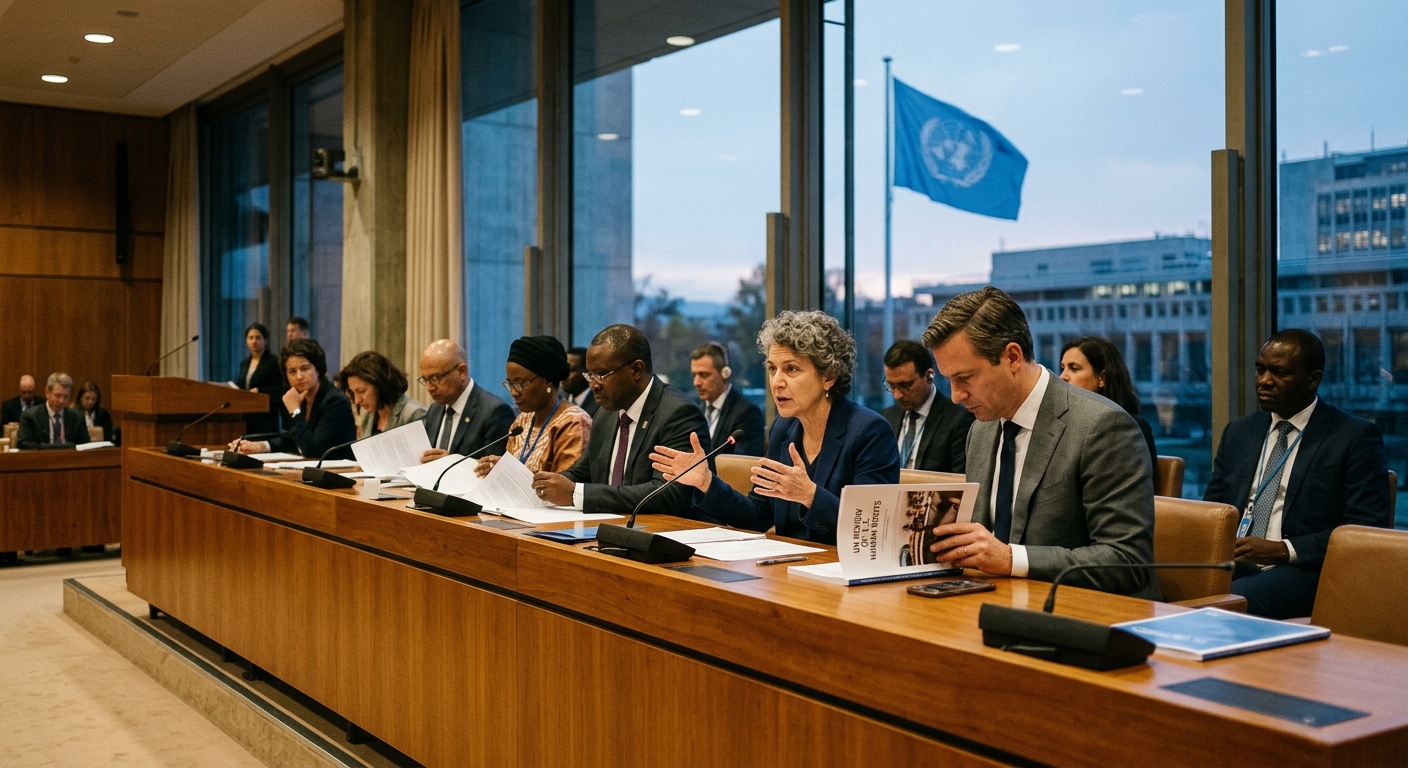
During the 2023 hearings in Geneva, the U.S. delegation acknowledged the importance of these human rights standards, speaking of a moral imperative to advance equality. However, human rights defenders and the UN Committee highlighted a profound disconnect between these diplomatic assurances and the lived realities of Americans. The UN’s observations underscore that while the federal government may espouse the ideals of justice, the decentralized nature of the U.S. legal system has allowed fundamental rights to erode rapidly. This gap between global posturing and domestic policy demands immediate introspection.
Dismantling the Ballot Box: Voting Rights Under Siege
The cornerstone of any functional democracy is the unfettered right to vote. Yet, the UN Committee expressed profound alarm at the systemic efforts to restrict this right within the United States. Across the country, partisan legislative bodies have engineered a complex architecture of voter suppression that disproportionately disenfranchises Black, Latinx, and Indigenous communities.
The mechanisms of this suppression are manifold and strategic. Since the Supreme Court gutted key provisions of the Voting Rights Act, lawmakers have enacted policies that surgically target minority voting blocs. These laws range from shrinking the window for early voting to imposing arbitrary identification rules.
- Stringent Voter ID Laws: State legislatures continue to pass strict identification requirements that create arbitrary barriers for low-income citizens and minority voters who may lack specific forms of government-issued ID.
- Felony Disenfranchisement: Millions of Americans, predominantly people of color, are stripped of their voting rights due to past criminal convictions. Even after completing their sentences, many find themselves locked out of the democratic process, trapped in a modern-day form of civic death.
- Aggressive Gerrymandering: The manipulation of electoral district boundaries dilutes the political power of marginalized groups, ensuring that the composition of legislatures does not accurately reflect the demographics of the electorate.
The UN explicitly called on the U.S. government to eliminate these discriminatory hurdles, emphasizing that true democratic participation cannot exist when the rules of engagement are rigged to favor the status quo. The Committee emphasized these are intentional mechanisms designed to disenfranchise and isolate vulnerable populations.
Bodily Autonomy in the Post-Roe Era: A Human Rights Crisis
Perhaps the most glaring regression highlighted by the UN review surrounds reproductive rights. The 2022 Supreme Court decision to overturn Roe v. Wade obliterated a half-century of federal protection for abortion access, triggering a cascade of draconian state-level bans. The UN Human Rights Committee unequivocally recognized this newly fractured landscape as an alarming violation of international human rights law.
The criminalization of abortion does not merely prevent individuals from accessing vital healthcare; it constitutes a profound infringement on bodily autonomy, the right to privacy, and the right to life. The Committee highlighted how forcing people to carry unviable or dangerous pregnancies to term—or forcing them to cross state lines under the looming threat of prosecution—amounts to cruel, inhuman, and degrading treatment under international frameworks.
Furthermore, the report heavily emphasized the discriminatory nature of these legislative bans. Affluent individuals can often navigate around these restrictions by traveling to progressive states, whereas low-income individuals, young people, and women of color bear the devastating brunt of forced birth and compromised maternal healthcare. The international community views the ongoing erosion of reproductive freedom not just as a domestic political issue, but as a catastrophic failure to protect fundamental human rights on a structural level.
The Criminal Legal System: Mass Incarceration and Cruel Punishments
The United States incarcerates a larger percentage of its population than any other nation, a fact that the UN Committee identified as an ongoing human rights disaster. The ICCPR explicitly mandates that the penitentiary system should focus on reformation and social rehabilitation. Instead, the U.S. legal system remains overwhelmingly punitive and racially disproportionate.
A central point of international condemnation is the widespread practice of solitary confinement. The UN highlighted that placing individuals in extreme isolation for prolonged periods causes severe psychological trauma and equates to torture under established international legal standards. Despite overwhelming global consensus, tens of thousands of Americans remain locked in solitary confinement on any given day, often for minor disciplinary infractions.
Additionally, the continued application of the death penalty remains a glaring anomaly among Western democracies. The Committee raised serious concerns about the persistent racial bias in capital sentencing, where defendants of color, particularly those convicted of crimes against white victims, are significantly more likely to receive a death sentence. The use of flawed, experimental execution methods, the execution of individuals with severe psychosocial disabilities, and the staggering number of death row exonerations further delegitimize the American capital punishment system in the eyes of the global community.
Unfulfilled Promises: Indigenous Sovereignty and Land Rights
The history of the United States is inextricably linked to the violent colonization and displacement of Indigenous peoples. The UN report did not shy away from confronting this ongoing legacy, pointing out that the U.S. continues to fall woefully short of its obligations to Native American tribes.
Key areas of concern include the lack of “free, prior, and informed consent” when the government or private corporations extract resources or build massive infrastructure projects—such as oil pipelines—on or near Indigenous lands. This environmental exploitation frequently endangers the health, water supply, and sacred cultural sites of tribal nations.
Furthermore, the Committee drew urgent attention to the tragic epidemic of Missing and Murdered Indigenous Women and Girls (MMIWG). The complex jurisdictional maze between tribal, state, and federal law enforcement often leads to rampant impunity, leaving Indigenous communities vulnerable to systemic violence without adequate legal recourse. The UN stressed that the U.S. must unconditionally honor its historical treaties and guarantee genuine self-determination for Indigenous communities moving forward.
The Legislative War on LGBTQ+ Identities
In recent years, the United States has witnessed an unprecedented, highly coordinated surge in state-level legislation targeting the LGBTQ+ community, particularly transgender individuals. The UN Human Rights Committee expressed grave concern over this legislative assault, which fundamentally violates the ICCPR’s core protections against discrimination and its guarantees of freedom of expression and privacy.
Lawmakers in numerous states have enacted policies outright banning gender-affirming medical care for minors, restricting transgender athletes from participating in sports that align with their gender identity, and censoring educational discussions of sexual orientation and gender identity in public schools. The UN recognized these measures not merely as domestic culture war tactics, but as state-sponsored persecution.
Such laws legitimize bigotry, fuel violence against queer and transgender people, and systematically exclude an entire demographic from public life and essential healthcare. The international human rights framework firmly demands that all individuals, regardless of gender identity or sexual orientation, be afforded equal protection under the law, free from political scapegoating.
Systemic Racism: The Invisible Architecture of Inequality
While the U.S. has passed landmark civil rights legislation in the past, the UN review makes it painstakingly clear that systemic racism remains deeply embedded in the nation’s institutions. This structural inequality permeates virtually every facet of American life, from housing and education to environmental justice and healthcare access.
The Committee highlighted glaring issues such as environmental racism, where predominantly Black and Latinx communities are disproportionately burdened by toxic industrial pollution, lead-contaminated drinking water, and hazardous waste sites. Beyond environmental hazards, vast healthcare disparities reflect decades of exclusionary policies. Black women experience maternal mortality rates significantly higher than their white counterparts—a disparity the UN highlighted as a severe intersection of racial and gender-based discrimination.
Additionally, police brutality and the militarization of law enforcement continue to target people of color at alarming rates, with absolute impunity for officers remaining the norm rather than the exception. The UN urged the U.S. not only to reform these individual sectors but to confront the historical roots of this inequality by seriously considering comprehensive reparations and structural reforms that address the enduring legacy of enslavement and Jim Crow segregation.
Turning Recommendations into Reality: The Path Forward
The UN Human Rights Committee’s concluding observations provide a clear, internationally backed roadmap for the United States to align its domestic realities with its global rhetoric. However, international recommendations are not self-executing; they require immense political will, institutional reform, and public mobilization to become a reality.
To bridge the gaping divide between promises and practice, the federal government must enact binding, unassailable legislation that safeguards reproductive freedom, restores robust federal voting rights protections, and drastically overhauls the inherently punitive criminal legal system. Moreover, the U.S. should finally heed the UN’s longstanding recommendation to establish a National Human Rights Institution (NHRI)—an independent body specifically tasked with monitoring and enforcing international human rights standards across all levels of domestic government.
Ultimately, American citizens, civil society groups, and grassroots activists hold the power to demand this accountability. The UN report is a powerful tool for domestic advocacy, providing irrefutable evidence that the fight for civil and political rights in America is far from over. If the United States wishes to truly lead the world by example, it must first have the courage to fix its own house.
Frequently Asked Questions (FAQs)
What is the ICCPR?
The International Covenant on Civil and Political Rights (ICCPR) is a multilateral treaty adopted by the United Nations. It commits its parties to respect the civil and political rights of individuals, including the right to life, freedom of religion, freedom of speech, and the right to a fair trial.
Why does the UN review the United States?
As a signatory and ratifying party to the ICCPR (ratified by the U.S. in 1992), the United States is legally obligated to undergo periodic, comprehensive reviews by the UN Human Rights Committee to assess its compliance with the treaty’s international standards.
What did the 2023 UN report say about abortion in the U.S.?
The UN Committee expressed deep concern over the overturning of Roe v. Wade, stating that the resulting state-level abortion bans violate fundamental human rights, including bodily autonomy, privacy, and the right to life, while disproportionately harming low-income and marginalized communities.
What is a National Human Rights Institution (NHRI)?
An NHRI is an independent, state-mandated body responsible for broadly protecting and promoting human rights within a given country. The UN has repeatedly urged the United States to establish one to ensure comprehensive human rights monitoring at the federal, state, and local levels.
References
- Concluding observations on the fifth periodic report of the United States of America (CCPR/C/USA/CO/5) — UN Human Rights Committee (OHCHR). 2023-12-07. https://tbinternet.ohchr.org/_layouts/15/treatybodyexternal/Download.aspx?symbolno=CCPR%2FC%2FUSA%2FCO%2F5&Lang=en
- U.S. Presentation to the UN Human Rights Committee — U.S. Mission to International Organizations in Geneva. 2023-10-17. https://geneva.usmission.gov/2023/10/17/u-s-presentation-to-the-un-human-rights-committee/
- 2023 Country Reports on Human Rights Practices — U.S. Department of State. 2024-04-22. https://www.state.gov/reports/2023-country-reports-on-human-rights-practices/
Similar Articles








Read full bio of medha deb


