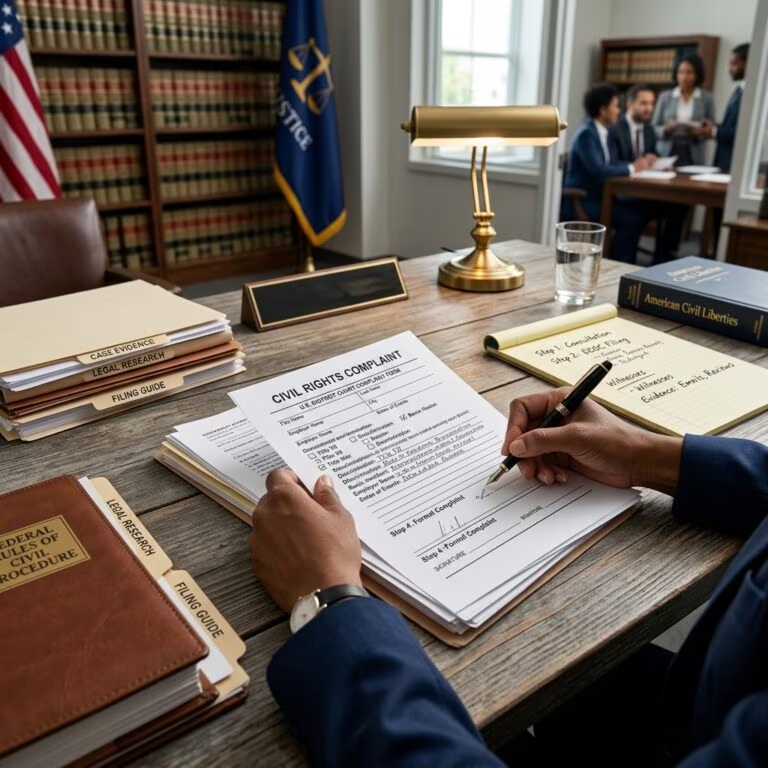
Pro bono service represents a cornerstone of the legal profession, offering attorneys a pathway to professional development, personal satisfaction, and societal impact. By dedicating time to cases without expectation of fee, lawyers not only uphold ethical standards but also gain tangible career advantages. This article delves into the transformative power of pro bono work, drawing on insights from leading legal practices and professional guidelines to illustrate its value for individuals, firms, and communities.
Enhancing Professional Expertise Across Practice Areas
One of the primary draws of pro bono involvement is the chance to diversify legal experience. Attorneys often handle matters outside their typical specialization, such as a transactional lawyer assisting with family law or an environmental specialist tackling housing disputes. This exposure refreshes foundational knowledge and introduces novel challenges, keeping skills sharp in an evolving legal landscape.
For instance, partnering with legal aid organizations exposes lawyers to real-world applications of seldom-used statutes, bridging the gap between theory and practice. Junior attorneys, in particular, benefit from increased client interaction and courtroom responsibilities that accelerate their learning curve. Seasoned practitioners refine advocacy techniques through high-stakes, low-pressure scenarios, fostering adaptability essential for complex paid cases.
- Diverse case exposure: Tackle immigration, benefits, or estate planning beyond daily routines.
- Skill refinement: Hone research, negotiation, and litigation in varied contexts.
- Career versatility: Build a broader portfolio for future opportunities.
Fostering Teamwork and Internal Networks
Pro bono projects frequently unite lawyers from different departments, breaking down silos within firms. Collaborative efforts on group initiatives, like community legal clinics, encourage knowledge sharing and relationship-building. These interactions often lead to mentorship pairings and cross-practice referrals, strengthening firm cohesion.
External networking amplifies this benefit. Working alongside nonprofit legal teams and bar association volunteers expands professional circles, potentially yielding referrals or joint ventures. Such connections underscore the interconnected nature of the legal community, where goodwill today translates to business tomorrow.
| Collaboration Type | Benefits | Examples |
|---|---|---|
| Internal Firm Teams | Improved morale, knowledge transfer | Estate planning clinics, multi-department cases |
| External Partners | Networking, referrals | Legal aid collaborations, pro bono networks |
| Mentorship Dynamics | Skill development, retention | Senior-junior pairings on client interviews |
Attracting and Retaining Top Legal Talent
In a competitive hiring market, a robust pro bono program distinguishes firms. Prospective associates, especially from millennial and Gen Z cohorts, prioritize employers demonstrating social responsibility. Highlighting pro bono commitments in recruitment materials signals alignment with values like justice and community service, drawing ambitious candidates.
Retention follows suit. Engaged lawyers who feel their work matters stay longer, reducing turnover costs. Firms with active programs report higher satisfaction rates, as pro bono injects purpose into demanding schedules. This is particularly vital for early-career attorneys seeking meaningful experience amid billable hour pressures.
Boosting Morale and Personal Fulfillment
Beyond professional gains, pro bono reignites passion for the law. Assisting underserved clients—those facing eviction, discrimination, or access barriers—provides a profound sense of purpose. Attorneys often describe it as a ‘reset,’ countering burnout from high-volume commercial work with tangible human impact.
Psychological benefits are well-documented: volunteering correlates with reduced stress, heightened self-efficacy, and improved mental health. Lawyers report renewed energy spilling into paid practices, enhancing overall productivity. For firms, this translates to a more resilient, motivated workforce.
Supreme Court Justice Ruth Bader Ginsburg noted that pro bono elevates lawyers from ‘fee-charging artisans’ to public good contributors, fostering deep satisfaction.
Fulfilling Ethical and Professional Obligations
The American Bar Association’s Model Rule 6.1 aspirational standard urges 50 hours annually of pro bono service, primarily for limited-means individuals or nonprofits. Many states incorporate similar guidelines, framing it as a professional duty to expand access to justice. Compliance not only meets bar requirements but elevates firm standing with regulators and peers.
This commitment counters systemic inequities: low-income Americans routinely face representation gaps due to legal aid underfunding. Pro bono bridges this divide, ensuring the justice system serves all, not just the affluent.
Strategic Advantages for Law Firms
Firms leveraging pro bono strategically reap reputational dividends. Publicized efforts—via press releases, firm websites, or awards—enhance brand equity, attracting clients who value corporate citizenship. It also positions the firm as a thought leader in public interest law, opening doors to government or nonprofit contracts.
Resource efficiency is another plus. Firms absorb investigation and expert costs, allowing nonprofits to focus on volume. Over time, this builds internal expertise, enabling handling of sophisticated matters that bolster the firm’s paid practice capabilities.
- Reputation enhancement through media and awards.
- Client attraction via demonstrated values.
- Cost-effective training for associates.
Practical Steps to Launch a Pro Bono Initiative
Getting started requires intentionality. Firms should:
- Assess capacity: Survey staff interests and align with firm strengths.
- Partner strategically: Connect with reputable legal aid groups or bar pro bono centers.
- Integrate incentives: Credit hours toward billables or tie to performance reviews.
- Track impact: Measure hours, cases, and outcomes for reporting.
- Celebrate wins: Host events to recognize contributors.
Individuals can begin by volunteering 5-10 hours monthly through platforms like the ABA’s pro bono directory or local access-to-justice programs.
Frequently Asked Questions (FAQs)
How much pro bono time is recommended annually?
The ABA Model Rule 6.1 suggests aspiring to 50 hours per year, focusing on services for those of limited means.
Does pro bono count toward billable hours?
Many firms offer equivalent credit or bonuses; policies vary, so check internal guidelines.
Can solo practitioners participate effectively?
Yes, through clinics, referrals, or brief advice programs tailored to smaller practices.
What if I’m new to an area of law?
Pro bono is ideal for exploration with support from partners or training resources.
How does pro bono impact firm recruitment?
It strongly appeals to younger talent, improving hiring success and diversity.
Overcoming Common Challenges
Time constraints top concerns, yet structured programs mitigate this via flexible scheduling. Liability risks are minimal with proper vetting and insurance. For smaller firms, consortiums pool resources. The net gains—skills, morale, reputation—far outweigh hurdles.
In summary, pro bono is not charity but investment: in self, team, firm, and justice system. Embracing it propels careers forward while addressing societal needs.
References
- 5 Reasons Why Your Law Firm Should Take Pro Bono Cases — Jaffe PR. 2023. https://www.jaffepr.com/blog/5-reasons-why-pro-bono-win-win-firms-and-attorneys
- Reflections on the Benefits of Pro Bono Service — Maynard Nexsen. 2024. https://www.maynardnexsen.com/publication-reflections-on-the-benefits-of-pro-bono-service
- Pro bono – good for the community, good for lawyers too — The Law Society. 2023. https://www.lawsociety.org.uk/en/topics/blogs/pro-bono-good-for-the-community-good-for-lawyers-too
- What does pro bono work mean to attorneys? — Thomson Reuters Legal Blog. 2024. https://legal.thomsonreuters.com/blog/what-does-pro-bono-work-mean-to-attorneys/
- The Pros of Pro Bono: Why Legal Professionals Can and Should Give Back — Casey Gerry. 2023. https://caseygerry.com/blog/the-pros-of-pro-bono-why-legal-professionals-can-and-should-give-back/
- Pro Bono Guide — Harvard Law School. 2024-10-17. https://hls.harvard.edu/bernard-koteen-office-of-public-interest-advising/opia-job-search-toolkit/career-and-application-guides/pro-bono-guide/
- The benefits of pro bono work for ambitious associates — White & Case Inside. 2023. https://inside.whitecase.com/articles/benefits-pro-bono-work-ambitious-associates